What Is a Home Battery’s Ingress Protection (IP) Rating? What You Should Know
You’re comparing solar batteries and everything sounds promising. Good warranty, solid capacity, strong brand name. But then your installer mentions something about an “IP rating” — and suddenly, you’re nodding politely while secretly thinking: What’s that?
IP ratings are often overlooked on a home battery spec sheet. However, it is important to note that if you’re planning to install your battery outdoors — whether it’s in storm-prone Queensland, chilly Canberra, or a coastal area with high humidity — it’s worth understanding what that rating actually means.
At Lenergy, we’ve worked with homeowners across a wide range of Australian conditions — from dry inland areas to coastal and tropical zones. Choosing a battery with the right level of environmental protection helps ensure it performs reliably over time, especially in outdoor installations.
In this article, you’ll learn exactly what an IP rating is, why it matters, and how to match the right rating to your home.
What Does an IP Rating Actually Mean?
“IP” stands for Ingress Protection. It’s a two-digit code that tells you how well a battery (or any electrical enclosure) is protected from two things: solid particles (like dust or debris) and liquids (like rain or condensation).
The first number refers to protection against solids and ranges from 0 to 6. The second number refers to protection against water and ranges from 0 to 8. The higher each number is, the more protection the enclosure offers.
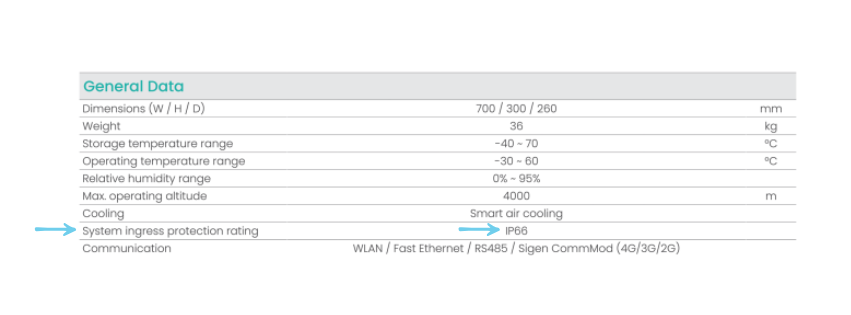
For example, if a battery has an IP66 rating:
- The first 6 means it’s completely dust-tight.
- The second 6 means it can handle high-pressure water jets from any direction (like driving rain in a storm).
So, when you’re comparing batteries, that little “IP” label is doing more work than it looks. It tells you whether the battery is only suited to a sheltered indoor location, or whether it can be installed on an exterior wall exposed to the elements.
Which IP Rating Is Right for Your Home?
Not every home battery needs the highest IP rating — but you do need one that matches where and how you plan to install it.
Here’s how to think about it:
Installing Indoors
If you’re placing the battery in a garage or enclosed space, it’s already protected from weather. In this case, an IP55 rating is usually enough. It offers basic dust protection and resistance to low-pressure water jets — more than adequate for indoor use.
For example, a battery installed in a weather-sealed garage in suburban Sydney may not need higher protection.
Installing Outdoors in a Sheltered Spot
If your battery will be mounted under a carport, eave, or on a wall with partial weather shielding, consider an IP65 rating. It offers full dust protection and handles rain or angled spray — but it still benefits from being out of direct weather.
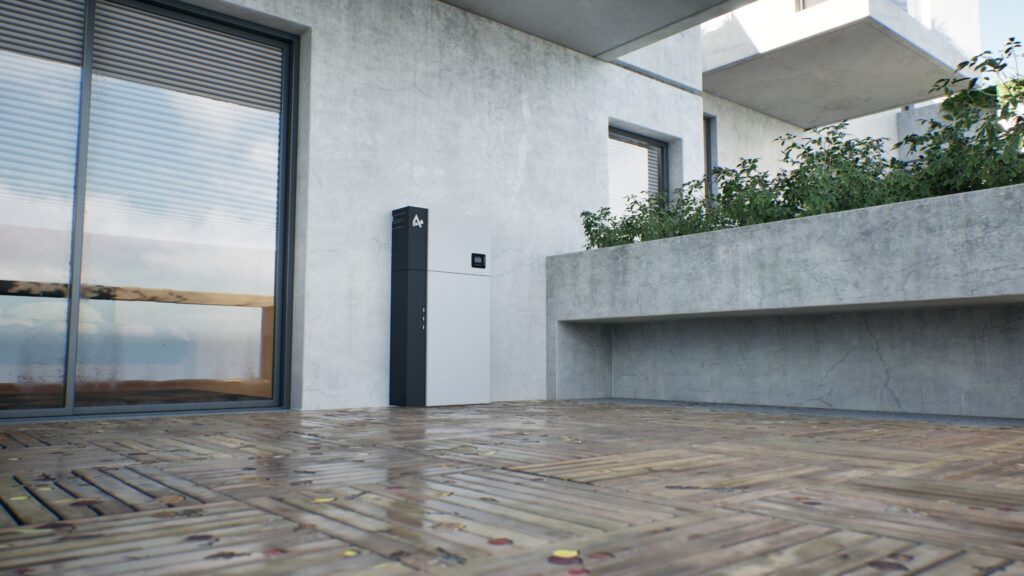
For instance, an Alpha ESS or Sungrow battery on a side wall under an eave in Newcastle would suit IP65.
Fully Exposed Outdoor Installations
For areas where your battery will face direct exposure to wind, dust, or rain — especially in places with storms, bushfire risk, or coastal salt air — an IP66 or higher rating is ideal. It ensures the battery is sealed against dust and can withstand powerful water jets (like driving rain or storm runoff).
In Brisbane’s storm season or coastal areas like Wollongong, IP66 is strongly recommended.
Flood-Prone or Persistently Wet Areas
If you live in a flood zone or a high-rainfall region with poor drainage, a battery rated IP67 may be worth considering. It can handle temporary submersion in water (typically up to 1 metre for 30 minutes), providing extra peace of mind.
For example, the Tesla Powerwall 3 has an IP67 rating, making it well-suited for exposed areas in flood-affected parts of Northern NSW.
If you’re unsure which IP rating makes sense for your home, your best next step is to compare battery models side-by-side.
You can browse a range of options — including Sigenergy, Tesla, Alpha ESS and Sungrow — on Lenergy’s solar battery page. Each listing includes the IP rating and product specs, so you can filter by what suits your location and installation type.
Can I Install a Battery Outdoors in Australia?
Yes — many solar batteries today are designed to be installed outdoors. But not all outdoor spaces are equal, and the right setup depends heavily on where you live and the conditions your battery will face.
Here are a few real-world considerations:
Queensland: Storms, Humidity, and Heat
If you’re in Brisbane or the Sunshine Coast, your battery may be exposed to intense summer storms and year-round humidity. In this case, look for at least IP66 to handle driving rain and high moisture levels. Also consider ventilation and heat dissipation — batteries don’t like extreme heat.
Canberra & Southern Highlands: Frost and Cold
Cold winters won’t necessarily damage a battery, however frost-prone areas can still expose it to moisture over time. An IP65 or IP66 rating is usually a safe bet. Just ensure the battery is installed off the ground to avoid water pooling.
Coastal NSW: Salt Air and Corrosion Risk
Living near the ocean means dealing with airborne salt, which is tough on electronics. A dust-tight enclosure (IP6X) is a must, and a location sheltered from prevailing sea breezes is recommended. Some installers also use corrosion-resistant mounting hardware.
Bushfire Zones: Dust and Debris
Inland areas and bushfire-prone zones (like parts of regional NSW or Victoria) can expose batteries to fine dust and debris. An IP66 or IP67 rating helps protect against intrusion during high-wind events and fire season fallout.
IP Rating Comparison Table
Below is a simplified guide to the most common IP ratings you’ll see on home batteries in Australia, and what each rating means in terms of dust and water protection.
| IP Rating | Dust Protection | Water Protection | Suitable For |
| IP55 | Limited protection from dust (not fully sealed) | Protected from low-pressure water jets from any direction | Indoor or garage installation |
| IP65 | Dust-tight (no dust ingress) | Protected from low-pressure water jets (e.g. rain, angled spray) | Outdoors in semi-sheltered areas |
| IP66 | Dust-tight | Protected from high-pressure water jets (e.g. storm-driven rain) | Fully exposed outdoor installations |
| IP67 | Dust-tight | Can withstand short-term immersion (up to 1 metre for ~30 minutes) | Flood-prone areas or extreme wet conditions |
Keep in mind: while IP67 batteries can handle temporary immersion, it doesn’t mean they should be installed where flooding is expected — they simply offer more resilience if the unexpected happens.
Why IP Isn’t the Only Thing to Consider
While IP ratings help you understand how well a battery can handle dust and moisture, they’re not the full story. There are a few other important factors to consider before installation:
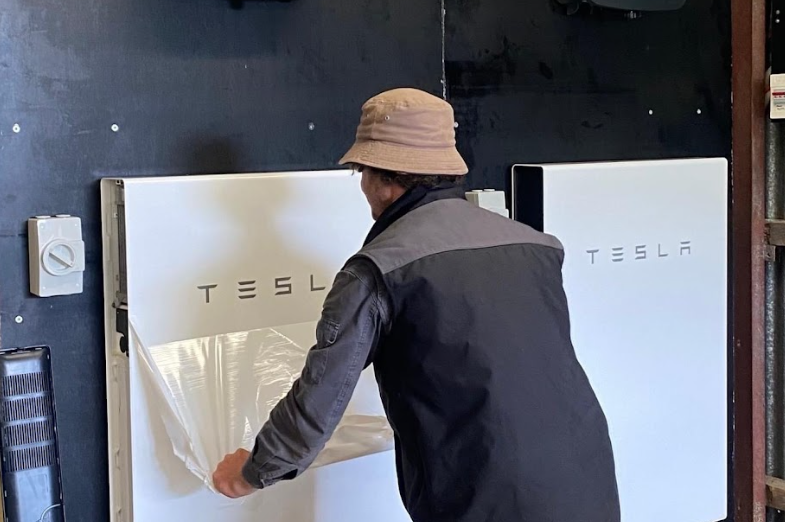
Mounting Location
Even the most weatherproof battery will last longer if it’s installed in a spot with some natural protection — like under an eave, beside a fence, or in a shaded area. This helps reduce exposure to UV, wind, and extreme heat.
Ventilation and Heat
Batteries don’t perform well in extreme heat. If you’re in a hot region, check whether the battery can safely dissipate heat — especially if it’s in a narrow side passage or an area with limited airflow.
Electrical Compliance
Your battery must be installed by a qualified professional according to Australian Standards and manufacturer guidelines. Some IP-rated enclosures also require specific clearances or mounting methods to retain their protection level.
Compatibility
Some batteries only work with specific inverters or require certain communications protocols (e.g. Alpha ESS vs Sungrow vs Tesla). Make sure your installer checks compatibility — especially if you’re retrofitting to an older solar system.
Looking to compare IP ratings across different battery brands?
Head over to Lenergy’s battery page to explore models like Tesla, Sigenergy, Alpha ESS and Sungrow — each with clearly listed specs and suitability for different home environments.