How Long Do Solar Panels Really Last? What to Expect in Australia
You’ve probably heard solar panels last “25 to 30 years.” But what does that actually mean?
Do they suddenly stop working after 25 years? Will you need to replace them before then? Or is it just a warranty number manufacturers throw around to make you feel better?
These are questions we hear all the time from homeowners trying to understand whether solar is really a long-term investment — or just an expensive experiment.
At Lenergy, we’ve installed thousands of panels across Australian rooftops — and we’ve also gone back years later to check how they’re holding up. So we’ve seen firsthand what lasts, what doesn’t, and what to look out for if you want optimal performance.
In this article, you’ll learn how long solar panels actually last in Australian conditions, what affects their performance over time, and how to separate marketing ploys from facts that matter to your bottom line.
- Do Solar Panels Really Last 25 Years (Or More)?
- How Solar Panels Degrade Over Time
- What Affects the Lifespan of a Solar Panel?
- Understanding Solar Panel Warranties
- When Will I Actually Need to Replace My Panels?
- Do Some Solar Panels Last Longer Than Others?
- What You Can Expect From a Well-Installed Solar System
Do Solar Panels Really Last 25 Years (Or More)?
Most solar panels sold today come with a performance warranty of 25 years. However, that doesn’t mean they stop working specifically on day 9,126. It just means that by the end of that period, the manufacturer expects the panels to still be operating at a certain percentage of their original output — usually around 80–85%.
In practice, most quality panels will last beyond 25 years.
It’s worth noting, though, that not all panels are created equal. A cheap panel might not make it through a decade without losing a chunk of its performance. A well-made panel from a proven manufacturer (like Aiko, REC, or Jinko) can keep producing reliably for decades.
In other words, the “25-year lifespan” is more of a baseline than a hard limit — and quality, installation, and care all play a role in how far beyond that number your panels can go.
How Solar Panels Degrade Over Time
All solar panels degrade over time. That means they slowly produce less electricity as they age. This is normal and expected with any solar panel, regardless of brand.
The important thing to understand is that this degradation happens gradually, not suddenly.
Rather than stating a single “average” degradation rate, SolarQuotes explains panel degradation by looking at performance warranties, which set the maximum amount a panel is allowed to degrade each year under warranty terms.

According to SolarQuotes, many modern solar panels sold in Australia are warranted to degrade at between roughly 0.25% and 0.55% per year, depending on the brand and model. Some premium panels are warranted at the lower end of that range, while others sit closer to the upper limit. These figures represent the worst‑case degradation allowed under warranty, not necessarily what happens in real‑world conditions.
What this means in practical terms is that a well‑made solar panel is still expected to be producing a high percentage of its original output decades after installation. Under warranty assumptions alone, many panels are guaranteed to still be producing around 88–92% of their original capacity after 25 years, depending on their warranted degradation rate.
Just as importantly, SolarQuotes notes that panels often perform better than their minimum warranty guarantees in real life, especially when they’re well installed and operating in suitable conditions.
This decline in output is steady and predictable. You don’t wake up one day to find your solar system producing half the power it did the year before. Instead, it’s a small reduction spread out over many years — something most homeowners never notice day to day.
In simple terms, degradation usually looks like this over time:
- Early years: Output remains very close to original levels
- Mid‑life: Small, gradual reductions that still leave panels producing most of their rated power
- 25+ years: Panels continue generating usable electricity, just at a slightly lower level than when new
Degradation isn’t a flaw — it’s a normal part of how solar panels work. The goal isn’t to eliminate it entirely, but to choose panels with clear, conservative warranties and a strong track record. That’s why SolarQuotes places so much emphasis on proven manufacturers and transparent performance warranties.
At Lenergy, this is exactly why we focus on Tier 1 manufacturers and panels like the Aiko Neostar 2P, which come with clearly defined degradation limits and long‑term performance backing, so you know what to expect over the life of your system.
What Affects the Lifespan of a Solar Panel?
Not all panels age at the same pace. Several factors influence how well a solar panel holds up over time — and how long it continues delivering solid performance.
1. Panel Quality
This is the biggest factor. High-quality panels from reputable manufacturers are built with better materials, undergo more rigorous testing, and are less likely to suffer from faults like microcracks, moisture ingress, or delamination.
If you’re using panels like the Aiko Neostar 2P, for example, you’re getting modern N‑Type ABC cell technology, which is designed to limit performance loss over time because it avoids some degradation mechanisms that older panel types are more susceptible to. According to Aiko’s own technical specification, these panels are warranted to degrade no more than about 0.35% per year after the first year, following an initial ≤1% drop in Year 1. Panels with lower warranted degradation figures tend to hold a higher percentage of their original output over the long term, which can make a difference in real‑world performance and long‑term energy production
2. Installation Quality
Even the best panel won’t last if it’s poorly installed. Shoddy mounting, loose wiring, or improper sealing can lead to moisture ingress, fire risk, or stress on the panel frame — all of which shorten its lifespan. And no, installers should never walk on the panels. It might look like they’re built to handle it, but foot pressure can cause microcracks in the cells, which reduces performance and accelerates degradation. Choosing a qualified installer matters just as much as the gear itself.

3. Environmental Conditions
Australia’s climate can be harsh — from the heat of Dubbo to coastal salt spray in Port Macquarie. UV exposure, heat, hail, salt, and humidity can all wear on a panel over time. That’s why it’s important to choose panels with IEC certifications for extreme conditions, like salt mist and ammonia resistance if you’re near the coast.
4. Shading and Dirt
While dirt or shade won’t directly “wear out” a panel, they can contribute to hotspots — small areas of excessive heat on a panel’s surface. Over time, this can cause cell damage. A clean, unobstructed array with proper airflow lasts longer and performs better.
Understanding Solar Panel Warranties
If you’ve been researching solar panels, you’ve likely come across two types of warranties: product warranties and performance warranties. They sound similar, but they cover different things — and it’s important to understand both before making a decision.

Product Warranty (Also Called Equipment Warranty)
This is the manufacturer’s guarantee that the panel is free from defects in materials and workmanship. If a panel fails due to a manufacturing fault within this period, it should be replaced or repaired.
- Typical length: 12 to 25 years
- Premium brands (like Aiko) often offer 25-year product warranties
This is your first line of protection. A longer product warranty often indicates the manufacturer’s confidence in build quality — and gives you peace of mind if something fails early.
Performance Warranty
This warranty guarantees how much power your solar panels will produce over time. It doesn’t cover defects — instead, it sets a minimum expected energy output (usually 80–85% of the original capacity after 25 years). Nearly all modern panels come with a 25-year performance warranty. It helps you understand how the panel is expected to degrade — slowly and predictably — over its life.
What the Warranties Don’t Tell You
Warranties are useful, but they’re not crystal balls. They don’t mean your panel will fail after 25 years — just that the manufacturer won’t guarantee its output beyond that point. Many panels continue operating well for 30 years, especially if they’re well cared for.
The real value is this: good warranties plus good installation equals long-term confidence.
When Will I Actually Need to Replace My Panels?
This is one of the most common — and most misunderstood — questions about solar.
The truth is, you usually don’t need to replace your panels just because the warranty ends. Most quality solar panels keep generating power well beyond 25 years. Instead, panel replacement typically only happens for a few practical reasons:
1. Severe Physical Damage
Panels can crack, break, or delaminate if hit by falling branches, major hailstorms, or installation faults. In these cases, the panel may stop working entirely — and you’ll need to replace it to keep your system running efficiently.
2. Performance Drops Too Low
If your panels degrade faster than expected and fall below the performance warranty threshold, you might consider a warranty claim — or simply choose to upgrade if they’re no longer meeting your energy needs.
3. System Upgrades or Expansion
Sometimes people replace panels not because they’ve failed, but because their energy needs have changed. Maybe you’ve added a pool pump, air con, or an EV — and your original system is no longer cutting it.
4. Roof Renovation or Re-roofing
If you’re replacing your roof or adding an extension, panels may need to be temporarily removed — and occasionally, older panels get replaced during the process, especially if newer, more efficient options are available.
Bottom line: panel replacement isn’t a scheduled event. It’s something that happens when there’s damage, performance drops below acceptable levels, or your energy needs change. For most homeowners with quality gear, that’s decades down the track.
Not Sure If Your Panels Need Replacing?
If you’re noticing a drop in performance or your system’s over 10 years old, it might be time for a check-up. At Lenergy, we can assess the health of your panels, help you understand if they’re still working as they should, and talk through your options if a replacement or upgrade is worth considering.
Do Some Solar Panels Last Longer Than Others?
Absolutely — not all solar panels are built to the same standard. Some brands degrade faster, are more prone to faults, or simply don’t have the same track record for long-term reliability.
If your goal is to install once and have it last 25–30 years, here’s what to look for:
Panel Type Matters
Modern N-Type panels typically last longer than older P-Type panels. They degrade slower, have better resistance to light-induced degradation, and often perform better in heat.
Lenergy installs Aiko Neostar 2P panels, which use N-Type, All-Back-Contact (ABC) technology. These panels are among the most efficient and durable available — and they come with a 25-year product and 30-year performance warranty.
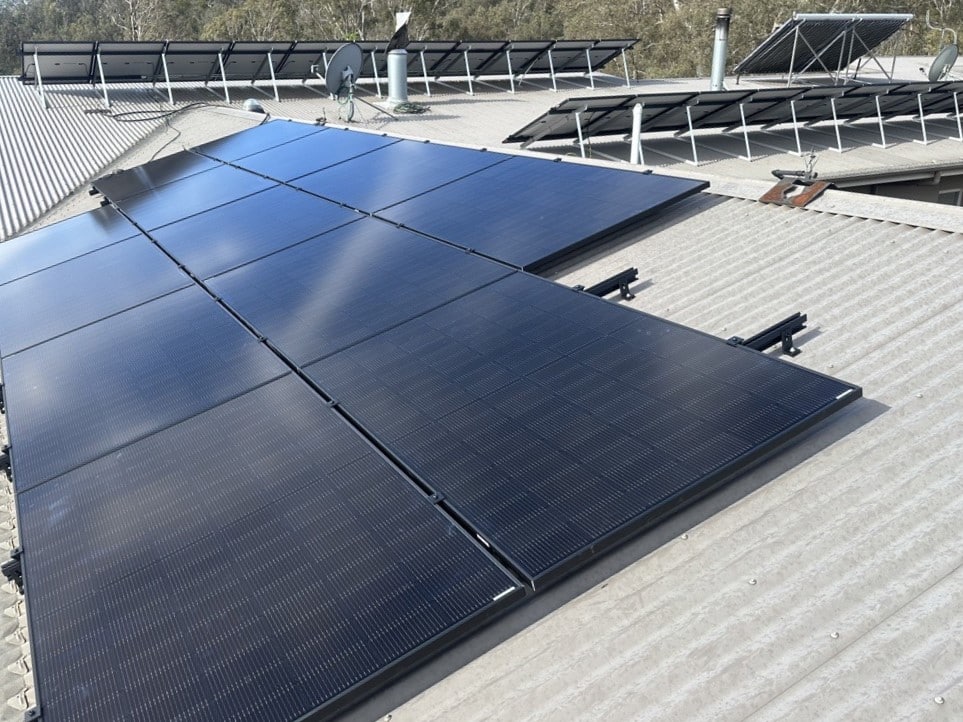
Panels built with modern N‑Type cell technology are generally more resistant to certain degradation mechanisms — such as light‑induced degradation — compared with many older P‑Type panels, which can help them retain a higher proportion of their original power output over years of use.
When evaluating brands, a manufacturer’s inclusion on BloombergNEF’s Tier 1 list indicates strong financial backing and bankability, which can be reassuring for long‑term support and warranty fulfilment. However, Tier 1 status alone isn’t a technical quality rating — it’s one of several factors to consider.
High‑quality panels should also be tested to recognized industry standards for issues like potential‑induced degradation (PID), salt mist corrosion, and mechanical load resistance. These independent tests help verify that panels can cope with real‑world stresses over decades of service
What You Can Expect From a Well-Installed Solar System
If you’re buying quality panels, working with a reputable installer, and keeping your system in good condition, you can expect your solar panels to last 25 years — and then some.
Yes, performance will gradually taper off. However, well-chosen solar panels don’t just stop at year 25. They keep producing usable energy, often well into their third decade, with minimal maintenance and no moving parts.
Here’s what it comes down to:
- Choose proven, durable technology (like N-Type panels)
- Avoid cheap panels with unclear origins
- Work with an installer who knows how to mount panels securely and protect your roof
- Keep your panels clean and your system monitored
Do that, and you’re setting yourself up for decades of savings — not just a quick return.
At Lenergy, we install systems designed to go the distance — because solar isn’t just about today’s power bill. It’s about making a smart, long-term decision that still makes sense ten or twenty years from now.