Can Renters Finally Access Solar? A Clear, Candid Guide to Queensland’s Supercharged Solar for Renters Rebate
If you’re renting in Queensland, you’ve probably wondered:
Why do homeowners get solar savings — but renters don’t?
Electricity prices shift. Rooftop solar is everywhere. However, if you don’t own the roof, installing panels hasn’t really been an option.
For landlords, the hesitation is just as common: Why invest in solar if the tenant receives the bill savings?
The Queensland Government’s Supercharged Solar for Renters program is designed to solve this problem.
This article will break down how much the rebate is, who qualifies and whether it is worth the investment for both the Landlord and the tenants.
What Is the Supercharged Solar for Renters Program — and Why It Matters for Queensland Tenants
The program provides a government rebate to eligible landlords to install rooftop solar systems on rental properties.
The latest funding round opened on the 12th of December 2025 and is capped at 6,500 properties statewide. Once those allocations are approved, the round closes.
The goal is simple:
- Lower electricity costs for eligible tenants
- Encourage landlords to install solar
- Improve the energy efficiency of Queensland’s rental housing
Unlike most solar rebates, this one specifically targets rental properties — a sector traditionally excluded from rooftop solar benefits.
How Much Is the Rebate? The Real Numbers Behind Queensland’s Solar for Renters Scheme
The rebate amount depends on the size of the solar system.
System capacity refers to the inverter size or total panel capacity — whichever is lower.
Here’s the official breakdown:
| Solar PV System Capacity | Rebate Amount |
| At least 3 kW but less than 4 kW | $2,500 |
| At least 4 kW but less than 5 kW | $3,000 |
| 5 kW or more | $3,500 |
The minimum eligible system size is 3 kW.
There is no upper size limit — but the maximum rebate remains $3,500 once the system reaches 5 kW.
Landlords must also contribute a minimum of $1,500 toward the system cost.
In practical terms, most systems installed under this program will likely sit in the 4–6.6 kW range, depending on roof space and budget.
Because the rebate plateaus at 5 kW, landlords choosing to install larger systems will have to fund the additional capacity themselves.
That doesn’t prevent larger installations — it simply means the government contribution stops increasing beyond that point. Which unfortunately means that these systems are likely not going to be large enough to fully cover a home’s needs.
Who Qualifies for the Supercharged Solar for Renters Rebate? Eligibility Explained Simply
Both landlord and tenant must qualify.
Tenant Income Thresholds (December 2025 Round)
Combined annual household taxable income must be:
- Up to $66,667 for a single adult household
- Up to $100,000 for households with two or more adults
The tenant must be on a valid lease and consent to the application.
Landlord Requirements
The landlord must:
- Own a Queensland rental property
- Install a minimum 3 kW grid-connected system
- Use an accredited installer
- Agree not to increase rent above CPI for at least 12 months after installation
If the tenant moves out later, the system remains with the property.
How Much Could Tenants Actually Save on Power Bills? A Realistic Look at Solar Savings
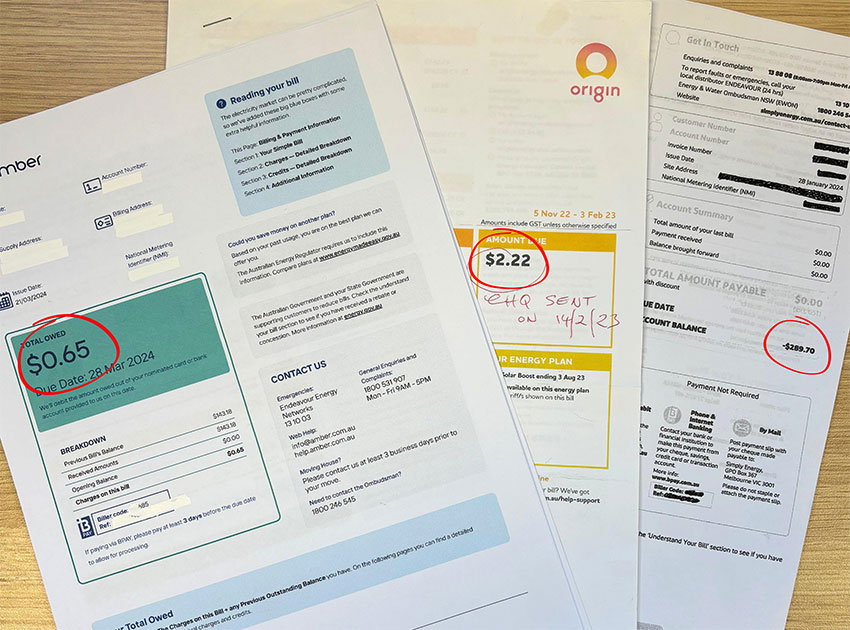
Solar savings depend largely on daytime electricity usage. So it will depend on whether the tenant is able to adjust their usage habits. With feed in tariffs dropping as low as they are these days, the tenant will have to work towards day time usage if they want to see substantial savings.
For a typical 4–6 kW system in Queensland:
- Annual generation: roughly 6,000–8,500 kWh
- Estimated bill reduction: $400–$1,000 per year, depending on usage patterns
The government provides a Solar for Rentals Calculator to model potential savings.
What solar won’t do:
- Remove daily supply charges
- Eliminate evening grid usage
- Include battery storage
Because batteries are not part of the program, excess daytime energy is exported at standard feed-in tariffs, and evening demand still relies on grid power.
This keeps costs lower — but with feed in tariffs dropping to almost zero these days it limits how much of the total bill can be offset.
Is the Program Worth It for Landlords? The Hidden Value of Solar on Rental Properties
The return for landlords isn’t direct electricity savings — it adds value to their asset..
With government funding covering up to $3,500, the required capital contribution is modest compared to many other upgrades.
Rental Appeal
Solar can make a property more attractive to cost-conscious tenants and may reduce vacancy risk.
Property Value
Broader market data supports solar as a value-adding feature.
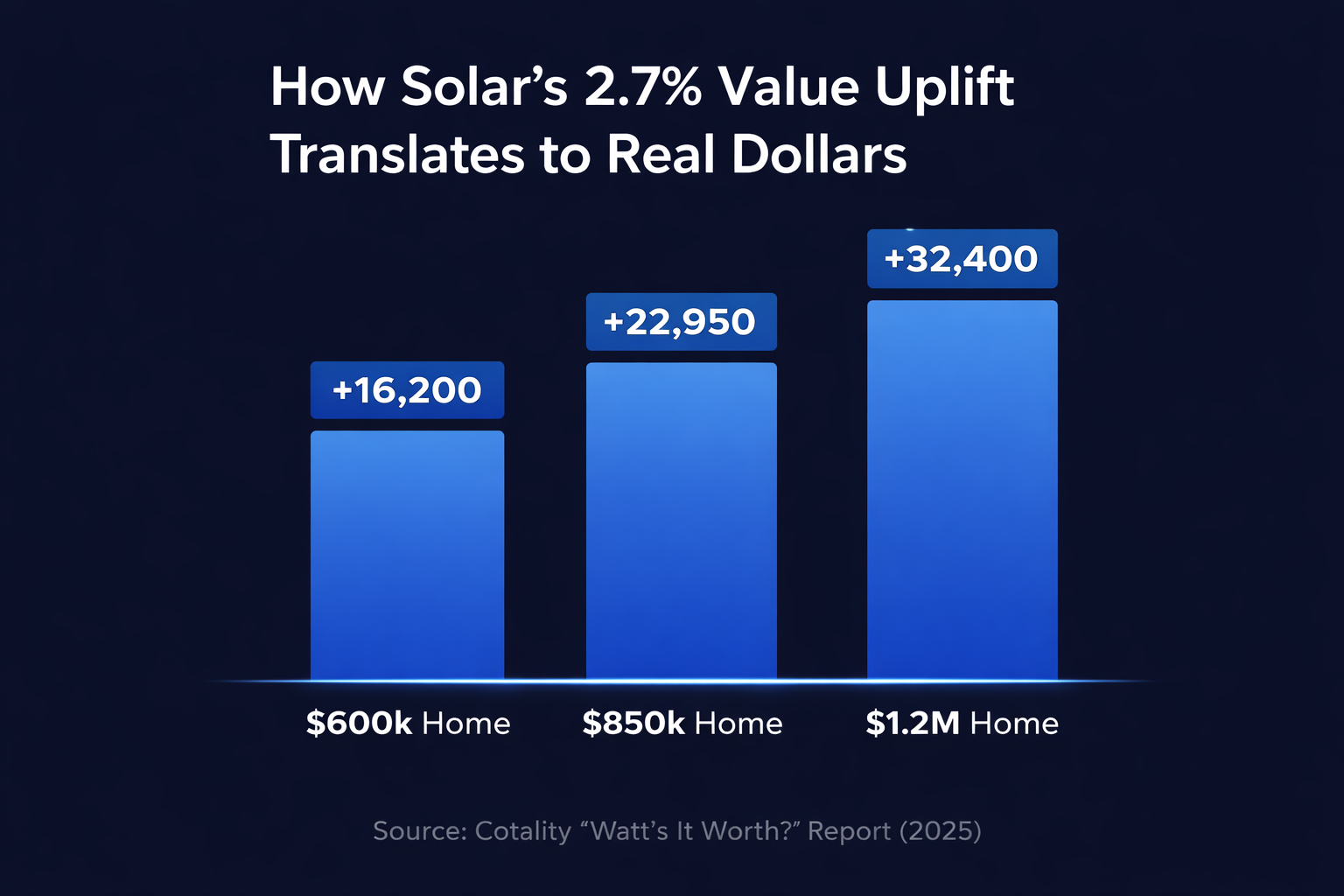
Recent analysis from property insights firm Cotality found in their report Watts It Worth, that Australian homes with solar panels can sell for thousands more than comparable properties without solar.
While that research relates to home sales rather than rentals, it reflects a clear market trend: solar is increasingly viewed as a desirable property feature.
For long-term landlords, installing solar under a co-funded scheme may strengthen resale appeal in future.
Could These Systems Become Undersized? The Quiet Trade-Off Behind the Rebate Structure
Because the rebate tops out at 5 kW in value terms, some installations may be sized to meet — but not exceed — that threshold.
That may mean:
- Partial bill offset rather than full coverage
- No battery storage
- Future expansion funded privately if energy needs increase
The program prioritises access and affordability rather than maximum system capacity.
For many renters, some bill reduction now may be more valuable than waiting for a fully future-proofed solution.
Pros and Cons of the Supercharged Solar for Renters Rebate
Pros
- Tiered rebate up to $3,500
- Lower electricity bills for eligible tenants
- Improved rental competitiveness
- Permanent property upgrade
Cons
- Income restrictions apply
- No battery included
- Savings depend on daytime usage
- Larger systems require additional landlord funding
Final Thoughts: Is the Supercharged Solar for Renters Program a Good Deal?
Well its a step in the right direction.
The Supercharged Solar for Renters program creates a structured, co-funded pathway for rental properties to install rooftop solar.
It won’t eliminate power bills.
It doesn’t include batteries.
It may not fully offset high-consumption households.
However, it does lower the barrier meaningfully.
For eligible tenants and long-term landlords, it’s a practical step toward more energy-efficient rental housing in Queensland.
To learn more about the solar industry check out our Lenergy Learning Centre, where we post articles all the time keeping consumers up to date on everything solar.