Mistakes to Avoid When Buying a Solar Battery
Buying a solar battery in 2026 can be overwhelming
With the federal battery rebate in full swing and electricity prices climbing, interest in home batteries has never been higher. But while the ads make it sound simple — “grab your rebate and start saving” — the reality is a little trickier. From choosing the wrong size, to falling for a too-good-to-be-true finance offer, to missing out on thousands in rebates because of poor timing, we’ve seen too many homeowners make decisions they regret later.
At Lenergy, we’ve helped hundreds of Australian families choose solar and battery systems that actually fit their lifestyle and save them money. We have also seen the common mistakes that trip people up — the ones that are often overlooked until it’s too late.
In this blog, you’ll learn what not to do when buying a battery in 2026. We’ll cover the technical traps, timing mistakes, and dodgy deals to avoid — and show you how to set yourself up with a system that works now and well into the future.
- 1. Jumping In Without Doing the Maths
- 2. Assuming All Batteries Are Created Equal
- 3. Ignoring the CEC Approval List
- 4. Underestimating Installation Compatibility and Limitations
- 5. Being Sold on a ‘Bargain Battery’ That Isn’t a Bargain
- 6. Choosing a Battery That’s Too Small for Your Needs
- 7. Waiting Too Long and Missing Out on the 2026 Rebate Window
- 8. Overlooking What You Want To Achieve Long-term
- How to Avoid Regret and Choose the Right Battery
1. Jumping In Without Doing the Maths
One of the biggest mistakes homeowners make is buying a battery without understanding their actual energy use. It’s easy to get swept up in the idea of “saving money” or “being more independent,” but unless you’ve looked at how much power you use — and when — you’re flying blind.
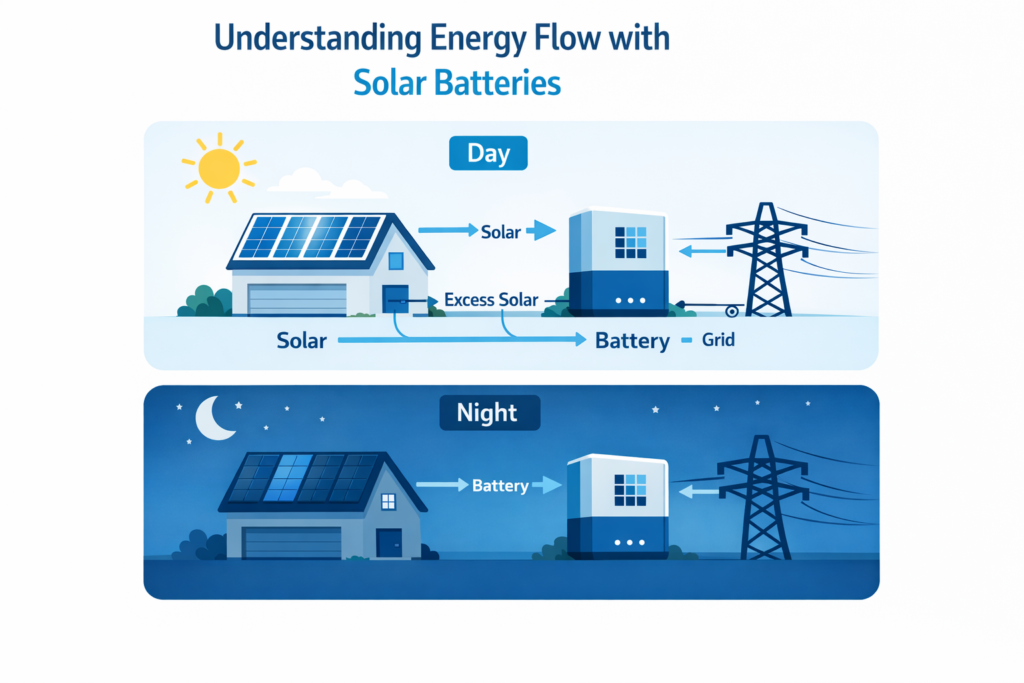
Solar batteries save you the most when they’re storing solar power that you would otherwise send to the grid for a low feed-in tariff, and then discharging it when you’d normally be buying expensive electricity. That’s called self-consumption, and it’s where batteries shine.
However, every household’s pattern is different. Some use more power in the evenings, others during the day. If you’re not home when the sun’s out — or if your solar system doesn’t produce much excess energy — your battery might sit half-empty and take years longer to pay off.
A quick way to check your numbers:
Even if your bill doesn’t break down what times you are using electricity, you can still get a solid read on whether a battery will help.
- Start by comparing your average daily imports and exports. Most energy bills will show how many kilowatt-hours (kWh) you import from the grid and how much excess solar you export. If your export number is high — and you’re still importing a decent amount — a battery could store that excess and offset your evening use.
- If you have a monitoring app, check when your usage spikes. If most of your power use happens after sunset (e.g. cooking, heating, entertainment), your solar isn’t helping during those hours — and that’s exactly where a battery fits in.
- Not sure why your bill’s still high? Without a battery, your excess solar is often sold to the grid for just 0–5 cents per kWh — only to be bought back later for 30–50 cents per kWh. That’s why aligning your solar with your usage matters — and batteries are the tool that makes that possible.
More can be found on this in our article – “I Have Solar — Why Am I Still Getting an Electricity Bill?”.
Still unsure? Ask your installer for a consumption model based on your bills and system data. It’s the fastest way to get a reality check on whether a battery stacks up.
2. Assuming All Batteries Are Created Equal
It’s tempting to think all solar batteries do the same thing — store excess energy and release it when you need it. However, the truth is, there are major differences between brands, technologies, and features that can affect your savings, flexibility, and reliability over time.
Key factors that separate one battery from another:
- Battery chemistry: Most modern batteries use lithium-ion, but there are different types. Lithium iron phosphate (LiFePO4), for example, is known for being safer and more thermally stable. Other chemistries may offer higher energy density but shorter life spans.
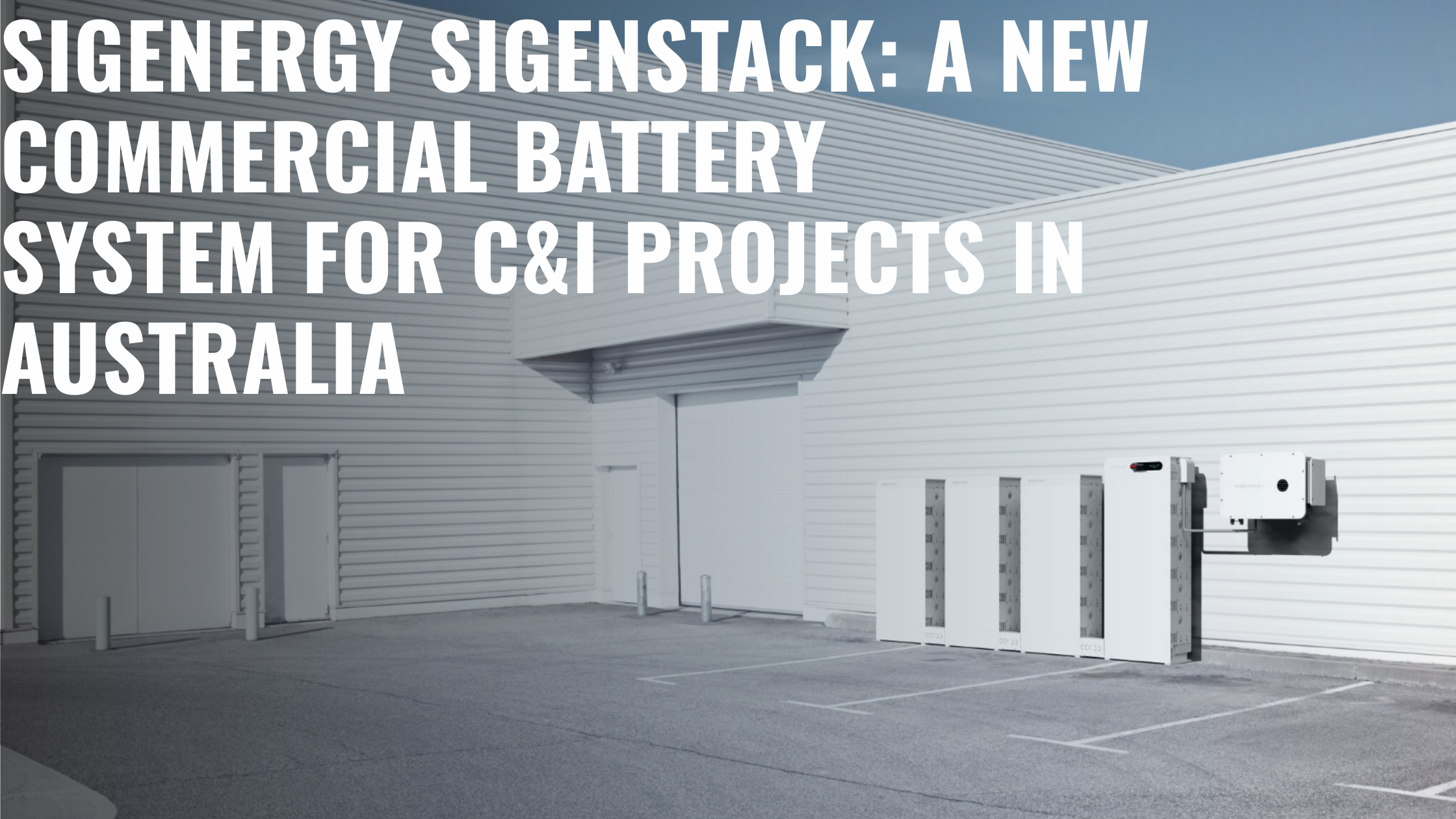
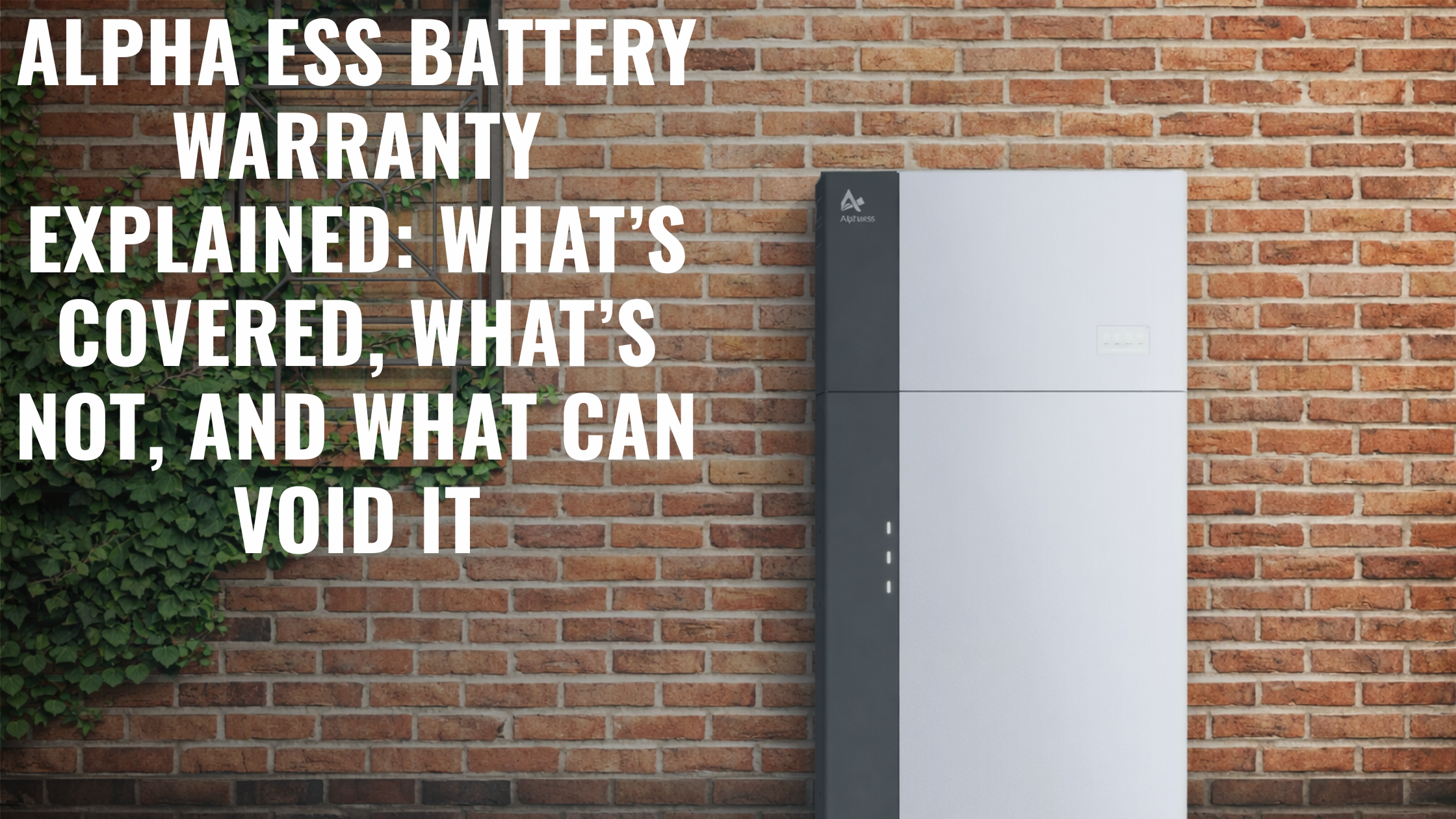
- Round-trip efficiency: This is how much of your solar energy the battery stores and successfully delivers back to your home. The Sigenergy SigenStor, for example, offers up to 98% round-trip efficiency when DC-coupled — meaning almost no energy is lost between storage and use. In comparison, the AlphaESS SMILE-G3-S5 battery system lists a maximum inverter efficiency of 97.3% and a Depth of Discharge (DoD) of 95%, with real-world round-trip efficiency typically estimated between 90–93% . While a few percentage points may not seem like much, over 10+ years of daily charging and discharging, this can add up to hundreds of kilowatt-hours — and hundreds of dollars either saved or lost.
- Backup capability: Not all batteries provide backup power during blackouts. Some need additional hardware, while others may only support partial home backup. If you want peace of mind during outages, confirm whether your system supports whole-home or essential-load backup — and what’s included in the quote. Good examples of batteries that provide full blackout protection are the Tesla Powerwall 3 and the Sigenergy Enstor.
- Scalability: Some systems let you add more capacity later. Others don’t. If you’re planning to increase your energy use in future — say with an EV, pool, or electric heating — it’s smart to choose a battery that lets you scale up without replacing everything.
- Monitoring and smart features: Most systems offer basic app monitoring, but some are far more advanced. Look for smart batteries that can learn your usage patterns, respond to energy price signals, and help you optimise savings without needing to babysit the system.
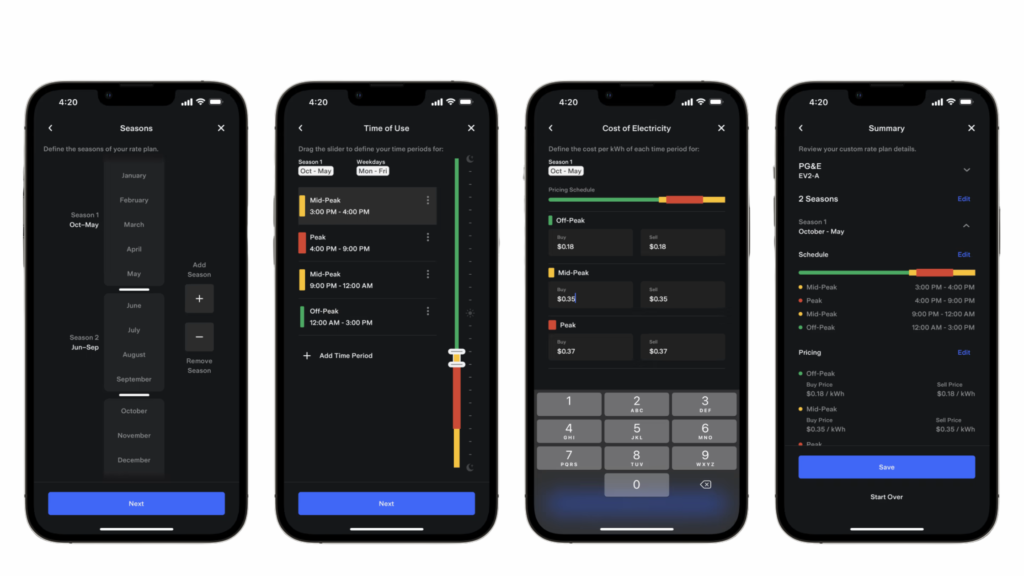
- Warranty and local support: Most batteries come with a 10-year warranty — but what’s actually covered, and for how long, can vary a lot. Some warranties are based on time alone. Others are capped by how much energy the battery stores and discharges over its life — called energy throughput. If you cycle the battery heavily, that type of warranty could run out earlier than expected.
Here’s how some of the better-known brands compare:
- Enphase IQ Battery 5P
Offers a 15-year warranty in Australia, and it’s based on time — not capped by usage for most households. That means even if you use it daily, you’re covered. Enphase also has strong local support if something goes wrong. - Sigenergy SigenStor
Comes with a 10-year warranty, and is designed with modular parts. If one battery unit fails, it can be replaced without touching the rest. That makes it easier and cheaper to maintain long-term. - Sungrow SBH Battery
Also has a 10-year warranty, while it’s mainly time-based, the battery needs to be used within certain limits (which your installer should explain). It’s a popular choice because Sungrow has good reliability and Australian support. - Tesla Powerwall 2 & 3
The Powerwall 2 comes with a 10-year warranty, but it also includes a cap of 37.8 megawatt-hours (MWh) of total energy use. If you cycle the battery heavily — such as in a Virtual Power Plant (VPP) or full-home backup scenario — you could reach that limit before the 10 years are up. The newer Powerwall 3, however, does not have a specified throughput cap in its Australian warranty. It offers a straight 10-year time-based warranty, which is simpler and more flexible for everyday users — as long as the unit remains properly connected and maintained.

3. Ignoring the CEC Approval List
Not all batteries sold in Australia are created equal — and not all of them qualify for government rebates. One of the most overlooked but critical checks is making sure the battery you’re considering is on the Clean Energy Council (CEC) Approved Products List.
Why it matters:
To be eligible for rebates under the Federal Battery Incentive or any state-level Virtual Power Plant (VPP) schemes, your battery must be on the CEC’s approved list. This ensures:
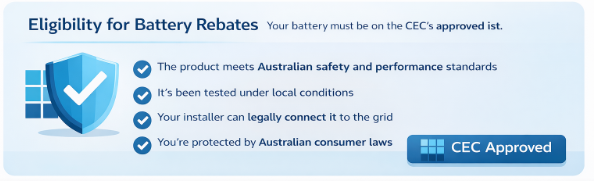
If you skip this step and install an unlisted battery, you could lose thousands in rebates — and be left with a product that can’t be serviced locally or supported under warranty.
Where to check:
The CEC publishes an up-to-date Approved Batteries List showing usable and nominal capacities, safety certifications, and recent updates. For example:
- Alpha ESS, Enphase, and Sigenergy all appear in recent updates with revised capacity ratings.
- Even reputable brands regularly revise their listed specs — so double-check the model number against the official document before signing anything.
If the battery brand or model you’re being offered isn’t listed, walk away — or ask your installer why.
4. Underestimating Installation Compatibility and Limitations
It’s easy to assume any battery can be plugged into your existing solar system — but that’s not always the case. Not every battery works with every inverter, and some setups require extra gear or cabling that can add thousands to your install cost.
Things that often get overlooked:
- Inverter compatibility matters — but it’s usually solvable:
For example, the AlphaESS SMILE-G3-S5 is a hybrid battery system with its own built-in inverter, typically used in new solar + battery installs. But if you already have a solar system with a non-hybrid inverter, that’s not a dealbreaker. You can simply AC-couple the AlphaESS battery — installing it as a separate system that works alongside your existing panels. This is a common setup for retrofits and doesn’t require you to replace your current inverter. Just make sure your installer includes any additional components (like a smart meter or switchboard isolator) needed to make the two systems work smoothly together. - The Sigenergy SigenStor can be either AC- or DC-coupled. DC-coupling gives you higher efficiency and is ideal for full new systems, while AC-coupling makes it a clean retrofit for homes that already have solar installed.
- Three-phase homes need extra planning: If your home uses three-phase power (common in larger houses or homes with ducted air con), not all battery systems can provide full backup across all three phases. The SigenStor stands out here — it’s one of the few systems that can support three-phase whole-home backup, while many others (including AlphaESS) only back up a single phase unless extra hardware is added.
- Switchboard upgrades aren’t always optional: Depending on your existing setup, installing a battery may require switchboard upgrades, extra circuit protection, or isolator switches. These can add hundreds — or even thousands — to the install if not accounted for upfront.

What to do:
Before you commit, ask your installer:
- Will this battery work with my existing inverter?
- Is it AC- or DC-coupled, and which suits my setup?
- Can it back up my whole home (especially if I’m on three-phase)?
- Will I need any switchboard upgrades, isolators, or new cabling?
- Is everything quoted upfront?
The key is to make sure the system you’re buying is designed for your house, your power supply, and your usage patterns — not just what’s convenient for the installer to sell.
5. Being Sold on a ‘Bargain Battery’ That Isn’t a Bargain
Every week, people get pulled in by battery quotes that seem way cheaper than the rest. But once the install is done — or even halfway through — the real costs begin to surface.
These cut-price quotes often hide crucial details like:
- The brand and model of the battery (or a vague promise of “premium quality”)
- Whether backup power is included
- What’s excluded from the install (e.g. switchboard upgrades, cabling, software setup)
- Who actually honours the warranty — and whether there’s any local support at all
Some of the lowest battery prices advertised online are only achievable because:
- The rebate is quietly pocketed by the installer instead of passed through to you
- The battery is a lesser-known or unapproved brand not on the CEC list
- Essential features like blackout protection, smart monitoring, or even a basic warranty are left out
- You’re locked into a non-refundable deposit before seeing the full scope of the system
What starts as a cheap deal can quickly balloon into:
- A system that doesn’t meet your needs
- Add-on costs for extra hardware or installation steps
- Frustration when support is slow — or nonexistent
What to do instead:
- Ask for a full itemised quote that includes make, model, battery size, and key features
- Check if the battery is CEC-approved
- Confirm whether blackout protection, monitoring, and smart controls are included
- Avoid quotes that don’t clearly show where the rebate goes
- Stick with installers who provide transparent pricing and explain what’s included — and what’s not
If the price looks too good to be true — and the details are vague — you’re probably not getting the deal you think you are.
6. Choosing a Battery That’s Too Small for Your Needs
Many homeowners are tempted to “just get a small one for now.” However, with the federal battery rebate only available once per home, and the amount you receive tied directly to the size of your battery, going small can mean missing out on thousands in support — and a system that underdelivers for years to come.
How the rebate actually works:
Under the Updated Federal Cheaper Home Batteries Program, rebate amounts are based on your battery’s usable kilowatt-hour (kWh) capacity, using a sliding STC (Small-scale Technology Certificate) factor:
- 0–14 kWh: You receive 100% of the rebate rate per kWh
- >14–28 kWh: You receive 60% of the rate for any kWh above 14
- >28–50 kWh: You receive 15% of the rate for any kWh above 28
- >50 kWh: No additional rebate applies (capped at 50 kWh)
View the Smart Energy Council rebate tier chart
That means you still receive some rebate benefit all the way up to 50 kWh — and in many cases, oversizing pays off both upfront and over time.
Why going bigger makes sense
- A 20–28 kWh system hits the sweet spot for families with higher evening usage, electric vehicles, or electric heating. You’ll get most of the rebate and plenty of storage for shifting your energy use off the grid.
- Going to 40–50 kWh maximises future flexibility. Even though the rebate per kWh drops significantly after 28 kWh, you’re future-proofing against rising usage, time-of-use pricing, and potential VPP participation — especially if you plan to electrify your home or add a second EV. This option is also great for solar systems that are not producing enough energy as it provides plenty of spare storage that can be force-charged from the grid.
- Smaller batteries (under 14 kWh) leave little room to grow. You may save money upfront, but you’ll lose out on rebate value and need to draw more power from the grid during peak times — exactly when energy is most expensive.
And remember: you only get one shot.
Because the rebate is only available once per household, most experts now recommend sizing your battery to meet not just today’s usage — but tomorrow’s needs too. Oversizing now is usually more cost-effective than replacing or upgrading later.
7. Waiting Too Long and Missing Out on the 2026 Rebate Window
The federal battery rebate has been a game-changer — but from 1 May 2026, it’s about to get less generous.
According to the Smart Energy Council, the rebate changes are part of a planned adjustment to ensure the long-term viability of the program. While the CHBP is still backed with $5 billion in funding and expected to support over 1.25 million battery installs by 2030, the window to maximise your return is now.
What’s changing in May 2026?
The federal rebate is tiered based on your battery’s usable capacity. From 1 May 2026, the STC factors used to calculate the rebate will be reduced. That means:
- A battery installed in April 2026 could receive up to $1,000 more than the same battery installed in June
- The per-kWh rebate value will drop across all tiers, affecting systems of all sizes
- You’ll still receive a rebate — but the total amount will be significantly lower
What does that look like in real dollars?
| Battery Size | Rebate If Installed Before May 2026 | Rebate If Installed After May 2026 | Savings Lost |
| 15 kWh | $5,040.00 | $3,960.00 | $1,080 |
| 30 kWh | $10,080.00 | $6,160.00 | $3,920 |
| 50 kWh | $16,800.00 | $6,960.00 | $9,840 |
The Smart Energy Council put together a comprehensive graph that shows just how much homeowners stand to lose if they delay:
Why act now?
- Installers are already booking out — especially for large or complex installs
- Battery prices are rising due to global demand and supply chain pressure
- Delaying could mean missing the rebate entirely if you can’t get installed in time
If you’re planning to add a battery in 2026, the next few months are your best chance to lock in the higher rebate and avoid disappointment.
8. Overlooking What You Want To Achieve Long-term
Too often, homeowners choose a battery based only on what they need right now — without thinking about how their electricity use might grow or what they want the battery to do long-term. This short-term mindset can lead to frustration, underperformance, and missed opportunities.
Ask yourself: what do you want your battery to do — now and in future?
Here are some common priorities — and why they matter when choosing the right system:
- Provide backup power during blackouts
If energy security matters to you, make sure the battery includes blackout protection — and check what it actually covers. Some systems only support a few circuits, like your fridge and lights. Others, like Sigenergy’s SigenStor, support whole-home backup, even in three-phase homes. - Lower your power bills through load shifting
Many homes are now on time-of-use tariffs, where evening electricity is far more expensive than daytime power. A battery lets you store your excess solar and use it during these peak pricing windows — especially useful if your evening usage is high. - Join a Virtual Power Plant (VPP)
If earning money from your battery appeals to you, look into VPP programs that pay you to export stored energy back to the grid during demand peaks. Most VPPs require 10 kWh or more of capacity, and not all batteries are compatible — so check if the system is VPP-ready. - Support future electrification
Planning to buy an EV, get rid of gas heating, or install a pool or spa? These changes will all increase your power use — especially in the evenings. Installing a larger battery now (e.g. 20–50 kWh) helps cover this extra demand without needing an expensive upgrade later.
Your battery is a long-term investment
A well-chosen battery should support your home for the next 10–15 years. That means:
- Thinking ahead to how your usage might change
- Choosing a system with the flexibility to grow
- Making sure it can deliver on the things that matter most to you — whether that’s lower bills, blackout protection, or earning from a VPP
If you’re not sure what your future usage might look like, a good installer should help you model different scenarios and recommend a system that gives you room to grow. Chat to our team at Lenergy for a no obligation energy assessment.
How to Avoid Regret and Choose the Right Battery
Buying a solar battery isn’t something you do every day — and once it’s installed, you’re living with that choice for the next decade or more. That’s why taking the time to understand your energy use, your future plans, and how the rebate works can make a huge difference in both your savings and your satisfaction.
Here’s a quick checklist to avoid the most common mistakes:
- Run the numbers — don’t guess at savings or size
- Make sure the battery is CEC-approved for safety and rebate eligibility
- Choose a system that’s compatible with your existing setup — or get a clear plan for upgrades
- Don’t go too small — the rebate only applies once, and future expansion isn’t always easy
- Act before May 2026 to avoid losing thousands in rebate value
- Think about your long-term goals — like EVs, electrification, and blackout protection
If you’re after more guidance on how to make a smart battery decision, check out this in-depth guide:
A good battery can cut your bills, reduce your reliance on the grid, and future-proof your home. But only if it’s the right battery — for you, your house, and your goals