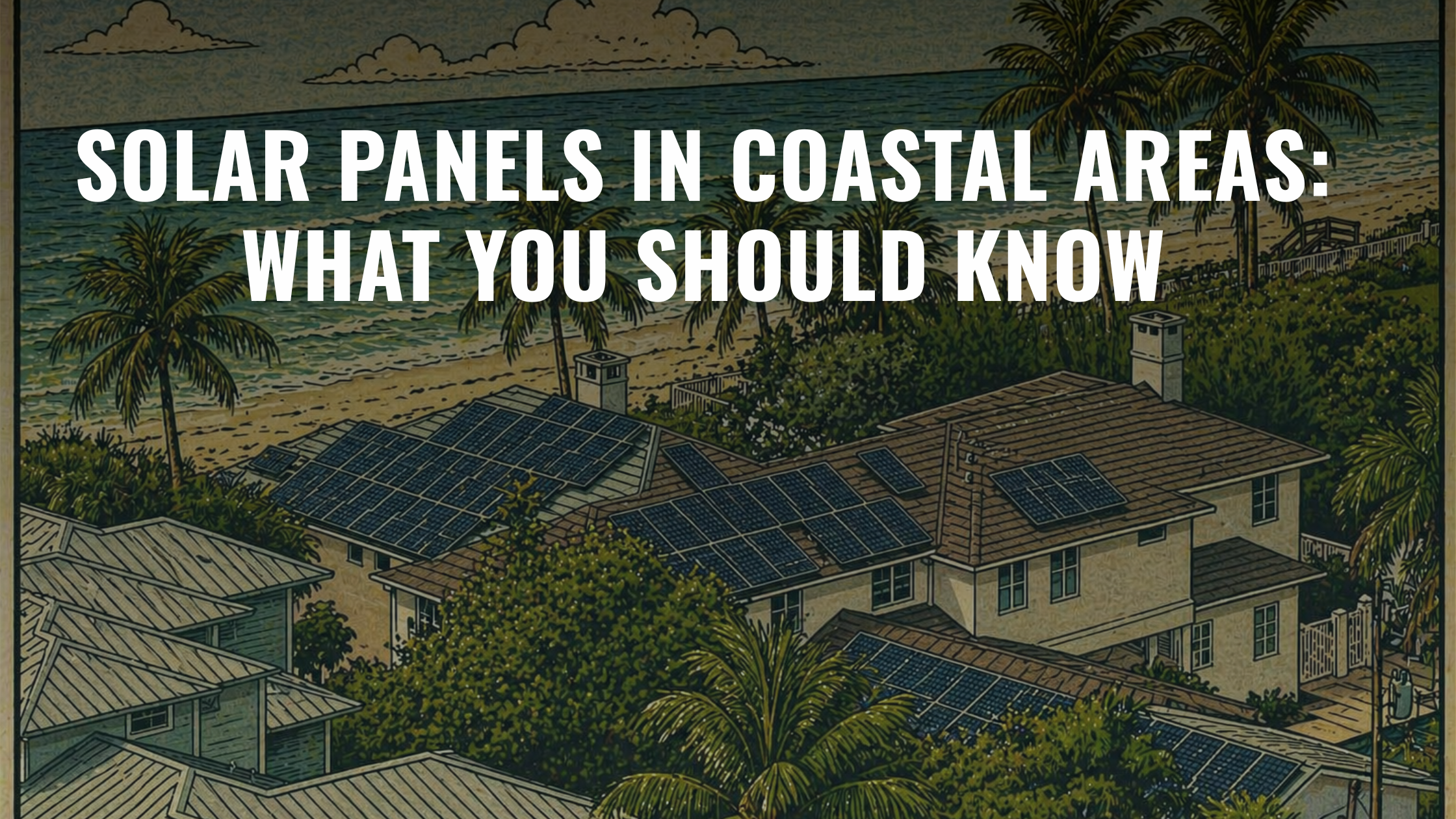
Solar Panels in Coastal Areas: What You Should Know
If you live on the coast, you already know about the impact the environment has on exterior items and surfaces on your home. You’ve seen rust on fence posts and door handles, salt crust on windows, and paint peeling off surfaces that would last decades somewhere else. It’s reasonable to wonder whether solar panels are any different, and whether the investment holds up when the conditions are working against it.
Coastal conditions do create challenges that don’t apply to homes further inland. The good news is that with the right products, the right installer, and a basic maintenance routine, those challenges are manageable. Solar works well on coastal homes. It just needs to be done properly.
In this article, you’ll learn:
- What coastal conditions actually do to solar panels and batteries
- What certifications and ratings to look for when choosing products
- How installation decisions affect how long your system lasts
- What maintenance a coastal solar system actually requires
- Whether a coastal location should change your decision to invest in solar and batteries
What Does Salt Air Actually Do to Solar Panels?
Salt mist is the primary threat to solar systems in coastal areas. Sea spray carries salt particles inland, and depending on how exposed your property is, that salt can reach 100 to 200 metres from the shoreline in sheltered areas, and further in locations exposed to strong prevailing winds.
Salt doesn’t damage the solar cells themselves. What it attacks is everything around them: the aluminium frames, electrical wiring, junction boxes, connectors, and mounting hardware. Over time, salt settles on these surfaces, mixes with humidity, and forms a corrosive film that degrades metal components, increases electrical resistance, and in some cases causes components to fail well before the end of their expected lifespan.
Salty grime on the panel surface itself is also worth factoring in. A build-up of salt and organic biofilm can reduce panel output by up to 10 per cent. This isn’t a reason to avoid solar, but it does mean that coastal homeowners need to factor in cleaning as part of their ongoing maintenance plan.
A practical way to gauge how exposed your property is to look at nearby metal objects like fence posts, letterboxes, door handles, and air conditioning units. If they show signs of rust, your property is in a corrosion-risk zone and product selection matters.
What Should You Look for in a Solar Panel for a Coastal Home?
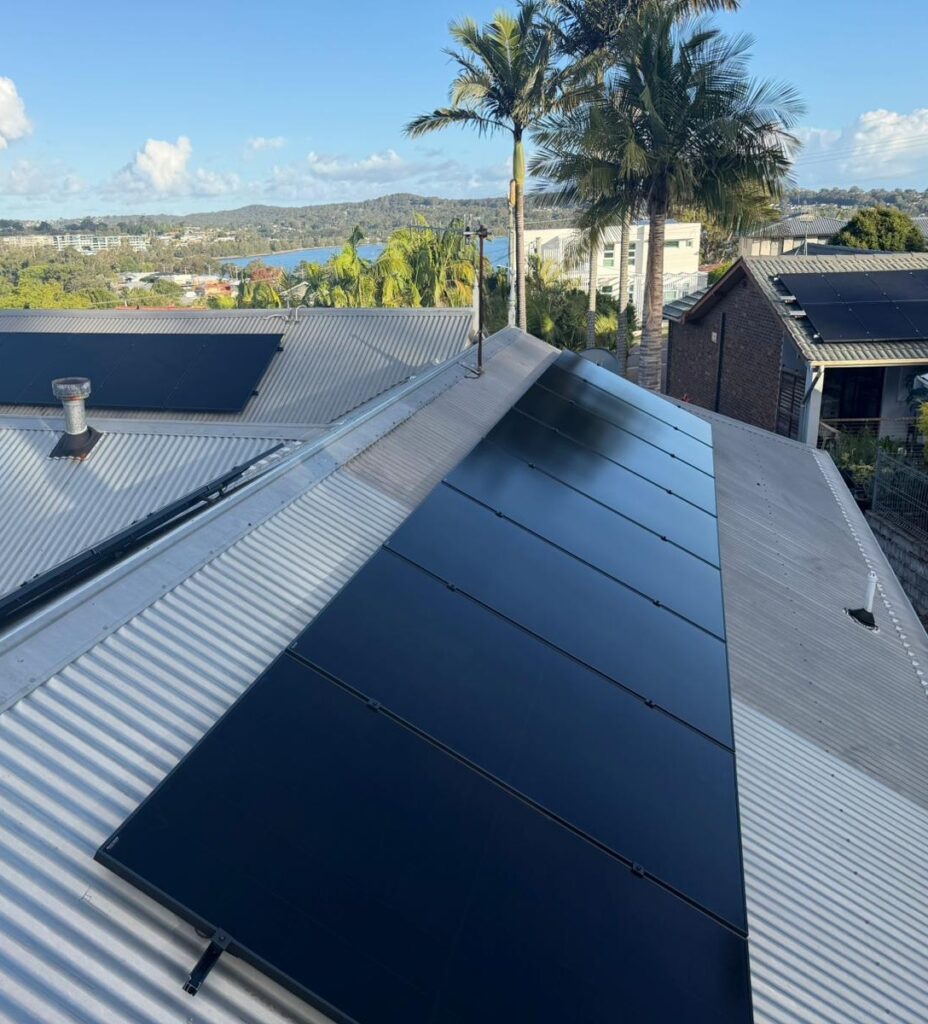
The key certification for coastal solar panels is IEC 61701, the international standard for salt mist corrosion resistance. Any panel intended for use near the coast should carry this certification. Most tier-one panels do, typically at Level 5 or Level 6. Level 6 is the highest, requiring panels to survive 112 days of salt-spray testing with less than 2 per cent power decline. Panels from manufacturers including AIKO, SunPower, and REC carry Level 6 certification. For homes in exposed coastal locations, Level 6 is worth specifying with your installer.
Beyond the certification, the quality of the frame material and sealing matters. Manufacturers address corrosion through marine-grade aluminium alloys, anodising, and sealed junction boxes and connectors. A competent installer will also ensure that mounting hardware is compatible with the panel frame, since mixing metals creates galvanic corrosion when salt water is present, and can cause panels to fail well within their warranty period.
One panel worth highlighting for coastal homes is the AIKO Neostar series. AIKO uses ABC (All Back Contact) cell technology, which removes the metal grid lines from the front of the panel surface entirely. This design pushes efficiency to between 23.8 and 25 per cent, which means more power generated from the same roof space. On a coastal home where grime and salt build-up can reduce output over time, starting from a higher efficiency baseline gives you more of an advantage.
AIKO panels are independently certified for salt mist resistance and have been tested for cyclone conditions in Darwin, making them suited to the range of harsh coastal environments found around Australia. Their low temperature coefficient of 0.26 per cent output loss per degree above 25°C is also relevant for coastal homes in warmer climates, where heat and humidity combine to reduce panel performance. AIKO panels hold a 25-year product warranty and a 30-year performance warranty. Full details on their testing and certifications are available on the AIKO website.
Part of what makes AIKO panels a strong choice for coastal homes is that their installation manual includes specific procedures for properties within 500 metres of the shoreline, requiring frames and related components to have anti-corrosion treatment applied. Make sure your installer is across these requirements and follows the relevant coastal installation procedures.
What Do Coastal Conditions Do to Solar Batteries?
The same corrosion risks that affect panels apply to batteries. In some respects a battery is at greater risk to the coastal elements, due to the amount of exposed metal hardware they contain: : terminals, connectors, enclosure hinges, fasteners, and the electronics inside the inverter. Salt mixes with humidity to form a conductive film on these surfaces, creating corrosion that increases resistance, causes heat build-up, and in worst cases leads to connection failure.
The battery chemistry itself, particularly in modern lithium iron phosphate (LFP) batteries, is not directly at risk as the cells are internally sealed. What degrades is the external hardware around them. This means product selection, placement, and maintenance determine how well a battery holds up in a coastal environment far more than the battery chemistry does.
When evaluating batteries for a coastal home, the ratings to look for are IP65 or IP66 for weather protection, and C5-M for anti-corrosion certification. IP66 provides full protection against dust and powerful water jets. C5-M is the highest industrial anti-corrosion rating, used in offshore and marine environments. Not every battery marketed as coastal-ready carries both.
Why Do Solar Battery Warranties Matter So Much on the Coast?
Coastal warranty exclusions are common across the battery industry and they are not always easy to find. Some manufacturers exclude corrosion damage in general terms buried in the fine print. Others exclude specific environments like “salt air” or “aggressive atmospheres.” A few have hard distance exclusions from the coastline, sometimes as far as two kilometres. Several major brands have removed explicit exclusions but replaced them with ambiguous language around “corrosive environments” or “foreign material contamination” that could still be interpreted broadly enough to void a claim.
As a rule, never rely on marketing materials alone. Pull the actual warranty document, search specifically for the words “corrosion,” “salt,” “coastal,” and “coastline,” and confirm what they say. If anything is ambiguous, ask the manufacturer for written confirmation that your location is covered. Warranty documents also change over time, so always check the current version rather than relying on reviews or comparisons written more than six months ago.
A solid battery brand to consider for coastal climates
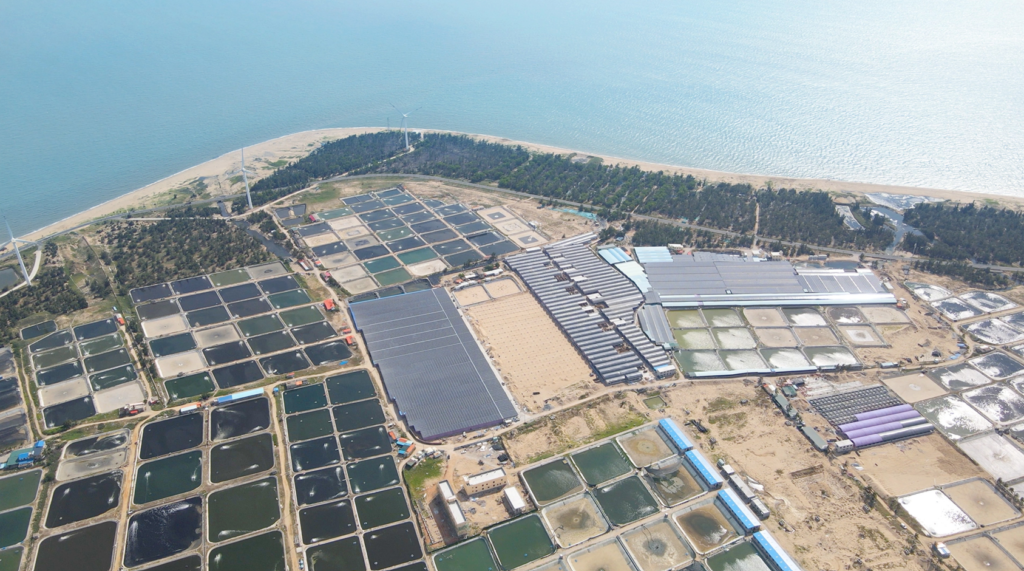
The Sigenergy SigenStor is one of the stronger options for coastal homeowners. It carries an IP66 weather rating and C5-M anti-corrosion certification, and it has been deployed in real-world coastal commercial projects, including a 6MW solar and battery installation 300 metres from the coast at a seawater fish farm in Hainan. In that project, the modular design and corrosion protection were specifically cited as factors in selecting the system.
An important update for Australian homeowners: the SigenStor’s Australian warranty previously excluded installations within 500 metres of the coastline. That blanket exclusion has been removed from the current AU/NZ warranty. For installations within 500 metres of the shore, Sigenergy now requires the battery to be installed indoors, with a protective cover to prevent direct exposure to sea breezes and corrosive gases, and in a location with a corrosion-protection rating of C5-M or below.
The warranty position has shifted in a positive direction, but it comes with installation conditions. Make sure your installer confirms the current SigenStor warranty terms in writing and follows the required installation procedures for your specific location.
How Does Installation Affect How Long a Coastal Solar System Lasts?
Product selection matters, but installation decisions matter just as much. The most common cause of premature failure in coastal solar systems is not the hardware itself, it is poor placement that exposes that hardware to conditions it was not designed to handle continuously.
For batteries and inverters, the key installation principles are:
- Install on the leeward side of the home, away from the prevailing ocean breeze
- Prioritize indoor installation in a garage, utility room, or ventilated internal space
- Keep units off the ground to avoid pooled water and wind-blown sand
- Use a weather hood, protective cover, or dedicated outdoor cabinet for units that must be installed outside
- Ensure inverters are placed inside or fitted with a shelter in heavy sea spray areas
For panel mounting, the hardware matters as much as the panels themselves. Ensure your installer uses mounting components that are compatible with your panel frames. Mixing aluminium frames with steel hardware in a salt-mist environment creates galvanic corrosion that can cause structural failure years before the panels themselves would otherwise have a problem.
What Maintenance Does a Coastal Solar System Need?
When it comes to coastal solar systems the goal is to catch salt build-up and early corrosion before it becomes a problem.
The recommended maintenance routine for coastal installations is:
- Monthly visual checks of panels, frames, and battery enclosures for rust streaks or white and green salt deposits
- Low-pressure fresh water rinse of panel surfaces and external battery enclosures to remove salt grime
- Having a professional inspection covering seals, terminations, mounting hardware, and coating integrity every year is recommended but if you are not experiencing any significant impact on your systems generation it may not be necessary
Some homeowners in heavy exposure zones choose to install one or two additional panels rather than increase their cleaning frequency, accepting that output will be slightly reduced by grime build-up but compensating by oversizing the system slightly at the outset. This is a common design approach worth discussing with your installer.
Is Solar Worth It If You Live Near the Coast?
For most coastal homeowners, yes. Coastal conditions are a design consideration, not a reason to avoid solar. However, every property is different, things such how exposed your roof is, how close you are to the water, and what your energy usage looks like all affect what the right system looks like for you.
What matters most is choosing an installer who understands coastal installations. The difference between a system that performs well for 25 years and one that starts degrading in five often comes down to decisions made when designing the system itself.
If you’re on the coast and weighing up whether solar makes sense for your home, speak to the Lenergy team. We’ll give you an honest picture of what’s possible for your specific situation and what it would actually take to get there.
Frequently Asked Questions
How far from the coast does salt air become a problem for solar? As a general guide, properties within 100 metres of the shoreline in sheltered areas, and within 200 metres in exposed locations, are considered at higher risk. In warm, humid climates the effective range extends further. A practical indicator is the condition of existing metal objects on your property, such as fence posts, letterboxes, and air conditioning units. Visible rust suggests your property is in a corrosion-risk zone.
What is IEC 61701 and why does it matter? IEC 61701 is the international standard for salt mist corrosion resistance in solar panels. Panels certified to this standard have been tested to survive extended salt-spray exposure with minimal power decline. Level 6 is the highest, requiring panels to pass 112 days of testing with less than 2 per cent output loss. Most tier-one panels carry this certification. If you live near the coast, always confirm the certification level before purchasing.
Does salt air damage the battery cells themselves? No. In modern lithium iron phosphate batteries, the cells are internally sealed and not directly affected by salt. The risk is to the external hardware: terminals, connectors, enclosures, fasteners, and the electronics within the inverter. With the right IP rating, corrosion-resistant hardware, and proper installation placement, this risk is manageable.
What IP rating should a battery have for coastal installation? For outdoor coastal installation, look for IP65 as a minimum and IP66 as the preferred rating. IP66 provides full dust protection and resistance to powerful water jets. For properties in direct sea spray zones, also look for C5-M anti-corrosion certification, which is the highest industrial rating for corrosive environments.
Can I install a Sigenergy SigenStor near the coast? Yes, under specific conditions. The current Australian warranty has removed the previous 500-metre blanket exclusion. For installs within 500 metres of the coastline, Sigenergy requires the battery to be installed indoors, covered to prevent direct sea breeze exposure, and located in an environment with a corrosion-protection rating of C5-M or below. Always confirm the current warranty terms with your installer before purchasing.
How often do coastal solar panels need to be cleaned? For most coastal properties, a regular fresh water rinse every one to three months is sufficient to prevent significant output loss from salt grime. Properties with direct ocean exposure may benefit from more frequent rinsing. Some homeowners choose to slightly oversize their system to compensate for grime-related losses rather than increase cleaning frequency.
Are there solar batteries with no coastal warranty exclusions? Yes. Several batteries do not include blanket coastal exclusions in their current warranties, including the Tesla Powerwall 3, BYD Battery Box Premium, Sungrow HV, and Sigenergy SigenStor, among others. However, warranty documents change over time and some include ambiguous language around corrosive environments that may apply in practice. Always review the current warranty document and get written confirmation from the manufacturer if you are in any doubt.
Does living near the coast affect how long my solar system will last? It can, if the system is not designed and installed with coastal conditions in mind. A system installed with standard hardware, poor placement, and no maintenance plan in a high-salt environment will degrade faster than the same system installed inland. A system specified correctly for coastal use, with appropriate certifications, protected placement, and a basic maintenance routine, should perform close to its rated lifespan.