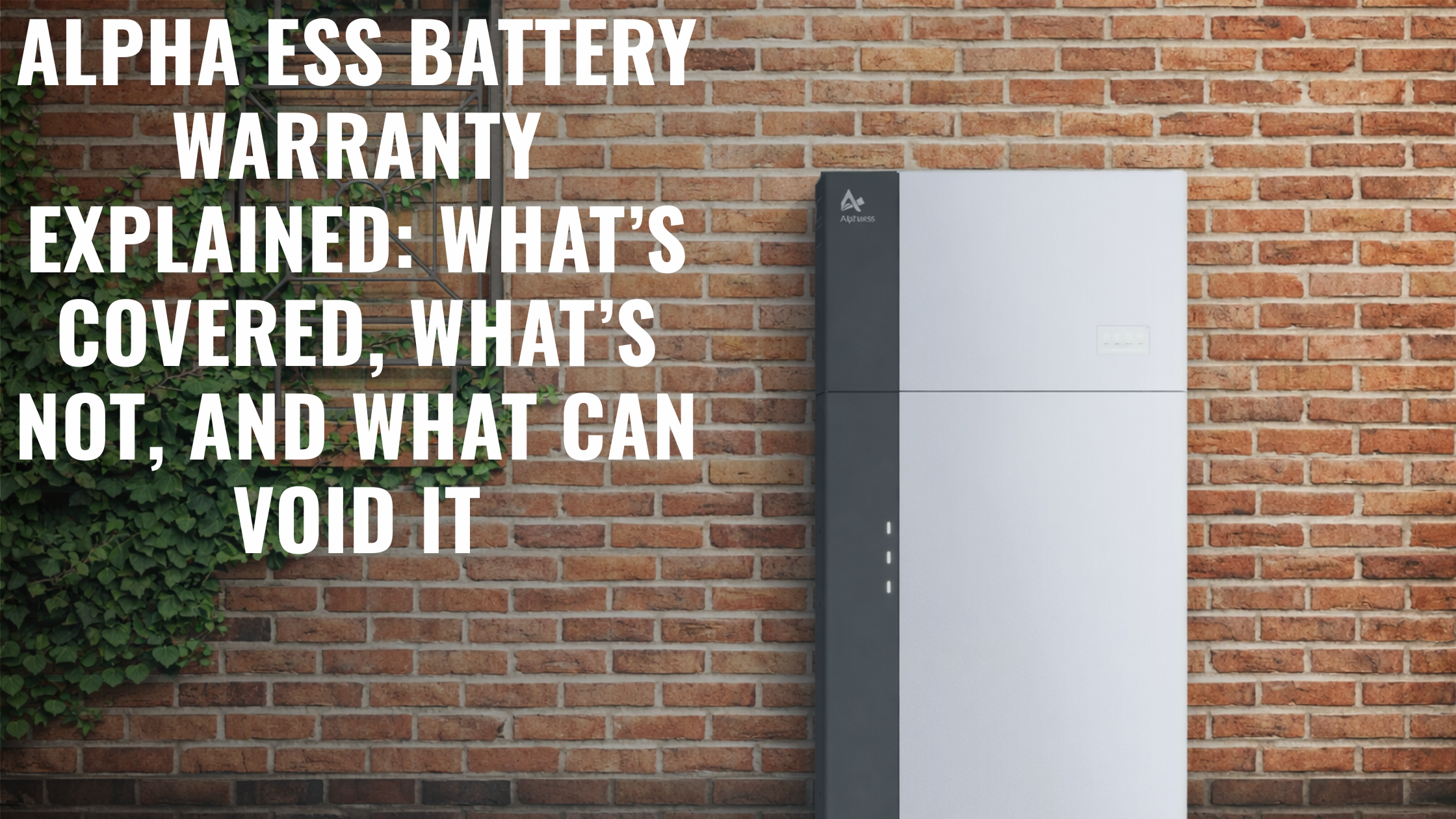
Alpha ESS Battery Warranty Explained: What’s Covered, What’s Not, and What Can Void It
If you’re looking at an Alpha ESS battery, chances are the specs look fine, the price seems reasonable, and the installer sounds confident.
However, there’s usually one concern sitting in the background: what happens if something goes wrong five or eight years down the track.
Battery warranties are where a lot of confidence is either earned or lost. They’re also where marketing language and reality can drift apart. Terms like 10-year warranty, performance guarantee, cycles, and throughput get thrown around, but rarely explained in a way that helps you understand how the battery will actually hold up in a normal Australian home.
This confusion stems from the challenge of defining battery lifespan in practical terms. Battery warranties are technical by nature, and most homeowners don’t read the full document until there’s a problem — which is usually too late.
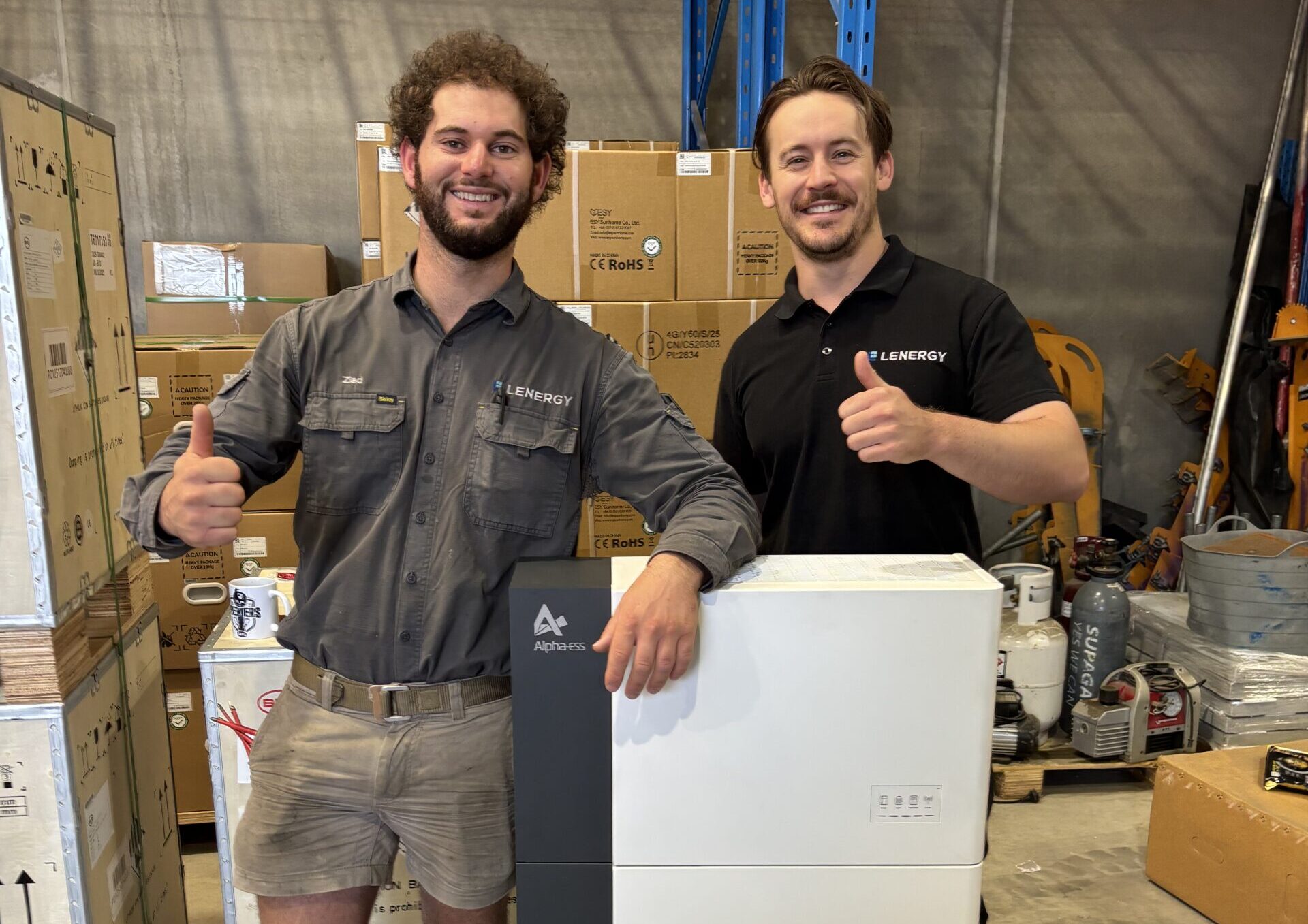
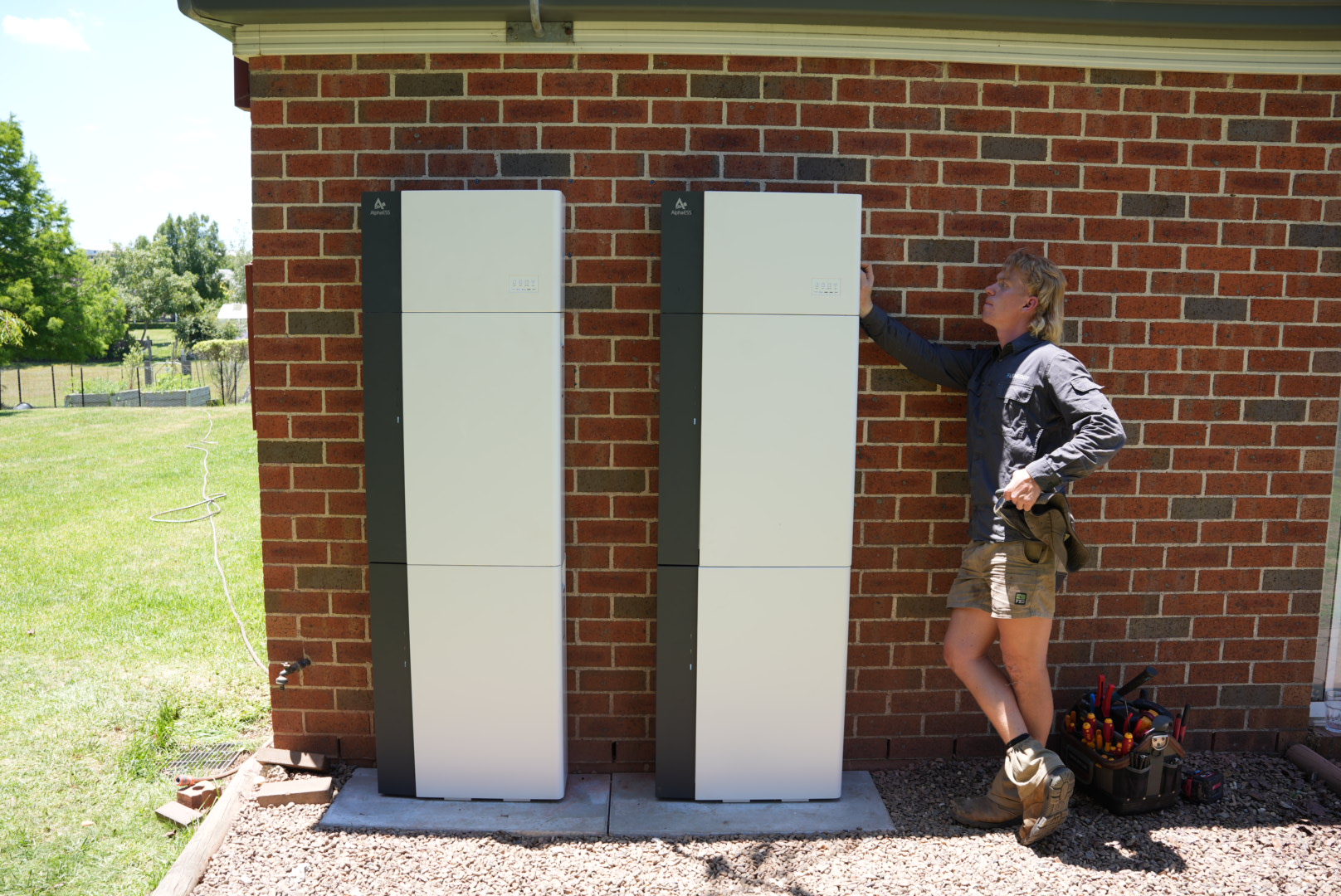
Alpha ESS is no different. Their warranty is detailed, reasonably conservative, and very specific about how the battery is allowed to be used. It’s also a warranty Lenergy deals with in practice, not just on paper. Alpha ESS batteries — including the SMILE-G3 — are installed by Lenergy every week, across a wide range of Australian homes, usage patterns, and installation environments. That hands-on experience matters, because warranties don’t fail in theory — they fail in real homes, under real conditions.
In this article, you’ll get a comprehensive breakdown of the Alpha ESS battery warranty, based on the current Australian warranty document dated October 2024. You’ll learn what’s covered, what isn’t, what can void your warranty, and where owners can get caught out — especially around VPPs, cycling limits, temperature, and installation quality. The goal is to help you understand the warranty well enough that, if you choose it, you know exactly what you’re agreeing to — and how to keep it intact for the long run.
Common Alpha ESS Battery Warranty Questions from Homeowners
Most people don’t start by asking for a warranty document. They start with questions like:
- Will this battery actually last?
- What happens if it degrades faster than expected?
- Am I going to get stuck arguing over fine print in a few years?
These concerns are reasonable. A battery is actively charged and discharged every day, which makes the warranty far more important than the big promises on the front page.
With Alpha ESS, confusion usually centres on:
- what the 10-year warranty really guarantees
- how degradation is measured
- whether VPPs or grid charging cause problems
- and who actually helps if there’s a fault
A lot of frustration comes from mismatched expectations. Hearing “10 years” often sounds like unlimited use. In reality, every battery warranty places limits around usage, environment, installation, and monitoring. Independent industry reviews, including SolarQuotes’ long-running assessment of Alpha ESS, have noted that warranty conditions and post-installation support have historically been areas of concern for some Australian customers — particularly in the brand’s earlier years.
Which Alpha ESS Batteries Are Covered by the Australian Warranty
The current Australian residential warranty (dated 30 October 2024) applies to all Alpha ESS residential systems sold in Australia, including:
- SMILE-G3
- SMILE-B3
- SMILE5
- SMILE-T10
- M4856-P
- all compatible Alpha ESS battery modules (alphaess.au)
At Lenergy, the system installed today is the Alpha ESS SMILE-G3, Alpha’s newer-generation hybrid battery designed for modern Australian homes and larger battery capacities.
This matters because some warranty concerns originated when home batteries were much smaller (3–5 kWh), and usage patterns — especially early VPP participation — were far more aggressive than they are today. Modern Australian installations are typically 10–50 kWh+, focused on self-consumption, backup, and moderate optimisation.
Importantly, Alpha ESS Australian warranties sit alongside:
- Australian Consumer Law — which still applies even if a warranty excludes certain coverage (EnergyAustralia)
- Clean Energy Council (CEC) rules
- Australian electrical standards
Installation quality and compliance matter just as much as the battery itself.
How Long Is the Alpha ESS Battery Warranty (And What 10 Years Really Means)
Alpha ESS provides a 10-year warranty, made up of two parts.
Product warranty
This covers manufacturing defects — faults that cause the system to stop operating as intended under normal use.
Performance warranty
This guarantees that after 10 years, the battery will retain at least 70 % of its usable capacity, provided it has been used within warranty conditions. Independent reviews confirm this throughput-based approach and degradation threshold.
What it doesn’t mean
A 10-year warranty does not mean:
- unlimited cycling
- unlimited daily discharge
- unlimited grid charging
Instead, it assumes typical residential use, spread reasonably over time.
That’s why Alpha ESS — like many other brands — uses an energy throughput limit rather than a simple cycle count.
Alpha ESS Throughput Limits Explained (And Why They Exist)
Alpha ESS places a lifetime energy throughput limit on its residential batteries. In simple terms, this caps the total amount of energy that can be charged into and discharged from the battery while still qualifying for the 10-year performance warranty.
What is the throughput limit?
Under the Alpha ESS warranty, the total energy cycled through the battery must stay under:
3.12 MWh per 1 kWh of usable battery capacity
That works out to roughly 3,120 equivalent full cycles over the warranted life — or, averaged out, less than one full cycle per day over 10 years.
This doesn’t mean the battery stops working if you go beyond this point. It simply means that if the battery’s capacity drops below 70% after exceeding the throughput limit, the performance warranty may no longer apply.

What this looks like in real Australian homes
Battery systems installed today are far larger than they were when Alpha ESS first entered the Australian market. Most homes now install 10–50 kWh+, which significantly changes how this limit plays out in practice.
Here’s how the throughput limit scales with common system sizes:
- 10 kWh usable → max ~31,200 kWh total throughput
- 20 kWh usable → max ~62,400 kWh total throughput
- 30 kWh usable → max ~93,600 kWh total throughput
- 50 kWh usable → max ~156,000 kWh total throughput
For the vast majority of households using their battery for:
- solar self-consumption
- off-peak or occasional grid charging
- evening household use
- backup during outages
…these limits are very difficult to reach within 10 years.
Why this limit exists
This condition became more prominent in the early days of home batteries, when:
- 3–5 kWh systems were common
- 20 kWh was considered “large”
- many VPP programs encouraged multiple full cycles per day
In some cases, batteries were being aggressively charged and discharged several times daily to chase grid payments. That level of use could burn through warranted cycles in just a few years.
The throughput limit was introduced to protect battery longevity, not to restrict normal household use. VPP participation and time-of-use charging are still approved operating modes under the Alpha ESS warranty — but extreme, frequent full cycling can push a system outside the warranty’s performance guardrails.
What happens beyond the limit?.
Alpha ESS datasheets indicate that many of their residential batteries are capable of 8,000–10,000 cycles under ideal laboratory conditions, often with around 80% capacity retention.
The warranty threshold is deliberately conservative. In favourable real-world conditions, batteries may continue delivering usable performance well beyond the warranted throughput — but once the limit is exceeded, capacity loss becomes the owner’s risk rather than the manufacturer’s.
Some homeowners knowingly adopt intensive time-of-use or grid-arbitrage strategies, accepting faster degradation in exchange for electricity bill savings. That can be a rational financial decision — as long as it’s made with clear expectations.
Can You Fully Discharge an Alpha ESS Battery Every Day Without Voiding the Warranty?
Yes — with context.
Alpha ESS batteries are designed for deep daily discharge. The Battery Management System (BMS) protects the cells by stopping discharge at a safe internal reserve.
Older systems occasionally needed a slightly higher minimum state of charge for reliability, but newer models like the SMILE-G3 handle deep discharge without problems when configured correctly.
So long as cycling stays within warranted behaviour, daily use won’t breach warranty conditions.
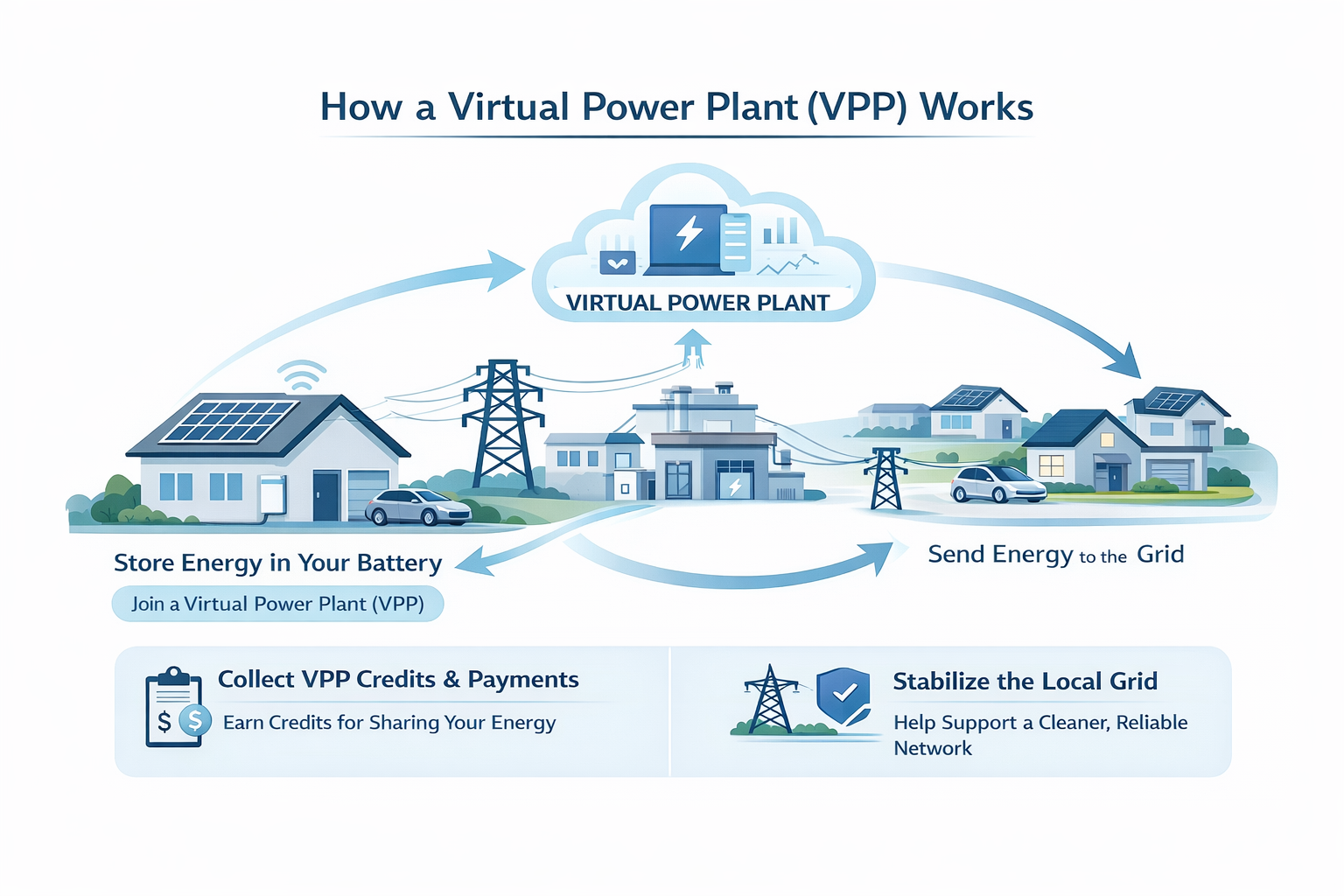
VPPs, Time-of-Use Charging, and Grid Charging Under the Alpha ESS Warranty
Alpha ESS explicitly allows:
- VPP participation
- grid charging
- time-of-use optimisation
None of these modes automatically void the warranty. What matters is usage intensity and whether it pushes the battery over the throughput threshold. Sensible use remains covered, but heavy, repeated cycling increases degradation risk.
This is where installer guidance is crucial.
Temperature, Installation Quality, and CEC Rules That Affect the Alpha ESS Warranty
Alpha ESS requires ambient temperatures between –10 °C and 50 °C — a condition tied to warranty eligibility. Poor thermal environments like tight cupboards or direct sun can accelerate ageing and put coverage at risk.
CEC compliance, SAA accreditation, and proper documentation are also required for the warranty to remain valid. In practice, many disputes stem from install conditions, not battery defects.
Internet Connectivity and Monitoring
Alpha ESS expects ongoing internet connectivity for:
- remote monitoring
- software updates
- accurate usage logging
Extended loss of connectivity won’t automatically void the warranty, but it can complicate a claim because the manufacturer may require owner-generated evidence without remote logs.
What the Alpha ESS Warranty Does Not Cover
The warranty typically does not cover:
- higher electricity bills or lost solar savings
- cosmetic wear
- refurbished replacement parts
- critical medical or life-support use
- indirect or consequential losses
Australian Consumer Law still applies independently of warranty clauses. (EnergyAustralia)
What Happens If an Alpha ESS Battery Fails? Claims, Support, and Reality
You usually deal with your installer first, not Alpha ESS.
Installer quality strongly influences outcomes. Independent industry commentary, including SolarQuotes’ review and user feedback on Alpha ESS, shows that post-installation support experiences in Australia have historically been mixed — particularly in the brand’s earlier years. However, more recent feedback reflects improvements in local processes, clearer installer support pathways, and better technical responsiveness as Alpha ESS has matured its Australian operations.
How the Alpha ESS Warranty Compares to Tesla, Sungrow, BYD, Enphase, and SigEnergy
Most warranties from leading brands (Tesla, BYD, Sungrow, Enphase, SigEnergy) use similar constructs — warranty years paired with usage boundaries expressed either as throughput or defined cycle assumptions.
None offer unlimited use, and all assume correct installation and monitoring.
Why Your Installer Matters More Than the Alpha ESS Battery Warranty
The biggest warranty risk isn’t the brand — it’s:
- poor design
- incorrect installation
- aggressive settings
- missing monitoring data
- or an installer who disappears
Good installers protect your warranty better than any headline number on a spec sheet.
Is the Alpha ESS Battery Warranty Reasonable for Most Australian Homes?
For most Australian homes, yes.
The Alpha ESS warranty is conservative, clear, and realistic. Used as intended — with a quality installer and within normal usage — batteries like the SMILE-G3 can deliver reliable performance beyond the warranty period.
If you’re still weighing up whether the Alpha ESS SMILE-G3 is right for your home — or you simply want a second set of eyes on usage, tariffs, or warranty-safe settings — a conversation with a qualified installer can save a lot of guesswork. You can learn more about the Alpha ESS SMILE-G3 here, or reach out to us at Lenergy to speak with one of our solar specialists.