Tesla Powerwall 3 Problems: What You Need to Know in Australia (2026 Guide)
You’ve probably heard the news by now:
The Tesla Powerwall 3 is now compatible with the Powerwall 2.
For many existing Powerwall owners in Australia, that’s a welcome update. If you already have a Powerwall 2, it finally gives you a way to expand your storage without replacing your system. For those looking at the Tesla Powerwall 3 for a new install, it’s easy to see why it’s getting so much attention.
There’s a reason the Powerwall 3 is one of the most popular home batteries on the market. It’s powerful, well-integrated, and backed by a brand most homeowners already trust.
However, like any system, it’s not perfect for every situation.
Some limitations only become obvious after installation. Others depend heavily on your home — especially in Australia, where things like three-phase power, rebates, and existing solar systems can change how well it performs.
As Tesla-certified installers, here at Lenergy, we’ve seen how the Powerwall 3 performs in real homes across Australia. While it works very well in the right setup, there are nuances that only become clear once it’s installed.
In this article, you’ll get a clear breakdown of:
- The most common problems with the Tesla Powerwall 3
- How the Powerwall 2 compatibility update actually affects you
- Where it works well — and where it can fall short
- Whether it’s the right fit for your home, or if you should consider other options
By the end, you’ll have a much clearer idea of whether the Powerwall 3 is a smart investment — or something you might want to think twice about.
What Are the Main Problems With the Tesla Powerwall 3?
Here’s the quick summary most homeowners are actually looking for:
Main Tesla Powerwall 3 Problems
- Single-Phase Backup Only: Why It’s a Problem for Australian Homes
- Single Point of Failure: What Happens If It Breaks?
- Installation Challenges and Why Your Installer Matters More Than the Battery Itself
- Reliability, Software Bugs, and Support Concerns
- Noise, and the Day-to-Day Quirks
- Warranty, Lifespan, and What You’re Actually Covered For
- Is the Powerwall 3 Right for You?
- The Tesla Powerwall 3, A Great Battery – But Not For Everyone
None of these make it a bad product — but they do affect whether it’s right for your home.
Single-Phase Backup Only: Why It’s a Problem for Australian Homes
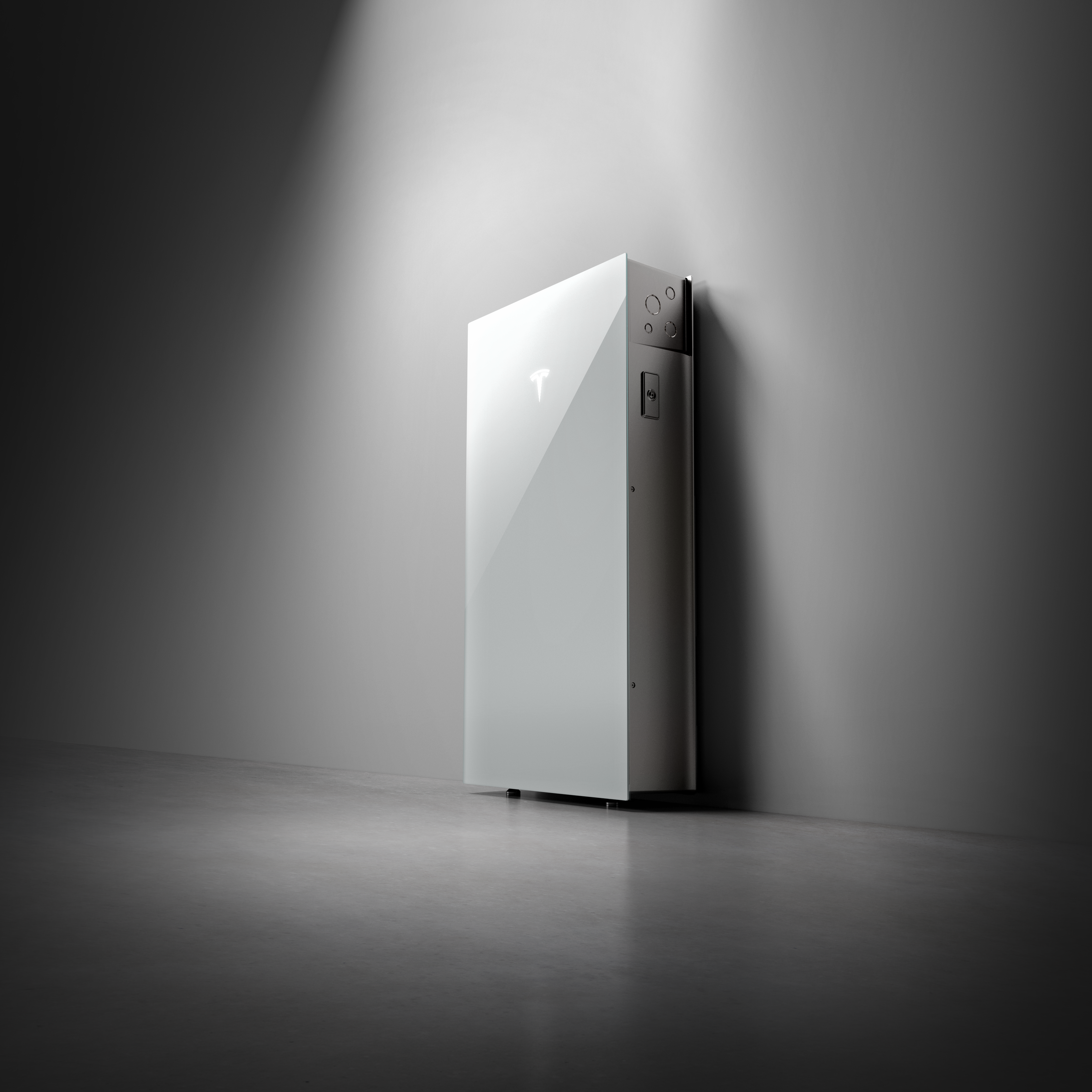
The Powerwall 3 currently only provides single-phase backup. There is a three-phase option being tested in Germany right now but is still a long way from the Australian market.
What Does “Single-Phase Backup” Actually Mean?
Most homes are connected to the grid as either single-phase or three-phase with the occasional 2-phase, effectively this is how much electricity can run in and out of your property at any given point in time.
- Single-phase power → typically smaller or older homes
- Three-phase power → common in larger, newer homes (especially in NSW)
The Tesla Powerwall 3 can be installed on three-phase properties, however it can only backup a single selected phase in the event of a blackout.
What That Looks Like in Real Life
If your home is single-phase, no issue — everything can be backed up (within the battery’s limits).
But if your home is three-phase, things change:
- Only one-third of your home is backed up
- Some circuits will work, others won’t
- Larger appliances (like ducted air con, pool pumps, or workshops) may be completely offline
You are best to speak with your installer about what you can expect to still be working during a blackout.
“Can’t I Just Add More Powerwalls?”
You can — however, this storage can only provide backup on the selected phase.
Single Point of Failure: What Happens If It Breaks?
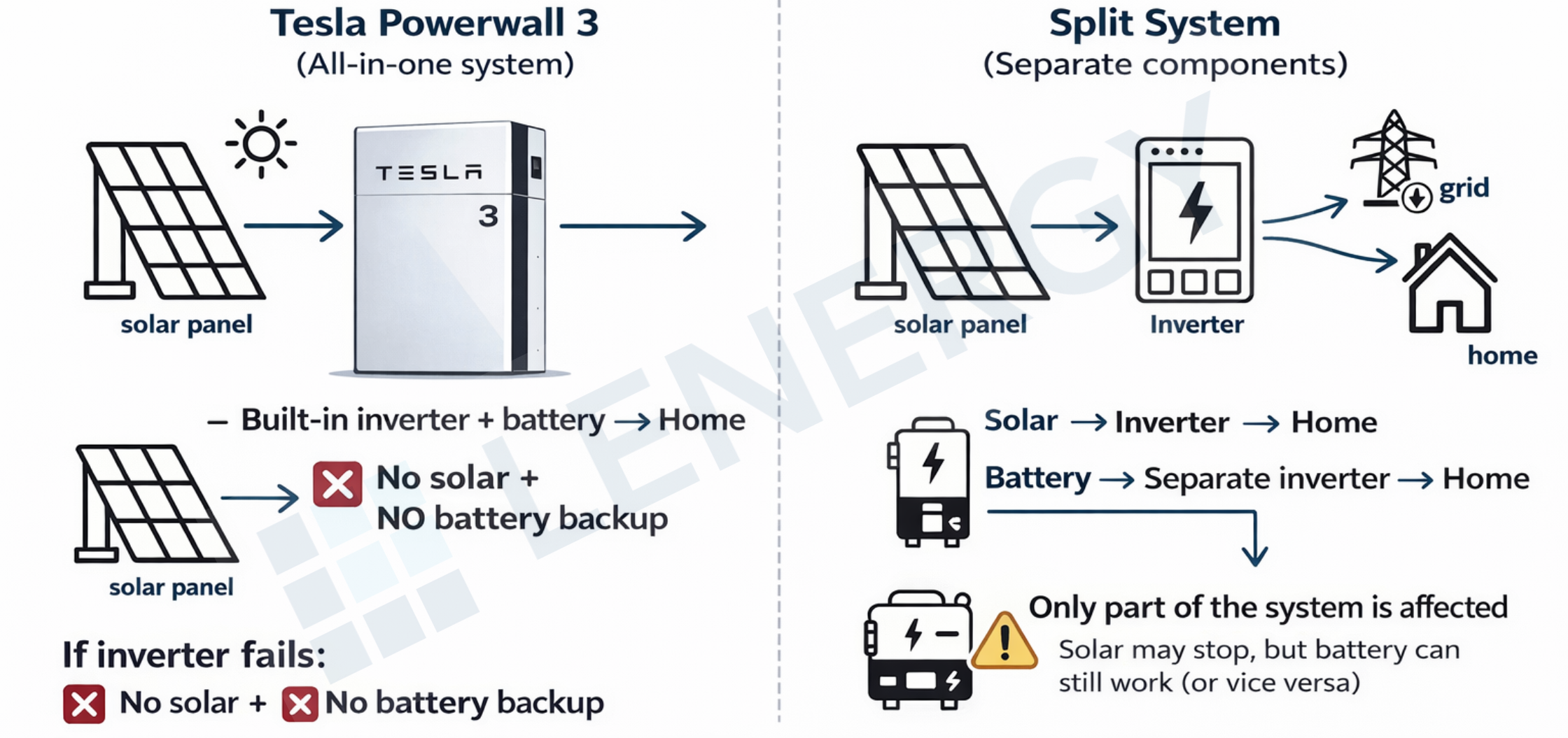
When it comes to the Tesla Powerwall 3 the battery and inverter are in one housing, which is great for installation simplicity and aesthetics. However, this creates a single point of failure which means in the event the inverter fails (or the DC isolator trips), you lose both solar production and battery backup at the same time. Split systems (separate inverter + battery) don’t share this risk.
Why This Matters
Most people install a battery to:
- Reduce power bills
- Keep their home running during outages
But if the system goes down completely:
- You lose both benefits at once
- And you’re back to relying fully on the grid
Installation Challenges and Why Your Installer Matters More Than the Battery Itself
When searching for a battery often people focus heavily on the battery brand, when it comes to something like the Powerwall 3, the reality is:
The installer often matters just as much — if not more — than the product.
The First Challenge: It’s Heavy (Really Heavy)
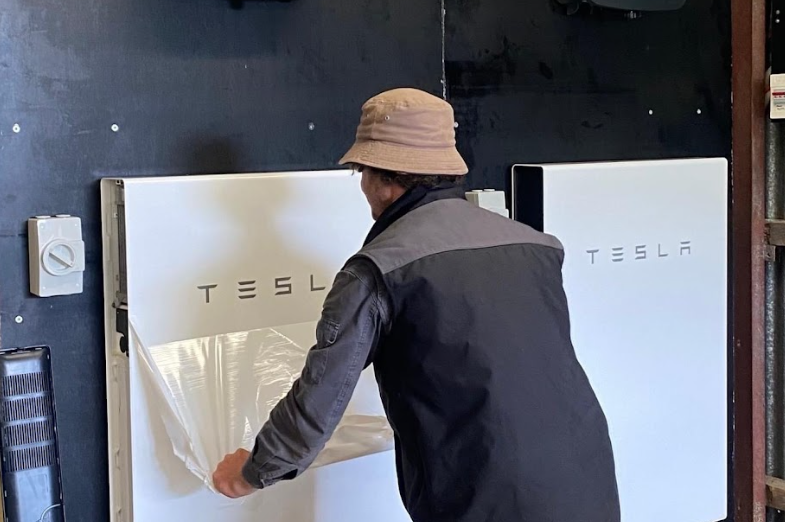
The Powerwall 3 weighs around 130 kg, this creates a difficulty that is not shared by the now common modular batteries in the industry, and it creates a few practical challenges:
- It’s not a simple one-person install
- Wall mounting can be difficult depending on structure
- Tight spaces (garages, side passages) can complicate things
In some cases, installers need:
- Extra labour
- Special mounting considerations
- More time on-site
All of that can impact:
- Installation quality
- Cost
- And even where the battery can be placed
Placement Matters More Than You Think
Because of its size, heat output, and cooling system, placement isn’t just aesthetic — it affects performance.
For example:
- Installing near living areas or bedrooms can expose you to fan noise
- Poor airflow can affect cooling efficiency
- Outdoor installs need to consider weather exposure and IP rating
If you want to avoid common pitfalls, this guide is worth a read: https://lenergy.com.au/mistakes-to-avoid-when-buying-a-solar-battery/
Not Every Installer Is Equal
The Powerwall 3 isn’t a “plug and play” product.
It requires:
- Correct system design (especially with solar integration)
- Proper configuration of backup circuits
- Understanding of Australian grid rules and phase setups
This is where experience matters.
A good installer will:
- Check whether your home is single-phase or three-phase
- Assess whether the Powerwall 3 actually suits your setup
- Flag limitations before installation — not after
A poor installer might:
- Just quote what you asked for
- Skip over compatibility issues
- Leave you with a system that doesn’t behave the way you expected
Why This Matters More With Powerwall 3
Because of its all-in-one design, there’s less room for adjustment after installation.
With more modular systems, installers can:
- Mix and match components
- Adjust system design more easily
With Powerwall 3:
- You’re more locked into a specific architecture
That means:
The upfront design and install quality are critical.
Safety and Compliance Considerations
Battery systems in Australia must meet strict safety standards.
With Powerwall 3, installers also need to manage:
- High-voltage DC cabling from solar panels
- Correct isolation and protection systems
- Compliance with local network requirements
If you’re concerned about safety in general, this article breaks it down clearly:
https://lenergy.com.au/are-solar-batteries-safe-will-my-battery-catch-on-fire/
Reliability, Software Bugs, and Support Concerns
What Installers and Owners Are Reporting
Across installer feedback, reviews, and real-world use, a few patterns come up with the Powerwall 3:
1. Software and Behaviour Quirks
Some users report unexpected behaviour, such as:
- The battery charging from the grid when set to self-consumption
- Getting stuck at 99% charge
- Fluctuating discharge rates
- Drawing small amounts of power from the grid when it shouldn’t
These aren’t constant issues — but they do show up often enough to be worth noting.
2. Occasional System Faults
Some early units and installations have experienced:
- DC isolator trips
- System going offline temporarily
- Inverter-related faults
- Units requiring replacement (RMA)
Every piece of technology experiences its own issues, especially one installed as widely as the powerwall, these faults are not major but common enough to take note of.
When Something Goes Wrong: Support Experience
This is where a lot of frustration tends to come from.
A common theme reported by both homeowners and installers:
- Long wait times for support responses
- Back-and-forth between Tesla and the installer
- Delays in replacement units or parts
In some cases, systems that fail early can take:
- Weeks to resolve, not days
And during that time, you may be:
- Back on full grid reliance
- Without battery backup
Where the Design Trade-Off Becomes More Noticeable
This is where it links back to something we covered earlier:
the single point of failure.
Because the Powerwall 3 combines:
- Battery + inverter in one unit
If a fault occurs, it doesn’t just affect part of your system — it can take down:
- Your battery storage
- Your solar production
- Your backup capability
All at once.
Now combine that with slower support or replacement timelines, and you can end up in a situation where:
Your entire solar and battery system is offline for an extended period while waiting for support or a replacement unit.
That’s not the common outcome, however, it is a realistic scenario that should be taken into account when considering the Tesla Powerwall 3.
With more modular setups, you might still have:
- Solar running without the battery
- Or partial system functionality
With an all-in-one system, it’s more of an “all or nothing” situation.

Noise, and the Day-to-Day Quirks
Up until now, we’ve covered the bigger structural limitations.
But there’s another layer to consider — the small things you notice after living with the system.
These aren’t dealbreakers on their own. But over time, they can shape how satisfied you feel with your setup.
1. Cooling Fan Noise: Louder Than Expected
The Powerwall 3 uses active cooling, which means it has internal fans that ramp up under load. In lighter operation, it’s relatively quiet. Under heavier loads (like: running air conditioning, charging/discharging quickly, hot weather conditions), the fans can become noticeable. Some users describe it as similar to a handheld vacuum.
2. Charge Rate vs Discharge Power
One thing that catches people off guard:
- The Powerwall 3 has very strong output (discharge)
- But a more limited charge rate (~5 kW per unit)
So:
- It can power your home quickly
- But takes longer to fill up from solar
In homes with large solar systems, this can mean:
- Not all excess solar gets stored
- More energy is exported to the grid instead
3. Small Behavioural Quirks
Some users notice things like:
- The system running calibration cycles
- Drawing small amounts of power from the grid unexpectedly
- Slight delays in switching behaviour
These aren’t headline issues, but they are the kind that don’t show up in brochures, only become obvious after installation, and depending on your expectations, can feel either completely fine or slightly frustrating over time.
Warranty, Lifespan, and What You’re Actually Covered For
The Tesla Powerwall 3 warranty aligns with what has become pretty much an industry standard for current battery warranties which means:
- It’s protected for 10 years
- It’s guaranteed to retain at least 70% capacity
- It should realistically operate 10–15+ years
- It’s backed by a manufacturer that has shown it responds when issues arise
- A throughput limit of 37.8 MWh of aggregate throughput if it is used outside of these applications – Solar self-consumption or timebased control , and backup. Otherwise unlimited.
There is really only two notable things about the warranty:
1. Internet Connection Requirement
The system needs to stay connected to the internet.
If it doesn’t:
- The warranty period can drop significantly
- In some cases, it may reduce to as little as 4 years
2. Grey Areas Between Installer and Manufacturer
If something goes wrong, the question becomes:
- Is it a product fault (Tesla)?
- Or an installation issue (installer)?
Sometimes it’s not immediately clear — which can lead to:
- Delays
- Back-and-forth between parties
This ties back to the support experience we discussed earlier.
How Long Does the Powerwall 3 Actually Last?
Most modern solar batteries are expected to last:
- 10–15+ years, depending on usage
The warranty gives you a baseline — but real lifespan depends on:
- How often it cycles
- Environmental conditions (heat, placement)
- System design and usage patterns
If you want a clearer breakdown of lifespan vs warranty, this article explains it well:
https://lenergy.com.au/how-long-does-the-tesla-powerwall-3-last-warranty-breakdown/

The Federal Battery Rebate (2025–2026 Context)
With the Cheaper Home Batteries Program, more homeowners are considering batteries due to reduced upfront costs.
However, timing has been a factor for existing Powerwall 2 owners. The federal rebate is reducing from May, and many were not able to access it before the recent Powerwall 3 compatibility update.
Tesla is currently offering its own incentive on the Powerwall 3. Now that it can be added alongside a Powerwall 2, this provides an option for existing owners to increase storage without replacing their system.
For some households, this may make the current period a practical time to consider expanding their battery capacity.
That said, rebates don’t change system suitability. If the battery isn’t meeting your home’s needs then it could be worth considering another option.
If you want a breakdown of how the rebate is evolving, this article explains what’s changing:
https://lenergy.com.au/cheaper-home-battery-program-reduction-what-it-means-for-you-in-2026/
Is the Powerwall 3 Right for You?
The new compatibility between the Powerwall 2 and Powerwall 3 has opened the door for existing Tesla owners to finally expand their energy storage without replacing their current system.
That’s a big step forward.
Instead of having to remove a perfectly good Powerwall 2, you can now build on what you already have — which, for many households, makes upgrading far more practical.
That said, it’s not a perfect solution.
You’re still working with two different system architectures, and expansion isn’t as seamless as fully modular battery systems. Some limitations around integration and performance still apply, so it’s important to understand how the system will behave in your specific setup.
If you’re in that position, this guide breaks it down in more detail:
https://lenergy.com.au/tesla-powerwall-3-compatibility-with-powerwall-2-in-australia-what-existing-owners-need-to-know/
The Bigger Picture
The Tesla Powerwall 3 is one of the most talked-about batteries in Australia right now — and for good reason. It’s powerful, well-integrated, and works very well in the right setup. As with all batteries it’s not a one-size-fits-all solution.
Most of the “problems” aren’t faults — they’re trade-offs.
You’re choosing:
- Simplicity (an all-in-one system) over flexibility and redundancy
- Strong performance for new installs over seamless compatibility with every existing system
Depending on your home, that trade-off can either work perfectly — or create limitations you’ll notice over time.
What You Should Check Before Deciding
Before choosing a Powerwall 3, it’s worth asking:
- Do you have single-phase or three-phase power?
- Do you want full-home backup, or just essential circuits?
- Are you comfortable with an all-in-one system, or do you want flexibility?
- How important is expandability and redundancy to you?
These answers will tell you more than any spec sheet.
The Tesla Powerwall 3, A Great Battery – But Not For Everyone
If everything lines up, the Powerwall 3 can be a reliable and effective system as it already is for many homeowners. However, if your setup is more complex, it’s worth slowing down and comparing your options before committing.
Because once it’s installed, you’re not just choosing a battery —
you’re choosing how your home will generate, store, and use energy for the next decade or more.
If you want help deciding whether this battery is right for you, reach out to us at Lenergy to speak with one of our specialists.