2 batteries side by side comparison with text overlay saying "Tesla Powerwall 3 vs Pylontech Force H3X: Which is better?"

Written by Donna Wentworth

Last Updated: November 6, 2025

Tesla Powerwall 3 vs Pylontech Force H3X: Which is better?

You’ve probably heard the hype around the Tesla Powerwall 3. It’s well-known, widely marketed, and packed with smart features. Then there’s Pylontech — a strong performer with a growing reputation among Australian installers for reliability and value.

So which one actually makes more sense for your home?

At Lenergy, we’ve installed both systems and helped hundreds of homeowners weigh up this exact decision. We know the questions people ask, the numbers that matter, and the gotchas you don’t find in the glossy brochures.

This article gives you a side-by-side breakdown of the Tesla Powerwall 3 and the Pylontech Force H3X. You’ll learn how they compare on performance, price, compatibility, and more so you can make a confident, well-informed decision about which one (if either) is right for your solar setup.

Why Compare These Two Batteries?

If you’ve been researching solar battery options in 2025, chances are you’ve come across both the Tesla Powerwall 3 and the Pylontech Force H3X. These two batteries come up in conversations with homeowners for a few good reasons:

  • They’re widely available in Australia
  • They offer serious backup potential
  • They support flexible solar system configurations
  • And they’re eligible for current rebates and VPP programs

That said, they’re very different systems.

The Tesla Powerwall 3 is a high-output, all-in-one battery with an integrated hybrid inverter, allowing it to be used in both AC- and DC-coupled systems. It’s often chosen by households looking for strong backup performance, smart home integration, and a clean, consolidated design that minimises wall clutter.

The Pylontech Force H3X also features an integrated inverter, offering flexibility to operate in both AC- and DC-coupled configurations. It’s a modular system, which makes it ideal for homes that want custom sizing, more inverter options, or the ability to start small and expand over time — whether you have a single-phase or three-phase setup.

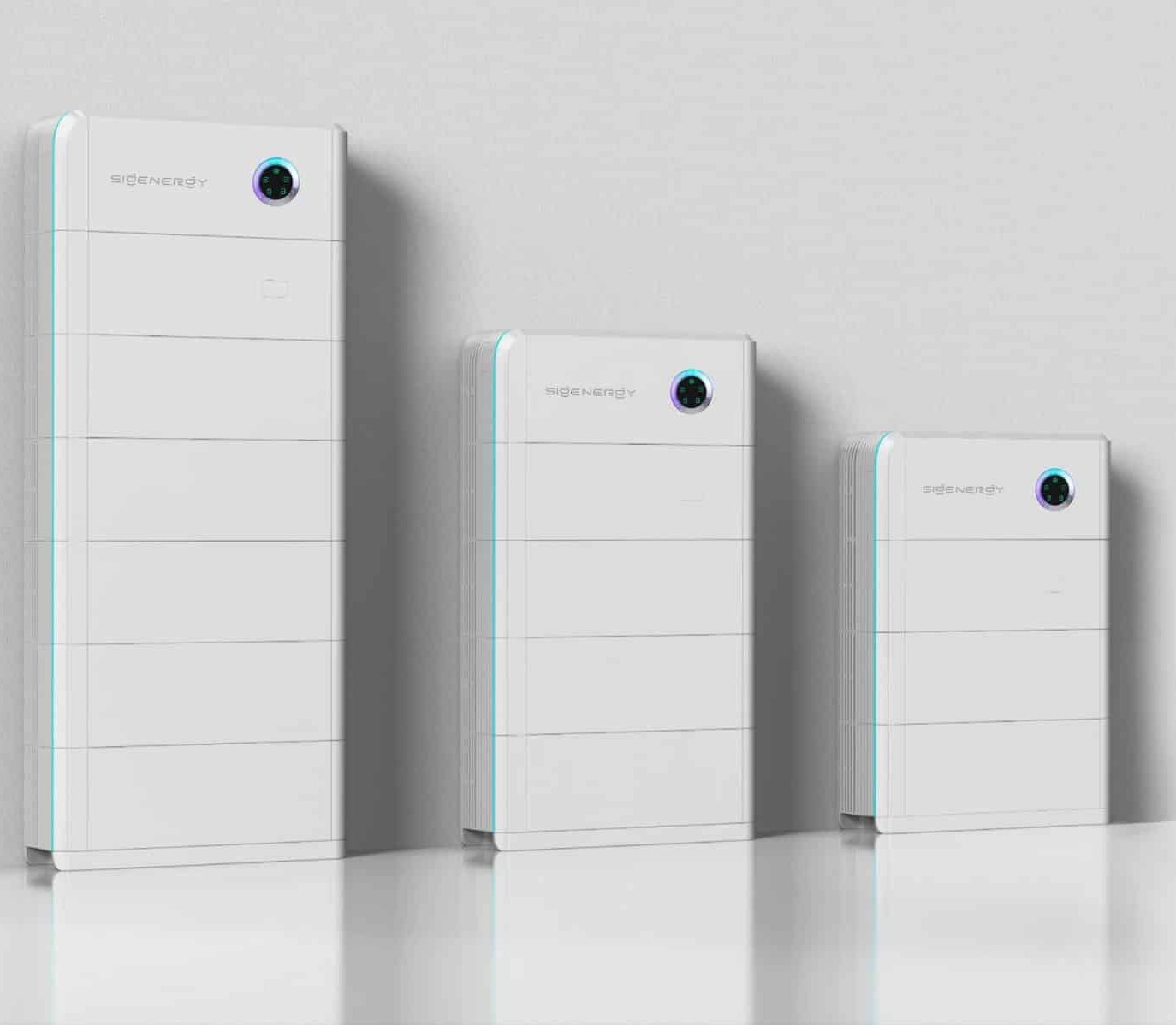
Pylontech Force H3X display battery installed on white brick wall

So if you’re trying to decide between them, this isn’t about which battery is “better.” It’s about which one fits your home, your usage patterns, and your long-term energy goals.

Capacity, Scalability & Suitability

When it comes to batteries, capacity isn’t just about how big it is — it’s about how well it fits your household’s energy habits, future plans, and available space. Here’s how these two batteries compare.

Tesla Powerwall 3: Fixed Capacity, High Output

The Powerwall 3 offers 13.5kWh of usable capacity in a single unit, with the ability to stack up to 40.5kWh (3 units). This covers most medium to large households — particularly if you’re trying to cover both night-time usage and power outages.

What’s different about the Powerwall 3 is that it includes a fully integrated hybrid inverter, making it suitable for both new solar systems and retrofits. But it’s not modular — if 13.5kWh isn’t quite enough, you’ll need to add to a whole second 13.5kWh battery unit, taking you to 27kWh of storage.

Pylontech Force H3X: Modular and Flexible

The Force H3X is built for customisation. Each battery module delivers 5.12kWh nominal capacity, with 4.864kWh of usable storage. 

You can stack:

Up to 20kWh usable on a single-phase tower

Up to 35kWh usable on a three-phase tower

Multiple towers can be installed together for even larger systems.

This makes it a smart choice if:

  • You’re looking for better value for each kWh of storage
  • You want compatibility with both single-phase and three-phase systems

In short: Powerwall suits those who already have the Tesla ecosystem (EV charging point/car) and are ok with paying a premium price for a premium battery. Pylontech suits those who want flexibility in system sizing at a more affordable price point, or households with either single-phase or three-phase supply looking for full backup or large-scale solar and battery setups. It’s also a proven name in the Australian battery market, with over a decade of local presence and performance.

Performance & Backup Power

When the grid goes down, not all batteries perform the same. Understanding each battery’s output, responsiveness, and blackout support can help you decide which one actually keeps your home running when it matters.

Tesla Powerwall 3: 

The Tesla Powerwall 3 supports up to 20 kWh DC of solar and provides up to 11.5 kWh AC of continuous power per unit, which is extremely high for a residential battery.

This means:

  • You can run most of your home during an outage, including large loads like air conditioners or pool pumps (depending on your setup)
  • You’re less likely to need to manually manage which circuits stay powered during blackouts

Tesla’s Powerwall also comes with a built-in backup gateway, which automatically detects outages and switches to battery power almost instantly. It’s a fully integrated backup solution — no need for external switches or special wiring in most cases.

Pylontech Force H3X:

The Force H3X can be paired with Pylontech’s own inverters, which are available in both single-phase and three-phase models. At the time of writing (November 2025), the single-phase inverters (5kW and 8kW) are already in use, while the three-phase options (10kW, 12kW, and 15kW) are expected to receive CEC approval by the end of 2025.

What this means for you:

  • With Pylontech’s inverters, your backup power is limited to the capacity of the inverter size.
  • These inverters are purpose-built for use with the Force H3X, streamlining setup and monitoring

Inverter & System Type: AC & DC Coupling

One of the biggest technical differences between these two batteries is how they connect to your solar system — and it’s something many homeowners overlook. It affects everything from system design to efficiency, installation costs, and future flexibility.

Tesla Powerwall 3: 

The Powerwall 3 includes a fully integrated hybrid inverter, which makes it capable of both AC- and DC-coupled configurations.

In AC-coupled mode, it can be added to virtually any existing solar setup — making it a simple option for retrofits without changing your current inverter.

In DC-coupled mode, the built-in inverter allows you to connect up to 20kW of solar panels directly to the system. This setup improves efficiency by reducing the number of energy conversion steps and enables tighter integration between your solar and battery.

This dual capability gives the Powerwall 3 added flexibility for both new installations and upgrades.

Pylontech Force H3X: 

The Pylontech Force H3X is designed to support both AC- and DC-coupled configurations, offering flexibility for a wide range of system types. Pylontech’s own inverters are available in single-phase (5kW, 8kW) and three-phase (10kW, 12kW, 15kW) models (pending CEC approval for three-phase as of November 2025).

In a DC-coupled setup, the battery connects to your solar system before the power is converted to AC, offering:

  • Higher overall efficiency
  • Improved energy yield, particularly in new builds or inverter upgrades

In AC-coupled mode, the Force H3X can be integrated into existing solar systems, making it a viable retrofit option — especially with the right inverter setup.

This dual-coupling capability makes Pylontech a versatile choice for both new and existing homes, with more control over sizing and design.

6 Pylontech Force H3X Batteries installed on white wall showing the scalability of output

Warranty, Lifespan & Battery Chemistry

Not all warranties are created equal — and neither are battery chemistries. These details can affect how long your battery lasts, how safe it is, and what kind of support you’ll get if something goes wrong.

Tesla Powerwall 3: LFP Chemistry, High Output

The Powerwall 3 uses Lithium Ferro Phosphate (LFP) chemistry — known for its thermal stability, long cycle life, and enhanced safety. It’s a shift from earlier Powerwall versions, which used NMC chemistry.

LFP batteries are:

  • Less prone to overheating, making them safer in hot environments
  • Capable of more charge/discharge cycles, giving them a longer lifespan

Tesla backs the Powerwall 3 with a 10-year warranty, promising at least 70% capacity retention. Combined with its 30kW peak power output and smart features, it offers a blend of durability and performance that suits most residential setups.

Pylontech Force H3X: LFP Chemistry, Longer Lifespan

The Force H3X uses Lithium Iron Phosphate (LFP) — a chemistry known for:

  • Greater thermal stability (safer in high temps)
  • Longer cycle life, often exceeding 8,000+ cycles

Pylontech backs this with a 10-year warranty too. For homeowners prioritising longevity, LFP is often the preferred option.

Warranties with Pylontech may involve the inverter manufacturer or installer as part of the support chain — so it’s worth asking your installer how warranty claims are handled.

Price & Installation Considerations

For most households, price is a major factor in choosing a battery. Here’s how the Powerwall 3 and Pylontech Force H3X compare on upfront pricing, installation complexity, and rebates.

Tesla Powerwall 3: Premium Price, Simple Install

The Tesla Powerwall 3 installed price in Australia typically ranges from $15,000, depending on your installer, location, and whether it’s part of a full solar package.

Because it’s AC-coupled with a built-in inverter, installation is usually straightforward for both new and retrofit systems. That said:

  • It’s not modular, so you need to add 2 or 3 full units if you want more storage
  • Some installations may still require a back-up switchboard upgrade (but this for just Tesla)

Tesla’s strong brand reputation and integration with solar + EV setups are part of what you’re paying for — however you are paying a premium – Rest assured you are getting a premium battery though.

Pylontech Force H3X: Modular & Cost-Effective

Pylontech pricing is more modular and flexible. With the installation cost sitting around $9,000 to $11,500 for 20-30kWh of storage, depending on:

  • Number of battery modules
  • Inverter brand and size
  • Site-specific wiring or upgrade requirements

You can start smaller — eg. with 5.12kWh — and scale up later, spreading out your investment.

What About Rebates?

Both batteries are eligible for:

  • The federal battery rebate (from July 2025), worth a few thousand dollars depending on your system size

However, only the Tesla Powerwall 3 is eligible for:

  • The NSW VPP incentive, offering up to $1,500 upfront for joining a VPP program

Next Steps: Talk to an Expert

A solar battery is a big investment — and the right choice depends on more than just specs. Your home’s wiring, energy habits, solar system, and future plans all play a role.

If you’re still weighing up your options, or want tailored advice based on your home setup, it’s worth speaking to someone who’s installed both systems and can walk you through the trade-offs clearly.

You can learn more about each battery here:

Or, if you’re ready to ask some questions or get a quote, you can get in touch with Lenergy’s team here.

Lenergy staff member, Ziad standing in front of solar panels smiling