
The Lenergy Offset Method: How a Canberra Home Cut a $5,000 Power Bill to $527
A Canberra homeowner was spending just over $5,000 a year on electricity. We got that down to $527. That is the Lenergy Offset Method, and they did it without spending a cent upfront.
Same money, different direction.
Instead of handing $5,000 a year to a retailer, they redirected it into a solar and battery system they own. Here is how it worked:
- What the Lenergy Offset Method actually is
- What this homeowner was paying before
- How we sized the system to their usage
- The production numbers across the year
- Whether the sums stacked up
What is the Lenergy Offset Method?
It is a way of redirecting what you are already spending.
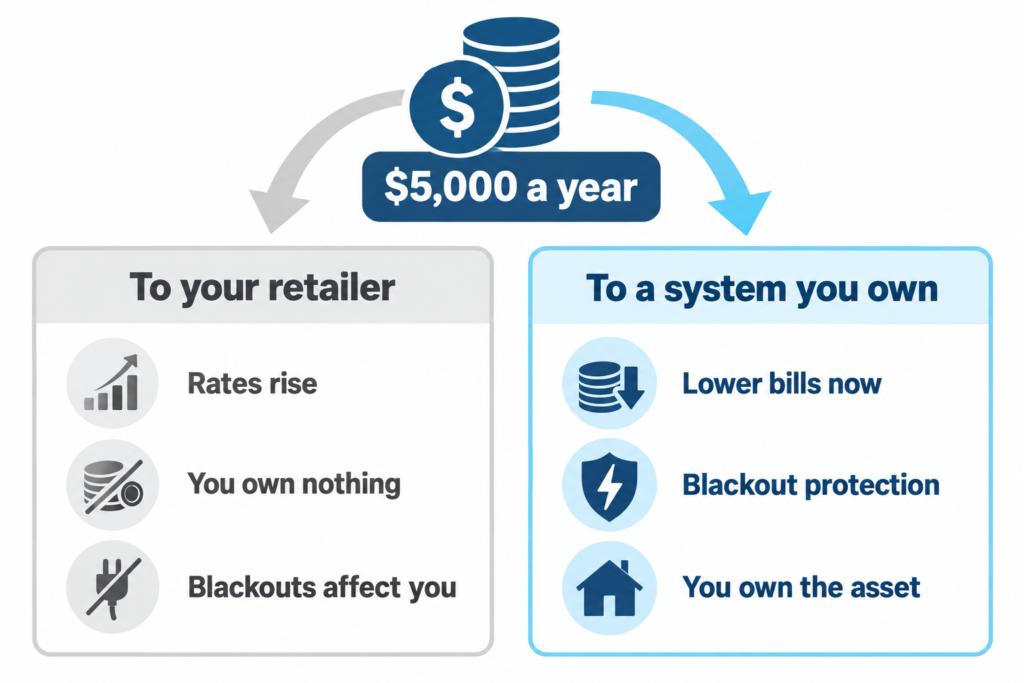
Right now that money goes to your energy retailer. AGL, Origin, Red Energy, whoever you are with. They can raise the rates whenever they want. You own nothing, so there is no ROI, no savings, no payback. You are still subject to grid outages and blackouts.
The Lenergy Offset Method points that same spend somewhere else. Into a solar and battery system in your name.
You get lower bills straight away. You are protected from blackouts. Once the finance term finishes you have an asset that belongs to you.
What was this Canberra homeowner paying?
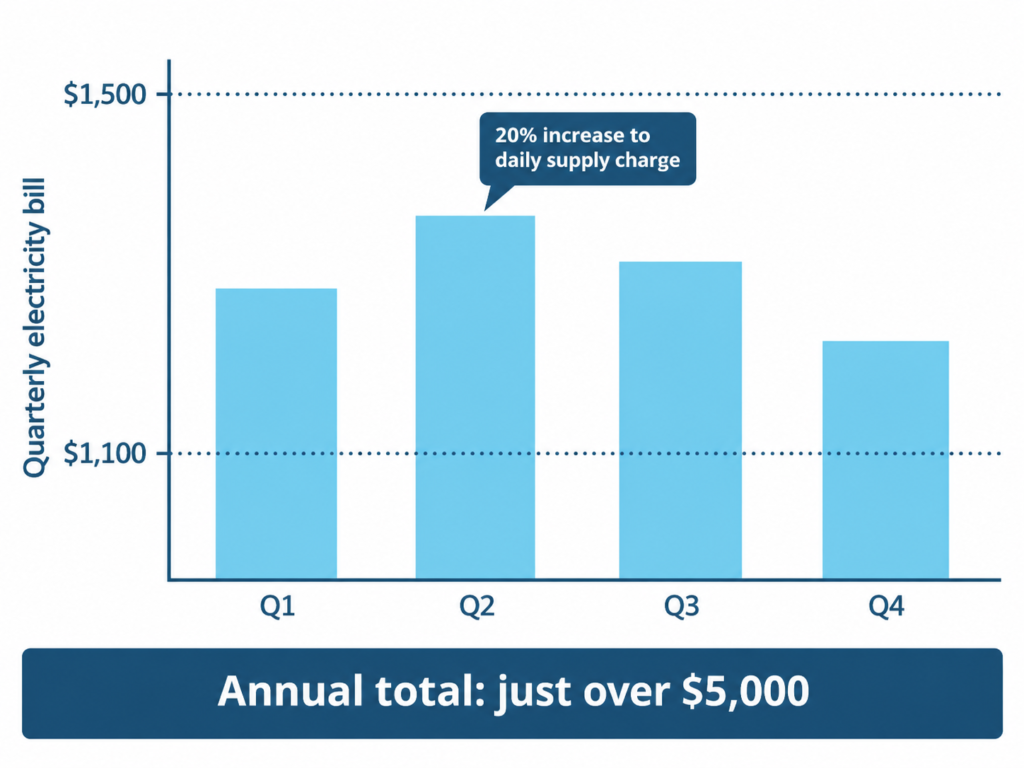
Between $1,100 and $1,500 a quarter.
Their bills showed a time of use plan, so they were charged different rates depending on when they used power. One quarterly bill also carried a 20% increase to the daily supply charge. That bill alone was over $1,100.
Over $5,000 a year. If rates never moved again, that is over $50,000 out the door
Rates do move, of course. Always in the one direction.
How do you size a system under the Lenergy Offset Method?
Sizing comes first. It is built around how you use power, not a package off a shelf.
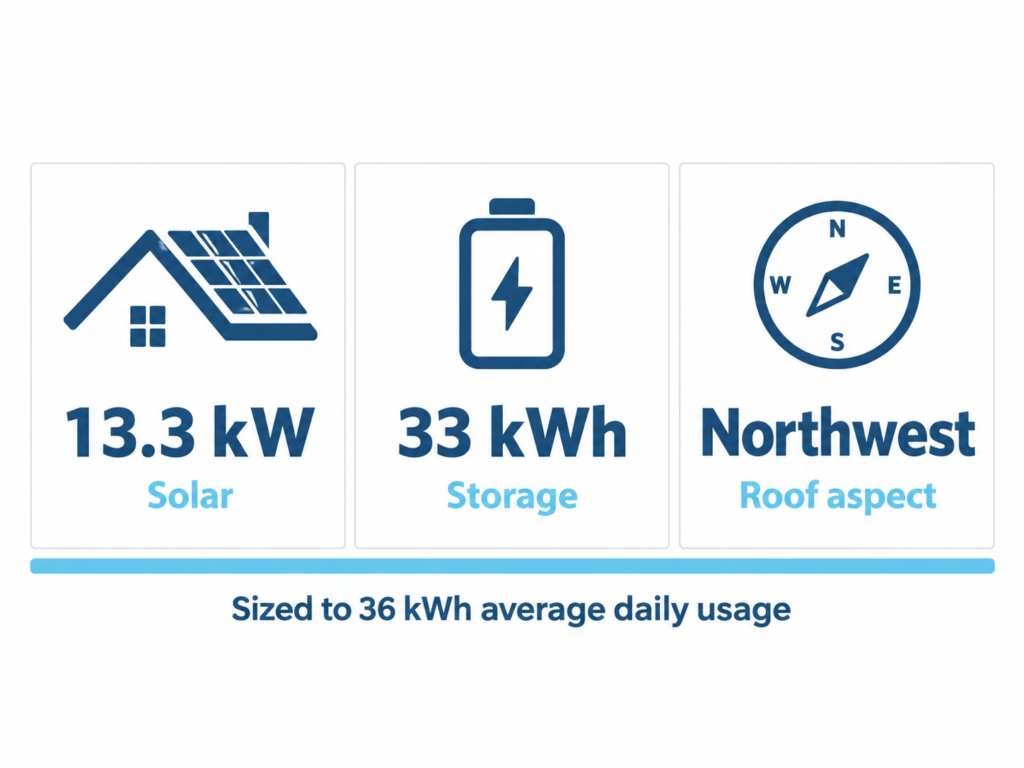
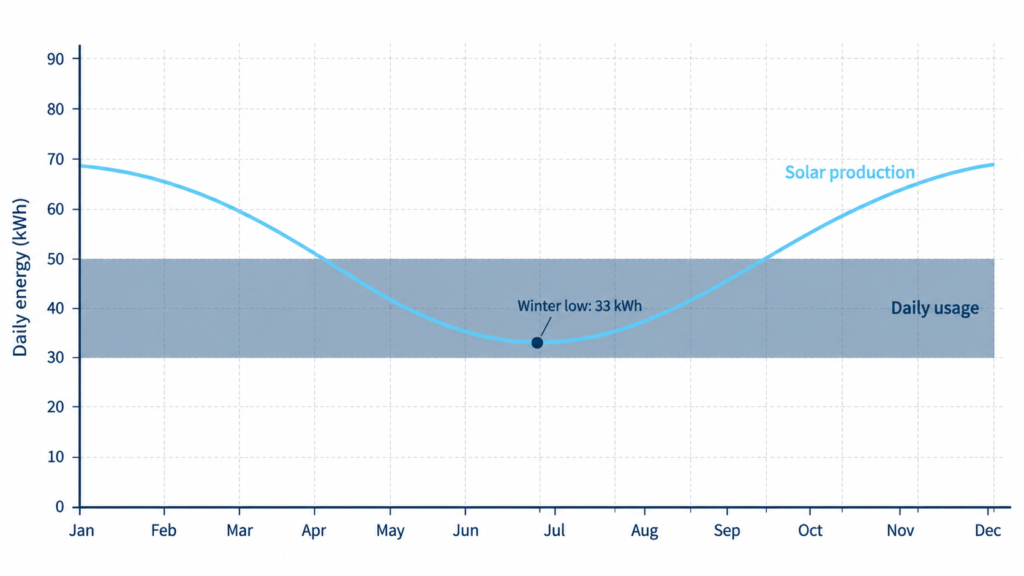
This home averaged about 36 kWh a day across a 90 day billing period. The daily figure moved around a fair bit, from roughly 30 kWh up to 40 and 50 kWh.
Averages are not the full picture. A system matched to an average day still leaves you buying from the grid on the heavy ones. So we size a system to be capable of handling the highest usage days, not the midpoint.
The design: 13.3 kW of solar with 33 kWh of battery storage. Panels went on the northwest facing roof, with allowance made for a little northern tree shade.
How much will the system actually produce?
Winter is the test. The sun sits lowest in the sky, days are shortest, production bottoms out.
Even then, the system was putting out about 33 kWh a day. For the remaining eight plus months of the year, daily production ran between 50 and 70 kWh. Enough to cover the loads and fill the battery.
Did the numbers stack up?
Paid for outright, the system carried a four to five year payback.
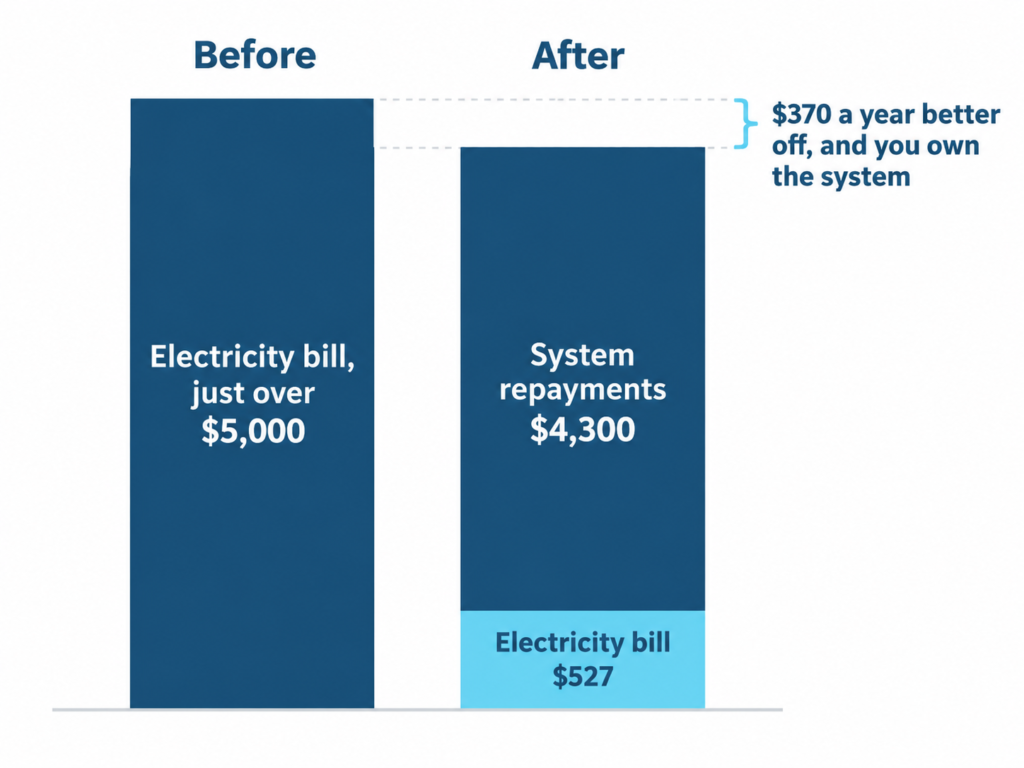
They did not pay for it outright. They financed the system and paid for it by redirecting what they were already spending on electricity. Here is how the year looks now:
| Before | After | |
| Electricity bill | Just over $5,000 | $527 |
| System repayments | $0 | $4,300 |
| Total | Just over $5,000 | $4,827 |
Net saving of $370 a year, and they now own a solar and battery system at the end of it.
That makes it a cash flow positive loan. The new bill plus the repayment lands under what they were already paying.
Does it work out this well for every home?
No, and I will not pretend otherwise.
It is not always less in every scenario. Sometimes it is about the same, and you are simply redirecting the money to your own asset. Other times it is a little bit more, so you have to chip in.
Four things decide which way it lands:
- How much power you use
- What system size that usage calls for
- The length of the finance term
- Whether you can put anything down upfront
For this Canberra home, it came out ahead. For yours, the only way to know is to run your own bills through it.
Frequently Asked Questions
What does LOM stand for?
The Lenergy Offset Method. It is the strategy of redirecting your current electricity spend into a solar and battery system you own, rather than continuing to pay a retailer for power you never keep.
Can I do this with no money upfront?
This homeowner did. They paid nothing upfront and started with a lower bill from day one. Whether you put money down is your call, and it changes the repayment figure.
Will my new bill really drop to $527?
That was this household’s result after the system went in. Yours depends on your usage, your system size and your tariff. The method is the same, the numbers are not.
What happens to the system once the term ends?
You own it outright. The repayments stop and the production does not.
Does this only apply in Canberra?
No. Lenergy designs and installs across the ACT, NSW and Queensland. The sizing work is the same wherever you are, only the sun and the tariffs change.

