

What Does a NatHERS Rating Actually Mean?
When it comes to the energy efficiency your home gets scored on two things: how comfortable it stays without the assistance of air conditioning, and how much energy it uses.
That’s your NatHERS rating and it’s actually two separate scores. A new interest-free loan can now help you fund the assessment and more importantly, the upgrades that lift it.
This guide covers:
- what a NatHERS rating actually measures, and the two parts that make it up
- how the Whole of Home rating works, and why solar and battery system move the needle
- how the score is calculated
- how the NSW $15,000 interest-free loan can pay for the upgrades, and who qualifies
What is a NatHERS rating?
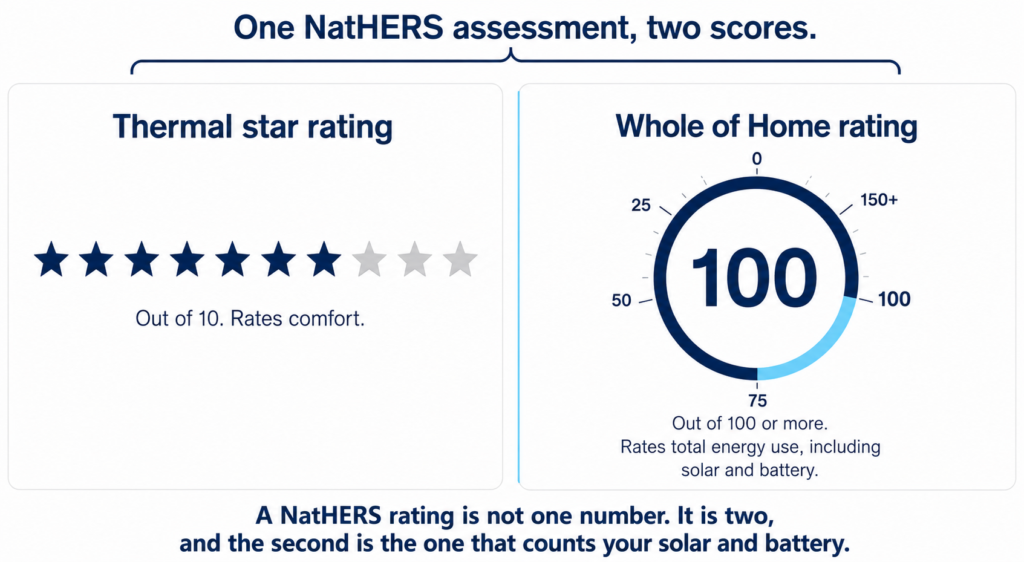
NatHERS stands for the Nationwide House Energy Rating Scheme. It is Australia’s main system for rating how energy efficient a home is. An accredited assessor runs your home through approved software and gives it a score. There are two parts:
- Thermal star rating, out of 10. This looks at the building itself, things like insulation and orientation.
- Whole of Home rating, out of 100 or more. This looks at the energy your home uses and produces across a year, including your solar and battery.
What does the Whole of Home rating measure?
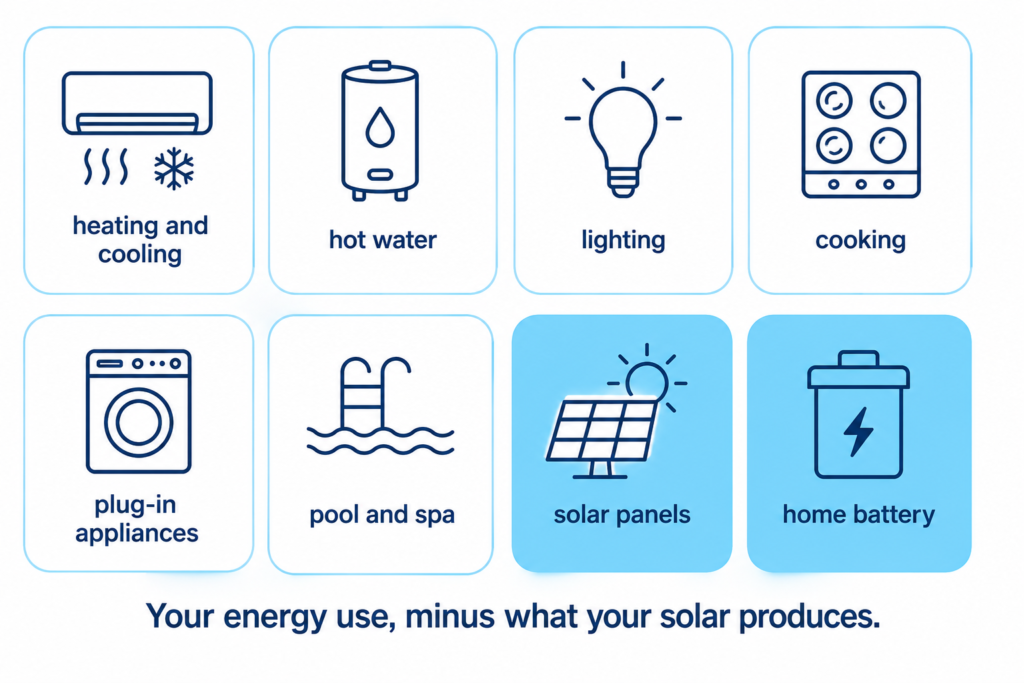
This is where solar and a battery earn their keep. The thermal rating only looks at the building fabric, things like insulation, windows and orientation. The Whole of Home rating goes further. It counts:
- heating, cooling and hot water
- lighting, cooking and plug-in appliances
- pool and spa equipment, if you have it
- your solar generation and battery storage
It adds up your predicted energy use, then subtracts what your solar produces. The result shows your real running costs and how much you lean on the grid.
How do solar and a battery change the score?
They lift it, often a lot. Here is how it works:
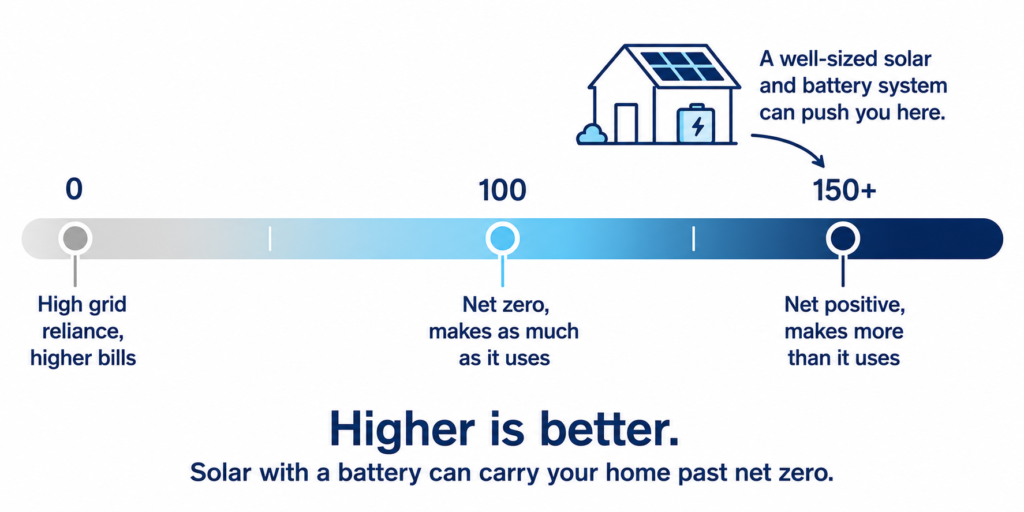
- A score of 100 means a net-zero home, one that makes as much energy as it uses across the year.
- A well-sized solar system paired with a battery can push the score past 100. That means your home produces more than it uses.
- Solar offsets your daytime use. A battery stores the extra, so you draw less from the grid at night.
- A well-insulated home needs less solar and battery capacity to hit a high score, so the two work together.
The payoff shows up on your bill. Read our guide on 5 Practical Reasons to Add a Battery to Your Solar System. Over time, the savings build.
How is the rating calculated?
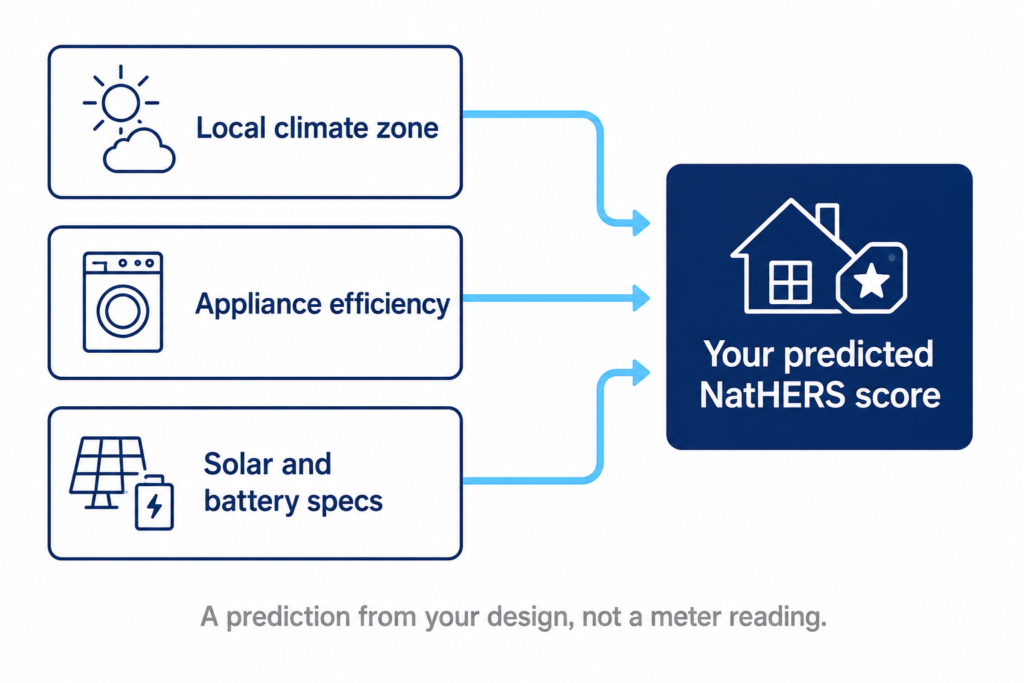
The rating is based on your home’s design and systems, not the way you live in it. An assessor uses approved software built on CSIRO research. It weighs:
- your local climate zone
- your appliance efficiency
- your solar and battery system specs
One thing to remember. The rating is a prediction made before or during a build, not a meter reading taken after. How you use the home still shifts the real numbers.
What is the NSW interest-free loan?
The recently announced NSW Home Energy Saver loan offers eligible households up to $15,000 at 0% interest, with no fees, repayable over up to 10 years. You can use it to fund the upgrades that improve your rating. Eligible upgrades include:
- rooftop solar
- a household battery
- the NatHERS assessment itself
- heat pump hot water, reverse-cycle air conditioning, ceiling insulation and switchboard upgrades
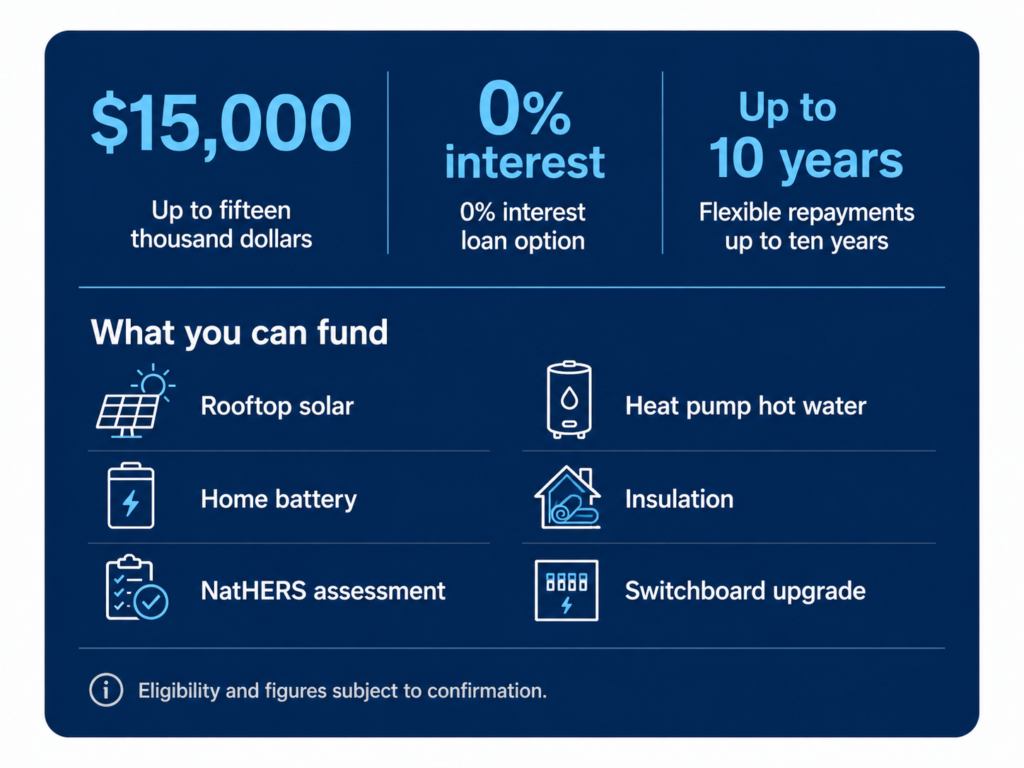
To qualify, you need to be an owner-occupier or a landlord with combined household taxable income up to $210,000. Extra discounts are expected to be implemented for lower-income households and concession card holders are expected, and renters may access support with their landlord’s approval.
You apply through an approved lender after getting quotes from approved suppliers Brighte or Plenti. If upfront cost is the thing holding you back, this is built to solve exactly that.
Want to learn more about whether solar and a battery would be right for you? Read more about in our article Is Your Home Ready for Solar Panels?

Frequently Asked Questions
What is a NatHERS rating and why do I need one?
It is an energy score for your home. The thermal part rates comfort out of 10 stars. The Whole of Home part rates your total energy use out of 100 or more, and counts your solar and battery. You usually need one for building approval on a new home or a major renovation.
How many stars do you need to pass a NatHERS assessment?
For many new homes, the current thermal minimum is 7 stars under the National Construction Code. Some areas also set a minimum Whole of Home score. Your assessor will confirm what applies to your address.
How much does a NatHERS assessment cost in Australia?
The standard cost ranges from around $350-$700, however, the cost depends on the home, the plans and the assessor. The NSW interest-free loan can cover the cost of the assessment itself.

