

The 5 Best Ways to Take Advantage of 3 Free Hours of Energy
From 1st of July 2026, three hours of your power each day could cost nothing.
That is the promise of the Solar Sharer Offer. Free energy hours, every day, right in the middle of the day. No rooftop solar required.
The free window lands in the middle of the day, when most people are out at work. Leave the house running as usual and your bill barely moves. To get real value, you have to get smart about how and when you use your power.
So the real question is not what the offer is. It is what you do with those three hours.
This article covers:
- How the Solar Sharer Offer works
- The 5 best ways to use your free hours
- How much you could save
- Why a battery gets the most out of it
How does the Solar Sharer Offer actually work?
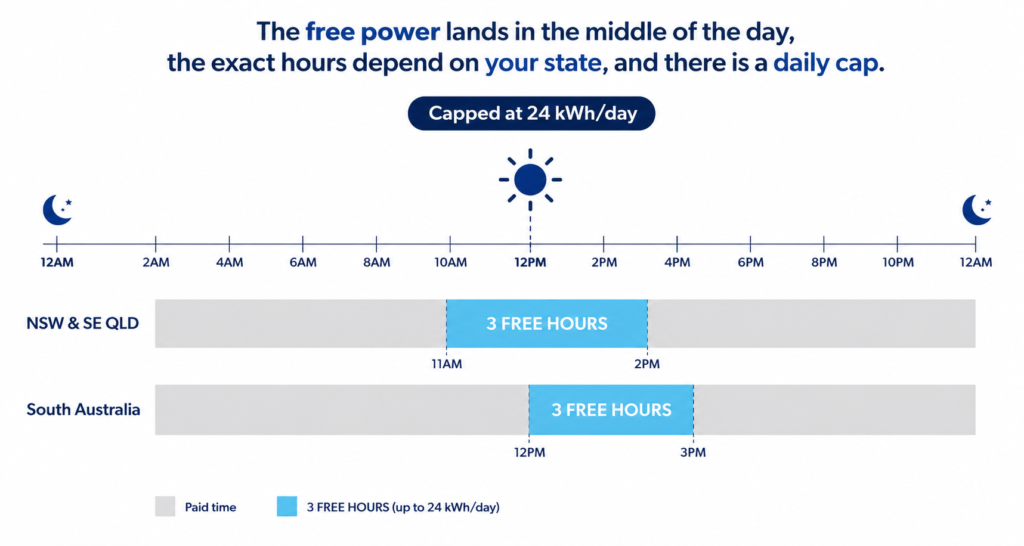
The Solar Sharer Offer gives you at least three free hours of electricity every day. It launches in NSW, South East Queensland and South Australia.
The free window is 11am to 2pm in NSW and South East Queensland. In South Australia it runs 12pm to 3pm. That is when solar is flooding the grid and power is at its cheapest.
To get it, you need a smart meter and you need to opt in through your retailer. It is not switched on automatically. You do not need solar panels, and you do not need to own your home.
The free power is capped at 24 kWh a day. Use more than that and you simply pay normal daytime rates on the extra, with no penalty. You still pay your daily supply charge, and any power you use outside the window.
What are the 5 best ways to use your 3 free hours?
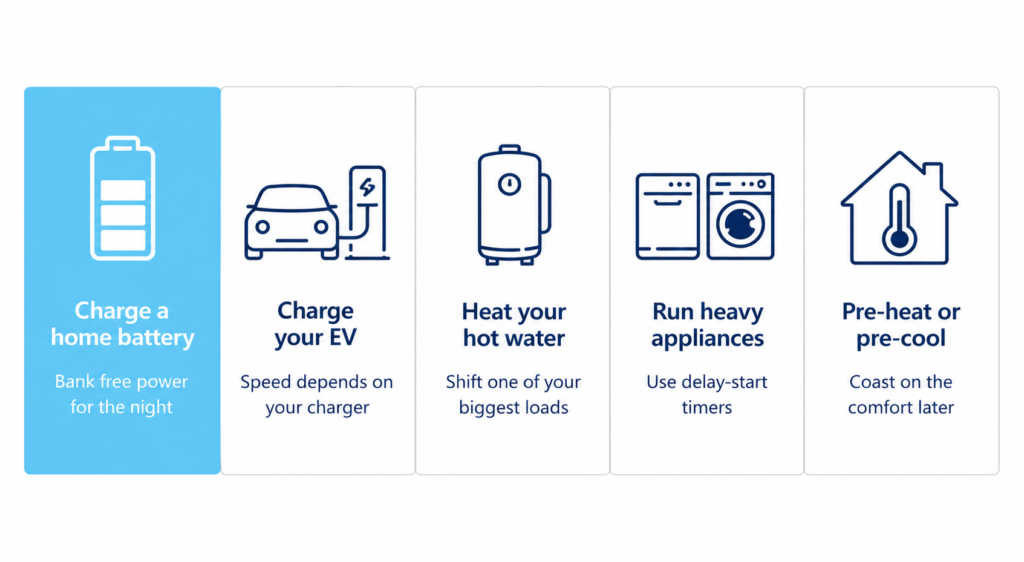
The trick is simple. Move your heaviest power use into the free window. Here are the five that pay off most.
1. Charge a home battery from the grid
A battery lets you grab free power at midday and use it at night, when rates are highest. You are not limited to what you can run in three hours. You store it and use it later. On cloudy or winter days, this is how you still fill up. Batteries such as Sigenergy SigenStor can be set to charge in the free window on its own, so you never have to think about it. Not every battery or inverter can do this so make sure to do some research on yours first.
2. Charge your electric vehicle
EVs are hungry, which makes them a great match. The result depends on your charger. A basic trickle charger might add only 6 kWh in three hours, around 10% of a typical EV. A fast three-phase home charger can push closer to 30 kWh, about half a charge or roughly 120 km of range.
3. Heat your hot water in the window
Hot water is one of the biggest single loads in most homes. Heating it at midday instead of in the morning or evening can save a lot. Check first though. If your hot water is on a controlled load tariff, your retailer may set the timing, so ask before you plan around it.
4. Run heavy appliances on timers
Your dishwasher, washing machine, dryer and pool pump all suit the free window. Use delay-start or smart settings to run them at midday, even when you are out. Running one dishwasher load in the window instead of at peak rates could save around $128 a year on its own.
5. Pre-heat or pre-cool your home
Run your heating or cooling hard during the free hours, then coast on it afterwards. A well-insulated home holds that comfort for hours. It is a simple way to use free power now and stay comfortable later for less.
How much can you actually save?
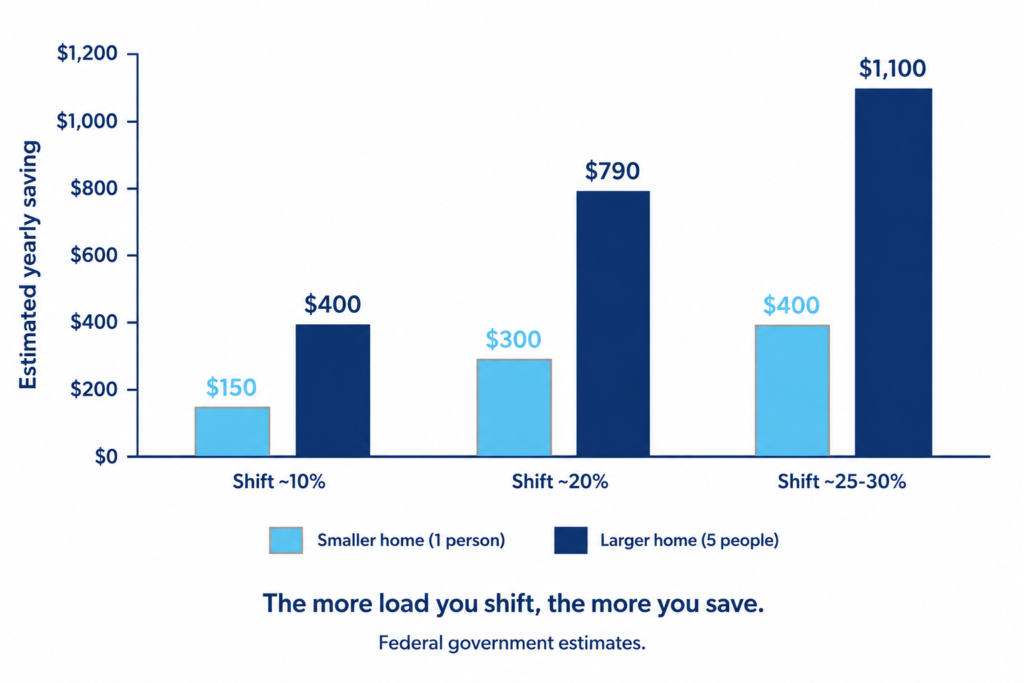
It depends on how much of your usage you can shift. The federal government’s own estimates give a rough guide:
| Usage shifted into the window | Smaller home (1 person) | Larger home (5 people) |
| About 10% | ~$150 a year | ~$400 a year |
| About 20% | ~$300 a year | $500–$790 a year |
| About 25–30% | ~$400 a year | $800–$1,100 a year |
The pattern is clear. The more load you move, the more you save. Bigger homes with more appliances, an EV or a pool have the most to gain.
Is the Solar Sharer Offer worth it for everyone?
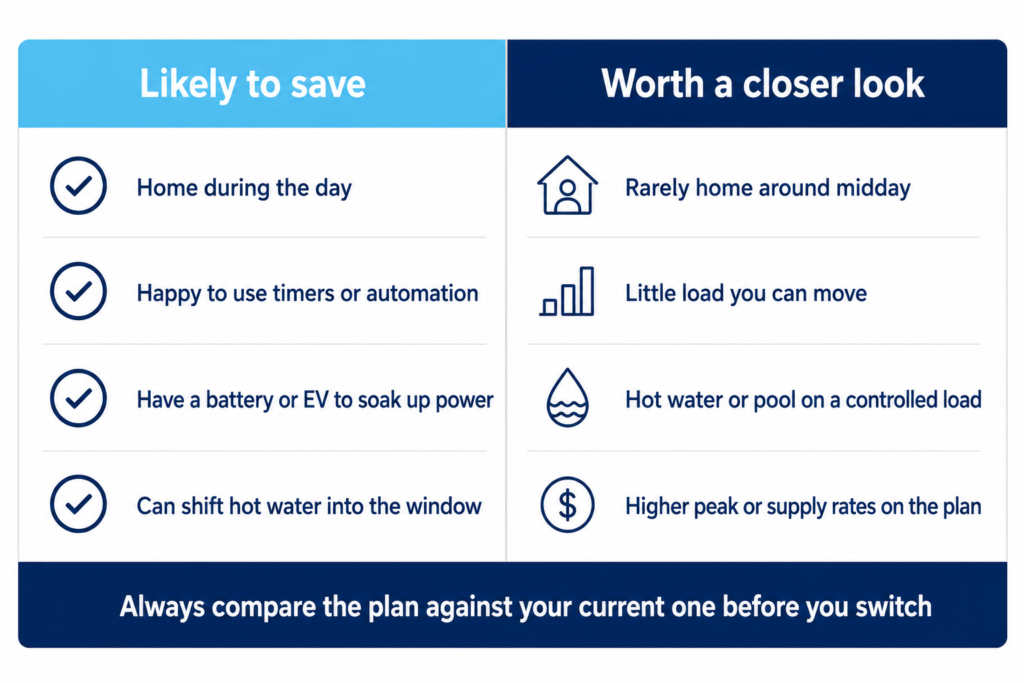
No. The Solar Sharer Offer can help eligible households cut their bills, as long as they can move power use into the free window. The key is your daily routine.
Think about whether you can shift your energy use to the middle of the day. The more you move into the three-hour window, the more you could save on your energy bills. If you cannot shift much, you could end up worse off, because these plans often carry higher peak rates or supply charges. So compare the plan against your current one before you switch.
Why a battery gets the most out of it
In three hours it is easy to fall short of the full 24 kWh. You might run the dishwasher and a load of washing, but most homes will not get through the whole cap in one short window. A battery brings more flexibility. It can soak up power you would otherwise miss and let you use it whenever suits you.
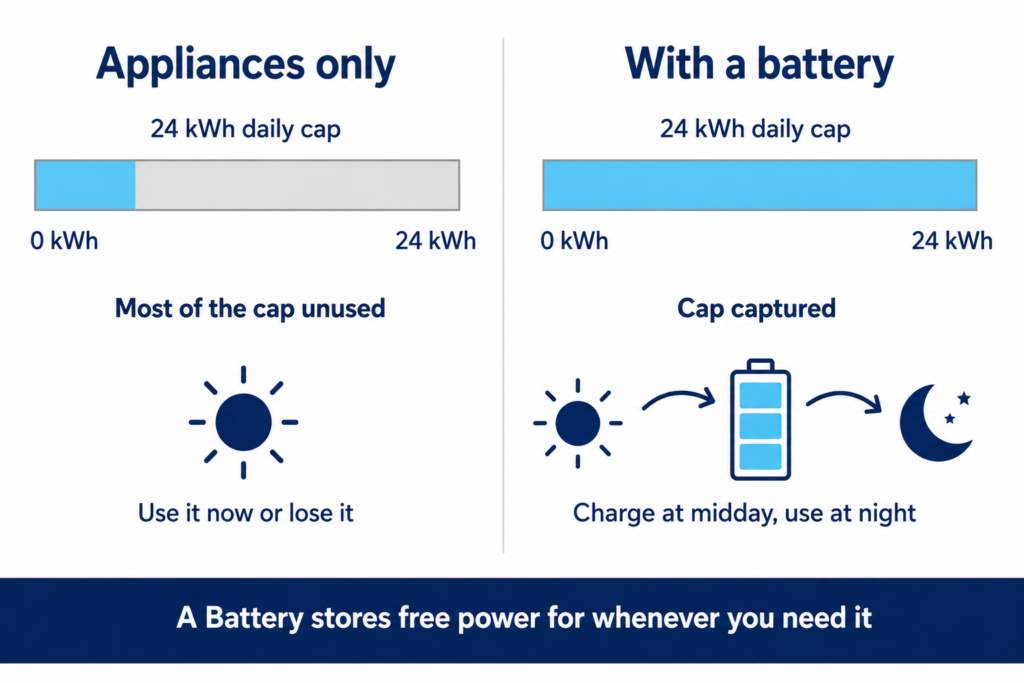
Pair the Solar Sharer Offer with a battery and the free window becomes your cheapest source of stored power, day or night, and don’t worry you have not missed the battery rebate.
If you want the full background on free daytime power and who benefits most, read more here.
Frequently Asked Questions
What is the Solar Sharer Offer and how do the 3 free hours work?
The Solar Sharer Offer gives eligible households at least three hours of free electricity a day, capped at 24 kWh. The window is 11am to 2pm in NSW and South East Queensland, and 12pm to 3pm in South Australia. You need a smart meter and you opt in through your retailer. No solar panels needed.
Which appliances should I run during my 3 free energy hours?
Your heaviest users give the best return: hot water, EV charging, dishwasher, washing machine, dryer and pool pump. Heating or cooling your home in the window helps too. Use timers or smart settings so they run even when you are out. Check whether your hot water or pool pump is on a controlled load first.
Can I save even more by combining the offer with a home battery?
Yes, and it is the single best way to maximise it. A battery stores free midday power for use at night, so you capture far more of the 24 kWh cap than appliances alone can. The right size matters most.

