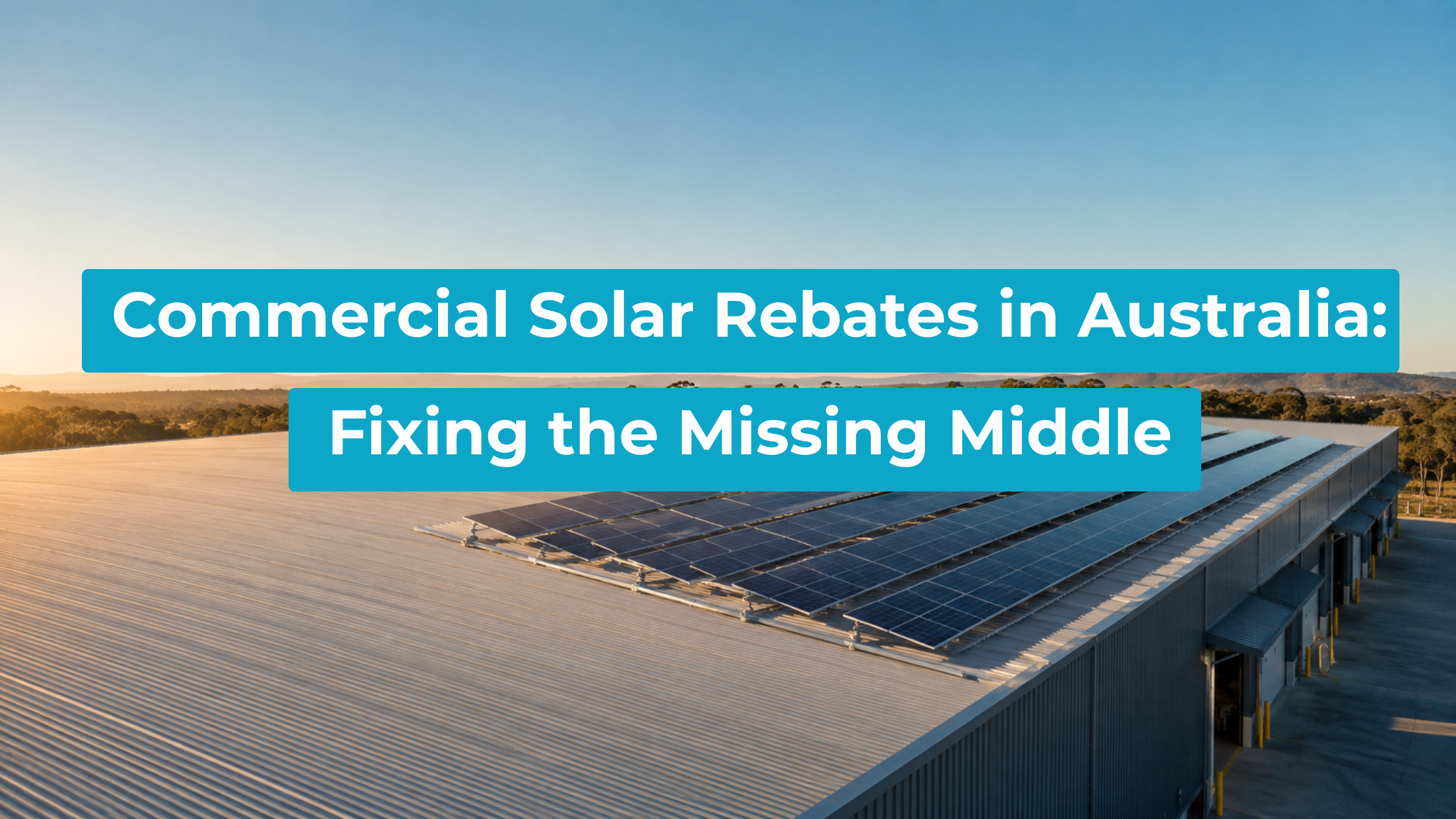
Commercial Solar Rebates in Australia: Fixing the Missing Middle
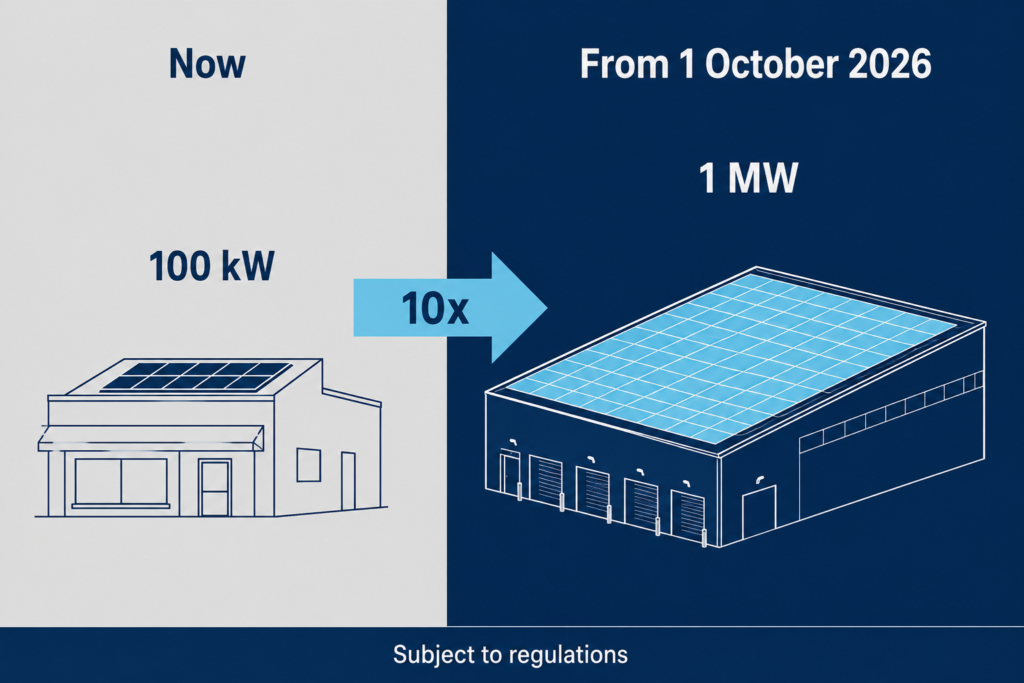
The federal government announced a tenfold increase to the cap for commercial solar rebates. The limit moves from 100 kW to 1 MW, opening the door for massive savings for commercial properties considering going green.
Commercial solar rebates in Australia have worked well for small systems for years. Larger roofs missed out. That gap has a name in the industry: the missing middle.
From 1 October 2026, subject to regulations, systems up to 1 MW can claim the same upfront discount smaller systems already get. The government estimates it cuts installation costs by around 20 per cent.
Here is what this article covers:
- What changed, and when it starts
- What the missing middle is, and why it happened
- What the discount is worth on a real system
- Which businesses can claim it
- What to do before 1 October
What changed with commercial solar rebates in Australia?
The Small-scale Renewable Energy Scheme (SRES) sits behind the rebate. It has run since 2011. It creates certificates, called STCs, that your installer trades on your behalf and takes off the price up front.
Until now, the SRES stopped at 100 kW. Anything larger moved to a different certificate system that pays out slowly instead of up front.
That cap is lifting to 1 MW.
Climate Change and Energy Minister Chris Bowen announced the change at the National Press Club, framing it as a fix for a rebate that stopped short.
“We’re fixing that by expanding support to systems up to 1 MW, unlocking the potential of commercial rooftops and helping businesses cut power bills, invest in growth and create jobs.”
The start date is expected to be 1 October 2026, subject to the regulations being in place. Nothing is locked in yet.
What is the missing middle in Australian solar?
Australia leads the world on rooftop solar at home. Residential solar sits at about 22 GW.
Business solar sits at about 5.6 GW. Most of that is systems under 100 kW.
Bowen put the gap plainly.
“One in three Australian homes have rooftop solar, but larger energy users have been locked out because the existing solar rebate only supports systems up to 100 kW.”
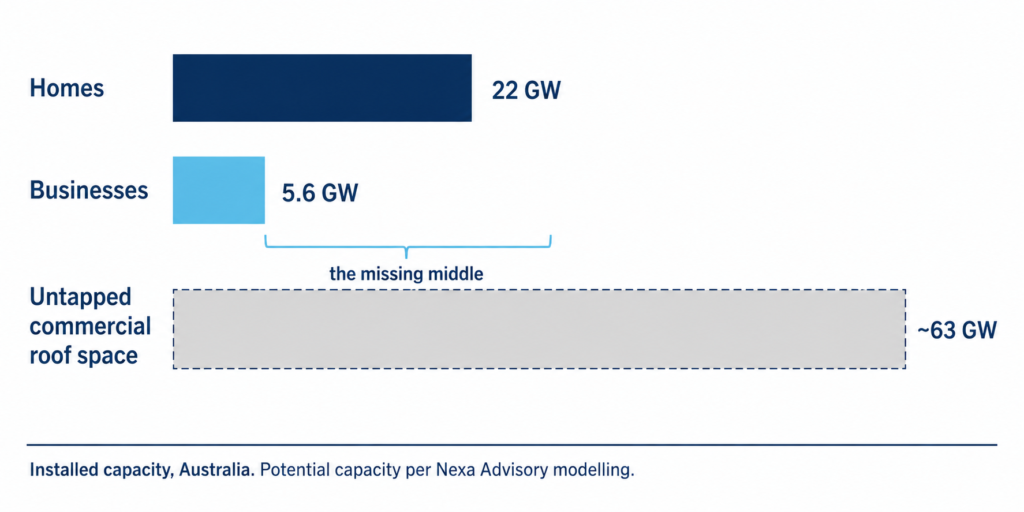
That is the missing middle. Not homes, not large solar farms, the factories, warehouses, packing sheds and shopping centres in between.
The 100 kW cap explains a lot of it. A big warehouse roof can hold far more than 100 kW. Going past the cap meant losing the upfront discount, so plenty of businesses built to just under it instead.
The room to grow is large. Modelling from Nexa Advisory puts technical capacity on commercial and industrial rooftops at more than 63 GW.
What are the expanded commercial solar rebates worth?
The government has published estimates for three system sizes.
- 250 kW. Around $68,000 off the install cost. A system this size produces about 345 MWh a year and could cut electricity costs by around $50,000 a year. Suits a medium sized retailer.
- 500 kW. Around $136,000 off the install cost. Enough to run a small manufacturing site.
- 850 kW. Produces about 1,173 MWh a year and could cut electricity costs by around $175,000 a year. Reported discount is around $230,000.
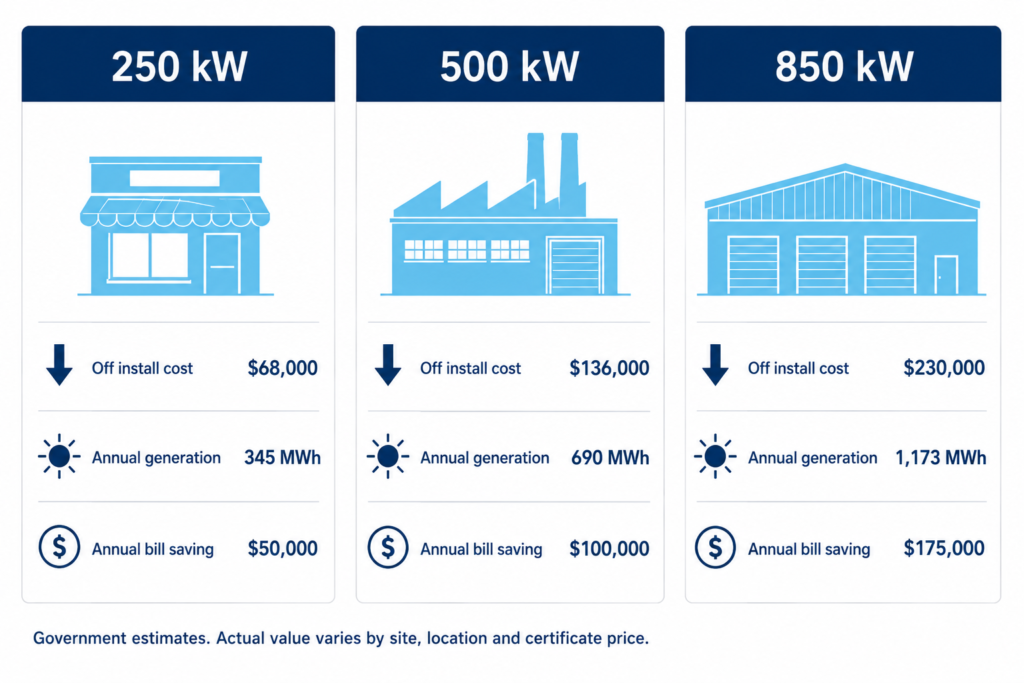
Treat these as estimates, not quotes. The real value of an STC discount moves with the certificate price, your location and the deeming period. Actual bill savings depend on how much of that power you use on site rather than export.
Eligible systems are expected to keep a five year deeming period through to 31 December 2030.
Which businesses can claim the commercial solar rebates?
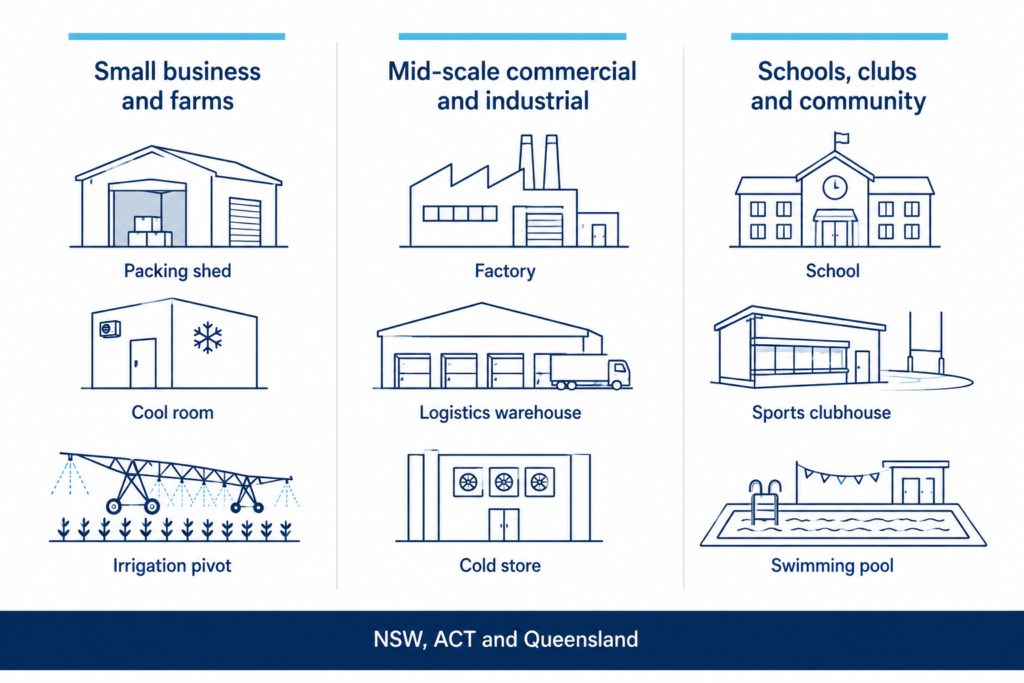
The scheme is federal, so it applies the same way in NSW, the ACT and Queensland. Bowen named the sectors directly.
“This will help manufacturers, farmers, retailers, logistics centres, schools, hospitals and community organisations reduce energy costs, and it uses an existing, proven scheme meaning no new bureaucracy or red tape.”
Small business and farms. Packing sheds, cool rooms, irrigation pumps and workshops run hard through the middle of the day. That is the best match for solar, because the power gets used where it is made.
Mid-scale commercial and industrial. Manufacturing, logistics, cold storage and large retail sit in the 250 kW to 1 MW range. These are the sites the change was built for.
Schools, clubs and community facilities. Halls, pools and clubhouses have large roofs and tight budgets. Some may also be able to combine this discount with grant funding, such as the PDRS scheme.
Why has cost not been the only barrier?
Grid connection is the other one.
A commercial system needs approval from the local network before it can export. Business owners report waits running into months. A slow approval can stall a project long after the quote is signed.
The government has said it will also push for faster connection approvals on mid-scale solar, through targeted rule change requests.
Network rules also decide what a system earns once it is connected, not just how quickly it gets switched on. We covered that in what the AEMC’s pricing proposal means for solar owners.
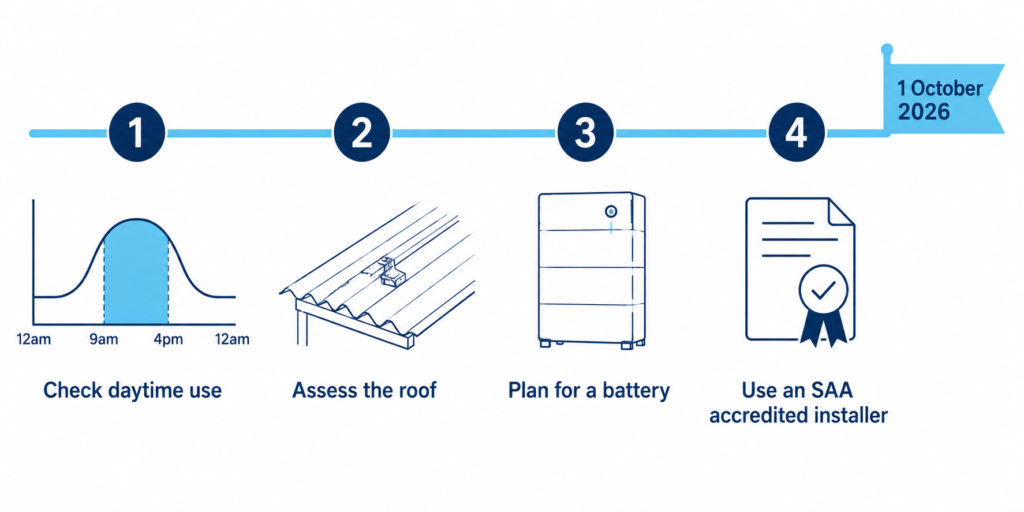
What should your business do before 1 October 2026?
Four things.
Look at your daytime use. Pull twelve months of interval data from your retailer. Solar pays best on sites drawing power between 9am and 4pm.
Get the roof checked. Age, orientation, sheet type and structure all decide what can go up there. Mounting matters more on a large commercial roof than most people expect, which is worth reading about solar racking works.
Design for a battery, even if you add it later. Solar covers the day. A battery covers the evening peak, when commercial tariffs bite hardest. SigenStack systems are designed to suit larger sites, and the federal battery rebate is a separate program with its own rules.
Use an SAA accredited installer. The Clean Energy Regulator suspended 21 solar companies from the SRES in the April to June 2026 quarter for compliance failures. A non-compliant install can cost you the discount.
Frequently asked questions
What is the Small-scale Renewable Energy Scheme, and who can use it?
It is the federal scheme that gives an upfront discount on solar and battery installs. It has run since 2011. Homes, small businesses, farms and community organisations can all use it. The discount comes through certificates your installer handles, so you see it as a lower price rather than a payment you claim back.
What is the new maximum system size for commercial solar?
1 MW, up from 100 kW, expected from 1 October 2026 and subject to regulations.
How much can my business save with the new commercial solar rebate?
Around 20 per cent off the install cost, based on government estimates. On a 250 kW system that is roughly $68,000. Your actual figure depends on system size, location, certificate prices and how much power you use on site.
Read next: what the new PDRS rules mean for commercial batteries