

Solar Racking: What Australian Homeowners Need to Know
What’s actually holding your solar panels to your roof?
It’s called racking. The rails, brackets and roof interfaces that carry your panels through 25 years of Australian weather. Most homeowners never think about it. Until something goes wrong.
Choosing the right solar panel mounting system in Australia matters more than most homeowners realise, and Clenergy, ranked the number one solar mounting brand in Australia for 2025 by market analyst SunWiz, is built to get it right.
This guide covers:
- what solar racking is and why it matters
- how to choose a mounting system, and why Clenergy leads
- the best racking for ColorBond, tile and other Aussie roofs
- how racking handles harsh Australian conditions
- what the warranty actually covers, now confirmed at 25 years
- how to know your solar installation is done right
What Is Solar Racking and Why Does It Matter?
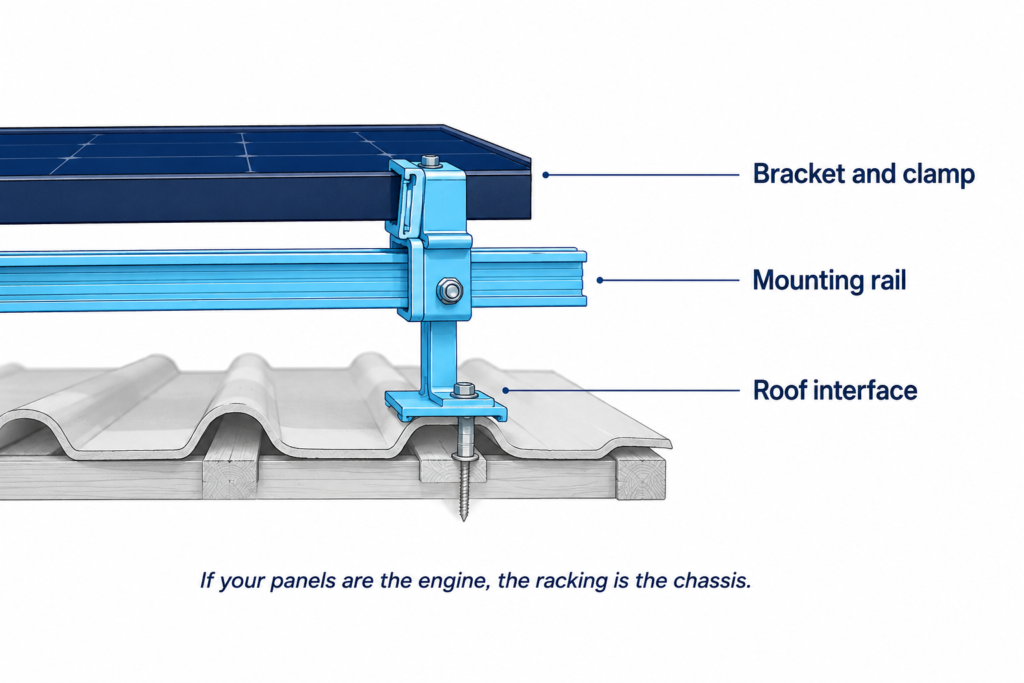
A typical solar racking setup consists of three parts:
- solar mounting rails that run across the roof
- brackets and clamps that grip each panel
- roof interfaces that fix it all down through the tiles or metal sheet
If your panels are the engine, the racking is the chassis. It does the structural work and gets none of the glory. Skimp on it and the costs show up later:
- water can leak in around each roof penetration
- panels can shift or lift in strong wind
- cheap solar panel brackets can corrode early near the coast
- the extra solar system roof load needs hardware that can carry it
How to Choose a Solar Panel Mounting System in Australia
Nearly every solar installer in Australia has a go-to racking brand they trust. Ours is Clenergy, and here is why:
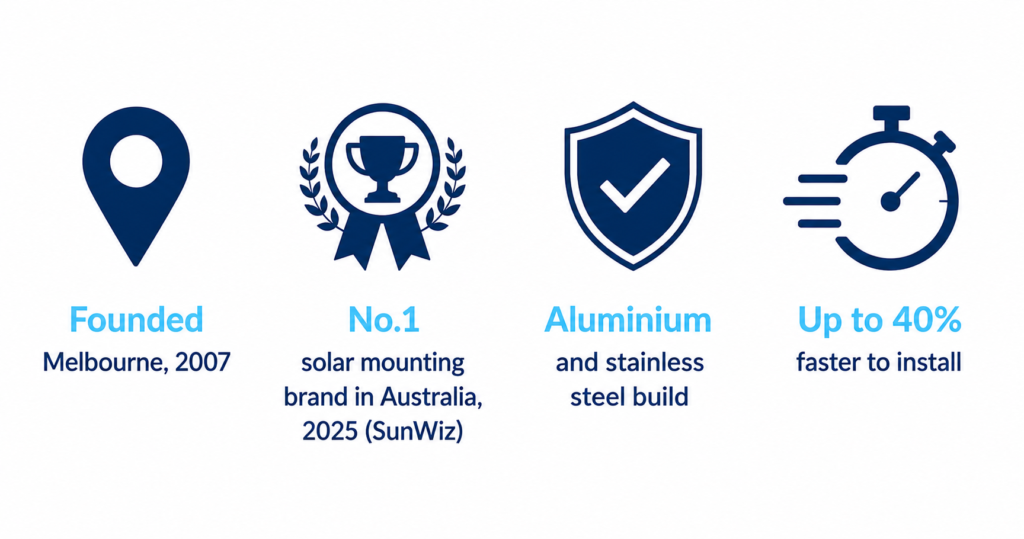
- founded in Melbourne in 2007, now selling in more than 50 countries
- ranked the number one solar mounting brand in Australia for 2025 by market analyst SunWiz
- built from tough anodised aluminium racking and stainless steel
- parts that click together, which Clenergy says can cut install labour by up to 40 percent
Why does installer-friendly hardware matter to you? For a few practical reasons:
- less time on your roof means less mess and fewer mistakes
- quality solar mounting hardware in Australia holds up over decades
- a solar installer in Australia who knows the system fits it right the first time
What Solar Mounting System Is Best for ColorBond and Tile Roofs?
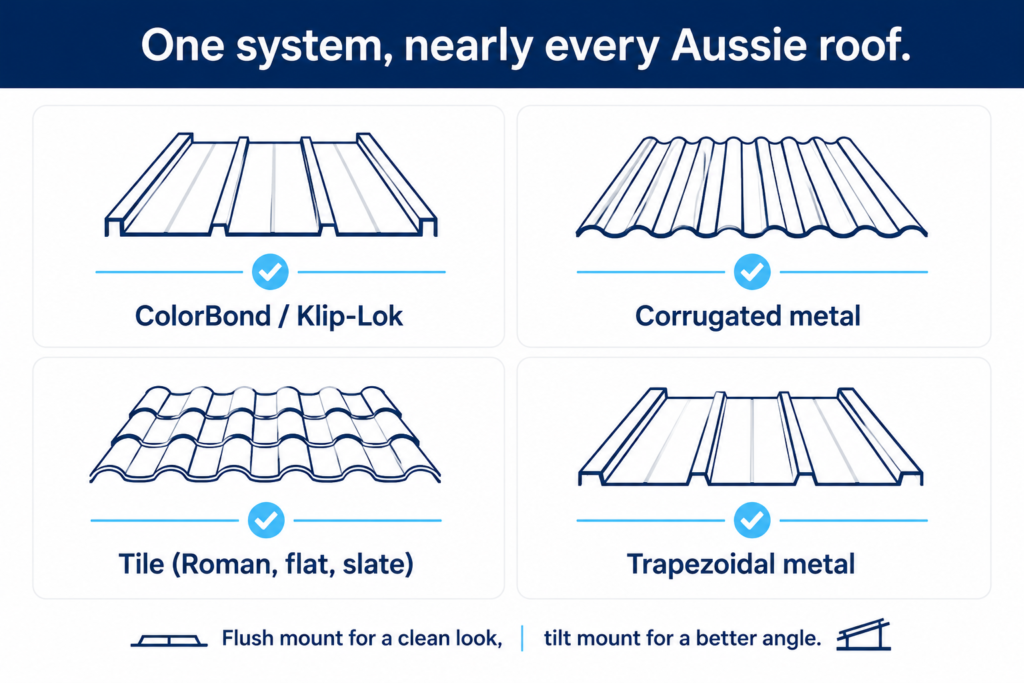
One of Clenergy’s biggest strengths is that the same system suits nearly every Australian roof. Only a small interface part changes to match yours. It covers:
- ColorBond and other steel roofs, including Klip-Lok and corrugated profiles
- tile roofs, including Roman, flat and slate, for solar tile roof mounting
- all of these roof types are backed by the same 25-year Clenergy product warranty
A few things worth knowing when you roof mount solar panels in Australia:
- on a ColorBond roof, the right solar brackets clamp to the ribs with minimal roof penetration
- on tile, the interface lifts a tile and bolts into the rafter below, then seals
- you can choose a flush mount for a clean look or a tilt mount to improve the angle
Roof angle changes how much power you make, so read our guide on roof orientation, pitch and shading before you settle on a layout.
How Solar Racking Holds Up to Australian Conditions
Australian weather is hard on rooftop hardware, from coastal salt to inland heat to cyclonic wind. Clenergy is built for it:
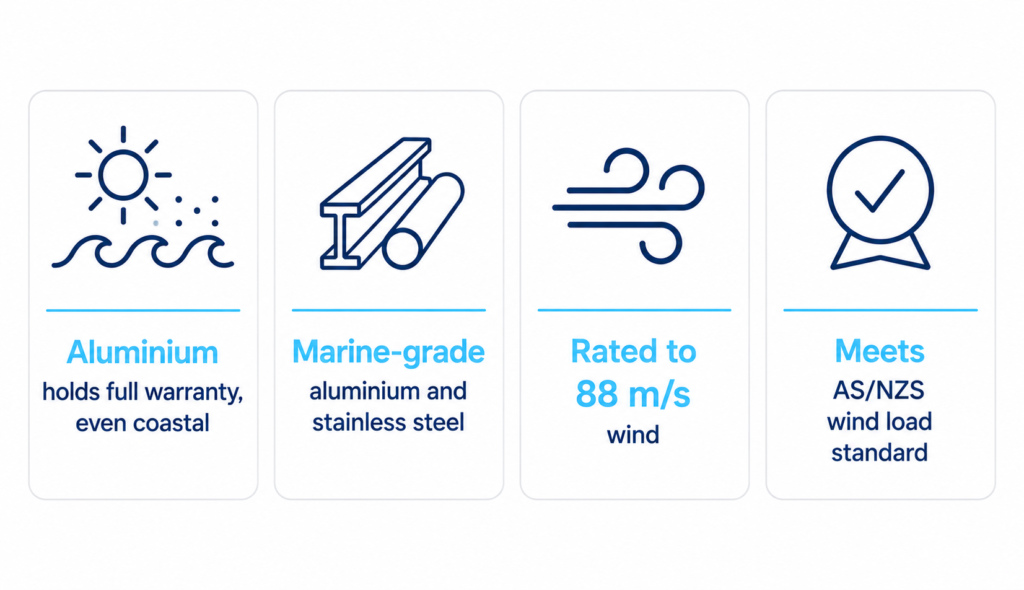
- aluminium parts warranted for the full 25 years, even in harsh coastal air
- a galvanised steel option for tougher environments
- wind-rated solar mounting said to handle up to 88 metres per second
- engineered to meet the AS/NZS wind load standard
Where you live changes what you need:
- coastal homes in NSW face salt corrosion, so component choice matters
- high-wind and storm-prone areas need properly rated, well-fixed racking
Severe weather hits your panels too, which we cover in our article on solar panels and storm or hail damage.
Does Solar Racking Affect My Roof Warranty?
Two different warranties come up here, and it helps to keep them apart. First, your roof warranty:
- every install needs roof penetrations or clamps, and poor workmanship there can cause leaks and put a roof or building warranty at risk
- done correctly, by an accredited installer using proper flashing and sealing, your roof stays sound
- always ask how your installer handles roof penetration and waterproofing
Second, the Clenergy product warranty:
- Clenergy Australia warrants its PVezRack SolarRoof and SolarTerrace racking for 25 years, per the product warranty last updated 10 July 2024
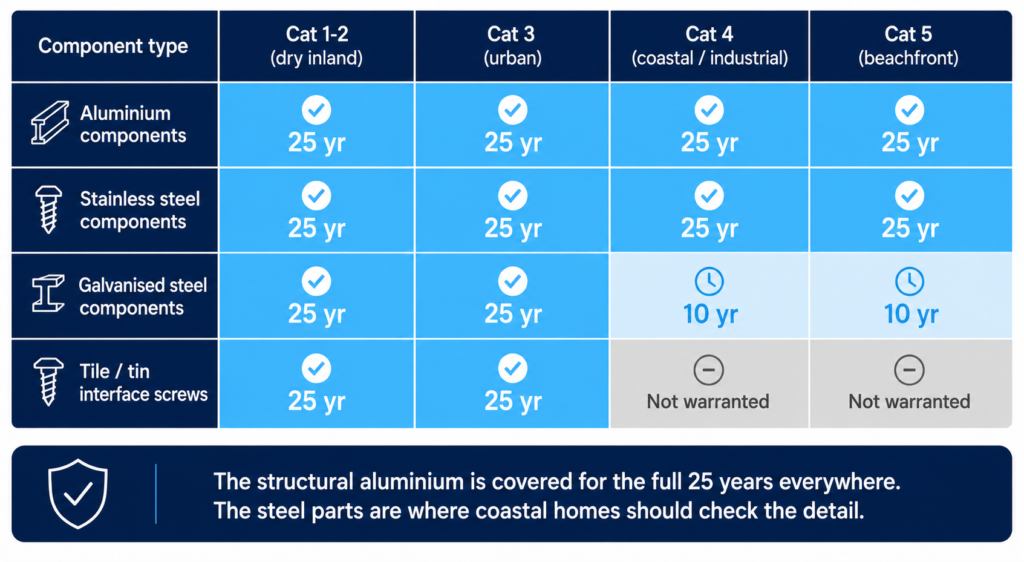
- aluminium and stainless steel components are covered for the full 25 years across all corrosivity categories
- Category 1 and 2: low corrosion, think dry inland areas
- Category 3: medium, general urban and suburban
- Category 4: high, near the coast or industrial areas
- Category 5: very high, beachfront and salt-heavy marine air
- in the harshest coastal corrosivity zones, some galvanised steel and screw components carry shorter cover, so coastal homeowners should check which parts apply
- cover holds only if the system is installed by an accredited installer and maintained as required, such as annual fastener checks
So the headline is simple: the official Australian warranty is 25 years for the core racking, with shorter cover only on specific steel parts in the most corrosive coastal categories. Ask your installer for the warranty document so you can see exactly what applies to your roof and your area.
Getting Your Solar Installation in Australia Right
A great solar installation in Australia comes down to the install as much as the gear. To know your solar racking is installed correctly:
- check your solar installer is accredited with Solar Accreditation Australia
- ask which racking brand and variant suits your roof, and ask for the warranty document
- ask how they handle roof penetration, flashing and the roof load
- look for neat, even rows of panels with tidy cable management
Is quality racking worth a little extra? For most homes, yes:
- it is a small part of the total cost but carries a big share of the long-term risk
- it matters most for coastal homes, complex roofs and long-term owners
- the thing to avoid is cheap, unrated racking with no Australian standards compliance
Your racking is also the foundation for everything else on the roof. Whether you are adding solar battery storage in Australia now or planning EV charger installation down the track, it all sits on the mounting system.
If you are looking to find out whether your home is ready for a solar system, you can read more here.

Frequently Asked Questions
How long does solar racking last on an Australian roof?
Quality racking like Clenergy is built to outlast the panels. The official Clenergy Australia product warranty covers the racking for 25 years, and the aluminium and stainless parts are rated for the full term across every corrosivity category. In the harshest coastal zones, some steel components carry shorter cover, so check which parts apply to your address.
Does solar racking affect my roof warranty?
It can, if it is done badly. Every install needs roof penetrations or clamps, and poor workmanship there can cause leaks and put a roof or building warranty at risk. Done properly by an accredited installer with correct flashing and sealing, your roof stays sound. Always ask how your installer manages roof penetration and waterproofing.
What solar mounting system is best for ColorBond roofs?
For ColorBond and other steel roofing you want a system with brackets that clamp securely to the roof ribs and keep roof penetrations to a minimum. Clenergy’s Klip-Lok and corrugated interfaces are designed for exactly this, which is part of why it suits so many Australian homes. Your installer should match the right interface to your specific roof profile.
How do I know if my solar racking is installed correctly?
A few quick checks tell you a lot:
- the installer can explain how they sealed every roof penetration
- the installer is accredited with Solar Accreditation Australia
- the rows of panels are neat and even, with tidy cable management
- you have the racking warranty document and know what it covers
Is now a good time to install solar, or should I wait?
For most homeowners, the sooner your system is generating, the sooner it cuts your bills, so waiting rarely pays off. The main exception is if you plan to replace your roof in the next year or two. In that case, do the roof first, so the racking goes onto sound material and does not have to come off again later.

