Australia to Set New Rules for Solar, Batteries and Inverters
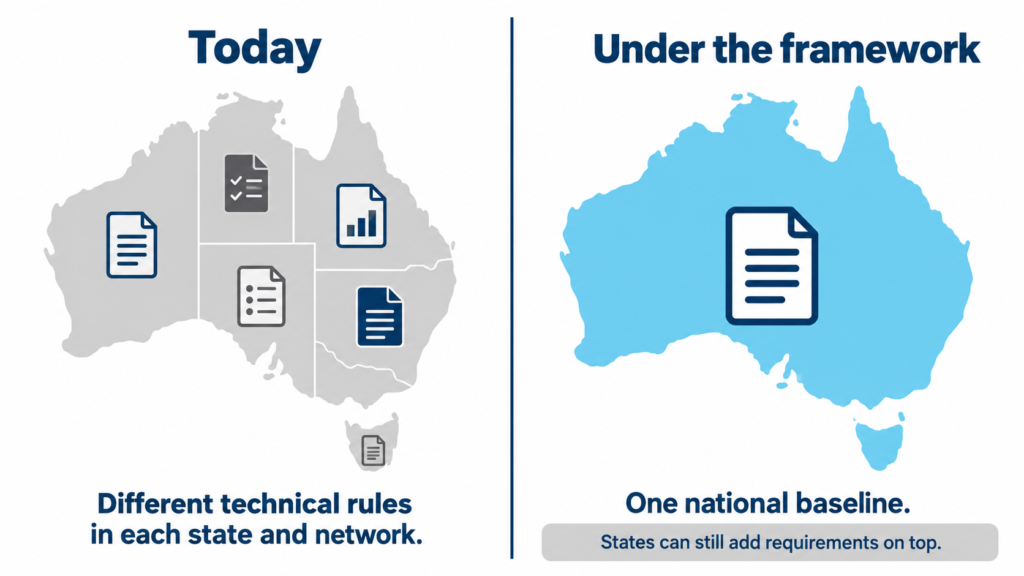
Right now, an inverter approved in one state can be a problem in the next one over. Same product. Different rulebook. Different paperwork.
That’s being replaced with one national set of rules.
In September 2026, Australia’s energy ministers endorsed the Consumer Energy National Technical Regulatory Framework, covering 2026 to 2029. It sets one national standard for the technical side of rooftop solar, inverters, home batteries and EV chargers. Nothing changes on your roof today. Nothing you’ve already installed gets caught out.
Here’s what this article covers:
- What the new framework actually is, in plain terms
- Whether your existing system is affected
- What changes when you go to buy
- What it means if you’re in the trade
- When any of it starts
What are Australia’s new solar and battery regulations for 2026?
The framework covers what the government calls consumer energy resources. That’s the gear sitting on and around your house that makes or stores power: panels, inverters, batteries, EV chargers, and some connected appliances like air conditioners and hot water systems.
Until now, the technical rules for that gear have been set state by state, and network by network. A manufacturer selling into Australia has had to build for several different sets of requirements.
The framework says that costs everyone money. Manufacturers either wear the cost of multiple versions, pass it on, or walk away from the market entirely. Fewer options on the shelf. Higher prices on the ones that stay.
So the fix is a single National CER Technical Code. One baseline, written by the federal department, updated every two years with the minister’s sign-off.
Now, states and territories can still add their own requirements on top of that baseline. The national rules set the floor, not the ceiling.
Will the new rules apply to the system I already have?
No. This is the part worth being clear about.
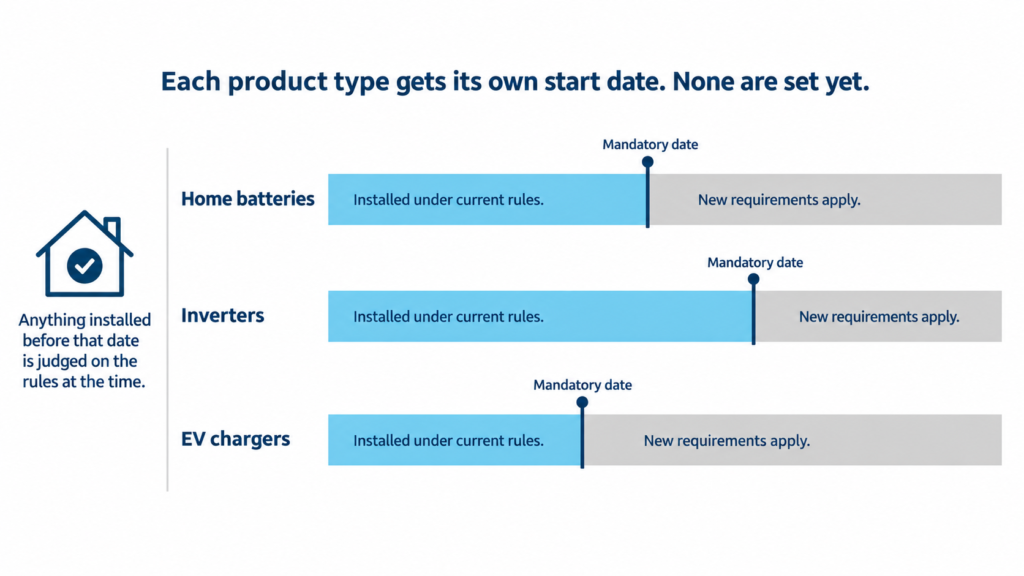
The framework does not apply retrospectively. It will not cover devices installed before the first mandated requirements start for that type of product.
Read that last bit carefully, because it’s more specific than “existing systems are safe.” The start dates get set per product type, inside the Code. Batteries will have their own date. Inverters will have their own date. EV chargers, their own.
What it means in practice: your system gets judged against the rules that were in place when it went in. If you install a battery in November and the battery requirements don’t kick in until two years later, your battery isn’t retrofitted into the new regime.
The same goes for anything you buy during the changeover. The regulator has said plainly that buying and installing now is not affected while the transition happens.
What actually changes when you go to buy?
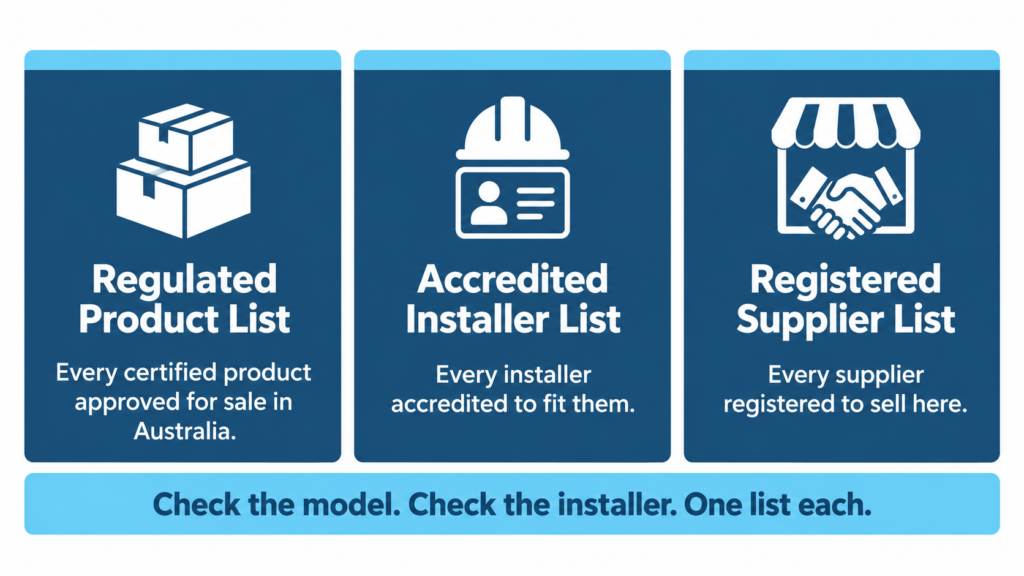
Three public lists. That’s the practical upshot for a homeowner.
A Regulated Product List. Every certified product approved for sale, installation and connection across the country. One list instead of a dozen state ones.
An Accredited Installer List. Every installer accredited to fit those products, with their accreditation current.
A Registered Supplier List. Every supplier registered to sell into Australia.
Say you’re getting three quotes. Today you’re largely taking each company’s word on whether the gear is approved where you live. Under the new system you check the model against one list, and the installer against another.
Products will also need independent testing and certification before they can be sold. Not a self-declaration. Tested by someone else, then listed.
What does this mean if you’re in the trade?
The weight lands on suppliers, not installers. That’s deliberate.
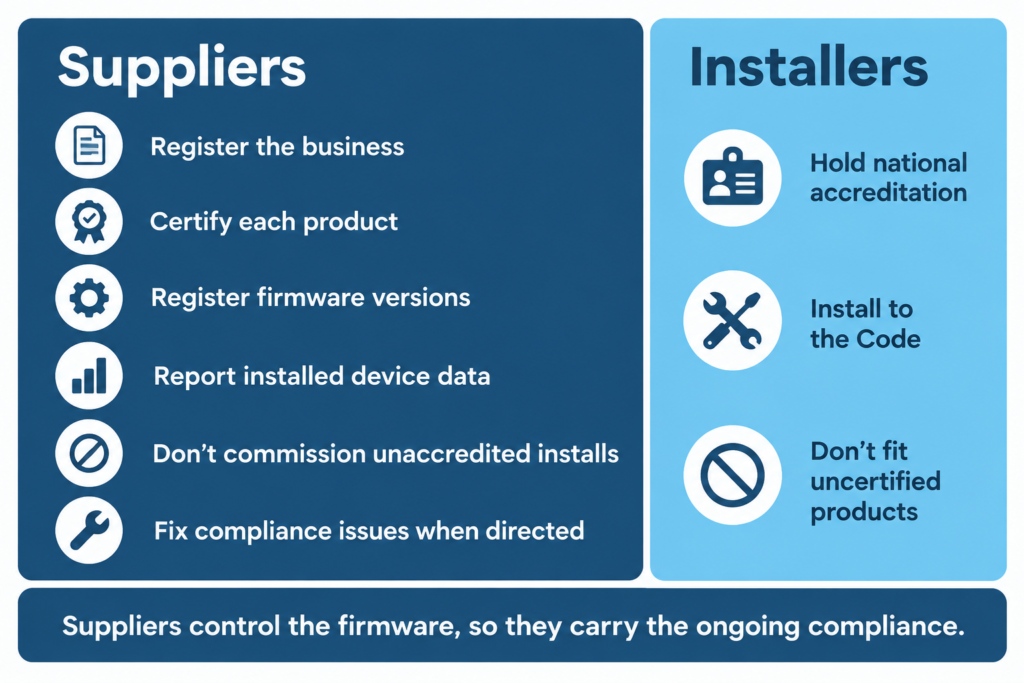
Suppliers will have to register, get each product certified before it can be sold in Australia, register firmware versions before releasing them, and feed installed device information back to the regulator. They also can’t commission a job done by an unaccredited installer, or one using a product that isn’t on the list.
The framework’s reasoning is straightforward. Installers fit the hardware. They have no control over the firmware that determines whether a device keeps meeting its requirements six months later. So the ongoing compliance obligation sits with the party that controls the software.
Installers still need accreditation, plus continuing professional development and a current trade licence. Solar Accreditation Australia doesn’t disappear. Under the framework it becomes one of the bodies that can recommend installers for national accreditation, alongside suppliers and state accreditation bodies. Existing training and accreditation can be recognised where it lines up with the Code.
When do the new rules start?
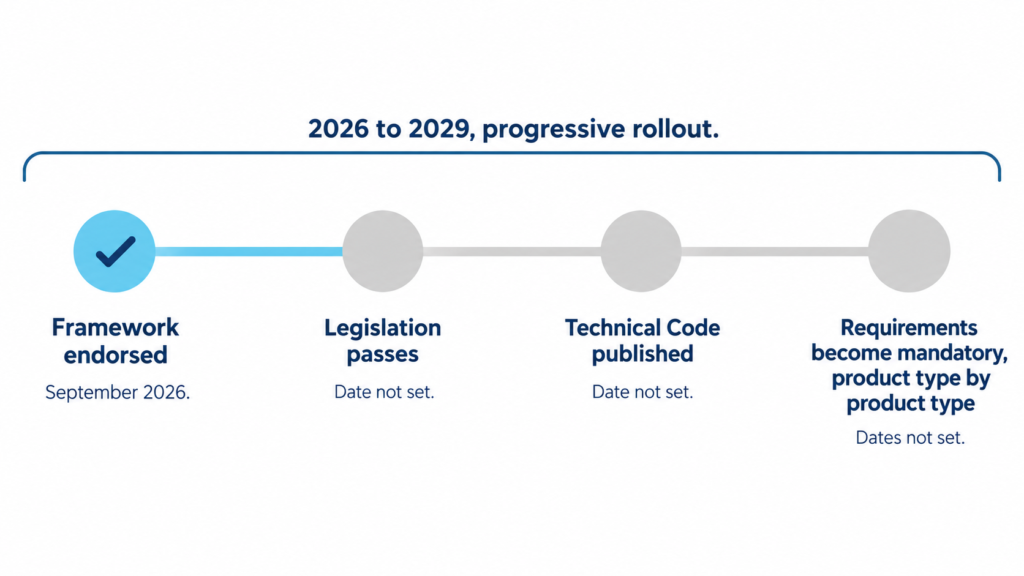
Nobody can give you a date yet, and you should be suspicious of anyone who does.
The framework is a policy document. Legislation still has to pass to establish the regulator and make any of the obligations enforceable. The Clean Energy Regulator will take on the role of national technical regulator, subject to that legislation.
After that, each product type gets its own transition period, then its own mandatory date, set through the Code. The Code hasn’t been published.
So the honest answer is: endorsed, not yet law, rolling out progressively across 2026 to 2029.
Well, what should you do with that? Not much. If a system stacks up for your household on today’s numbers, it stacks up. Waiting for a rulebook that explicitly won’t apply to you backwards is waiting for nothing.
If you’re sizing a system now, the thing that matters is still whether it’s built to offset your usage properly.
Read next: NSW Leads Push for Mandatory Solar Panel Recycling
Frequently Asked Questions
What is the Consumer Energy National Technical Regulatory Framework?
It’s a national policy framework endorsed by Australia’s energy ministers, running 2026 to 2029. It creates one set of baseline technical rules for rooftop solar, inverters, home batteries, EV chargers and some connected appliances, replacing the current state-by-state approach.
Who will enforce Australia’s new solar and battery technical standards?
The Clean Energy Regulator, taking on a new role as the Consumer Energy National Technical Regulator. That’s a new function of an existing body, not a new agency. It will certify products, accredit installers, register suppliers and investigate breaches, subject to legislation. The technical rules themselves are written by the Department of Climate Change, Energy, the Environment and Water.
Will the new rules apply to solar panels and batteries I already have installed?
No. The framework does not apply retrospectively. It won’t cover devices installed before the first mandated requirements begin for that product type. Systems going in during the transition aren’t affected either.