NSW Leads Push for Mandatory Solar Panel Recycling
NSW is moving on mandatory solar panel recycling. On 21 September 2026 the Government released a draft regulation that would make panel brand owners pay to collect and recycle their own products.
Not homeowners. The companies that sell the panels.
It is a proposal for now, with consultation open. It is also the first scheme of its type in the country, and it is good to see the industry getting some structure around this.
What this article covers:
- What NSW has actually proposed
- Why old panels are becoming a problem
- How the scheme would work
- Where the national picture sits
- What it means if you already own solar
What has NSW actually proposed?
A mandatory product stewardship scheme. Product stewardship means the business that puts a product on the market carries responsibility for what happens to it at end of life, rather than the customer or the council.
The draft is the Product Lifecycle Responsibility Amendment (Photovoltaic Panels) Regulation 2026, sitting under the Product Lifecycle Responsibility Act 2025.
Environment Minister Penny Sharpe put the aim plainly: making sure those panels do not become tomorrow’s landfill problem.
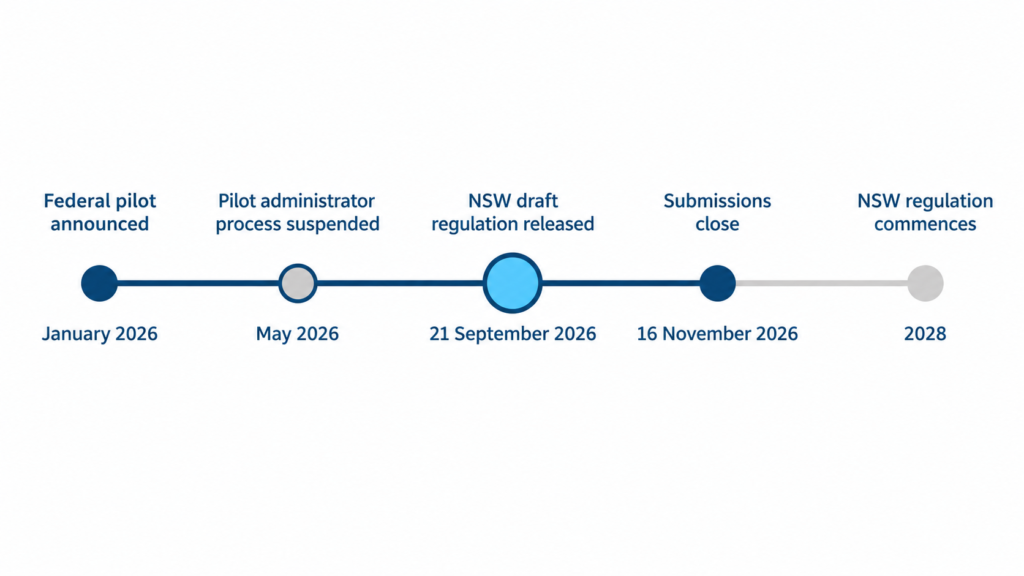
Submissions close at 5pm on Monday 16 November 2026. The regulation is expected to commence sometime in 2028.
Why are old solar panels becoming a problem?
Volume.
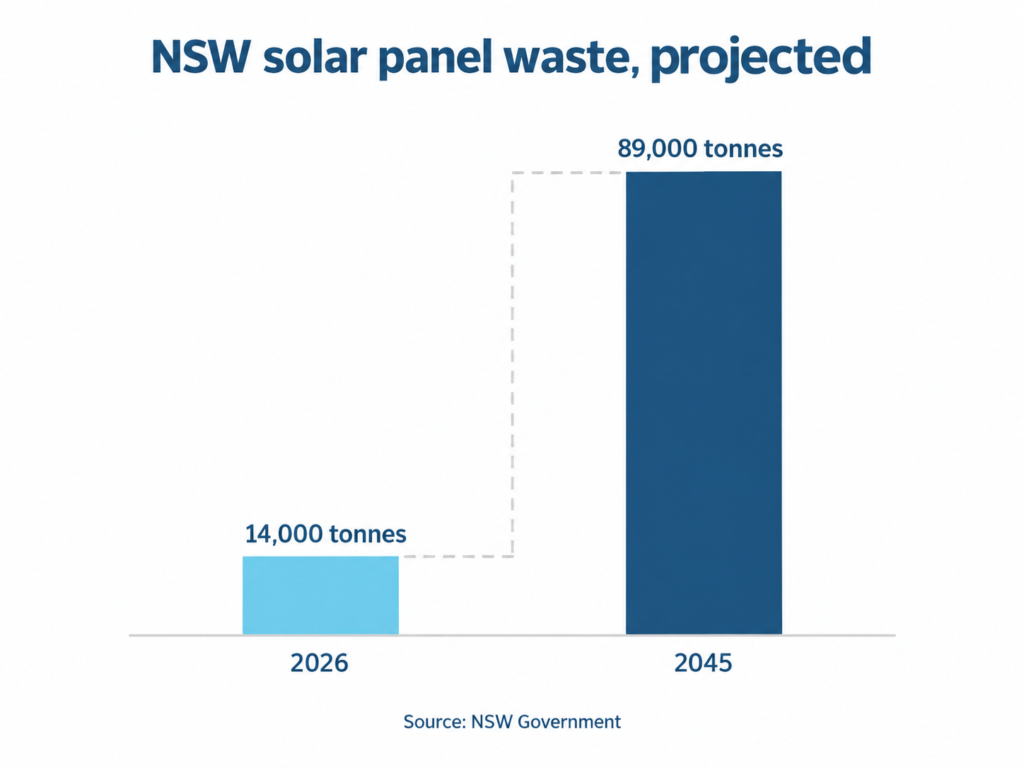
NSW carries more than 1.18 million rooftop solar systems. Around 14,000 tonnes of panels reach end of life here every year, projected to reach 89,000 tonnes by 2045 as the first wave of rooftop systems retires, according to the NSW Government. Nationally, Australia is expected to generate around one million tonnes of panel waste by 2035. Roughly 50 million panels.
Only about 17% of end-of-life panels are recycled today.
Most of the rest goes to landfill. Victoria is the only state with an outright ban on panels going to landfill, in place since 2019.
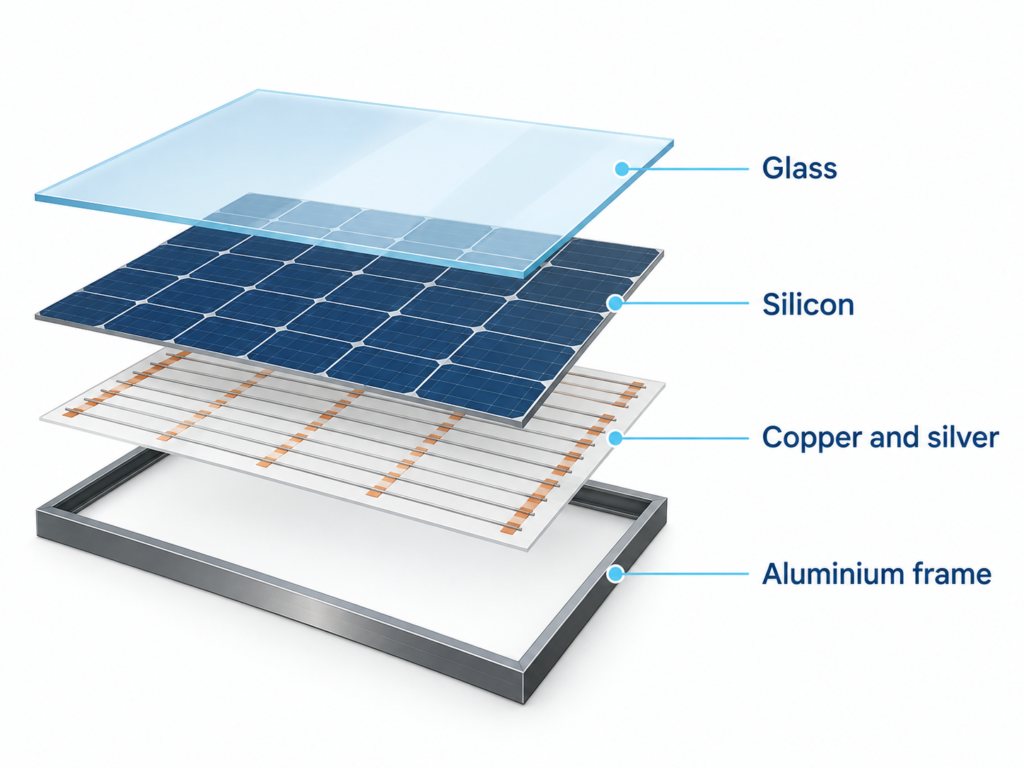
A panel is worth recovering. There is aluminium, glass, silicon, copper and silver inside one. Degraded panels also carry small amounts of lead and chromium, which is a second reason to keep them out of the ground.
How would the scheme work?
Brand owners, meaning the manufacturers and importers who supply panels into NSW, would have to join a product stewardship organisation. That organisation lodges an action plan with the EPA covering collection points and public awareness, then runs the network.
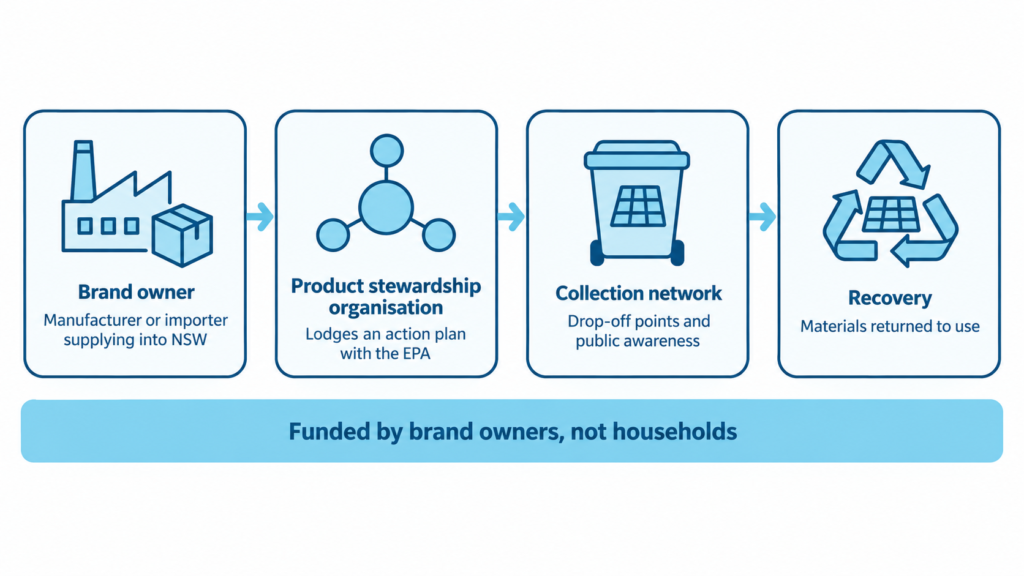
Where no such organisation exists for a panel type, the brand owner carries the obligations on its own. Non-compliance is an offence under the Act, and the EPA can publish which brand owners are meeting their obligations and which are not.
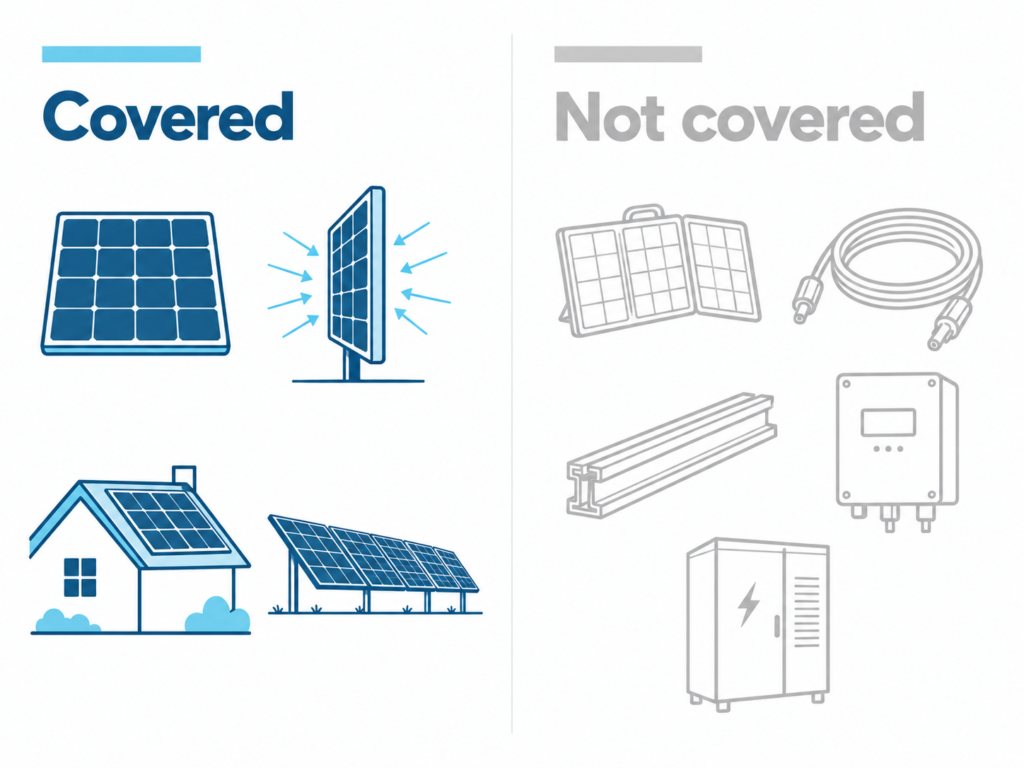
Scope is narrower than people assume. The draft covers monocrystalline and bifacial panels, rooftop and utility-scale. Portable panels, cables, inverters and batteries sit outside it.
The same Act already covers batteries. That scheme starts on 1 October 2026, and panels would work the same way.
What is happening nationally?
Slower going.
In January 2026 the federal government announced a 24.7 million dollar National Solar Panel Recycling Pilot. Around 100 collection sites, up to 250,000 panels, designed to gather the data for a future national scheme. Lifting recycling rates nationally was costed at up to 7.3 billion dollars in benefits.
The pilot has not started yet. The process to appoint an administrator was suspended in May 2026 over an undisclosed complaint, as reported by the Guardian. Eight solar recycling companies have since written to ministers warning that some operators may not survive the wait.
That is why the NSW move matters. Waste and recycling industry bodies welcomed it, pointing to the certainty a legislated scheme gives recyclers who need to invest in equipment and sites.
What does this mean if you already own solar?
Nothing changes today. Nothing to pay, nothing to do.
When your system does reach replacement, the rule is simple. Panels should not go in general waste, and a decent installer takes the old ones away as part of the job. Specialist recyclers can recover a high share of a panel’s weight.
For businesses, the change is bigger. Decommissioning a commercial or C&I array produces panels by the pallet, and a funded collection network makes that far easier to handle than it is now. Worth factoring into anything you are planning to build past 2028.
If you are in the ACT or Queensland, none of this binds you yet. States tend to follow each other on waste rules, so expect the question to come up.
For now, a scheme that puts the cost where the product came from is a sensible piece of work.
Read next: Will Data Centres Make Your Power Bill Go Up?
Frequently Asked Questions
What is NSW’s mandatory solar panel recycling scheme?
A proposed regulation that would require solar panel brand owners to fund the collection and recycling of their products at end of life. It is out for public consultation now, with submissions closing 16 November 2026.
When will the NSW solar panel recycling scheme start?
The regulation is expected to commence in 2028. That is a legislated future start date, not a live scheme, so nothing changes for households in the meantime.
What materials can be recovered from recycled solar panels?
Aluminium from the frame, glass, silicon, copper and silver. Recovering these at scale supports local recycling and reduces the need for new raw material.
Why are solar panels a growing waste problem in Australia?
The early wave of rooftop installs is reaching end of life at the same time as the fleet keeps growing. NSW alone produces around 14,000 tonnes a year now, rising to a projected 89,000 tonnes by 2045.
How does NSW’s scheme compare to the federal recycling pilot?
The federal pilot is voluntary and designed to gather data, with no mandate attached. NSW’s proposal is a binding obligation on brand owners with penalties for non-compliance.