Author: Donna Wentworth

Is Sigenergy Worth the Hype? Everything You Need To Know

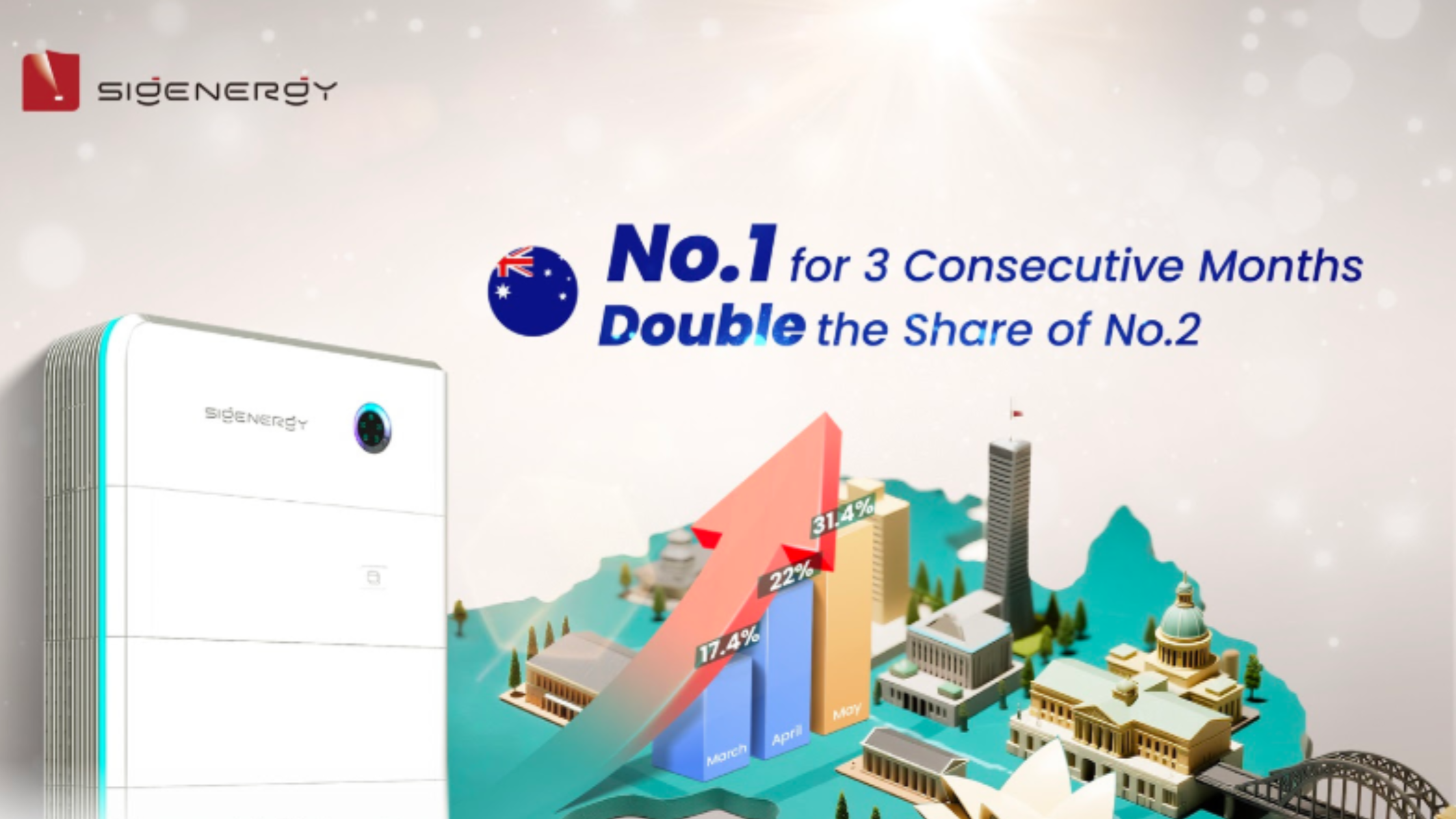
You’re probably here because you’ve heard of this new, rising energy solutions brand called “Sigenergy,” and are wondering what it’s all about. After all, Sigenergy has gained recent attention for its innovative energy solutions. Now the question is: is it the right choice for you? Is Sigenergy a good investment?

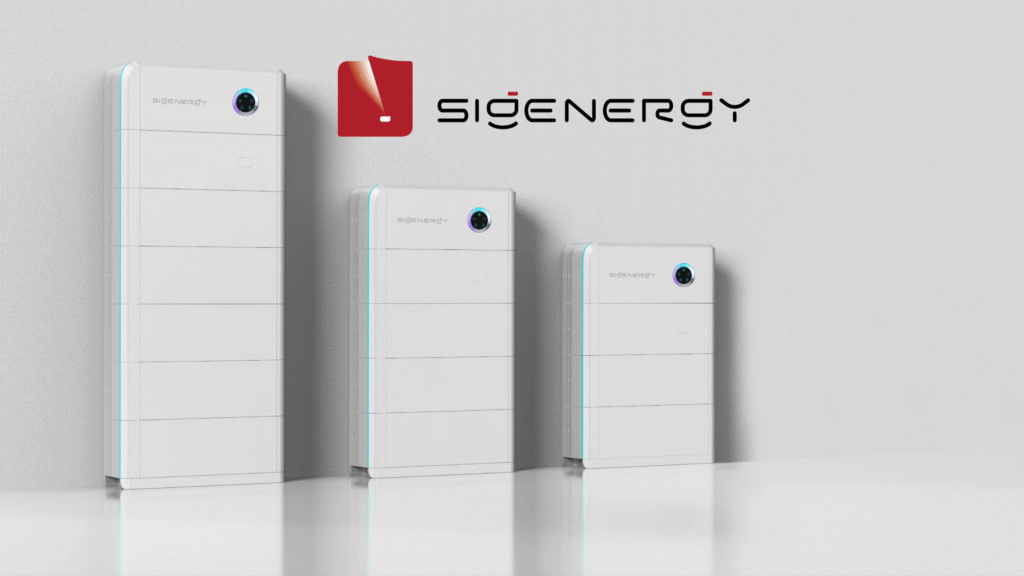
Well to start, Sigenergy is not just any battery. It’s a revolutionary product that is AI-optimised and combines a hybrid inverter with a powerful battery all into one streamlined system; it’s a game-changer for the solar industry.

At Lenergy, we understand that shopping for solar solutions can be overwhelming. That’s why we’re here to help you cut through the noise and explore what makes the Sigenergy battery a standout option for your energy needs.

Sigenergy battery system diagram highlighting its features, including EV DC charger, battery PCS, battery pack, solar inverter, and EMS.

In this article, you’ll learn about:

What Are the Specs and Features of The Sigenergy SigenStor Battery?

The Sigenergy SigenStor is a state-of-the-art battery system that combines multiple energy solutions into a sleek, modular design. It’s more than just a battery. It integrates a solar inverter, battery power conversion system, EV DC charger, and energy management system in one powerful unit.

Whether you’re installing a new solar system or adding storage to your existing setup, the SigenStor’s flexibility makes it an excellent choice.

Here are some specs to help you understand the SigenStor battery better:

 Key Specifications of the Sigenergy SigenStor Battery

  • Storage Capacity: The SigenStor offers a modular design with each battery module providing 5.38 kWh or 8.06 kWh of total energy capacity. These modules can be stacked to achieve a total capacity ranging from 5 kWh up to 48 kWh per stack, accommodating various energy needs. 
  • Inverter Options: Sigenergy offers both single phase and three phase inverters in a range of different sizes making it a perfect fit for any home. Inverter options are:
    • Single phase models in 5kW, 6kW, 8kW and 10kW AC ratings, with two, three or four MPPT solar inputs;
    • 3-phase models in 5kW, 10kW, 15kW, and 25kW AC ratings, with two, three or four MPPT solar inputs;
  • Power Output:The system supports a maximum charge/discharge power of up to 24 kW, depending on the number of battery modules connected. Each module’s power output scales with the system’s configuration to meet different energy demands.
  • Integrated Components: SigenStor integrates a Solar Inverter, EV DC Charger, Battery PCS, Battery Pack, and Energy Management System (EMS) into one cohesive unit, streamlining your energy infrastructure. 
  • Operating Temperature Range: Designed for diverse climates, the SigenStor operates efficiently within a temperature range of -20°C to 55°C, ensuring reliability in various environmental conditions. 
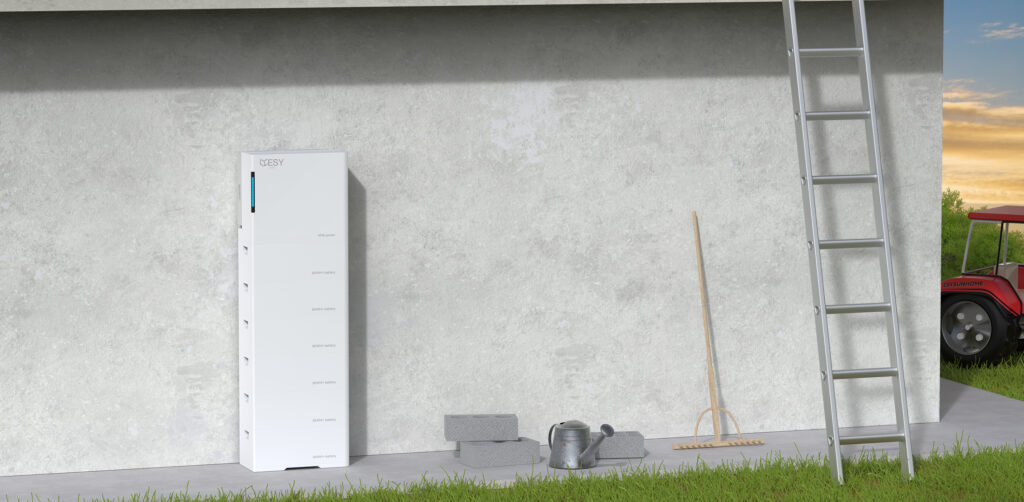
  • Mounting Options: The system offers flexible installation with both floor-standing and wall-mounted options, allowing it to fit seamlessly into different spaces. 
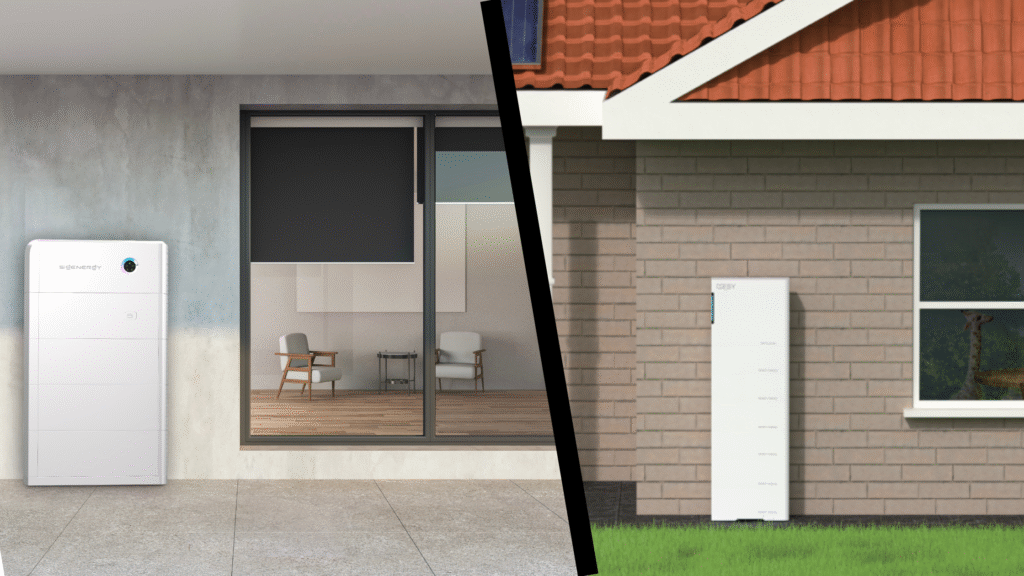
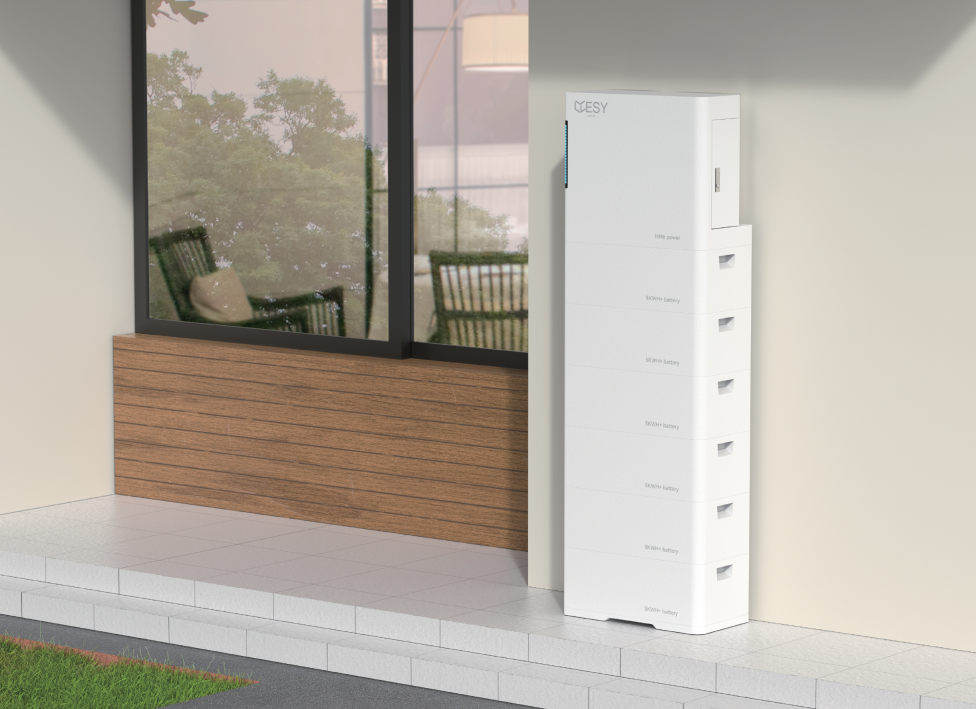
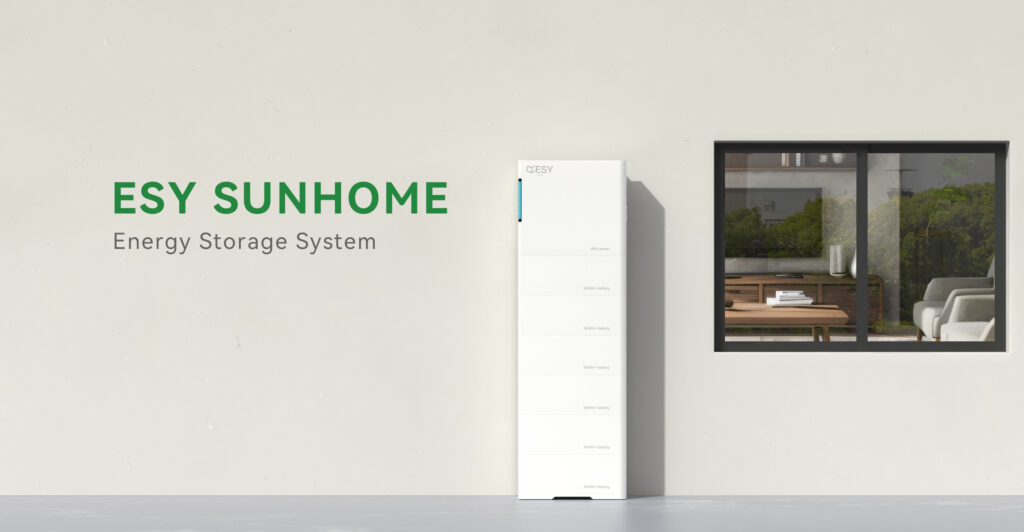
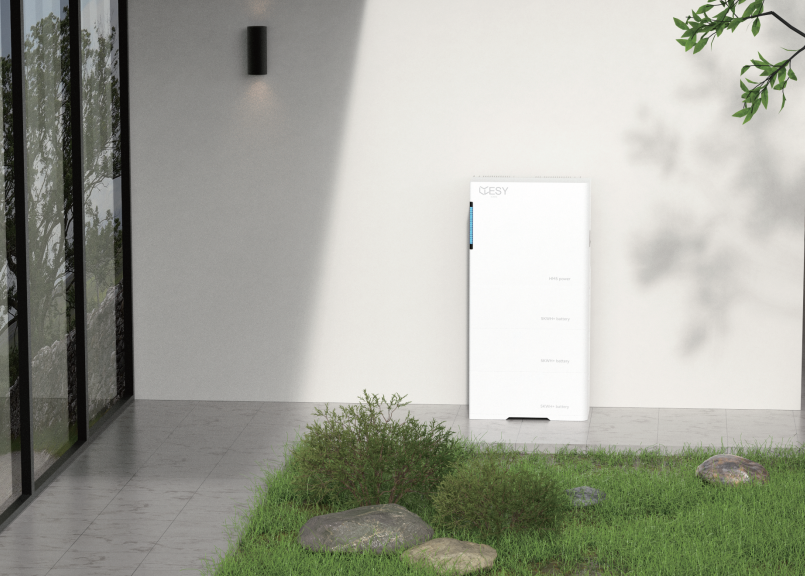
A white Sigenergy battery system mounted on a wall of a modern home

Advanced Features of the Sigenergy SigenStor Battery

5-in-One Integration

SigenStor combines multiple energy components into one system, making installation easier and improving efficiency. This all-in-one design offers a complete energy solution for your home or business.

Scalability

With a modular and stackable design, SigenStor is easy to expand. Each stack can hold 1 to 6 battery modules, and multiple stacks can be connected for larger energy needs. This makes it suitable for both homes and commercial properties.

Enhanced Safety Measures

The battery is built with a 5-layer safety protection system, including temperature sensors, internal fire suppression, and heat-resistant materials. These features ensure safe and reliable performance throughout its life.

AI Optimisation

Sigenergy technology uses AI to plan energy use and manage virtual power plants (VPP). This helps maximise energy production, storage, and consumption, saving you money and improving efficiency.

EV Integration

The system includes an EV DC charging module, allowing electric vehicles to charge directly with solar power. It also supports V2X technology, letting you use your vehicle’s battery to power your home or send energy back to the grid.

Easy Monitoring

The mySigen App lets you track and control your energy system in real time. It provides detailed insights into energy generation, storage, and use, with smart AI features for a simple and user-friendly experience.

Hopefully this Sigenergy battery review and overview can help provide clarity on what it is and what it offers.

What Are the Safety Features of the Sigenergy SigenStor Battery?

As a homeowner, we understand that it’s not enough to know that you’re getting the most advanced features available in the market today. When it comes to solar and energy storage, safety is always a top concern. The Sigenergy SigenStor battery addresses these concerns with top-of-the-line safety measures that protect your home, energy investment, and peace of mind.

Comprehensive Battery Protection

Fire? Electrical accidents? Not with Sigenergy’s robust, multi-layer safety system into the SigenStor battery. This includes:

  • Thermal Protection: The SigenStor battery is designed to stay safe and efficient even under extreme conditions.This battery is equipped with temperature sensors and high-temperature-resistant materials to prevent overheating. 
  • Fire Suppression: This battery has built-in fire suppression systems that help prevent and control internal fires, making it a reliable choice for high-capacity energy storage.
  • Overcharge and Overcurrent Protection: To ensure safety, the battery monitors its charge levels and automatically adjusts to prevent overloading. This keeps energy storage efficient and secure.

 Durable Design for Harsh Environments

The SigenStor battery is built to handle harsh environments. It works effectively in temperatures ranging from -20°C to 55°C and is made with water-resistant materials, protecting it from moisture and minor flooding. This makes it ideal for homes in areas with extreme weather.

Advanced Monitoring and Emergency Shutdown

The Sigenergy management includes smart monitoring systems that detect issues in real-time and provide safety features like:

  • Arc Fault Detection: Automatically shuts down if it senses dangerous electrical arcing to reduce fire risks.
  • Rapid Shutdown: Quickly disconnects during emergencies to protect your home and family.

Lithium Iron Phosphate (LFP) Chemistry

The Sigenergy SigenStor battery uses lithium iron phosphate (LFP) cells, known for being safe and stable. Unlike regular lithium-ion batteries, LFP batteries are less likely to overheat and last longer, making them a dependable choice.

With its advanced safety features, the SigenStor battery is one of the safest energy storage options, giving you reliable energy management while keeping safety a top priority.

Person using a smartphone app to monitor home energy usage and solar performance, showcasing modern energy management technology.

Sigenergy Payback Period: How Long Will It Take to See Returns?

When investing in this solar battery, one of the first questions you’re likely to ask is, “How long will the Sigenergy battery price or cost take to pay for itself?”, “What is the payback period?”The payback period is how long it takes to earn back the money you spent on the battery system. Knowing this is important when deciding if the energy solution is worth the initial investment.

What Influences the Payback Period?

The payback period for the Sigenergy SigenStor battery depends on several factors, including:

  1. Your Home’s Energy Usage: The more electricity you consume, the greater your potential savings when switching to solar energy storage
  2. Electricity Rates: Rising electricity prices can make the Sigenergy battery even more cost-effective, as storing your own energy reduces reliance on expensive grid power.
  3. Solar Panel Size and Output: Homes with larger solar systems that produce excess energy benefit the most from battery storage, as they can store surplus power instead of feeding it back to the grid for minimal returns.
  4. Government Incentives: Depending on where you live, rebates or subsidies for solar batteries can significantly shorten the payback period.

Estimated Payback Period

When combined with a new solar system, the SigenStor battery can achieve a payback period of as little as 5–7 years in optimal conditions. This is due to its high energy efficiency and ability to drastically reduce grid dependence.

For existing solar installations, the payback period may be slightly longer because the battery is an additional cost. However, as electricity rates continue to rise, the return on investment accelerates.

Beyond Savings: Other Advantages of the Sigenergy Battery

So now that you know how long the payback period will be, what are the other benefits of Sigenergy?

Reducing Peak-Time Usage

Electricity costs the most during peak times, such as evenings when demand is highest. The SigenStor battery stores solar energy collected during the day, allowing you to use it during these expensive hours. This reduces your reliance on the grid and significantly lowers your energy bills.

Maximising Solar Usage

If you don’t have a battery, the extra solar energy your panels produce during the day often goes back to the grid for a small credit, which isn’t very profitable. The SigenStor solves this problem by storing that excess energy for later use. This means you can take full advantage of all the energy your solar panels generate instead of giving it away for minimal return.

Protection from Rising Energy Prices

Energy prices are constantly increasing as retailers adjust rates. With the SigenStor battery, you can store and use your own energy, making you less dependent on the grid. This shields you from rising costs and helps you maintain control over your energy expenses.

Long-Term Value Beyond Payback

While the financial payback period is a key factor, the SigenStor battery provides additional value by offering backup power during outages, reducing your carbon footprint, and increasing your home’s energy independence. These benefits often outweigh the initial cost over the long term.

Modern home equipped with rooftop solar panels and a home battery system, showcasing energy-efficient technology for sustainable living.

Final Verdict: Why the Sigenergy Battery Stands Out

So the bottom line now is: Is Sigenergy a good investment? The Sigenergy SigenStor battery offers a seamless, innovative solution to your energy storage needs. By prioritising safety, efficiency, and control, the SigenStor battery ensures you’re prepared for the future of energy and getting significant cost savings. 

At Lenergy, we want to provide options and genuine guidance to cutting-edge energy solutions that enhance your life. The Sigenergy SigenStor battery is a perfect example of how we deliver quality and innovation to every home and business.

If you’re still exploring your options, why not take the next step? Reach out to see how Sigenergy could fit into your setup and help you make the most of your investment. Let’s walk you through how the Sigenergy SigenStor battery can transform your solar setup and provide lasting benefits for years to come. Our team is here to guide you through every step of the way!

What To Expect On your Solar Install Day

You’ve made the big decision to install solar panels, and your installation day is just around the corner. You’re probably feeling a mix of excitement about reaping the benefits of clean energy and a bit of uncertainty about what to expect on the big day. Will it be noisy? Do you need to be home all day? How long will it take?

Your solar installation day should be a smooth and rewarding experience. At this point, all the planning and decision-making is done. Now, it’s time for your home to be fitted with the system that will start saving you money and reducing your carbon footprint. 

In this guide, you’ll discover everything you need to know about what happens on installation day. From our arrival to when we walk you through the app to monitor your system, we’ll cover it all. We’ll also explain the final steps you need to take with your energy retailer before you can start benefiting from solar power.

How Long Does A Solar Install Take?

Your solar installation day begins early, with our team arriving at your home around 7:30 AM, ready to get started. Depending on the size of your installation, we aim to have everything wrapped up by 4:00 PM if it’s a one-day job.

For example a standard 6.6kW solar system will only take 1 day, whereas a standard 10kW system is scheduled for 2 days. These examples are taken from the scenario of a regular degree roof pitch, string inverter system with single phase supply. This timeline ensures that we can work efficiently without rushing, giving us the time needed to complete a high-quality installation.

What happens during the day?

  • Arrival and Setup (7:30 AM):
    We’ll start by setting up our equipment, accessing your roof, and making sure everything is prepped and ready. 
  • Wiring: The technicians onsite will begin wiring everything in. This includes all cabling for the inverter and the solar panels throughout the roof, in preparation for them both.
  • Racking & Panel Installation:
    The main task is to secure the solar panels on your roof. This is the stage where you might hear some noise, as our tradesmen move around and drill to attach the mounting brackets. Don’t worry, it’s all part of the process!
  • Inverter and Electrical Work:
    While the panels are being installed, we’ll also be fitting the inverter and connecting your system to your electrical supply. This step is crucial as it links your solar panels to your home’s electricity, allowing you to generate and use solar power.
  • System Testing and Final Touches (4:00PM):
    By mid-afternoon, we’ll test the system to ensure everything is functioning as it should. We make sure your panels are generating power and that the inverter is working perfectly. Once we’re happy, we tidy up the work area, ensuring everything is left just as we found it.


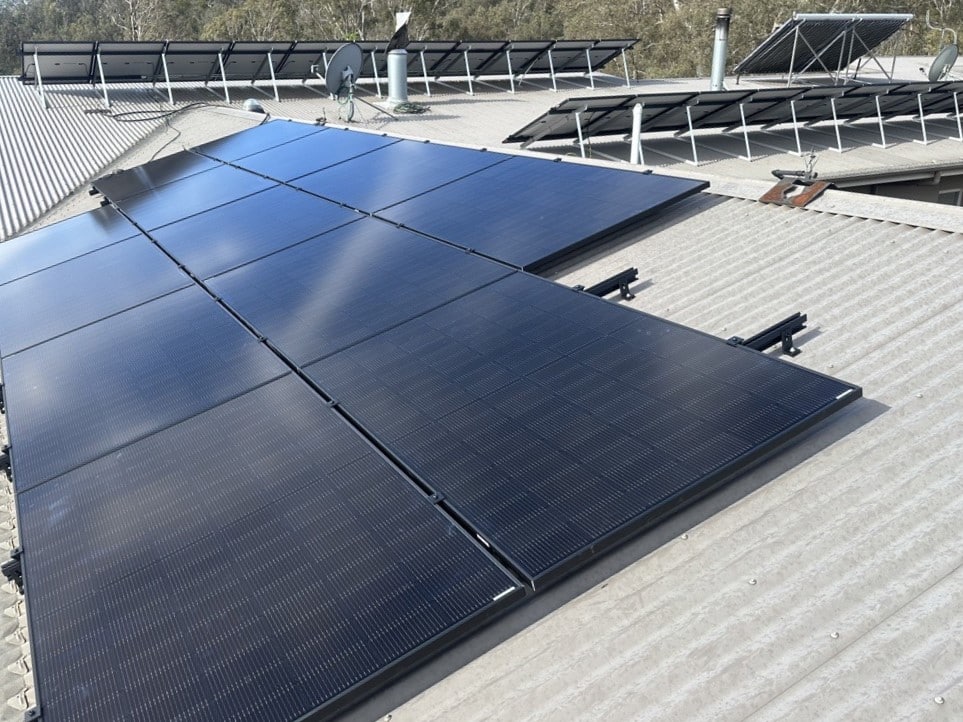
Photo taken from a Lenergy Solar installation

Do You Need To Be Home All Day?

While you do not need to be home the entire day, it is important that someone is home for the majority of the day. We will require access to the manhole and to run you through the operation of the system, once the installation has been completed.

  • Access to the Roof Cavity and Manhole:
    Throughout the installation, our team will need access to key areas of your home, particularly the roof cavity and manhole. These spaces allow us to properly fit the solar panels and connect the wiring to your inverter. Depending on your home’s layout, the access points might be inside, so it’s crucial someone is available to let us in.
  • The Final Walkthrough:
    Toward the end of the day, we’ll complete a walkthrough with you. This is an important step where we explain how to monitor your system, how to use the app, and what you can expect moving forward.
    During this walkthrough, we’ll show you how to track your energy production and consumption in real time, so it’s essential that you’re present to understand how everything works.


Enphase Monitoring App Source: Lenergy

Will The Install Be Noisey? 

One question that often comes up is whether the installation process will be noisy or disruptive. The truth is, like any home improvement project, there will be some activity that might generate noise, but nothing too overwhelming.

What kind of noise can you expect?

  • Footsteps on the Roof:
    As our team moves around to install the panels, you’ll hear some footsteps and movement above. 
  • Drilling and Grinding:
    You will also hear some drilling or grinding, especially if we need to secure mounting points or make adjustments for tiled roofs. These noises are usually brief and intermittent, and we do our best to minimise disruption as much as possible.

Post-Installation: The Walkthrough and What’s Next

Once the installation is complete, we don’t just pack up and leave—you’ll get a thorough walkthrough of your new solar system. This step is crucial in ensuring that you understand how everything works and can make the most out of your investment.

  • Monitoring Your Solar System:
    We’ll show you how to use the app that tracks your solar system’s performance. This app will let you monitor your energy production in real-time, giving you insights into how much solar power you’re generating and how much of it you’re using. We’ll guide you through the key features, so you feel confident using it from day one.
  • How the Inverter Works:
    We’ll explain how your inverter functions, as it’s the heart of your solar setup, converting the energy from the sun into usable electricity for your home. We’ll show you how to check the system status and what to do if anything seems off in the future.


Photo Taken On A Lenergy Solar Installation

Supply Request and Energy Retailer Steps

After your solar system is installed and we’ve walked you through everything, there’s just one more critical step: your energy retailer needs to configure your system so you can start using your solar power. This process happens behind the scenes, but here’s what you need to know.

What is a Supply Request?

A supply request is the paperwork we handle to notify your energy retailer that you’ve installed solar panels. Essentially, it tells them that you’re now producing solar energy, and they need to adjust your account to reflect this. Once they’ve processed the request, you’ll be able to track your solar energy usage and, depending on your retailer, get set up with a smart metre if you don’t already have one. 

If you’re with a retailer like Origin, we’ll also ask for your date of birth before the installation day. This is a requirement by Origin to process the supply request, and it’s a simple step that helps speed things up.

How Long Do Supply Requests Take?

Typically, this process takes between 4 to 14 days. Your retailer will either configure your existing metre or install a new smart metre that tracks both the energy your solar system generates and the energy you still draw from the grid when needed.

  • Smart Metres:
    Most energy retailers charge an additional fee to install a smart metre. However, some companies, like Amber, include it in their packages at no extra cost. We’ll help facilitate this step, but it’s up to your energy retailer to install the metre and complete the configuration.

Once your retailer has finished configuring your account and, if needed, installed your smart metre, you’re good to go! Your home will start running on solar power, and you’ll begin seeing the benefits both on your energy bills and through your system’s monitoring app.


Photo Taken On A Lenergy Solar Installation

Solar On, Savings Activated.

Now that your solar installation is complete, the only thing left to do is wait for your energy retailer to configure your metre. Once that’s done, you’ll officially be generating your own solar energy! The excitement of seeing your first reduced electricity bill will be the icing on the cake.

One final tip: be sure to save your solar installer’s contact details. That way, you can easily reach out to them if you need any help in the future, whether it’s for maintenance or a good cleaning. You’re all set to enjoy the benefits of solar without any extra hassle!

If you have opted for a solar battery with your installation, you might want to read our article here: How Does A Virtual Power Plant (VPP) Work?

Aiko Neostar 2P Solar Panels: Everything You Need To Know

You’ve probably heard the hype by now; there’s a new solar panel on the market claiming to be the most efficient, with some fancy new tech to back it up. And maybe you’re thinking, “Great, another solar brand that’ll probably disappear in a few years.” Honestly, I wouldn’t blame you for thinking that. 

The solar industry is crowded, and it’s not uncommon for brands to pop up, make big promises, then vanish when they run out of steam. So, how do you know Aiko won’t be just another one of those?

We were pretty sceptical ourselves when we first heard about Aiko’s bold claims. But after testing out their Neo 2P panels in real-world conditions, we’ve got to say, we’re impressed.

Now, because we do actually use Aiko Neostar solar panels, we won’t pretend this article is 100% unbiased. Instead we will share our thoughts on Aiko and specifically the Aiko Neo 2P Solar Panels.

In this article, you’ll learn:

Who is Aiko?

Aiko Solar might be a newer name in the solar world, but it’s made a big impact in a short time. Founded in 2017 and based in China, Aiko has quickly become a key player in solar technology, focusing on improving solar panel efficiency. Aiko started out supplying solar cells to solar panel manufacturers and have now moved into producing their own solar panel line. 

In just a few years, Aiko has built a reputation in the industry, supplying panels for large-scale solar projects across the globe, including the Pareto P4 Project in Norway and the Mount Everest Solar Carport. Their success comes from balancing advanced technology with affordability, making efficient solar panels more accessible.

So they might be new to the residential world but they are not necessarily new to the solar world. 

aiko solar panels
Photo taken of the Solar Carport on Mount Everest, Source: pv-magazine.com

Key Stats on the Aiko Neostar 2P Panels

The Aiko Neostar 2P series packs some serious performance and tech, making these panels a real contender in the solar game. These N-type ABC panels are designed to get the most out of every bit of sunlight, even when there’s some shading.

Here’s what you need to know:

  • Efficiency: The Aiko Neostar 2P panels hit up to 23.6% efficiency, which is right up there with the best in the industry. That means you get more energy from less space, whether it’s on your home or a commercial building.
  • Power Output: These panels deliver between 450W and 485W, so they’ve got plenty of muscle to help you maximise energy production.
  • Temperature Coefficient: With a rating of -0.26%/°C, these panels lose less power in hot weather compared to many others out there. If you’re in a warm climate, this is a big deal for keeping your system efficient.
  • Durability and Design: Built to last, these panels are resistant to micro-cracks and come with a sleek, black design.
    Plus, they’ve got a 25-year product warranty and a 30-year performance warranty, so you’re covered long-term.

All in all, the Neostar 2P series is a strong choice if you’re after high efficiency, durability, and a clean, modern look.


Popular solar panel brands ranked by efficiency – Source: Clean Energy Reviews

What is an N-Type Solar Panel?

N-Type solar panels are a specific type of solar tech that use N-type silicon in their cells, which sets them apart from the P-type panels. The main difference is in how they’re built and how efficiently they turn sunlight into electricity.

Here’s why N-type panels come out on top compared to P-type:

  • Higher Efficiency: N-type panels tend to be more efficient because they don’t suffer from Light-Induced Degradation (LID) like P-type panels do. LID is when P-type panels lose some performance after being exposed to sunlight, but N-type panels avoid this, making them more reliable in the long run.
  • Better in Low Light: N-type panels also perform better when the light isn’t great, like on cloudy days or early mornings. P-type panels can struggle to keep up in those conditions, but N-type panels handle it much better.
  • Longer Lifespan: These panels last longer because they’re less likely to have issues like boron-oxygen reactions. This is a common problem in P-type panels, where the boron and oxygen impurities in the silicon cause defects when sunlight hits them.

    In simple terms, this means the panel generates less electricity than it should, and over time, it can lead to a noticeable drop in power output, especially in the early months after installation. N-type panels don’t have this issue, so they hold up better over time.

Aiko’s N-Type ABC panels take full advantage of these benefits. They not only offer higher efficiency but also have that extra durability and reliability, making them a smart choice if you’re looking for long-term solar power.

Image created by Lenergy

What is ABC Solar Technology?

Aiko’s ABC (All Back Contact) technology is a key feature that makes their solar panels stand out. In ABC panels, the electrical contacts, which are normally on the front of the solar cells, are moved entirely to the back. This change comes with a few big benefits:

  • Increased Efficiency: By moving the contacts to the back, ABC technology cuts down on the metal shading at the front of the panel. With less metal blocking the sun, the cell absorbs more sunlight, which boosts efficiency and energy output.
  • Improved Aesthetics: Since there are minimal busbars (those metal strips you see on most panels), ABC panels have a sleek, black look.
  • Better Performance in Shading: ABC panels optimise power at the cell level, so if part of the panel gets shaded, it won’t drag down the entire panel’s performance. This is especially useful in spots where shading might be an issue.
  • Higher Durability: The back contact design also puts less stress on the solar cells, making them more resistant to cracks and long-term damage. That means these panels are built to last.

Read Full Article Here

Aiko Solar Panels: Award Winner

Aiko has picked up some serious recognition as a top solar panel manufacturer. In 2023, they won the Intersolar Innovation Award for their advancements in solar tech, specifically for their high-efficiency ABC modules. They didn’t stop there though, they also snagged the Red Dot Design Award for their sleek, modern panel design, showing they care about both how their panels perform and how they look. 

And to top it off, Aiko received the 2024 ESG Excellence Transparency Award for their efforts in sustainability and social responsibility.

These awards show that Aiko is committed to making solar panels that not only work well but also make a positive impact on the environment.

Image created by Lenergy


How Much Are Aiko Solar Panels

When it comes to pricing, Aiko Solar Panels sit in the mid-to-high range compared to other premium brands. They’re more affordable than some of the big names like REC or SunPower, but they do cost more than entry-level options like Risen, JA Solar, or Canadian Solar. That’s because of the advanced technology and higher efficiency you get with Aiko.

The Neostar SP is in the mid-range price bracket, which is one of the main reasons we’ve chosen to install it. In our view, it gives the best balance between price and features in Aiko’s lineup.

For example:

– Our 6.6kW value package solar system with TW solar panels and Sungrow inverter is from $6,993.

– The Neo 2P Aiko solar panel upgrade for the same 6.6kW value package is from $7,403.

That extra $410 is a small price to pay when you consider the added value the Aiko panels bring. With higher efficiency, better performance in shaded conditions, and a longer lifespan. It’s an investment that pays off in both energy production and long-term reliability.

Efficiency, Warranty and Degradation comparison of popular solar panel brands – Source: Lenergy

A Cut Above The Rest

So, if you value efficiency, reliability, and long-term returns on investment, (without the hefty price tag that often comes with premium solar products) the Aiko Neostar 2P should definitely be on your radar. 

Your next step is to decide on what inverter system you need: String Inverters vs Micro Inverters vs DC Optimisers

What Are The Best Solar Panels?

Are you feeling overwhelmed by all the solar panel options in 2024? You’re not alone. With such a flooded solar market it’s hard to know what all the differences are. You’re probably wondering which panels are most efficient? And, how to get the available incentives and rebates.

We are consistently asked what is the best solar panel and why? With years of experience in installing solar and having tried and tested a variety of brands, we want to share our insights with you.

At Lenergy, we offer Aiko Neostar 2P solar panels due to the all black design, efficiency and durability but we know there are many other fantastic solar panel brands available. 

Just a heads-up: we won’t be discussing pricing in this article. The reason is that pricing varies widely depending on several factors, and each solar company has the flexibility to set its own rates. We touch more on this here: Why Do Solar Companies Charge Different Prices For The Same Product.

Instead, we’ll focus on helping you find the best solar panels available by looking at factors like efficiency, durability, and warranty, so you can make an informed decision for your home or business. Lets Dive in:

Overview of the Solar Panel Market in 2024

The solar panel market in NSW for 2024 is both dynamic and innovative, driven by growing awareness of climate change and the push for renewable energy. Manufacturers are continually enhancing their products, focusing on improving efficiency and durability. This year’s advancements centre on photovoltaic (PV) technology, aiming to deliver higher energy output and longer-lasting performance.

  • Higher Efficiency: Modern solar panels now boast efficiency rates exceeding 22%, meaning they can convert more sunlight into usable energy.
  • Durability Improvements: Advances in materials science have led to more robust solar panels that can withstand harsh environmental conditions, from intense UV exposure to severe weather.
  • Smart Solar: Solar Panels integrate with smart technology. This allows for better monitoring and optimisation of energy production.
  • Eco-friendly Manufacturing: There’s a growing emphasis on making solar panels using sustainable methods and materials. This will further reduce the carbon footprint.

Top Solar Panels in NSW for 2024

Before diving into the details, it’s important to know that choosing the right solar panel for your needs goes beyond just efficiency. Factors like durability, special features, warranties, and long-term performance also play a key role. To help you make the best choice, we’ve compiled a list of the top solar panels available in NSW for 2024, highlighting these essential aspects.

In no particular order, here are the best solar panels you should consider:

SunPower Maxeon 7

  • Efficiency: Up to 23%
  • Durability: Engineered to withstand extreme weather conditions with superior resistance to corrosion and breakage.
  • Special Features: Features Maxeon Gen 7 solar cells, offering unmatched efficiency and minimal degradation over time. Known for its high performance in both high and low light conditions, making it suitable for various climates.
  • Warranty: It has a leading 25-year warranty. It covers both products and performance. It ensures high energy production and peace of mind over the panel’s lifetime.
  • Degradation: Guaranteed 88% after 40 years.

Trina Solar Vertex S+

  • Efficiency: Up to 22%
  • Durability: It is designed for high performance and durability. It has excellent resistance to high temperatures and bad weather.
  • Special Features: Utilises advanced multi-busbar technology to enhance light absorption and electrical performance. It is ideal for homes and businesses. This is because it is small and efficient.
  • Warranty: It offers a 25-year product warranty. And a 30-year performance warranty. These ensure long-term reliability and sustained energy output.
  • Degradation: Guaranteed 87.4% after 30 years.

REC Alpha Pure

  • Efficiency: Up to 22.3%
  • Durability: Built to withstand harsh conditions with robust materials and a reinforced frame, ensuring longevity and consistent performance.
  • Special Features: Features heterojunction cell technology (HJT) for higher efficiency and lower degradation rates. Environmentally friendly with a lead-free design.
  • Warranty: It comes with a 25-year product warranty. It also has a 25-year performance warranty. They guarantee strong energy production and reliability over time.
  • Degradation: Guaranteed 92% after 25 years.

Jinko Solar Tiger Neo (N-Type)

  • Efficiency: Up to 22.27%
  • Durability: Excellent resistance to potential induced degradation (PID) and enhanced performance in high-temperature environments.
  • Special Features: Utilises N-Type cells which provide better efficiency, longer lifespan, and lower degradation rates compared to traditional P-Type cells. Ideal for both residential and commercial installations.
  • Warranty: It comes with a 20-25 year product warranty. It also has a 30-year performance warranty. These warranties ensure long-term reliability and energy production.
  • Degradation: Guaranteed 87.4% after 30 years.

Aiko Solar Panels

  • Efficiency: Up to 24.5%
  • Durability: Excellent resistance to potential induced degradation (PID) and robust performance in high-temperature environments.
  • Special Features: Utilises advanced HJT (Heterojunction Technology) cells, which combine the advantages of crystalline silicon and thin-film technologies to achieve higher efficiency and lower degradation rates. Features half-cell technology, improving energy yield and minimising power loss.
  • Warranty: It comes with a 15-year product warranty. It also has a 30-year performance warranty. These ensure long-term reliability and steady energy production.
  • Degradation: Guaranteed 90.6% of initial performance after 25 years and 88.85% after 30 years.

Longi Hi-MO 6 Explorer LR5-54HTB

  • Efficiency: Up to 22.8%
  • Durability: High resistance to potential induced degradation (PID) and optimised performance in high-temperature environments.
  • Special Features: Incorporates advanced PERC (Passivated Emitter Rear Cell) technology, enhancing efficiency and performance in low-light conditions. Features half-cut cell technology, reducing power loss and improving energy yield.
  • Warranty: It offers a 12-year product warranty. It also has a 25-year performance warranty. They ensure reliable long-term performance.
  • Degradation: Guaranteed 84.8% of initial performance after 25 years.

Top 6 Solar Panels Summarised – Source: Lenergy

Country of Manufacture

When choosing solar panels, the country of manufacture can be important to some. Although many people hesitate when they hear “China,” it’s worth noting that most of our phones are made there, and we seldom question this.  

Don’t get me wrong, supporting Australian-made products is important. But, they can be less affordable today in the global market.  For Australian-made solar panels, Tindo Solar produces them locally in small quantities. 

REC manufactures in Norway and Singapore.
SunPower Maxeon manufactures in Mexico, Malaysia, and the Philippines.
Longi, Aiko, Trina, and Jinko manufacture in China.

There are no extra benefits for where the solar panels are made. There is no better customer service or larger degree of quality between the solar panels. This really hinges on personal preference and the price tag. 

Government Incentives and Rebates

NSW offers a solar rebate under the Small-scale Renewable Energy Scheme (SRES). This rebate works by awarding you STC’s for the amount of solar panels or size of the system you have installed. The greater the size of the solar system, the more STC’s you will earn. These STC’s have a dollar value of $38.50 per kilowatt. This is then subtracted from your end installation amount.

The distribution of STC incentives is set to cease by the end of 2030, with a gradual decline in the number of STCs awarded per kilowatt installed each year leading up to that point. Installing your system sooner rather than later ensures you can maximise the benefits derived from STCs before their value diminishes further.

Find out more about the solar rebate here

solar rebate

How to Choose the Right Solar Panel

Choosing the right solar panel involves several factors:

  • Energy Needs: You need to determine your home or business’s energy use. This will let you find the size of the solar power system you need. An undersized system can’t cut electricity costs, making it a poor investment. Find out what size system you need here
  • Budget: Balance the initial cost with long-term savings, efficiency, and government incentives.
  • Roof Space: Consider the available roof space and its orientation to ensure greatest sunlight exposure. If you experience shading or have a steep roof pitch, select the type of inverter that will optimise these conditions.
  • Warranty and Support: Look for panels with strong warranties and reliable installer support. Nearly all top solar panels come with at least a 25-year product warranty.

For More Info, Click here

Don’t Overthink It

The differences among solar panels are quite minimal, so choosing a cost-effective option won’t mean missing out on a lot of features.

From a quality and efficiency standpoint, there is nothing wrong with panels made in China. If your budget allows for other countries of manufacture, that’s great. However, don’t let the place of manufacture deter you from going solar.

Now, its time to consider your inverter type to match your solar panels : Microinverters vs String Inverters: Which Is The Best?

How Does A Virtual Power Plant (VPP) Work?

Did you know by 2050, Virtual Power Plants are projected to supply 30-45% of Australia’s electricity needs. That’s nearly half the country’s energy demand. But why does this matter to you? As Australia moves towards a more sustainable energy future, Virtual Power Plants will play a central role in stabilising electricity prices, reducing carbon emissions, and ensuring a more reliable energy supply. Whether you’re a homeowner, business owner, or just concerned about rising energy costs, understanding a Virtual Power Plant could shape your energy choices for the better in the years to come.

VPP’s may seem like something out of a Sci-Fi film, but they’re much simpler than that. We have years of experience in battery installation, so let us shed some light on this for you. 

With renewable energy on the rise, you might have heard about a Virtual Power Plant. But what are they, and why should you care? Understanding VPPs can help you save money and use energy more efficiently. 

In this article you will learn what a VPP is and how they work, how to go about joining, the requirements and common concerns associated with VPP’s.

What is a Virtual Power Plant (VPP)?

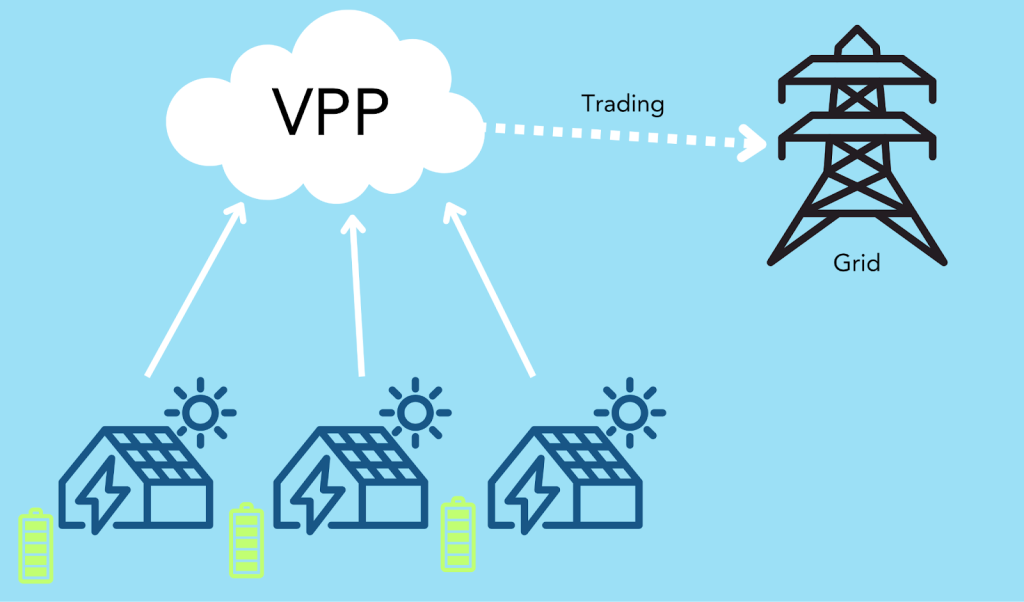
A Virtual Power Plant (VPP) is a network of small power sources like solar panels, wind turbines, and batteries. These are connected and managed together to work like one big power plant. The goal is to balance energy supply and demand, making sure everything runs smoothly. By linking these small power sources, a VPP can provide reliable electricity just like a traditional power plant.

what is a VPP

How Does a Virtual Power Plant Work?

A Virtual Power Plant (VPP) may sound complex, but it’s quite simple when broken down. It uses smart software and communication systems to connect and manage different energy sources, like your solar panels and battery, as one big network. Here’s how it works:

  1. Aggregation
    First, the VPP pulls together (or “aggregates”) many individual energy sources, such as solar panels, batteries, and sometimes even wind power, into a single network. This combination of energy sources acts like one large, flexible power plant. By doing this, the VPP can manage the energy more effectively, making sure it’s available when and where it’s needed.

    Instead of relying on one big power station, we get the power from many smaller sources working together.

  2. Optimisation
    Once the energy sources are connected, advanced software takes over to make sure everything runs smoothly. The software constantly monitors the energy being produced and adjusts it to balance supply and demand.

    For example, during a hot night when a lot of people are using air conditioning, the VPP can draw extra power from batteries to meet that demand. This smart technology ensures that energy is used efficiently, reducing waste and saving money.

  3. Distribution
    Finally, the VPP distributes the energy to where it’s needed most. If the grid needs extra power, the VPP sends energy back to it, helping to prevent blackouts or reduce strain on traditional power plants.

    The energy can also go directly to consumers when the demand is high. This flexibility ensures that every bit of power generated is put to good use, whether it’s keeping your lights on or helping out your neighbours.

This smart system not only helps you save money and earn from your energy, but also plays a role in creating a cleaner, more reliable energy grid for everyone.

how does a vpp work

Benefits of Participating in a Virtual Power Plant

Get Paid For Your Energy

One of the exciting benefits of joining a Virtual Power Plant (VPP) is the potential to earn money by selling your excess energy back to the grid. When your solar panels produce more energy than you need, your battery stores it. Instead of letting that energy sit unused, the VPP can sell it to the grid when demand is high, and you get paid for it! Homeowners on Amber’s VPP have seen the feed-in-tariff go as high as $4/kWh during rare grid events!

The amount you can save annually by using a Virtual Power Plant (VPP) can vary depending on several factors like your energy usage, the size of your solar and battery system, and the specific VPP program you’re part of. 

However, here’s a rough estimate to give you an idea:

Annual Savings: Many homeowners in a VPP save anywhere from $300 to $1,000 or more per year.

Extra Income: Some VPPs pay participants for the energy their batteries feed back into the grid. Depending on your system and location, you could earn $100 to $700 or more annually just from selling excess energy.

In total, combining savings on your energy bill and potential earnings from the VPP, you might be looking at $400 to $1,500+ in annual financial benefits.

This, of course, depends on how your VPP is set up, your energy consumption patterns, and how often the VPP uses your stored energy.

graph showing visually how a Virtual Power Plants works


Environmental Impact

One of the biggest advantages of joining a Virtual Power Plant (VPP) is its positive effect on the environment. By using more renewable energy, like solar power, VPPs help reduce carbon emissions. This means less pollution and cleaner air for everyone. Instead of relying on traditional power plants that burn fossil fuels, a VPP uses the energy your solar panels generate and shares it with others.

In short, by being part of a VPP, you’re helping to make the world greener and supporting a future with cleaner energy for all.

Grid Stability

VPPs also play an important role in keeping the power grid stable. Power grids need to balance how much energy is being used (demand) with how much is available (supply). 

When demand is high, like during heat waves or storms, there’s a greater risk of blackouts and brownouts. But a VPP can help by releasing energy from batteries like yours when it’s needed the most. This helps ensure a steady flow of electricity to everyone, preventing blackouts and brownouts and making sure your home and others always have power. 

In other words, VPPs make sure the grid stays reliable and strong.

Do You Need A Battery To Join A Virtual Power Plant?

While solar panels alone can generate renewable energy, a battery is crucial for storing the excess energy that your solar panels produce during the day. This stored energy can then be used by the VPP to either power your home at night or be sold back to the grid when it’s needed most, like during peak demand times. Without a battery, any unused solar energy is typically sent straight to the grid, and you wouldn’t have the flexibility to store and sell energy as part of a VPP.

However, some VPP programs may allow homes with solar panels alone to participate in a more limited way, but the real benefits of a VPP, such as earning money by selling excess energy or helping to stabilise the grid, come from having both solar panels and a battery.

If you’re thinking about joining a VPP, having a battery will help you maximise the financial and energy-saving benefits!

solar battery installation

Grid Feed-In vs. VPP Payments

While you can get paid for sending energy back to the grid, the key difference with a Virtual Power Plant (VPP) is how and when that energy is sent and the role a battery plays.

Here’s the breakdown:

  1. Timing Matters: In a VPP, the goal is to supply energy during high-demand periods when electricity is most valuable (like during heat waves or peak hours). A battery allows you to store excess energy from your solar panels and release it to the grid at these optimal times. Without a battery, your solar panels only send energy to the grid when they’re producing it—usually in the middle of the day when demand is lower and energy is cheaper. This means the energy is worth less, and you won’t earn as much for it.

  2. Energy Control: VPPs work because they can control when and how much energy your system sends to the grid. A battery gives the VPP the flexibility to manage this flow. Without a battery, there’s no way to control the timing of energy production, which reduces the value of your contribution to the VPP.

  3. Grid Feed-In vs. VPP Payments: When you send solar energy directly back to the grid without a VPP, you typically receive a feed-in tariff—a fixed payment per kilowatt-hour of energy exported. But these tariffs are usually low because the energy is sold during low-demand times. In contrast, VPPs offer higher payments because the energy is stored in a battery and sold when it’s more valuable to the grid.

In short, while you can still be paid for sending energy to the grid without a battery, the payments are lower. A battery in a VPP allows you to maximise your earnings by sending energy when it’s most needed and valuable!

how does a VPP work

How to Join a VPP

The first step in joining a VPP is checking to see if your current solar and battery system is eligible to join and you can do this by:

  1. Check Your Battery Compatibility: Not all batteries can be part of a VPP. Look up your battery model (e.g., Tesla Powerwall, Enphase, etc.) and see if it’s supported by a VPP program in your area. Most VPPs work with specific brands and models.
  1. Look for a VPP Program in Your Area: Virtual Power Plants are available in different regions, offered by energy retailers or VPP-specific companies. Do a quick search for VPP programs in your area (New South Wales, for example, has a few well-known ones).
  1. Check Connection Requirements: VPPs need your system to be connected to the grid and have an internet connection to control when and how your battery feeds power back into the grid. Make sure your system meets these conditions.
  1. Contact Your Installer or Manufacturer: Reach out to the company that installed your system or the battery manufacturer. They can tell you if your setup is ready for a VPP or if any upgrades are needed.

Next you need to select a provider. Research and pick a VPP provider that offers the best benefits for you. Look for those with good customer reviews and strong support. 

And lastly, follow the provider’s steps to sign up for the VPP. This usually involves filling out an application and agreeing to their terms.


Read the full article here

Addressing Common Concerns About Virtual Power Plants

  1. Integration Complexity
    One of the most common concerns people have is thinking that joining a Virtual Power Plant (VPP) is too complicated. The good news is, it’s actually much simpler than it sounds! Most VPP providers are there to guide you through the process. 

    They offer clear instructions, step-by-step support, and resources that make it easy for you to get your system connected. You won’t be left figuring it out on your own, there’s help every step of the way.

  2. Costs and Savings
    Another worry is about the cost. Yes, there may be some initial expenses, but the long-term savings often make it well worth it. By joining a VPP, you could actually earn money by selling excess energy back to the grid. Plus, many solar companies offer financing plans to help you with any upfront costs of your solar installation. 

    In the end, the financial benefits outweigh the initial investment, helping you save more over time.

  3. Reliability and Security
    Some people worry about how reliable and secure a VPP is. Virtual Power Plants use advanced technology to make sure everything runs smoothly and securely. They have strong protections in place to keep your data safe and ensure that your system operates reliably.

    This means you can relax, knowing that your system is both secure and dependable.

Time Is Ticking

Virtual Power Plants represent the future of energy, offering smarter, more efficient, and environmentally friendly solutions. By joining a VPP, you can not only save money on your energy bills but also contribute to a cleaner, more reliable power grid. At Lenergy, we’re here to help you navigate the process and maximise the benefits of renewable energy. Ready to take the next step? Contact us today to find out how a VPP can work for you and start your journey towards a smarter energy future.

Why Do Solar Companies Charge Different Prices For The Same Products?

Are you considering solar energy? Have you just received three quotes, all for the same products but at completely different prices? Are you wondering, “Why are these prices so different for the exact same product?”

This is one of the most frequent questions we hear from homeowners like you who are looking to make the switch to solar.

The guy charging a lot seems a bit dodgy, doesn’t he? But before you jump to conclusions, let us, with our years of experience in the solar industry, shed some light on this issue. We typically sit on the more expensive side of solar installations and we’ll share exactly what influences this.

In this article, you’ll discover exactly why some companies charge more or less than others, what drives these price discrepancies, and how to make sense of it all so you can make the best decision for your solar investment.

Access To Solar Brands And Deals

One of the key factors influencing the price you’re quoted for solar products is the access that some companies have with certain brands and the deals they may negotiate with them. Larger solar companies often have the advantage of buying in bulk or establishing partnerships with specific manufacturers. This allows them to secure discounts that smaller companies might not have access to.

Think of it like this: if a company is purchasing hundreds of solar panels at a time, they’re likely to get a better price per unit than a company buying just a few. These savings can then be passed on to you, the customer. However, this doesn’t always mean that the lowest price is the best option. Sometimes, companies might offer lower prices on products that aren’t as high quality or don’t come with the best warranties.

On the flip side, smaller companies might charge more because they don’t have these bulk buying deals in place. However, they might offer more personalised service or use higher-end products that they believe offer better value in the long run. It’s all about understanding what you’re getting for your money.

This variation in access to brand deals is one reason why you’ll see different prices for the same solar products from different companies. But it’s not the only factor at play. Let’s dive into how the size of the company and its overheads can also impact pricing.

Size of the Company

Another significant factor that influences the price you’re quoted is the size of the company and the associated overheads. Larger companies often have more extensive operations, including multiple offices, a larger workforce, dedicated operations managers and customer care teams. These added expenses contribute to higher operational costs, which are often reflected in their pricing. 

For example, a national solar company with a big brand presence needs to charge more to cover its higher overheads. While this can lead to higher prices, it can also mean a more established reputation and potentially better customer service. 

It’s like buying a cup of coffee, you’re not just paying for the coffee beans, milk, and sugar; you’re also contributing the café’s rent, staff wages, and other operational costs.

On the other hand, smaller, local companies might operate with lower overheads. They may have fewer employees, less expensive office spaces, and lower operating costs. This leaner operation can allow them to offer more competitive pricing. However, while lower overheads can lead to lower prices, it’s important to ensure that these companies still offer the quality and reliability you need.

It is also important to consider the longevity of the company. Since 2011, 750 solar companies have gone under and a lot of these were pop up solar companies with no commitment to warehouse rent,  building a customer base or a good reputation. 

In summary, the size of the company and its overheads play a crucial role in the pricing of solar products. While larger companies might charge more due to their extensive operations, smaller companies might offer lower prices due to their leaner setups. But pricing alone shouldn’t be the only factor in your decision; service quality and the company’s reputation are also key considerations.

There are a few ways to see if a solar company is committed to being around for a long time. 

  • Online Reviews 
  • Established Website and Social Media
  • Customer Case Studies
  • Renting Warehouses or Office spaces
  • Company Vehicles

Frequency and Size of Installs

The frequency and size of installations that a solar company handles can also significantly affect the prices they charge. Companies that regularly perform larger or more frequent installations often develop greater efficiencies in their processes. These efficiencies can include streamlined logistics, more skilled labour, and bulk discounts on materials, all of which can lead to cost savings.

For instance, a company that installs solar systems every day may have a well-honed process, reducing the time and labour required for each job. They might also purchase equipment in larger quantities, further reducing costs. These savings can then be passed on to you, resulting in a lower overall price for your installation.

On the other hand, a smaller company that only installs a few systems each month might not have these efficiencies. They may spend more time on each installation or pay higher prices for materials due to smaller order sizes. As a result, their costs, and the prices they charge you, can be higher.

In short, the frequency and size of a company’s installations can influence their pricing strategy. High-volume companies might offer lower prices due to efficiencies, while smaller companies might charge more. Balancing cost with service quality is key when choosing a solar provider.

Now that we’ve covered the main factors that influence solar pricing, let’s move on to what you should consider beyond just the price when choosing a solar company.

What to Consider Beyond Price

While price is an important factor in choosing a solar company, it’s not the only thing you should consider. Focusing solely on cost can sometimes lead to compromises in quality, service, or long-term satisfaction. Here are a few key aspects to weigh alongside the price:

1. Quality of Products and Installation

Not all solar panels and inverters are created equal. Even if two companies are offering the same brand, there might be differences in the model, efficiency, or warranty that can affect the overall performance of your system. 

Additionally, the quality of the installation itself is crucial. A poorly installed system can lead to issues like reduced efficiency or even damage over time, which could cost you more in the long run. When comparing quotes, ask about the specific products being used and the experience level of the installation team.

2. Service and Support

Solar systems are a long-term investment, so it’s essential to choose a company that offers reliable service and support. Consider how responsive the company is to your questions, how they handle after-sales service, and what kind of customer support they provide. 

A company that offers a slightly higher price but excellent service and support might be worth the extra cost, especially if it means peace of mind over the years to come.

3. Warranty and Guarantees

Warranties are another critical factor. A company offering a lower price might cut corners on the warranty, offering less coverage for the panels, inverters, or the installation itself.

 A robust warranty can save you significant money in case anything goes wrong, so it’s vital to understand what is and isn’t covered. Ensure that you’re getting a comprehensive warranty that covers both the equipment and the workmanship.

4. Company Reputation

Lastly, consider the reputation of the company. Look for reviews, testimonials, and case studies from previous customers. A well-regarded company is more likely to deliver a positive experience, even if their quote isn’t the cheapest. 

A solid reputation often indicates reliability, quality, and a commitment to customer satisfaction, all of which are invaluable when making such a significant investment.

5. Subcontractors

The use of subcontractors can also affect pricing. While subcontracting isn’t always a negative, we’ve seen situations where the installation company becomes unreachable when issues arise. We touch on this topic in our article here

Watt a Perfect Match: Solar and Stability.

Choosing a solar company isn’t just about finding the lowest price, it’s about finding the best value for your money. By understanding why prices differ, from brand access and company size to installation efficiency, you’re better equipped to make a decision that balances cost with quality and long-term satisfaction.

Subcontractors vs In-house Solar Installers

Stop me if this sounds familiar: “Don’t trust subcontractors for your solar installation.”

 You’ve probably heard it before, right? Yet, those subcontractors are a few thousand dollars cheaper than the company with in-house installers. Now, you’re left wondering if paying that extra money will really get you better service.

This is one of the longest-standing debates in the solar industry, subcontractors vs. in-house installers. If you’re feeling torn between the two options, you’re definitely not alone.

We use in-house installers, but we’re not here to preach that you should only go with in-house teams. While it’s easy to assume that in-house installers guarantee better quality, the reality is more nuanced. Many reputable solar companies use subcontractors and still maintain excellent standards.

In this article, you’ll learn about the differences between in-house installers and subcontractors. We’ll explore their roles, compare quality and accountability, and discuss after-sales support. 

Most importantly, you’ll discover that the key to a successful solar installation lies in choosing a reputable solar company, regardless of their installation method.

Understanding In-House Installers

In-house installers are technicians employed directly by the solar company. These teams are usually on the company’s payroll and work exclusively for them. This employment structure can offer several benefits:

  1. Training and Standards: Since the solar company directly employs these installers, they often receive consistent training aligned with the company’s standards and procedures. This can lead to a uniform quality of work and adherence to best practices.
  2. Accountability: With in-house installers, the company has more direct control over their work. If issues arise, it’s clear who is responsible, making it easier to address and resolve problems quickly.
  3. Communication: Direct communication between the solar company and its installation team can streamline processes and reduce misunderstandings. This can be particularly beneficial during complex installations or when specific customer requirements need to be met.

However, there are some considerations to keep in mind:

  1. Higher Costs: Maintaining an in-house team can be more expensive for the company, which may result in higher costs for the consumer. Salaries, benefits, and ongoing training are significant expenses.
  2. Availability and Flexibility: In-house teams may be limited in size, which can impact their availability. During peak installation times, there may be longer waiting periods for your solar system to be installed.

The Role of Subcontractors in Solar Installations

Subcontractors are independent professionals or teams hired by solar companies to carry out installations. This model has its own set of advantages:

  1. Scalability and Flexibility: Subcontractors allow solar companies to scale their operations quickly to meet high demand. This flexibility means that your solar installation might be completed faster, especially during peak periods.
  2. Cost-Effectiveness: Using subcontractors can reduce overhead costs for solar companies. These savings are often passed on to customers, making installations more affordable.
  3. Specialised Expertise: Subcontractors often work with multiple companies and may bring a wealth of experience and specialised skills to the table. This level of experience can be beneficial for handling hard or unique installation scenarios.

However, potential concerns with subcontractors include:

  1. Variable Quality: Since subcontractors are independent, the quality of their work can vary. Ensuring consistent standards across different subcontractors can be challenging for solar companies.
  2. Accountability and Communication: With subcontractors, there may be more layers of communication. Which can sometimes lead to misunderstandings or delays. Additionally, if issues arise, it can be less clear who is accountable, potentially complicating resolution efforts.
  3. Dependence on Relationships: The success of using subcontractors heavily depends on the relationship and agreements between the solar company and the subcontractors. These companies will have strong relationships with strict hiring process, to ensure high-quality work.

Comparing Quality and Accountability

When it comes to solar installations, quality and accountability are paramount. Both in-house installers and subcontractors can provide high-quality installations. The approach to providing this quality and accountability differs between the two models.

In-house installers typically undergo consistent training programs set by the company. This way all team members work to the same high standards. Since these installers are employees, the company can enforce uniform installation procedures and quality control measures more effectively. Over time, in-house teams can become highly skilled in the company’s specific processes and products, leading to a high level of expertise.

Subcontractors often have extensive experience working with various systems and companies. This can enhance their problem-solving skills and adaptability. Their exposure to different projects can bring great knowledge and innovative techniques. Reputable solar companies have strict hiring processes. This includes ongoing quality checks to ensure subcontractors meet their standards.

In-House Installers:

  • Direct Oversight: The company has direct oversight of in-house teams. Which makes it easier to manage performance and address any issues swiftly.
  • Clear Responsibility: Accountability is straightforward since the installers are direct employees, simplifying conflict resolution and customer support.
  • Customer Trust: Customers may feel more reassured knowing the installers are directly employed by the solar company.

Subcontractors:

  • Contractual Agreements: Subcontractors work under detailed contracts that outline expectations, standards, and accountability measures. This can ensure high performance and adherence to company policies.
  • Reputation Management: Reputable companies closely monitor their subcontractors, requiring regular updates and conducting random inspections to maintain high standards.
  • Customer Feedback: Many solar companies use customer feedback to assess subcontractor performance continuously, making adjustments as needed to ensure customer satisfaction.

After-Sales Service and Support

After-sales service and support are crucial components of a positive solar installation experience. Whether a company uses in-house installers or subcontractors, the key is how well they manage and deliver this support.

In-House Installers

Seamless Support:

  • Integrated Teams: In-house installers are part of the same company that provides customer support. This can mean seamless communication and a cohesive approach to addressing issues.
  • Direct Accountability: If there are any problems post-installation, it’s easier to trace and resolve them. This will lead to quicker resolution times.
  • Consistent Follow-Up: Companies with in-house teams can provide consistent follow-up services, maintenance, and inspections, enhancing customer satisfaction and system performance.

Subcontractors

Managed by Reputable Companies:

  • Dedicated Support Teams: Some reputable solar companies have dedicated customer support teams. These teams look after all the after-sales care, if needed. It is important to ask the company if they offer this.
  • Service Level Agreements (SLAs): Contracts with subcontractors often include SLAs. These specify the level of service and support required, ensuring that customers receive the same high standard of care.
  • Accountability Systems: Good solar companies have robust systems in place to track and manage any issues that arise. This ensures subcontractors are held accountable for their work. And that any customer problems are resolved promptly.

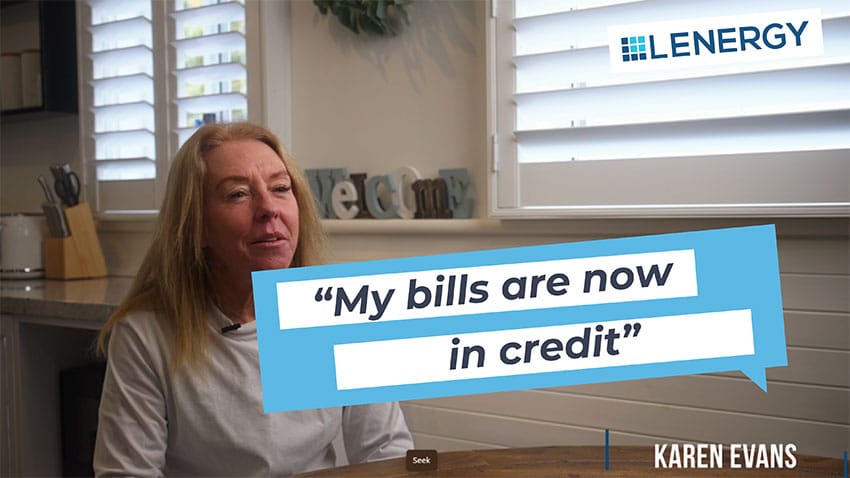
Watch Karen’s full testimonial here

Choosing a Reputable Solar Company

The decision to go solar is significant! So choosing the right solar company is crucial for a successful installation. It is also crucial for long-term satisfaction. Whether a company uses in-house installers or subcontractors, the focus should be on the company’s reputation and commitment to quality. Here’s how you can ensure you’re making the best choice:

Customer Testimonials:

  • Online Reviews: Look for reviews on platforms like Google, SolarQuotes, and other reputable review sites. Pay attention to recurring themes in customer feedback, both positive and negative.


Regarding a well known solar company that exclusively uses subcontractors. We witness this firsthand, when customers come to us after failing to reach their original installer. This ends up costing you twice as much.

  • Case Studies and Testimonials: Many solar companies provide case studies and testimonials on their websites. These can give you a sense of their customer service, quality of work, and overall reliability.

Industry Reputation:

  • Accreditations and Certifications: Check if the company has industry accreditations. Some are approval from the Clean Energy Council (CEC) in Australia. Certifications can show a commitment to high standards.
  • Awards and Recognition: Companies that have received industry awards or recognition often stand out for their quality and service.


Transparency and Communication

Clear Information:

  • Detailed Quotes: A reputable company will provide detailed quotes. These will break down the costs, including equipment, installation, and any additional services.
  • Transparent Contracts: Ensure the contract clearly outlines the terms of the installation and warranties. This is especially important when subcontractors are involved.

Open Communication:

  • Responsive Customer Service: Test the company’s responsiveness by reaching out with questions. Their willingness to provide clear, prompt answers can be indicative of their service quality.
  • Consultation Process: A good solar company will offer a thorough consultation process. Helping you understand your options and tailor solutions to your specific needs.

Warranty and Maintenance:

  • In-House Installers: Companies with in-house teams might offer longer warranties for the workmanship. Maintenance plans might also be easier to manage and integrate.
  • Subcontractors: Reputable solar companies using subcontractors can offer strong warranties and maintenance plans. They ensure that subcontractors adhere to the same standards and honour these commitments.

Customer Feedback:

  • In-House Installers: Feedback can directly influence training and process improvements within the company, leading to better service over time.
  • Subcontractors: Companies that use subcontractors often have rigorous feedback and review systems. Ongoing assessment of subcontractor performance helps maintain high standards and address any issues.

Ultimately, the key to excellent after-sales service lies in the company’s commitment to customer care, regardless of the installation method.

Subcontractors vs. In-House Installers: The Bottom Line

The choice between in-house installers and subcontractors shouldn’t be the main deciding factor. Instead, focus on the overall reputation, quality assurance, and support offered by the solar company. A reputable company, whether using in-house teams or subcontractors, will ensure high standards and excellent customer care.

By choosing a company with a strong track record, transparent practices, and a commitment to quality, you can feel confident in your solar investment. This approach ensures that your installation will be reliable and well-supported, giving you peace of mind.

What Size Solar System Do I Need?

Have you ever wondered, “What size solar system do I need for my home?” You’re not alone. This is one of the most common questions among Aussie homeowners considering a switch to solar energy. 

With the rising cost of electricity and the increasing awareness of our environmental footprint, more and more Australians are looking to solar power as a solution. But figuring out the right size for your solar system can feel overwhelming.

As a company that has helped countless households transition to solar and we get it, you want to make sure you’re getting the right setup without overspending or undershooting your needs. 

In this article, you’ll learn exactly how to determine the best-sized solar system for your home, ensuring you get the most bang for your buck.

Ready to shine some light on your solar journey? Let’s dive in.

Understanding Your Energy Needs

Before you can decide on the right size solar system, you need to understand your household’s energy consumption. This isn’t as complicated as it sounds. Here’s a simple 3 step guide to help you get started:

  1. Check Your Energy Bills:

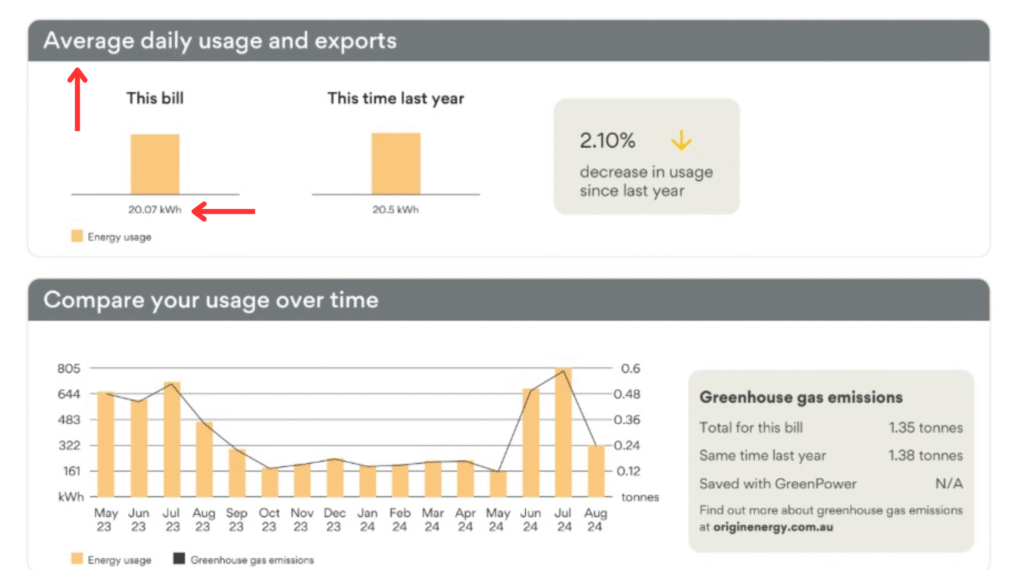
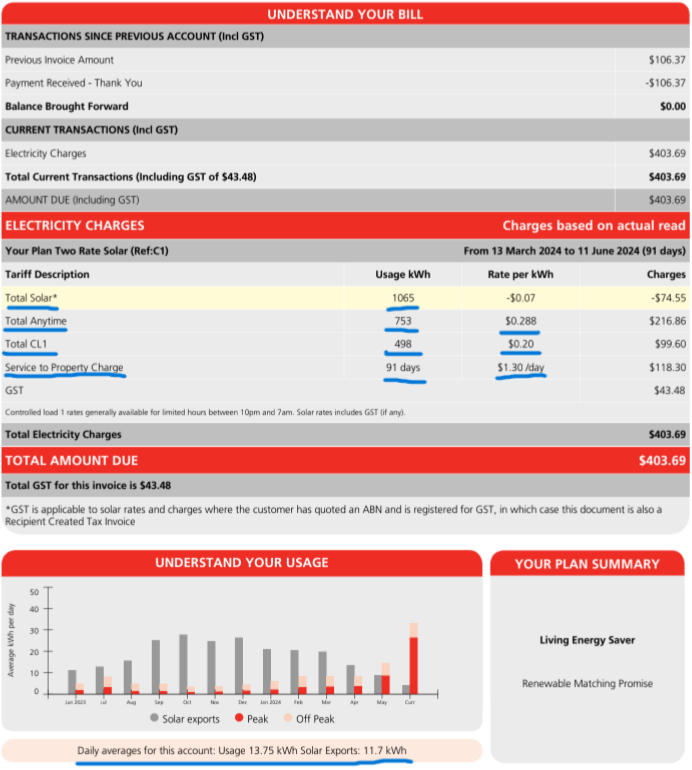
Grab your recent electricity bills and look at the “usage” section. This shows how much energy your household uses each day, usually measured in kilowatt-hours (kWh). It’s a good idea to look at bills from different seasons to get an average annual usage since energy consumption can vary throughout the year. (This is also why at Lenergy we request 3 electricity bills in our quoting process.)

  1. Calculate Your Daily and Monthly Usage:

Most bills will show your daily average usage. If not, you can divide your total monthly kWh by the number of days in the billing period. For a more accurate annual estimate, add up your total usage for the year and divide by 365.

Example Calculation:

Suppose your bills show a usage of 2160 kWh for the quarter. 2160kWh ÷ 90 Days in the period = an average daily usage of 24kWh (remember this number we will use it later 🤭).

  1. Consider Future Changes:

Think about any future changes that might affect your energy consumption. Planning to buy an electric vehicle? Adding a pool? Expecting an addition to the family? These changes can increase your energy needs.

Why This Matters:
Understanding your current and future energy needs helps you size your solar system correctly, ensuring it can cover your consumption and maximise your savings. For instance, we would size your solar system from your winter usage as typically, everyone uses more electricity in winter than summer, and this is also when your future system won’t be producing as much. This ensures your usage is matched in winter and that you will be in credit during the warmer months. 

How to Calculate the Right Solar System Size

Now that you know your energy needs, let’s get into the calculation.

Determine Your Peak Sun Hours:
Peak sun hours are the hours during which sunlight is strong enough to generate a significant amount of solar energy. In Australia, this typically ranges from 2 to 7 hours per day depending on your location.

Image edited from original: ktcables.com.au


Calculate the System Size with this simple formula:

System Size (kW) = Daily Energy Usage (kWh) ÷ Peak Sun Hours

​At Lenergy we use a conservative average of 3.6 peak sun hours to determine the approximate size solar system necessary for your needs. This is then cross-checked using our solar designing software.

For example, if your daily usage is 24 kWh and you get 3.6 peak sun hours per day, your system size would be:

Inverter System Size: 24 kWh ÷ 3.6 hours = 6.66kW

So to produce 24kWh per day, you need at least a 6.6kW inverter. 

It is also industry best practice to oversize the inverter up to 33% to account for heat and cable losses and provide a more constant output. 

This means we oversize the solar panels that are paired with the inverter. For example 7.92kW of solar panels on your 6.6kW inverter. 

Customer Case Study:

One of our customers was using 24kW a day and after evaluating their usage, goals and future plans, we sized a 7.92kW system for them.

This tailored solar system came to $7,130.46 with a substantial STC rebate saving of $3,349.50.

Because this system was correctly sized to meet their current usage and future plans, their return on investment is outstanding. The careful sizing ensures they’re not just covered for today’s energy needs, but also prepared for any future increases in usage. As a result, their payback period is impressively short, just 2-3 years. With a remarkable 620% return on investment, they’re seeing substantial financial benefits. 

Additionally, they’re saving $2,339.39 annually on their electricity bills. This means more money in their pocket every year! Investing in the right solar system has proven to be a wise financial decision that offers both immediate and long-term rewards.


Other Factors Influencing Solar System Size

Roof Space and Orientation: 
The amount of roof space you have and its orientation (north, south, east, west) can affect how many solar panels you can install and how efficiently they will produce energy. North-facing roofs are ideal in Australia as they receive the most sunlight throughout the day.

The Angle of Solar Panels:
The ideal angle for solar panels is approximately 30 degrees facing north. For roofs with a lower angle, i.e. 5 degrees, we can either install tilts or increase the system size to compensate for a sub-optimal angle.

Images Taken From a Lenergy Solar Tilt Installation

Available Budget:
Solar systems come in various sizes and prices. Your budget will influence the size and type of system you have installed. Remember, while larger systems have a higher upfront cost, they often lead to greater savings in the long run.  But you don’t have to navigate this alone. That’s why solar companies often recommend starting with a call. We can assess your current and future energy needs, along with your budget, to help determine the optimal size of your solar system.

There are several financing options available to make solar energy more accessible, including $0 upfront payments and low % finance plans. 

Additionally, the recent announcement of the Home Energy Upgrade Finance (HEUF) with Plenti introduces further discounted green loans for solar and battery installations.

A green loan is a financing option specifically designed to support environmentally friendly projects, such as solar and battery installations. These loans typically offer lower interest rates and favourable terms to encourage the adoption of sustainable energy solutions and reduce the environmental impact.

This HEUF  initiative offers homeowners an affordable and attractive way to transition to solar power, ensuring that financial barriers are minimised while maximising the benefits of renewable energy.

Energy Goals:
Are you aiming to be completely energy-independent or just offset a portion of your energy usage? Your goals will dictate the size of your solar system. For example, if you aim to go off-grid or use power at night, you’ll need batteries. 

In addition to the recent announcement of the Home Energy Upgrade Finance (HEUF) with Plenti, starting in November 2024 a home solar battery rebate will launch, making it even more cost-effective to incorporate batteries into your solar system for greater energy independence.

Graphic Images Created By Lenergy

Common Pitfalls and How to Avoid Them

Avoiding mistakes when sizing your solar system is crucial for getting the most out of your investment. Here are some common pitfalls and how to avoid them:

Overestimating Your Needs:
While it’s good to plan for future energy increases, don’t go overboard. Installing a system that’s too large can lead to unnecessary costs and wasted energy.

Underestimating Seasonal Variations:
Energy production and usage can vary with seasons. Ensure your system can handle peak demand during less sunny months. 

Ignoring Shading Issues:
Trees, buildings, and other obstructions can significantly impact solar panel performance. Whether you need a microinverter over a string inverter system will influence your upfront cost, as well as your return on investment. 

Not Accounting for System Degradation:
Solar panels lose efficiency over time. Factor in a slight degradation rate when calculating your system size to ensure long-term performance. Most high-quality solar panels have an annual degradation of approximately 0.4%, which means they will be about 90% efficient after 25 years.

It is important to choose a quality panel that is going to withstand the test of time and the elements and fit your exact location needs. 

Watts Next?

Now that you have a better understanding of how to size the right solar system, you’re in a much better position to make informed decisions. When you receive your quotes, you’ll know exactly what to expect, ensuring that you get the most out of your investment and maximise your savings.

However, the process can still feel overwhelming, and that’s perfectly normal. Consulting with a solar expert can offer personalised advice tailored to your specific needs, giving you peace of mind. They can answer your questions, address your concerns, and help you navigate any uncertainties.

Investing in solar energy is a significant step towards a more sustainable future and financial savings. By correctly sizing your solar system, you’re not just making a smart financial decision, but also contributing to a greener planet.

So, take your time, consult the experts, and rest easy knowing you’re on the right path to a brighter, more efficient future.

String Inverters vs Microinverters vs DC Optimisers

Are you considering installing a solar system but feeling overwhelmed by the different inverter options? You’re not alone. Many homeowners ask us about the differences between these systems and why they should choose one over the other. With years of experience in installing solar solutions at Lenergy, we’re here to help you understand all your options.

At Lenergy, we provide all three types of inverters because we recognise that every household has unique needs and requirements.

In this article, we’ll compare String Inverters, DC Optimised systems, and Microinverters—looking at their efficiency, installation process, costs, and suitability for various situations. Picking the right inverter is essential to maximise your solar system’s performance and value.

By the end, you’ll have a clear understanding of which system best fits your needs, ensuring optimal efficiency and long-term savings from your solar investment.

What are String Inverters?

String inverters are the most common type in the solar energy market and are known for their affordability.

How they work:
All of your solar panels are connected in a “string” (similar to Christmas lights). The combined DC electricity flows to a single central inverter, which converts it into usable AC power for your home.

Advantages of String Inverters:

  • Cost-effective: Generally, lower-priced than other inverter types, making them attractive for both small and large systems.
  • Simple installation: Fewer components mean quicker, straightforward setup.
  • High efficiency in ideal conditions: Perform well when sunlight is consistent and shading is minimal.

    Disadvantages:

    • Shading sensitivity: Any shading, dirt, or damage on a single panel can significantly reduce the output of the entire string.
    • Limited monitoring: Usually lacks detailed panel-level performance data, making issue detection more difficult.
    • Design restrictions: Require specific panel layouts and orientations, which can limit flexibility—especially on roofs with multiple angles or obstructions.

      Best Use Cases:

      • String inverters are ideal for open spaces with little or no shading. These include homes with simple roof designs that are unaffected by shading, large commercial rooftops or ground-mounted solar farms.
      • Simple Panel Layout. They work well for homes with very simple roof layouts where the solar panels only face up to three separate directions.

      String inverters are reliable and cost-effective for many solar installations. But, shading and layout can greatly hurt their performance.

      Imagine a large, open roof with no shading, this is where string inverters thrive.

      What are DC Optimisers?

      DC optimisers are advanced devices attached to each solar panel, working alongside a central string inverter.

      How they work:

      Each panel is equipped with an optimiser that conditions its power before sending it to the central inverter. This setup improves overall system performance by optimising each panel individually.

      Advantages:

      • Improved shading performance: Reduce shading impacts by ensuring each panel operates at its best.
      • Panel-level monitoring: Accurate detection of issues at the individual panel level, simplifying maintenance.
      • Enhanced energy yield: Increase overall solar energy harvest, especially in partially shaded or multi-orientation rooftops.

        Disadvantages:

        • Higher upfront cost: Adds to the initial investment compared to a basic string inverter system.
        • Longer installation time: Slightly more complex installation process with additional components.

          Best Use Cases:

          • DC optimisers are for places where some panels may be slightly shaded at different times of the day. This includes residential rooftops with chimneys, trees, or other obstructions that may shade sections of the roof.
          • Variable Panel Orientations are well-suited for roofs with many angles or orientations as each panel can be optimised separately.

          DC optimisers offer a great balance of cost and performance. They boost the efficiency and reliability of solar systems in less-than-ideal conditions. They provide great benefits in scenarios where shading or panel orientations would otherwise reduce the system’s overall output.

          What are Microinverters?

          Microinverters are small devices mounted directly on each solar panel, converting DC to AC at the panel level.

          How they work:
          Every panel has its own microinverter, which operates independently of the others, converting the power right at the source.

          Advantages: 

          • Maximum efficiency: Ensures each panel operates at its highest potential, especially useful in shaded or complex roof layouts.
          • Ideal for shaded conditions: Shade on one panel doesn’t affect the others.
          • Detailed monitoring: Track performance at the panel level for precise troubleshooting.
          • Enhanced safety: No high-voltage DC present in the system, reducing fire risk.

            Disadvantages:

            • Higher initial cost: More microinverters mean a higher upfront expense. 

              Best Use Cases:

              • Complex Roof Designs: Microinverters are ideal for installations with multiple roof angles and orientations, as they ensure each panel performs optimally regardless of its position.
              • Shaded Locations: They are perfect for areas where shading varies throughout the day, as each panel operates independently without impacting the rest of the system.
              • High-Performance Monitoring: For those who value detailed performance data, microinverters provide comprehensive monitoring at the panel level, making them a great choice.

              Microinverters are very efficient and flexible. Microinverters are an excellent choice for residential and commercial solar installations with varying conditions. Their ability to optimise each panel independently and provide detailed monitoring ensures maximum energy production and system reliability.

              How are DC Optimisers, String inverters and Microinverters Different?

              Choosing between String Inverters, DC optimisers, and Microinverters involves evaluating many key factors. These include efficiency, performance, installation, maintenance, cost, and safety. 

              Here’s a detailed comparison to help you understand the differences:

              Efficiency and Performance:

              • String inverters are efficient in ideal conditions. But, they suffer performance drops if even one panel is shaded or malfunctioning. The output of the whole string is limited by the weakest panel. It can greatly reduce efficiency.
              • DC optimisers boost efficiency. They do this by letting each panel operate at its best. They reduce the impact of shading on a single panel. They do this by optimising each panel independently. This results in better overall system efficiency in varied shading conditions.
              • Microinverters offer the highest efficiency. They convert DC to AC at the panel. Each panel operates alone. If one panel is shaded or fails, it does not affect the others. This results in superior performance, particularly in installations with mixed shading or orientations.

              Installation and Maintenance:

              • String Inverters: These are the simplest and quickest to install due to fewer components. Maintenance is also straightforward, as there is only one central inverter to manage.
              • DC Optimisers: Have more time-consuming installations. This is due to the extra components attached to each panel. Maintenance can be more involved. But, the panel-level monitoring makes it easy to find and fix specific issues.
              • Microinverters: Much like the DC Optimisers, are more time-consuming to install. This is because each panel requires its own microinverter. However, this allows for easier maintenance and troubleshooting at the individual panel level.
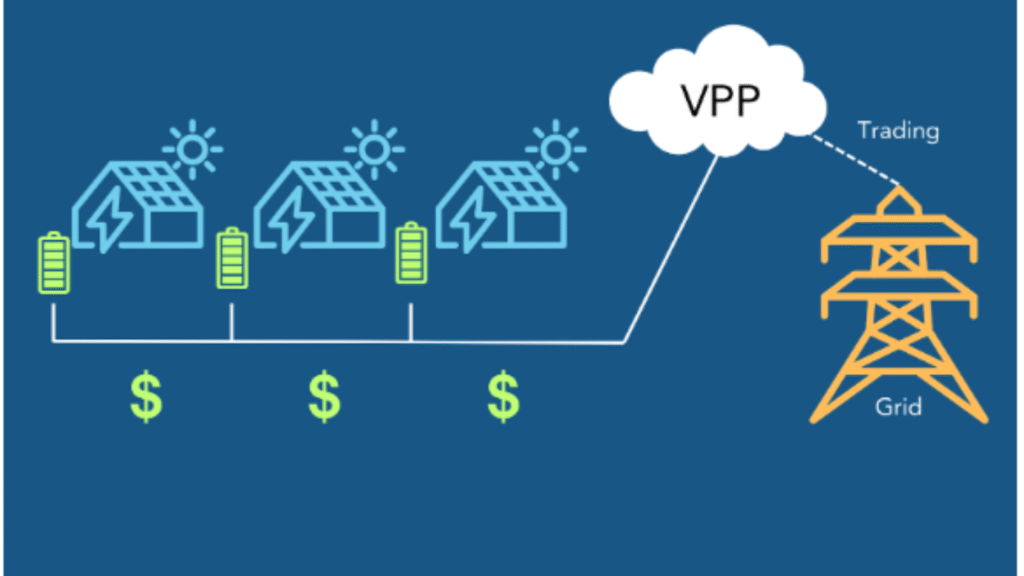
              Cost Comparison of a String inverter, Microinverter and DC optimisers

              – 6.6 kW String Inverter system at Lenergy is: $6,992

              – 6.6 kW DC Optimiser inverter system at Lenergy is: $8,110

              – 6.6 kW Microinverter system at Lenergy is: $10,279

              There is a notable price difference between string inverter systems and microinverter systems. Therefore, it is crucial to have a system that is specifically tailored to your needs.

              Cost Considerations:

              • String inverters: Have the lowest upfront cost. This makes them a good option for budget-conscious installations. However, potential performance losses due to shading can impact long-term savings.
              • DC Optimisers: Higher initial cost than string inverters due to the added optimisers. The better efficiency and performance in shaded conditions can justify the additional expense over time.
              • Microinverters: The highest initial cost due to the need for multiple inverters. The higher upfront cost can be offset by better efficiency, performance, and monitoring. This is especially true in challenging installations.

              Safety and Reliability

              String Inverters are reliable but considered less safe as high-voltage DC electricity runs through the system. Performance issues with a single panel can affect the entire string. Both String and DC optimisers have Arc Fault Detection Devices to minimise their risk.

              DC Optimisers increase safety by reducing the impact of shading and managing voltage at the panel level. They offer better reliability through panel-level optimisation. 

              Microinverters provide the highest safety. They eliminate high-voltage DC electricity, reducing the risk of fires. Their independent operation of each panel ensures excellent reliability and safety.

              Solar Inverters: Turning The ‘Current’ Situation Around

              The most important takeaway is understanding your needs, your home’s capabilities, and your goals. This will help you avoid buying something unnecessary or unsuitable.

              We get it, you’re probably not 7 feet tall with a perfect view of your roof. That’s why we can show you, in real time, any shading issues and discuss which option is best for your roof layout. Here’s a quick summary for you:

              Inverter TypeCostPerformance with ShadePanel IndependenceBest For
              String InverterLowestPoor (one panel affects all)NoUnshaded roofs, same direction panels
              MicroinverterHighestExcellentYesShaded roofs, complex roof layouts
              DC OptimiserMid-rangeGoodYes (to some extent)Partial shading, slight mismatches

              With the above information in your arsenal, you can now understand why one inverter option may be suggested for you. Or know if you’re being led astray.

              Still confused about which inverter is for you? Contact us today and we’d be more than happy to discuss your needs and match them with the right choice! Alternatively check out our recent blog on Which one is right for you.

              Compare The Best Solar Batteries: Tesla vs Enphase vs Sungrow

              If you’re a homeowner considering adding battery storage to your solar system, you’ve probably come across different battery brands. Names like Tesla Powerwall 2, Enphase IQ 5P, and Sungrow might sound familiar. Each brand promises to enhance your energy independence, reduce electricity costs, and boost your solar power system’s efficiency. But which one is the best fit for your home?

              At Lenergy, we understand just how overwhelming navigating through these options can be. But don’t worry, we’re here. You don’t have to do it alone. As experts in renewable energy systems and providers of Tesla, Enphase, and Sungrow batteries, we’re here to guide you with confidence.

              In this article, you’ll discover the key features, performance metrics, costs, and user experiences of the Tesla Powerwall 2, Enphase IQ 5P, and Sungrow Batteries.

              By the end, you’ll know which battery system best suits your needs, ensuring you make a well-informed investment for your home.

              Graphic Image Created By Lenergy

              Overview of The Tesla Powerwall 2

              When it comes to home energy storage, the Powerwall 2 by Tesla stands out as a game-changer. This innovative solution not only stores the excess energy generated by your solar panels but also ensures you have a reliable backup during power outages. But what exactly makes the Powerwall 2 so special, and how can it transform your home’s energy management? In this section, you’ll understand its key features, benefits, and potential drawbacks of the Powerwall 2, giving you a clear understanding of why it might be the perfect addition to your solar power system.

              Key Features:

              • Capacity: The Tesla Powerwall 2 offers a usable capacity of 13.5 kWh, making it one of the largest residential batteries available. This capacity is sufficient to power an average home for a day.

              • Power Output: With a continuous power output of 5 kW and peak power output of 7 kW, the Powerwall 2 can handle heavy loads, ensuring that your essential appliances and devices remain powered during outages.

              • Scalability: Multiple Powerwall units can be connected to increase storage capacity, providing flexibility for larger homes or higher energy demands.

              Performance Metrics:

              • Efficiency: The Powerwall 2 boasts a round-trip efficiency of 90%, meaning that 90% of the energy stored in the battery can be used.

              • Lifespan: Tesla offers a 10-year warranty with an expected lifespan of at least 15 years, assuming daily cycling. 

              Installation and Maintenance:

              • Installation: The Powerwall 2 can be wall or floor-mounted, indoors or outdoors, offering versatile installation options. Professional installation is recommended to ensure optimal performance and safety.

              • Maintenance: Minimal maintenance is required. The battery is designed to operate in a wide range of temperatures and is equipped with liquid thermal control to maintain optimal performance, but it is best to keep out of direct sunlight to ensure the battery performance and longevity is not compromised

              Cost:

              • The Tesla Powerwall 2 typically costs around $15,800 including installation fees, with an additional Tesla Powerwall 2 costing around $12,800. The total cost can vary based on the complexity of the installation, the number of phases at the property and additional equipment required.

              The Tesla Powerwall 2 utilises lithium-ion (Li-ion) battery technology with a specific focus on nickel-manganese-cobalt (NMC) chemistry. This combination provides a high energy density, which translates to efficient energy storage and discharge. The NMC chemistry is well-regarded for its stability and longevity, making it a reliable choice for residential energy storage.

              The Powerwall 2 also comes in a strong, weatherproof case. This means it can handle different weather conditions and works well whether you install it inside or outside your home.

              The Best Solar Batteries
              Graphic Image Created By Lenergy

              Overview Of The Enphase IQ 5P

              Choosing the right home energy storage can be difficult. Good thing the Enphase IQ 5P Battery is a cutting-edge solution designed to optimise your solar power system’s efficiency and reliability. Known for its seamless integration with Enphase microinverters, this battery offers robust performance, flexibility, and intelligent energy management. In this section, we’ll explore the standout features, advantages, and any potential downsides of the Enphase IQ 5P Battery, providing you with a comprehensive understanding of why it might be the ideal choice for enhancing your home’s solar energy system.

              Key Features:

              • Capacity: The Enphase IQ 5P offers a usable capacity of 5kWh per battery. While slightly lower than the Tesla Powerwall 2, it can still provide substantial energy storage for daily use.

              • Power Output: It has a continuous power output of 3.84 kW and a peak power output of 7.68 kW. This allows for effective management of household loads during peak times and power outages.

              • Scalability: Like the Powerwall 2, the IQ 5P can be scaled by connecting multiple units, making it adaptable for various household energy needs.

              Performance Metrics:

              • Efficiency: The IQ 5P has a round-trip efficiency of approximately 96%, which means it retains more of the energy stored compared to many competitors.

              • Lifespan: Enphase provides a 15-year warranty with an expected operational life similar to that of the Powerwall 2, ensuring longevity with proper usage.

              Installation and Maintenance:

              • Installation: The Enphase IQ 5P is designed for flexibility with both wall and floor-mount options, and it can be installed indoors or outdoors. Professional installation ensures optimal configuration and safety.

              • Maintenance: The IQ 5P is low-maintenance, designed to operate efficiently across a broad range of temperatures. It incorporates advanced thermal management to sustain performance.

              Cost:

              • The Enphase IQ 5P battery costs around $11,499,  including installation fees. The final price depends on installation specifics and any additional components required for the setup.

              The Enphase IQ 5P uses lithium iron phosphate (LFP) chemistry. LFP batteries are celebrated for their exceptional safety, thermal stability, and long cycle life, making them a robust option for home energy storage. The LFP chemistry provides significant advantages in terms of safety and durability, reducing risks of overheating and extending the battery’s lifespan.

              The IQ 5P is enclosed in a sturdy, weather-proof casing, similar to the Powerwall 2, ensuring it can withstand both indoor and outdoor installations while maintaining reliable performance. However, it employs passive cooling, so keeping it out of direct sunlight is even more important.


              Sungrow Solar Battery
              Graphic Image Created By Lenergy

              Overview of The Sungrow Battery 

              The Sungrow battery is a versatile and robust energy storage solution designed for residential solar power systems. Known for its modular design, the SBR096 offers flexibility and scalability, making it an attractive option for homeowners looking to maximise their energy independence. This battery system is designed to seamlessly integrate with existing solar setups or as part of a fully integrated solar and battery solution, providing a reliable source of stored energy that can be used during peak demand periods or power outages.

              The Sungrow battery also comes with advanced safety features and intelligent management systems. It is equipped with multiple layers of protection, including overcharge, over-discharge, and short-circuit protection, ensuring the safety of your home and the longevity of the battery. The intelligent battery management system (BMS) continuously monitors and optimises the battery’s performance, providing real-time data and diagnostics. This feature not only enhances the safety and efficiency of the battery but also allows homeowners to monitor their energy usage and battery status through a user-friendly interface.

              Key Features of the Sungrow Battery

              • Capacity: The Sungrow battery is modular by design and offers a usable capacity of 3.2 kWh per battery. Starting with a minimum of two battery modules and a storage capacity of 6.4kWh, this capacity makes it a strong contender in the market, providing ample energy storage for daily household use, particularly for those with high energy consumption or larger solar setups.
              • Power Output: The has a starting continuous power output of 3.84 kW, and increases by 1.92kW with each additional module. This high power output allows for effective management of household loads, especially during peak demand times or power outages, ensuring that essential appliances and systems remain operational.
              • Scalability: The modular design of the battery allows for scalability. Homeowners can connect multiple units to increase total storage capacity all the way up to 102.4kWh, making it adaptable to a variety of household energy needs. This flexibility ensures that the battery system can grow alongside your energy requirements.

              Performance Metrics

              • Efficiency: The Sungrow battery boasts a round-trip efficiency of over 95%. This means that a high percentage of the energy stored is retained and usable, reducing energy loss and maximising the benefits of your solar power system.

              • Lifespan: Sungrow provides a 10-year warranty for their battery, with an expected operational life that ensures long-term reliability. Proper usage and maintenance can help extend the battery’s life, providing sustained energy storage over many years.

              Installation and Maintenance

              • Installation: The Sungrow Battery modules are designed with installation flexibility in mind, offering both wall and floor-mount options. It can be installed indoors or outdoors, depending on space and preference. Professional installation is recommended to ensure optimal configuration and safety, taking into account specific household requirements and local regulations.

              • Maintenance: The Sungrow battery is designed to be low-maintenance, operating efficiently across a broad range of temperatures. It features advanced thermal management systems that help sustain performance and protect the battery from temperature-related issues. Routine checks and monitoring via the intelligent battery management system (BMS) ensure ongoing efficiency and safety.

              Cost:

              • The 6.4kWh Sungrow battery system is competitively priced, generally costing around $8,000 to $10,000, including installation fees. The final price may vary based on specific installation requirements and any additional components needed for the setup. This cost-effective solution provides homeowners with a reliable and efficient energy storage option without breaking the bank. 

              Customer Support for Tesla, Enphase & Sungrow

              Now, it’s not enough to compare the features of different battery storages. You should also consider post-installation support. Having the most advanced technology won’t mean anything if you can’t contact anybody when you encounter issues with the product. Post-installation care is an important factor to consider because it ensures you can reach both the installer for general support and the product manufacturers for specific product-related issues.

              Tesla offers comprehensive customer support, accessible through their website, mobile app, and customer service hotline. They provide detailed installation guides, troubleshooting resources, and a responsive support team. 

              Users report that while support is generally good, response times can vary, especially during peak times or when dealing with more complex issues.

              Enphase is known for its strong customer support, with resources available through their website, customer support hotline, and a dedicated mobile app. They offer extensive documentation, including installation manuals and troubleshooting guides.

              Customers frequently praise Enphase for their prompt and helpful support, noting the efficiency and effectiveness of their service team in resolving issues.

              Enphase boasts a call response time of less than 60 seconds, ensuring they answer customer calls within this brief timeframe. We tested this out and were amazed after 40 seconds the call was answered.  

              Sungrow offers comprehensive customer service through multiple channels, including their customer support hotline, their dedicated app, and their official website. This multi-faceted approach ensures that assistance is readily available no matter how you prefer to seek help.

              Much like Enphase, Sungrow includes detailed installation manuals and troubleshooting guides both in their app and on their main website. However, it’s important to note that while Sungrow provides solid customer service, it may not reach the same level of excellence as that of Tesla or Enphase. Tesla and Enphase are often praised for their exceptional customer support, quick response times, and overall user satisfaction. While Sungrow’s customer service is reliable and comprehensive, some users might find it falls slightly short compared to these leading competitors.

              recycling solar batteries
              Graphic Image Created By Lenergy

              Environmental Impact

              As the popularity of battery storage continues to increase annually among homeowners, the demand for recycling processes and facilities has surged. Contrary to popular belief, solar batteries can indeed be recycled in Australia.

              Recent advancements in recycling technology have led to the establishment of several facilities in New South Wales that specialise in recycling lithium-ion batteries, the most common type used in Australia. Furthermore, the elimination of cobalt from new batteries is expected to boost lithium-ion battery recycling. 

              Tes-Amm, one of the leading lithium-ion recycling facilities in Australia, utilises sophisticated technology to separate raw materials, Lithium Carbonate, Cobalt Hydroxide, Sodium Sulfate (by-products), Graphite/Copper/Aluminum, for repurpose.

              These batteries are recyclable not only at the end of their lifespan but also when they need replacing.


              So, What’s Next?

              Only you truly know what you are looking for in a battery system for your home and with the above information, which battery sits right with your needs and circumstances. 

              At Lenergy, we supply  the Enphase IQ 5P, Sungrow and Tesla Powerwall 2, because we believe in all products. So which is the best? It really comes down to your personal preference. And we’re just here to give you premium solar installation services.

              Now it’s time to get the ball rolling on your solar battery installation and start reaping the benefits.

              Still confused about which one is right for you?

              Get in touch today and we can help you figure out the best solar solution for your home or business.

              How Much Money Can You Save With Solar Panels?

              Do you dread seeing your monthly energy bill? With costs steadily rising, you might be wondering if there’s a more affordable and sustainable way to power your home. You’re not alone—many homeowners are facing the same challenge, and in 2024, the answer is clearer than ever: solar energy.

              With our extensive experience in the renewable energy industry, we’ve seen how solar panels can dramatically cut energy costs while helping the environment. But just how much can you save by going solar?

              In this article, you’ll learn about the potential savings solar power offers, supported by the latest data and incentives. We’ll walk you through the financial advantages, explain the impact of government rebates, and show how solar can revolutionise your energy expenses. It’s time to take control of your energy bills and make an informed decision about switching to solar power for your home.

              Find Your Energy Bill Usage

              To truly understand the savings you can achieve through solar energy, you first need to get a clear picture of your current electricity costs. Most households typically face electricity bills between $800 and $1000 per quarter. While this amount can vary depending on your location, usage patterns, and the tariff you’re on, it gives us a solid baseline for calculating potential solar savings.

              To figure out your average energy consumption, simply check your electricity bill, where your usage in kilowatt-hours (kWh) is usually listed on the first or second page. It’s crucial to match your solar system’s size with this usage, as it ensures you get the best return on your investment and a shorter payback period. More on how to calculate your solar system size here

              Speaking of payback periods, this refers to how long it takes for the savings from your solar panels to cover the upfront costs. In 2024, the typical cost to install a solar system for an average home in Australia ranges between AUD $5,000 and AUD $10,000.

              Real Life Savings From Solar

              One of our customers, who was regularly hit with electricity bills nearing $1,000 each quarter, made the smart decision to invest in solar power to reduce their energy costs. Based on their energy usage, we recommended and installed a 13.2kW solar system, which cost $11,765 upfront.

              The results have been nothing short of impressive. Thanks to their new solar system, their annual electricity bill, which once totalled $3,555.99, has been cut by a staggering 95%. This translates to an annual saving of $3,386.21.

              $3,555.99 – $3,386.21 = New Annual Bill $169.78

              It’s also worth noting that electricity bills can vary throughout the year. In fact, during February, their account was in credit due to the excess energy generated by their solar system. This showcases not just the efficiency of the system but also its ability to deliver substantial yearly savings, reinforcing the long-term value of the investment.

              Looking at the bigger picture, the financial benefits of going solar are obvious. With such a dramatic drop in energy costs, the payback period for their system is estimated at 3 to 4 years. After that, the system will continue to deliver savings, providing an impressive return on investment (ROI) of around 719%.

              Moreover, with most solar panels coming with warranties of 25 years or more, this means that after the payback period, they can expect 18 to 19 years of drastically reduced energy costs. And, as electricity prices are expected to keep rising, these long-term savings are likely to grow even further.

              How To Get The Most From Your Solar System

              To get the most bang for your buck with your solar panels, try using more energy during the day when they’re producing power. But we get that might not be an option for everyone because, well, life happens. This is where adding solar batteries can help, storing that energy for later use.

              But what about the Sun Tax? During the daytime, your solar panels often generate more electricity than your household consumes. Without a battery, this surplus energy gets sent back to the grid, and you could now see a small fee applied to this, referred to as the Sun Tax. With battery storage you dodge this small fee as the excess energy is stored for later use. This means you can draw on this stored energy during the evening or on cloudy days, reducing your reliance on grid electricity and further lowering your energy bills.

              Do Solar Batteries Save You More?

              While installing solar panels delivers substantial savings, adding a solar battery can take those benefits even further. Solar batteries store the surplus energy generated by your panels during the day, allowing you to make the most of your solar power even after the sun goes down. 

              Opting into a Virtual Power Plant (VPP) can also shorten your payback period. When your battery is connected to a VPP, the excess energy you store can be fed back into the grid during peak demand. This not only helps stabilise the electricity grid but also allows you to earn extra income through available incentives. In simple terms, a VPP pools energy storage from multiple homes to improve grid stability and lower energy costs for participants.

              And here’s the best part, the new solar battery rebate launching in November 2024 will further reduce upfront costs, making it even more affordable to upgrade your system with a battery.

              Brighte Finance: Green Loans for Solar Panels

              One of the biggest concerns for homeowners considering solar power is the upfront cost. While the long-term savings are impressive, the initial investment can feel overwhelming. Luckily, financial solutions like the Brighte Finance Green Loan are designed to make solar more affordable by breaking the cost into manageable instalments.

              Brighte Finance offers green loans specifically for renewable energy projects, including solar panel and battery installations. This means you can spread the cost of your solar system over small, fortnightly payments, making it easier to manage.

              Here’s how it works: Instead of paying AUD $6,500 upfront for your solar system, you can choose a Brighte Green Loan and spread the cost over 2 to 10 years. For example, you could make fortnightly payments of around $45. This lightens the financial load and aligns with your regular expenses.

              By using a Green Loan to install a solar system, you can replace your high electricity bills with solar repayments, essentially using the savings generated by your panels to cover the cost of the system. In fact, the combination of your loan repayments and new electricity costs is often lower than what you’re currently paying for electricity. So by not making the switch, you could actually end up paying more in the long run. Let’s break it down with a real-life example:

              If you’re spending around $4,000 a year on electricity, a 10.52kW solar system could reduce your bill by 60%, saving you roughly $2,400 annually.
              Add your remaining electricity costs to your $45 per fortnight Green Loan repayments, and you’re still spending far less than your current bill. Without dipping into your savings, you could be over $900 better off each year!
              By the time your Green Loan is paid off, your solar system would have paid for itself, leaving you with substantial savings for years to come.
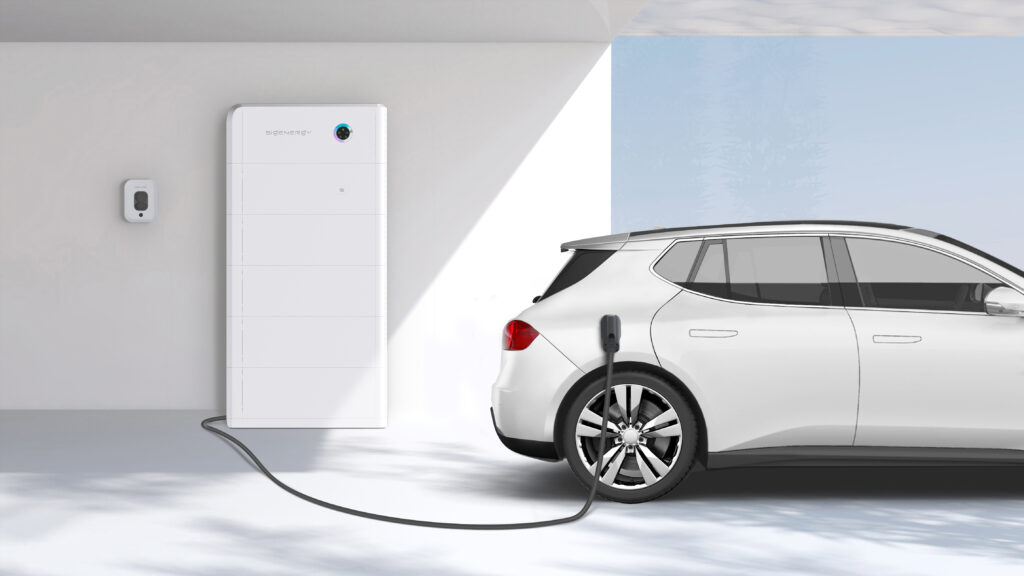
              Wait Longer, Save Less.

              If you don’t take action soon, you’ll likely face the ongoing rise and unpredictability of electricity bills. With energy prices expected to continue increasing, delaying your switch to solar could lead to higher expenses and greater financial uncertainty. By making the move to solar now, you can stabilise your energy costs, gain more control over your finances, and shield yourself from the fluctuations of the energy market.

              It’s also worth considering the Small-scale Technology Certificates (STCs) rebate, which offers valuable financial incentives for installing solar panels. However, this rebate is set to end in 2030 and will decrease each year until then. This means the longer you wait, the less financial support you’ll receive, making solar installations more costly down the road. Acting now not only maximises your savings on electricity bills but also ensures you benefit from the highest possible STC rebate, significantly lowering your upfront costs.

              Find out more about the STC’s here

              Household Energy Upgrades Fund (HEUF): Everything You Need To Know

              Imagine this: you’re sitting at home, feeling the weight of your electricity bills and knowing that your old heating system is not just draining your wallet but also the environment.  You’ve thought about upgrading to solar panels or maybe installing a new battery storage system, but the upfront costs have always put you off. Sound familiar?

              Well, here’s some good news to brighten your day. Plenti Group Limited has just been selected by the Clean Energy Finance Corporation (CEFC) as the inaugural financier for its brand-new $1 billion Household Energy Upgrades Fund (HEUF). This means you now have access to low-cost loans designed to make those dream upgrades a reality. Say goodbye to the old barriers and hello to a more energy-efficient, eco-friendly home.

              In this article, you’ll learn all about the HEUF, how Plenti’s involvement can benefit you, and the simple steps to take advantage of these fantastic loan opportunities.

              Overview of the Household Energy Upgrades Fund (HEUF)

              The Household Energy Upgrades Fund (HEUF) is a groundbreaking initiative by the Clean Energy Finance Corporation (CEFC) aimed at making Australian homes more energy-efficient and sustainable. With a whopping $1 billion in funding, the HEUF is set to provide low-cost loans to homeowners looking to upgrade their energy systems. Whether you’re considering solar panels, battery storage, or other energy-saving technologies, this fund is designed to help you make those upgrades without the financial stress.

              The HEUF focuses on making clean energy more accessible and affordable for everyone. By reducing the upfront costs associated with energy-efficient home improvements, the fund encourages more homeowners to take the leap towards sustainability. It’s a win-win situation: you save money on your energy bills while also reducing your carbon footprint.

              HEUF Discounted Green Loans
              Graphic Image Created By Lenergy

              Plenti’s Role and Selection by CEFC

              Plenti Group Limited, a leader in green finance, has been chosen as the inaugural financier for the HEUF discounted green loans. This is a significant endorsement of Plenti’s commitment to sustainable energy solutions and its expertise in providing affordable financing options. But what does this mean for you as a homeowner?

              Plenti’s involvement ensures that the funds allocated by the CEFC are distributed efficiently and effectively. With a proven track record in green loans, Plenti is perfectly positioned to help you navigate the process of applying for and securing your HEUF discounted green loan. Their selection by the CEFC highlights their reliability and dedication to making clean energy upgrades accessible to all Australians.

              Through Plenti, you can expect a streamlined green loan application process, competitive interest rates, and expert support every step of the way. This partnership is designed to take the hassle out of financing your home energy upgrades, making it easier than ever to embrace a more sustainable lifestyle.

              Homeowners can enjoy significant financial benefits through the HEUF discounted green loans with Plenti, which offer:

              • Up to 2.24% per annum rate discount for purchasing an eligible solar battery system.
              • Up to 2.74% per annum rate discount for purchasing energy-efficient equipment, either with or without a solar battery system.
              • An additional 0.60% per annum rate discount when signing up for a Virtual Power Plant (VPP) through Plenti’s GreenConnect point-of-sale platform.
              • Extended loan terms up to 15 years, five years longer than typical loans, aligning the repayment period with the life of the equipment and making repayments more affordable.

              Combined with the new battery rebate launching in November 2024, this really is the icing on the cake. The financial barriers that once hindered Australian homeowners from installing solar panels or battery storage have been removed!

              Graphic Image Created By Lenergy

              Benefits of HEUF for Homeowners

              So, what’s in it for you? Here are some of the key benefits of the HEUF:

              1. Lower Upfront Costs: The primary barrier to home energy upgrades has always been the initial expense. The HEUF’s low-cost loans significantly reduce this burden, making it feasible for more homeowners to invest in energy-efficient technologies.
              2. Energy Savings: By upgrading your home’s energy systems, you can dramatically cut down your energy bills. Over time, the savings on your utility costs can offset the loan repayments, leading to long-term financial benefits.
              3. Environmental Impact: Switching to renewable energy sources and improving your home’s energy efficiency helps reduce your carbon footprint. You’ll be contributing to a cleaner, greener planet for future generations.
              4. Increased Property Value: Energy-efficient homes are in high demand. Upgrades like solar panels and battery storage can increase your property’s market value, making it a smart investment for the future.
              5. Government Backing: With the CEFC’s endorsement, you can trust that the HEUF is a reliable and beneficial program. This backing ensures that the loans are not only affordable but also supported by a credible institution.

              Types of Upgrades Covered

              The HEUF covers a wide range of energy-efficient upgrades, ensuring that you can tailor your improvements to your specific needs. Here are some of the main upgrades you can finance through the HEUF:

              1. Solar Panels: Harness the power of the sun to generate your own electricity, reducing your reliance on the grid and cutting down your energy bills.
              2. Battery Storage: Store excess energy generated by your solar panels for use during peak times or power outages, maximising your energy independence.
              3. Energy-Efficient Appliances: Upgrade to energy-efficient appliances that consume less power, saving you money and reducing your household’s overall energy consumption.
              4. Insulation and Glazing: Improve your home’s insulation and glazing to maintain a consistent indoor temperature, reducing the need for heating and cooling.
              5. Heating and Cooling Systems: Invest in modern, energy-efficient heating and cooling systems that provide comfort while using less energy, such as air conditioning systems.

              Application Process for HEUF Loans

              Applying for a HEUF discounted green loan through Plenti is designed to be a straightforward and hassle-free process. Here’s a step-by-step guide to help you get started:

              1. Check Eligibility: Ensure that you meet the basic eligibility criteria for the HEUF loan. This includes being an Australian resident and having a good credit history.
              2. Get a Quote: Reach out to approved vendors or contractors to get quotes for the energy-efficient upgrades you’re interested in. This will give you a clear idea of the costs involved.
              3. Apply for the Loan: Your chosen installer will get in touch with Plenti and relay a few details, Plenti will contact you to finalise the information. 
              4. Loan Approval: Once your application is submitted, Plenti will review it and get back to you with a decision. If approved, you’ll receive the loan amount directly to cover your upgrade costs.
              5. Complete the Upgrades: Work with your chosen vendors or contractors to complete the energy-efficient upgrades to your home.
              6. Repay the Loan: Repay the loan in easy, manageable instalments. With the savings on your energy bills, you’ll find that the repayments are more than affordable.

              It’s Time To Start

              With access to discounted green loans, you can now make those much-needed energy-efficient upgrades to your home without the financial strain. Not only will you save money on your energy bills, but you’ll also be making a positive impact on the environment.

              Ready to transform your home into an energy-efficient powerhouse? Don’t wait!
              Get in touch with us today to learn more about how you can take advantage of the HEUF discounted green loans and start your journey towards a greener, more sustainable future.