Author: Donna Wentworth

5 Tips For Choosing The Right Battery For Your Home

You’ve done your research. You’ve compared brands, watched reviews, maybe even spoken to an installer. And yet — you’re still unsure which solar battery is right for your home. Should you go with a big name like Tesla? Is a modular system better if your energy use might grow? What about blackout protection?

At Lenergy, we’ve helped hundreds of Australian homeowners navigate the battery buying process. From small homes with basic backup needs to high-usage properties with three-phase power, we’ve seen what works — and what causes headaches.

In this article, you’ll learn five straightforward, practical tips that will help you choose a battery that actually suits your home, your habits, and your future plans.

1. How Much Battery Storage Do You Really Need?

This is the first — and arguably most important — question to ask. A common mistake is thinking bigger is always better. In reality, oversizing your battery can add thousands to your upfront cost without giving you meaningful extra savings, unless you have plans to trade your power on a VPP (virtual power plant).

If you’re not wanting to trade your battery power on a VPP, then your battery should match your energy use, not just your energy production. If your home only uses 5–6 kWh in the evening, then you probably don’t need to install a 40 kWh battery. 

A few quick sizing tips:

  • Start by reviewing your power bills to see how much energy you use at night.
  • If your solar panels regularly export a lot of excess power, that’s potential battery fuel.
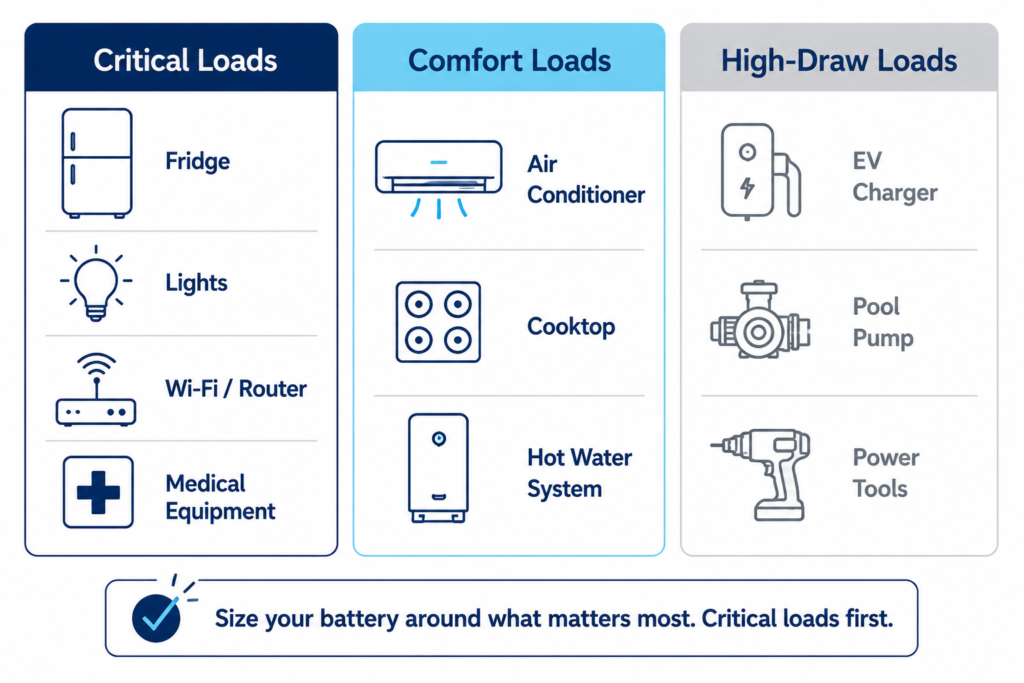
  • Blackout protection? Consider how much of the home you want covered — just the fridge and lights, or the whole house?
An example of an electricity bill showing the daily usage

For most homes, and based on our own sales data from the past three months, the average battery size installed by Lenergy is around 30 kWh. That suggests many households are thinking ahead — not just about overnight usage, but also blackout coverage, electric vehicles, and future-proofing. If you think your energy use will grow, a modular system gives you flexibility to expand over time.

2. Should You Choose AC or DC Coupling?

This one sounds technical — but it matters more than most people realise, especially if you’re retrofitting a battery to an existing solar system.

So what’s the difference?

  • DC-coupled batteries receive power directly from your solar panels, then convert it once for your home. This is more efficient, with fewer conversion losses — ideal for new systems or when installing everything together.
  • AC-coupled batteries work independently of your solar inverter. They’re a bit less efficient, but they’re far more flexible — this is most common for people adding a battery to an existing system.

Here’s a simple way to think about it:

  • If you’re starting from scratch and want maximum efficiency → DC coupling is better.
  • If you already have solar and want to add a battery → AC coupling is usually easier and more common.
A diagram showing the difference between AC and DC couple battery systems with simple icons and arrows for an accurate depiction of each process.

Most homeowners fall into the second category, which is why options like the Tesla Powerwall 3 are popular — it’s an AC-coupled battery that plays well with most systems, regardless of brand or inverter type.

3. Battery Chemistry and Efficiency

Battery chemistry might not sound exciting — However it plays a big role in how safe, long-lasting, and cost-effective your battery is.

Most home batteries in Australia now use lithium-ion Phosphate technology, but there are two common types:

  • NMC (Nickel Manganese Cobalt): Often used in older or high-energy-density batteries like earlier Tesla models.
  • LFP (Lithium Iron Phosphate): The safer, more stable option — better for heat resistance and longevity.

Why does this matter?

  • LFP batteries typically last longer and are more thermally stable (a big deal in Australian summers).
  • They can also be cycled more frequently with less degradation — giving you better long-term value.

Another key metric is round-trip efficiency — how much of your stored energy you actually get back when using it. Look for batteries with at least 90–95% round-trip efficiency. Anything less means more energy loss and slower payback.

For example, the AlphaESS Smile G3 uses LFP chemistry, a stable, reliable, and thermally safe chemistry that makes it well-suited to Australian homes and summer heat.

4. Warranty, Backup Power & Smarts: Features That Matter

It’s easy to get distracted by flashy features, however when you’re investing thousands in a battery, these three practical areas require your attention:

Warranty

A good battery warranty should last at least 10 years, with some premium brands offering 12-15 years. Beyond the number of years is the cycle count (e.g. 6,000 cycles) and the energy throughput limit (e.g. 20MWh). For the maximum return on a warranty you should considering the below 3 things;

  1. Does it cover full replacement or just performance degradation?
  2. Are labour and transport costs included?
  3. Are there usage conditions (like VPP participation) that affect the warranty?

Keep in mind:

  • You only get the federal battery rebate once. It pays to get it right the first time.
  • If a brand hasn’t been around long — or has few reviews — ask yourself: Will they still be here in five years if something goes wrong?
  • A 10-year warranty from a company that’s only existed for two is not the same as a 10-year warranty from a trusted brand with proven support.

Backup Power

Not all batteries provide blackout protection — and not all backup systems are equal.

  • Some batteries only cover a few key circuits. (like an Alpha ESS system)
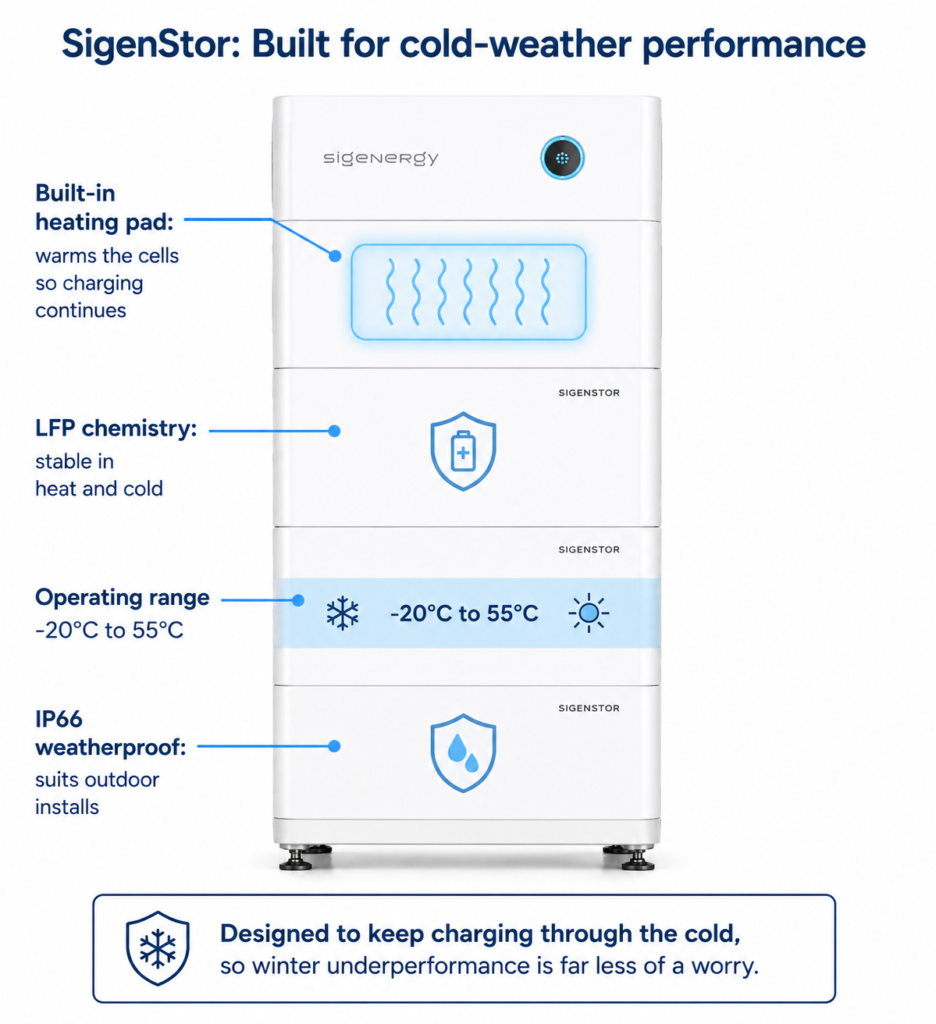
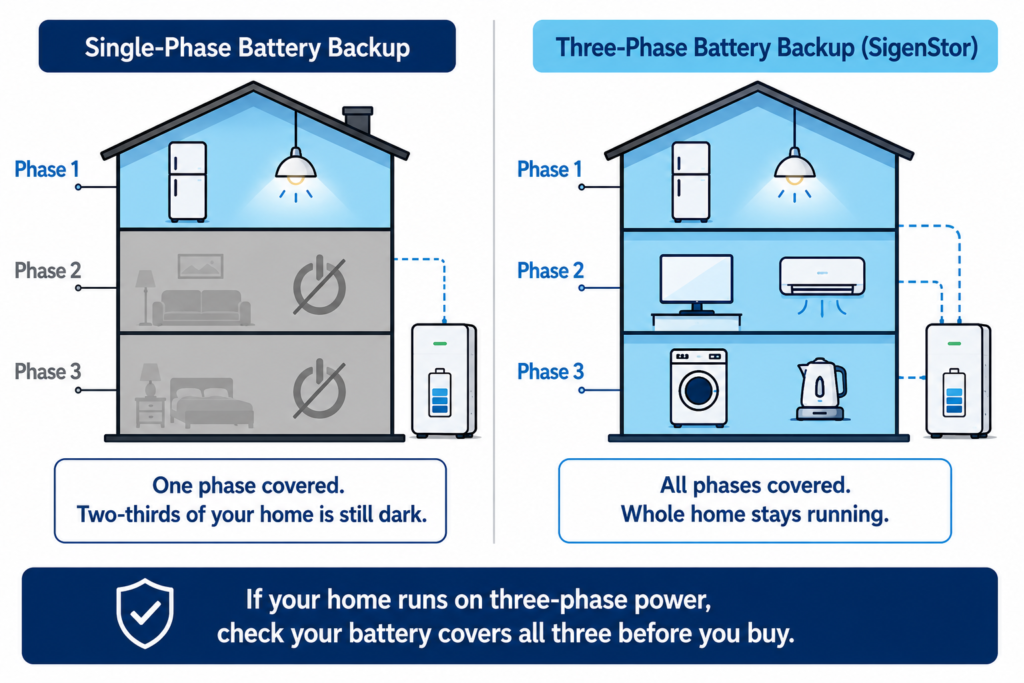
  • Others (like the Sigenergy SigenStor) can provide full three-phase backup, which is a game-changer for larger homes or those needing uninterrupted power.

Smart Monitoring

Image of the home screen in the Tesla app which is showing the energy usage of the home and battery output.

A user-friendly app can help you track solar generation, energy use, and battery performance. Bonus points if it includes AI-based optimisation, like the mySigen app with Sigenergy’s SigenStor or Tesla’s app for Powerwall 3. These platforms help you maximise savings by timing battery usage for peak electricity prices or VPP events.

5. Check the CEC Approved Battery List Before You Buy

Before committing to any solar battery, it’s critical to make sure it’s on the Clean Energy Council’s (CEC) list of approved batteries. This isn’t just a quality tick — it’s a requirement for eligibility in many state and federal rebate programs, including the Small-scale Renewable Energy Scheme (SRES).

The CEC approved battery list includes over 1,000 lithium-based batteries that meet strict safety and consumer protection standards outlined in the Australian Battery Safety Guide. These include international compliance standards and additional safeguards to ensure your system operates safely and is eligible for grid connection.

Not on the list? Rule it out.

Top 10 Battery Brands Rated by Aussie Homeowners

When you’re making a big investment like a solar battery, it pays to listen to people who’ve already been through the process. That’s where SolarQuotes comes in — one of Australia’s most trusted solar review platforms, with over 90,000 genuine reviews across installers, panels, inverters, and batteries.

Based on customer feedback collected through their platform, these are the Top 10 battery brands in Australia right now — ranked by overall satisfaction and performance:

  1. Sigenergy
  2. SunGrow
  3. Alpha-ESS
  4. Tesla Powerwall 3
  5. Anker Solix
  6. Tesla Powerwall 2
  7. SolaX Power
  8. BYD
  9. Fox ESS
  10. Goodwe

This ranking is based on independent reviews and ratings collected by SolarQuotes. You can view the full list — and compare even more brands and models — via their SolarQuotes battery comparison table.

Confidence Over Confusion

When you focus on the essentials — sizing, compatibility, chemistry, features, and fit — you’ll end up with a solution that works for your home long after the install is done. However, here’s the part many people overlook: it’s not just about the product specs. It’s about the company behind the battery, too.

From our experience, these are non-negotiables when choosing a battery brand:

  • Solid reviews from both installers and customers
  • Reliable tech support and after-sales service
  • A proven track record in the Australian market

If you’re still comparing options or weighing the pros and cons, or want to understand the broader value batteries offer beyond just storage? Check out our guide on 5 practical reasons to add a battery to your solar system. And if you’re ready to talk specifics, get in touch with Lenergy — we’re happy to walk you through the best options for your home, your usage, and your future plans.

Lenergy staff member, Ziad standing in front of solar panels smiling

Is the AlphaESS SMILE-G3-S5 Really a Good Home Battery — or Just Marketing Hype?

The AlphaESS SMILE-G3-S5 is one of the most feature-rich and cost-effective residential battery systems currently available in Australia. Designed to meet the needs of both on-grid and off-grid households, it offers blackout protection, high PV input capacity, and compatibility with Virtual Power Plants (VPPs).

For homeowners seeking a scalable, reliable, and rebate-eligible energy storage system, the SMILE-G3-S5 stands out for its technical capabilities and local support. AlphaESS is backed by a strong global presence and has been ranked well amongst the best battery brands in the Australian market.

At Lenergy, we work with a wide range of battery brands — and we’ve seen what holds up in real homes, under real conditions. In this article, you’ll learn what makes the SMILE-G3-S5 one of the most trusted, scalable, and VPP-ready energy storage solutions on the Australian market right now.

You’ll also find out when it’s not the right fit — and how to avoid some common mistakes when choosing your installer.

What Is the AlphaESS SMILE-G3-S5 Battery?

The AlphaESS SMILE-G3-S5 is a lithium iron phosphate (LiFePO₄) home energy storage system designed for residential solar applications. It combines a hybrid inverter (DC-coupled) or an AC-coupled option with modular battery storage, allowing homeowners to store excess solar energy for later use, including during blackouts.

AlphaESS SMILE-G3-S5 Battery installed outside of home on concrete wall next to a glass door.

The SMILE‑G3 series includes two models: the S5, which is a 5 kW hybrid (DC‑coupled) inverter, and the B5, which is a 5 kW AC‑coupled variant. The S5 model supports up to 10 kW of PV input, allowing significant solar oversizing relative to its 5 kW inverter rating. The B5 is designed for AC‑coupled installations and typically offers a lower entry cost, but its PV input specifications differ because it does not take DC solar input directly.

The battery stack used in the AlphaESS SMILE‑G3‑S5 system is modular and scalable, with a minimum capacity of 10.1 kWh and expandable up to 60.5 kWh using Alpha’s SMILE‑BAT‑10.1P modules. Each module delivers 10.1 kWh and supports flexible installation configurations, making the system suitable for households with medium to high energy usage. The modular design also allows for staged upgrades over time as energy needs grow.

Notably, the SMILE-G3-S5 includes 5kW UPS-grade backup with blackstart capability, meaning it can restore power independently in the event of an outage. It also offers grid-charging functionality, allowing users to charge the battery from the grid when rates are low.

Why Is AlphaESS a Trusted Battery Brand in Australia?

AlphaESS is a globally recognised energy storage manufacturer with systems installed in over 80 countries. In Australia, it has earned a strong reputation for its technical reliability, flexible system design, and local support infrastructure.

According to rankings by leading independent solar platforms, AlphaESS is consistently rated among the top residential battery brands in the country. In 2025, SolarQuotes ranked AlphaESS as the third-best battery brand in Australia, based on installer feedback and consumer satisfaction. Solar Choice placed it second, citing its combination of affordability, modular capacity, and compatibility with a wide range of residential solar systems.

One of AlphaESS’ strengths in the Australian market is its local warehouse and support presence. The company operates out of Chatswood in New South Wales, with additional warehousing in St Marys, South Australia, and third-party logistics facilities across Victoria, New South Wales, and Western Australia. This distribution footprint enables faster delivery times and improves after-sales service through local technical support teams.

A map of Australia that shows AlphaESS SMILE-G3-S5 areas of service with highlighted dots.

Having multiple Australian-based warehouses also helps reduce delays for warranty claims, parts replacements, and maintenance — a key advantage over brands that rely solely on overseas supply chains.

Any Drawbacks to Watch Out For?

While the AlphaESS SMILE-G3-S5 offers strong technical specifications and competitive pricing, there are some potential drawbacks to keep in mind — particularly when it comes to installation quality.

Installer Variability

Due to its affordability and wide market appeal, the SMILE-G3-S5 is installed by a broad range of providers — not all of whom deliver the same standard of workmanship or support. Unlike premium battery brands that are sold through closed or accredited installer networks, AlphaESS systems are more widely accessible. This increases the risk of substandard installations if consumers choose based solely on price.

To avoid issues such as poor system configuration, delayed support, or missed rebate eligibility, it’s essential to:

  • Choose an installer with proven experience working specifically with AlphaESS systems.
  • Ask to see past installations or verified customer feedback.
  • Confirm that the installer is Clean Energy Council (CEC) accredited and compliant with local VPP or rebate schemes.
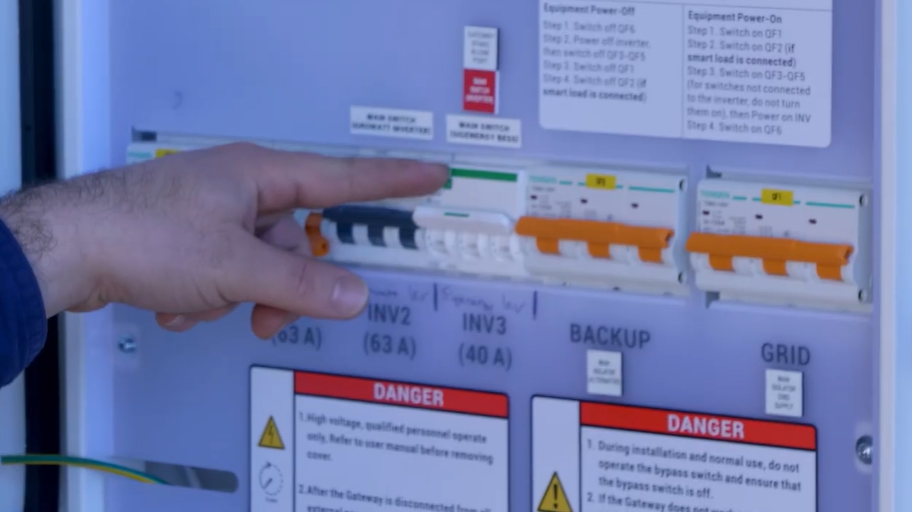
Team member from Lenergy in a branded uniform doing work on a switchboard to prepare for an AlphaESS SMILE-G3-S5 installation

Is the SMILE-G3-S5 Right for You?

The AlphaESS SMILE-G3-S5 offers a well-balanced mix of performance, safety, scalability, and affordability — making it a strong contender for homeowners looking to invest in solar battery storage.

Its hybrid and AC-coupled options provide flexibility for both new installations and solar retrofits. The system’s support for high PV input, robust 5 kW backup capability, and modular storage up to 60.5 kWh make it suitable for a wide range of energy needs. Add to that VPP readiness and eligibility for rebate programs, and the value proposition becomes clear.

However, because AlphaESS systems are installed by a broad range of providers, the outcome can vary depending on installer quality. If you’re considering the SMILE-G3-S5, it’s important to work with a knowledgeable, experienced installer who understands system design, VPP setup, and long-term servicing.

At Lenergy, we specialise in technically sound battery installations and can help determine whether the SMILE-G3-S5 is the right fit for your home, usage patterns, and goals. Whether you’re looking to reduce grid reliance, prepare for outages, or join a VPP, this system offers a compelling, future-ready option — provided it’s installed and supported properly.

Female Lenergy staff member standing in front of branded Lenergy sign

AlphaESS Battery Review: What You Need to Know Before You Buy

AlphaESS is a global provider of battery storage systems and energy management solutions, with a strong and growing presence in the Australian market. Founded in 2012, the company focuses on integrating advanced battery management (BMS), energy management (EMS), system integration, and cloud monitoring technologies into smart, scalable storage products.

Today, AlphaESS operates in more than 130 countries with over 200,000 systems installed across homes, businesses, and large-scale infrastructure. The company has built a wide global footprint, with over 40 subsidiaries and branches, including key locations in Australia, Germany, China, the UK, Italy, Singapore, and South Africa.

One of AlphaESS’s best-known systems in Australia is the SMILE-G3-S5 — a hybrid, DC-coupled battery designed for residential solar setups. This model includes a 5kW hybrid inverter and supports multiple battery configurations, making it ideal for new installations where efficiency and modularity matter. You can learn more about the SMILE-G3-S5 below:

What Is the AlphaESS SMILE Series?

The AlphaESS SMILE series is an all-in-one energy storage solution designed for homeowners and small businesses looking to use more of their solar power, protect against blackouts, and prepare for energy trends like virtual power plants (VPPs).

Each SMILE system includes:

  • A hybrid inverter (typically 5kW) that handles both solar input and battery storage
  • A modular lithium iron phosphate (LiFePO₄) battery setup
  • Smart monitoring via the AlphaCloud platform

The system is designed to grow with your needs. You can start with a modest capacity and expand up to 30kWh or more, depending on the configuration. The SMILE series supports both DC-coupled and AC-coupled installation types, making it a fit whether you’re starting fresh or adding to an existing solar setup.

Is AlphaESS a Reliable Battery Brand?

When it comes to batteries, reliability isn’t just about what’s on the spec sheet — it’s about how a system performs in real-world conditions, how well it’s supported locally, and whether it holds up over time. So, how does AlphaESS stack up?

Their systems are listed with the Clean Energy Council and are widely used in residential installations. In terms of adoption, AlphaESS batteries have been consistently listed among the top five brands, particularly among Chinese manufacturers according to Sunwiz and PV Magazine, though exact rankings by number of systems versus kWh capacity vary. That doesn’t automatically mean they’re the best — but it does mean they’re proven and widely deployed.

Independent Testing (ITP Renewables)

AlphaESS systems have been tested as part of a long-term battery trial run by ITP Renewables, funded by the Australian Renewable Energy Agency (ARENA). This trial cycles batteries multiple times per day to simulate real-world use over years in a compressed timeframe.

One of Alpha’s early models, the M48100, was included in this program. While it showed some performance restrictions after extended testing, it’s important to note that:

  • This was a first-generation model from more than 7 years ago
  • The current SMILE series is significantly more advanced
  • AlphaESS themselves acknowledged and addressed the limitations found

Since then, the company has made noticeable improvements in battery chemistry, thermal management, and firmware control — and there haven’t been any flagged reliability issues with newer models in public testing reports.

AlphaESS Battery Pros and Cons: An Honest Look

Like any energy storage system, AlphaESS batteries come with trade-offs. They’re popular in Australia, especially with homeowners looking for an all-in-one, cost-effective battery setup — but popularity doesn’t always equal perfection.

A display of the AlphaESS Battery against a while wall

Here’s a clear, honest breakdown of the main advantages and limitations of the AlphaESS SMILE series, based on installer feedback, user reviews, and publicly available data.

ProsCons
Competitive Pricing – Often more affordable than brands like Tesla or Sonnen.Mixed Installer Feedback – Some report slow support response during installs or faults.
All-in-One Design – Built-in hybrid inverter reduces clutter and simplifies installs.Limited Inverter Output – 5kW inverter may not suit large homes or high-usage businesses.
Modular & Scalable – Easily expand battery capacity over time.Early Model Performance Issues – Older units like the M48100 had issues during testing.
VPP Ready – Widely accepted in Virtual Power Plant programs.
Australian Support Office – Based in Chatswood, NSW for warranty and tech queries.

Should You Consider AlphaESS for Your Home or Business?

If you’re comparing battery brands in 2025, AlphaESS deserves a spot on your list — especially if you’re looking for an affordable, all-in-one system that’s ready for VPPs and comes with local support.

The SMILE series in particular hits a sweet spot for many homes and small businesses: it’s modular, scalable, and integrates a hybrid inverter to keep things simple. For new solar installs, the DC-coupled SMILE-G3-S5 is one of the more efficient systems on the market. And for those retrofitting storage onto existing solar, AlphaESS offers AC-coupled options that are flexible and cost-effective.

But it’s not the right fit for everyone. If your home has high peak energy loads or if you want ultra-fast support turnaround, you might want to consider higher-capacity inverters or brands with a more established service network.

At the end of the day, AlphaESS isn’t trying to be a premium brand — it’s aiming to deliver solid performance at a fair price, with systems that are widely accepted across Australian incentive schemes and VPPs.

The takeaway? If you’re price-conscious, looking for a system with local support, and value flexibility, AlphaESS is worth a close look. Just make sure you’re working with an installer who knows how to set it up properly — and who’s transparent about what to expect if you ever need support.

Want help deciding if AlphaESS is right for your setup?

Lenergy can walk you through your options and provide honest, tailored advice

Lincoln from Lenergy standing in front of branded neon sign smiling.

Federal Government Launches Solar Sharing Scheme

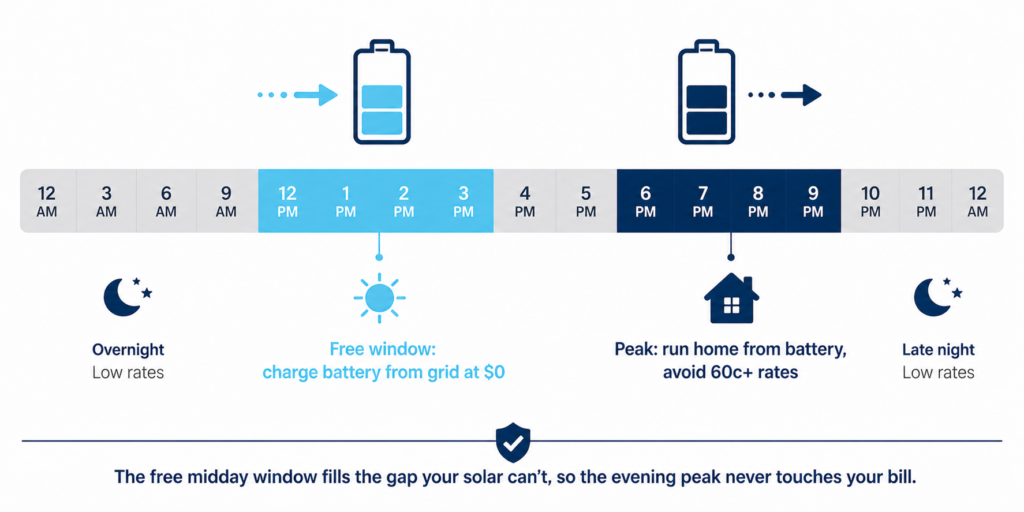
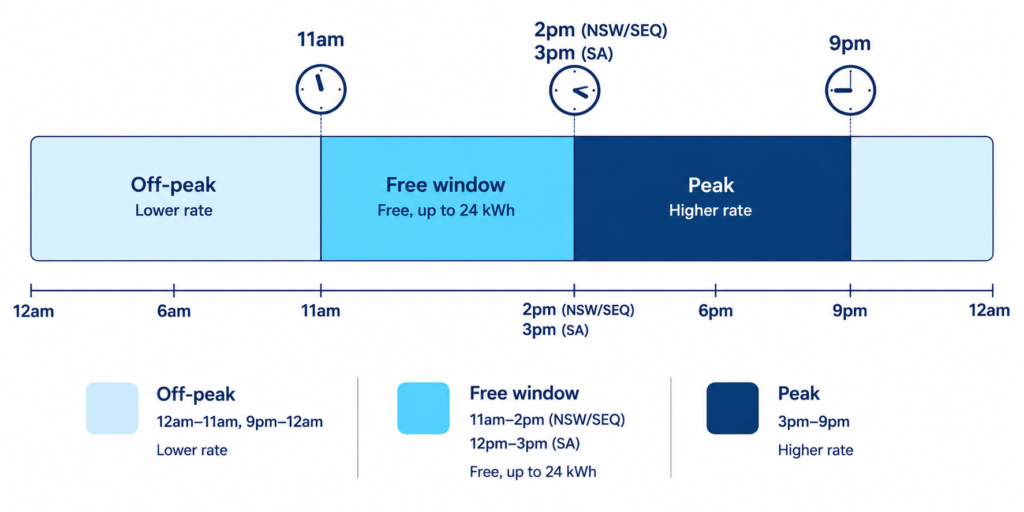
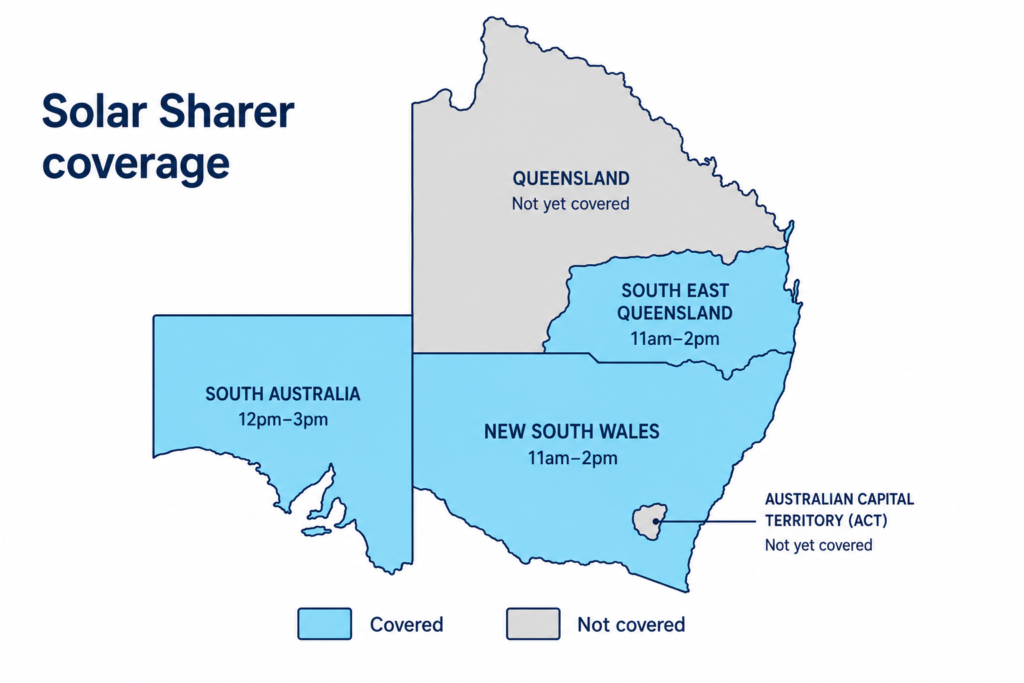
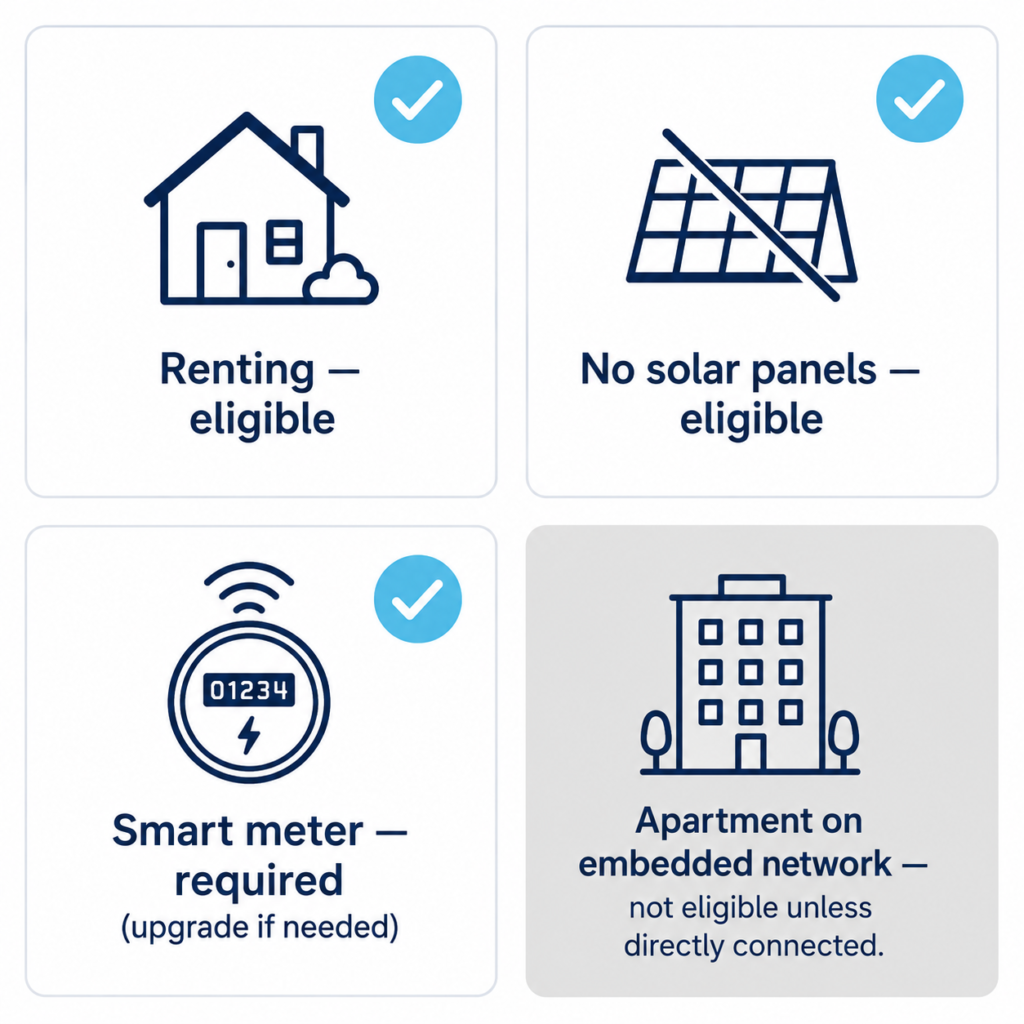
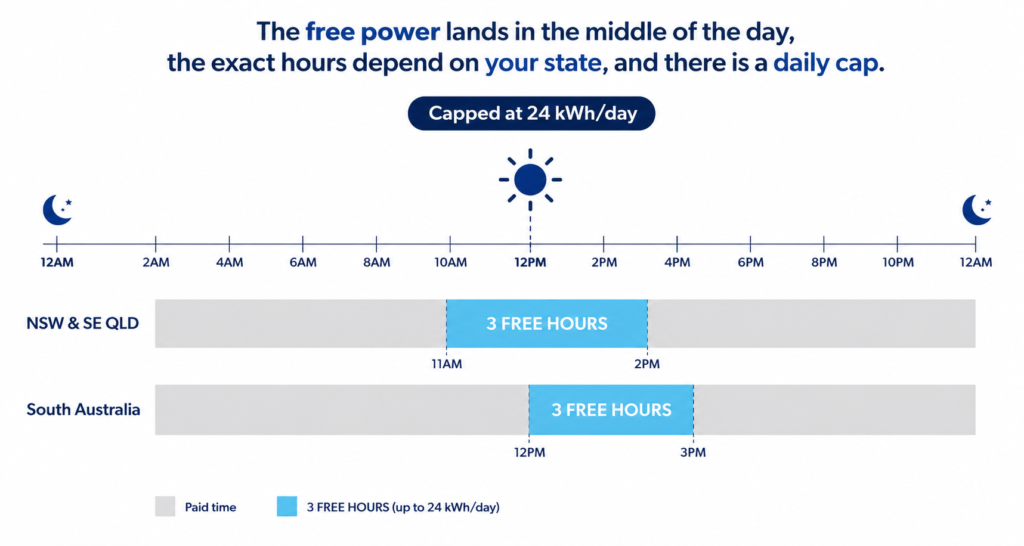
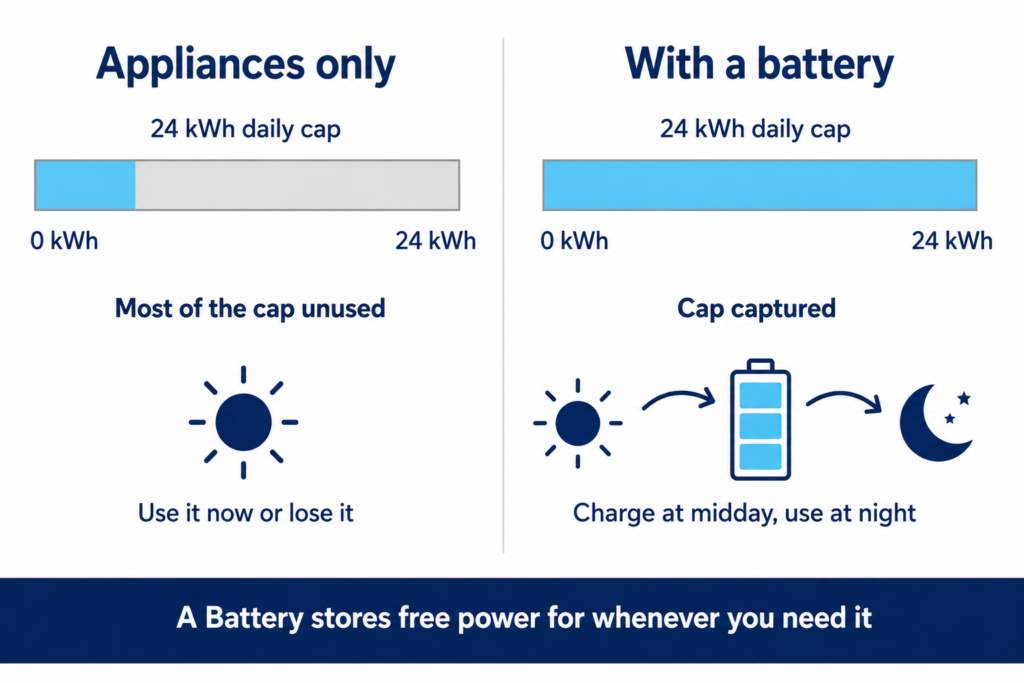
From July 2026, households in New South Wales, South-East Queensland and South Australia will be eligible for at least three hours of free solar electricity each day — even if they don’t have rooftop panels installed. The announcement comes as part of the federal government’s new Solar Sharing scheme, which aims to let more Australians benefit from the country’s abundant solar energy. It applies to homes with smart meters — which includes the majority of Australian households — and could expand to other parts of the country by 2027.

According to The Guardian, the scheme will be enabled by updates to the default market offer — the government-set electricity price cap used in many areas. This will allow energy retailers to offer zero-cost power during periods of high solar generation, typically in the middle of the day.

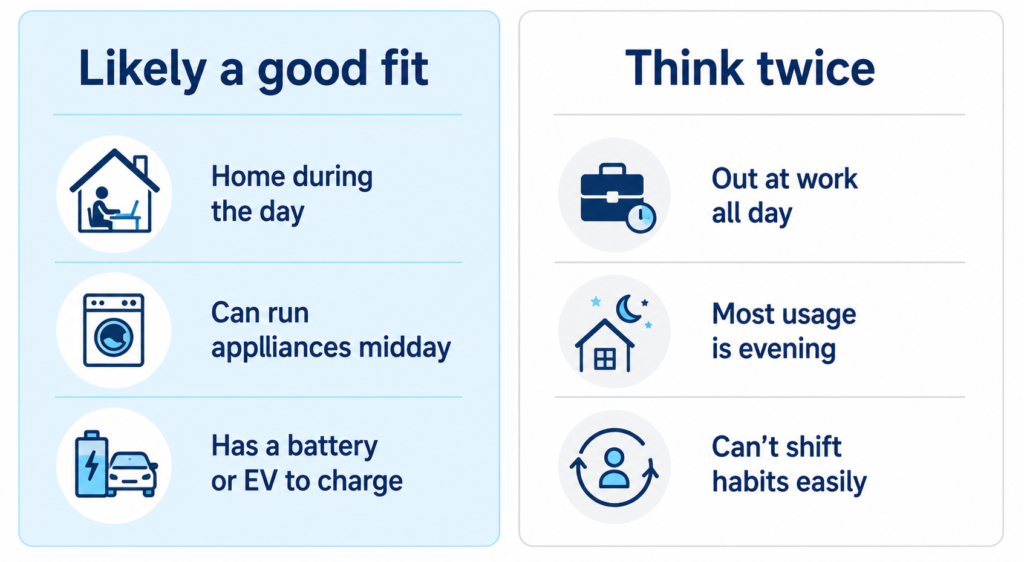
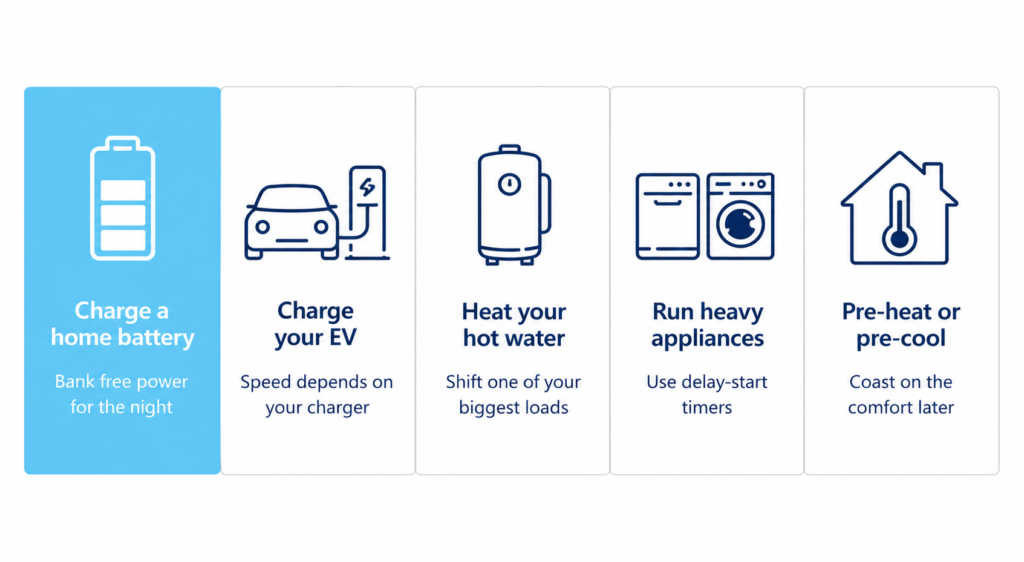
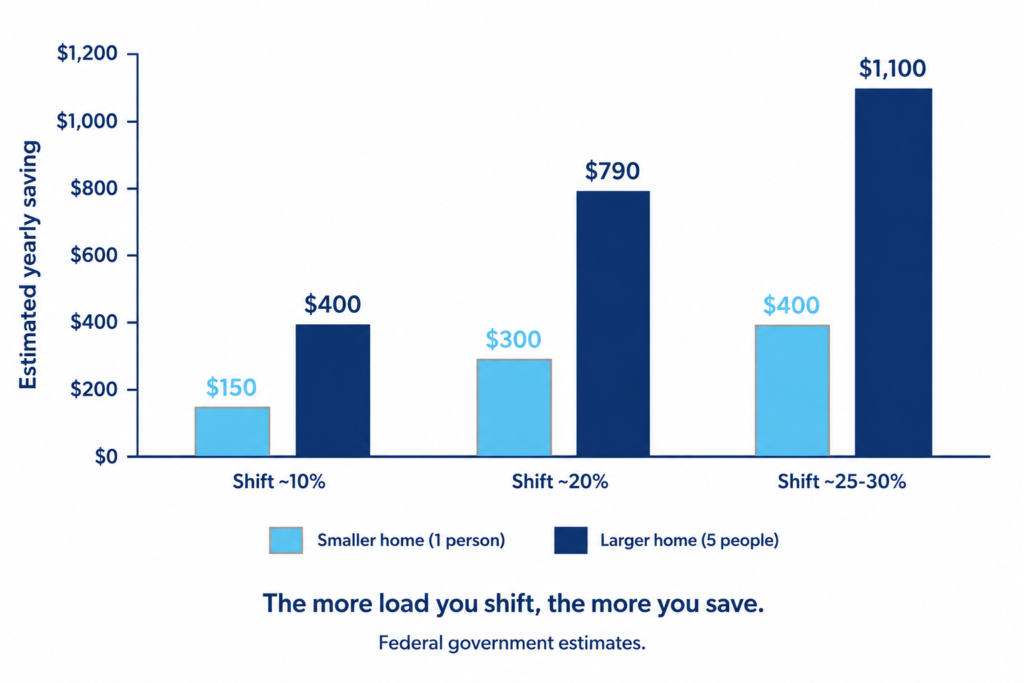
Households will be encouraged to use this free electricity by shifting the timing of appliances such as washing machines, dishwashers, or air conditioners — or even charging EVs and batteries — into the zero-cost window.

Reducing Solar Waste and Shifting Energy Demand

Energy Minister Chris Bowen said the scheme was about using “every last ray of sunshine” to power homes, helping to reduce waste from excess solar production while lowering energy bills. He added: “This is proof that what’s good for the planet is good for your pocket.”

The government noted that Australia’s more than four million rooftop solar systems often generate more electricity than needed during sunny periods, leading to low wholesale prices and unused energy. The Solar Sharing program aims to smooth electricity demand by shifting it away from peak evening times, easing grid pressure and potentially reducing future infrastructure costs.

Mixed Industry Response to the Solar Sharing Announcement

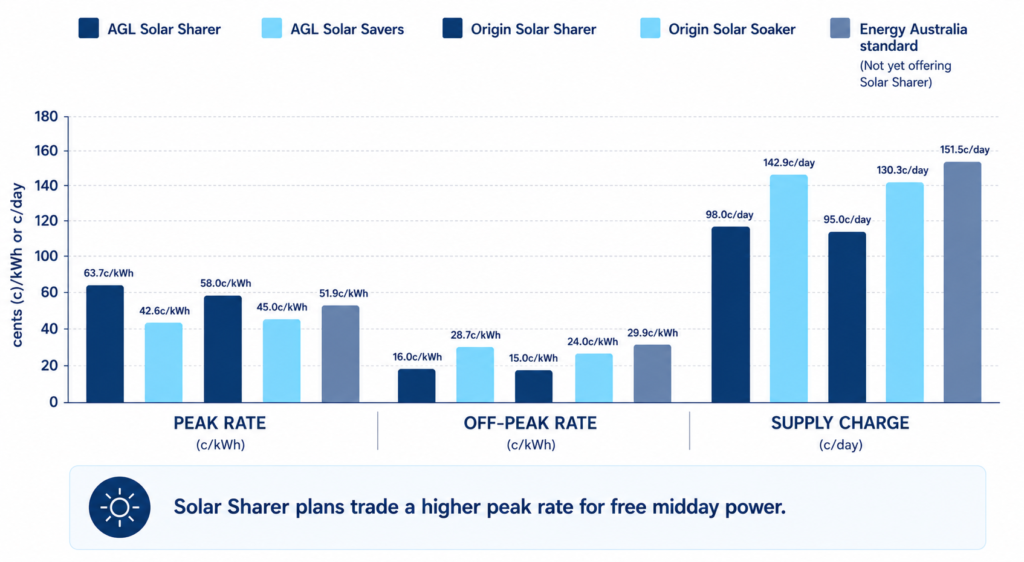
While some providers like AGL and Red Energy already offer similar midday solar plans, the move has drawn mixed responses. The Smart Energy Council welcomed the program as a cost-of-living support measure. However, the Australian Energy Council criticised the lack of consultation, warning it could impact energy market confidence and disrupt product innovation.

The Australian Energy Regulator will oversee the rollout to ensure customers are treated fairly outside the free electricity window. The government also confirmed it will consult with other states about expanding the program in future years.

Aiko solar panels installed by Lenergy on roof with ample sun in the Southern Highlands

Is the Solar Sharing Scheme A Win for Households with Solar and Batteries Too?

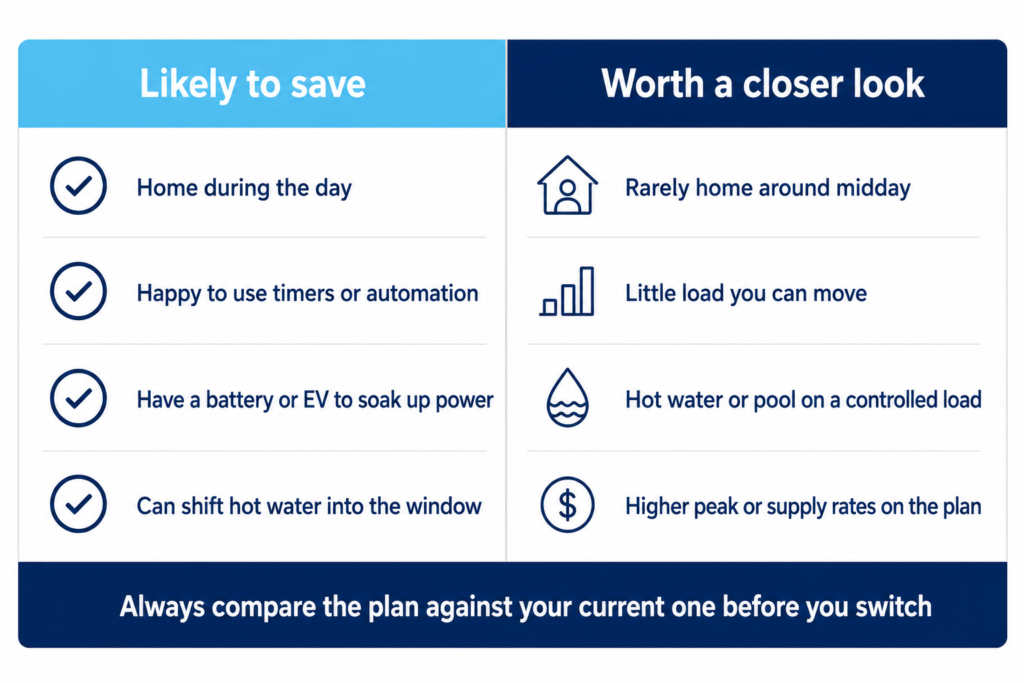
Lenergy sees the new Solar Sharing scheme as a positive for homes with existing solar and battery systems. Why? Because now, you can charge your battery from the grid during the free power window, allowing you to soak up free electricity during the sunniest part of the day — even if your own panels aren’t covering demand.

It also opens the door to scheduling smart energy use. You can set appliances like EV chargers, dryers, washing machines, or hot water systems to run during the three-hour zero-cost period — making better use of your system and reducing your reliance on peak-time grid power.

Thinking about whether solar still makes sense for your home?

Contact the team at Lenergy for an honest chat about your usage, goals, and whether a solar system or battery could still be the right move.

Tesla Powerwall 3 vs Pylontech Force H3X: Which is better?

You’ve probably heard the hype around the Tesla Powerwall 3. It’s well-known, widely marketed, and packed with smart features. Then there’s Pylontech — a strong performer with a growing reputation among Australian installers for reliability and value.

So which one actually makes more sense for your home?

At Lenergy, we’ve installed both systems and helped hundreds of homeowners weigh up this exact decision. We know the questions people ask, the numbers that matter, and the gotchas you don’t find in the glossy brochures.

This article gives you a side-by-side breakdown of the Tesla Powerwall 3 and the Pylontech Force H3X. You’ll learn how they compare on performance, price, compatibility, and more so you can make a confident, well-informed decision about which one (if either) is right for your solar setup.

Why Compare These Two Batteries?

If you’ve been researching solar battery options in 2025, chances are you’ve come across both the Tesla Powerwall 3 and the Pylontech Force H3X. These two batteries come up in conversations with homeowners for a few good reasons:

  • They’re widely available in Australia
  • They offer serious backup potential
  • They support flexible solar system configurations
  • And they’re eligible for current rebates and VPP programs

That said, they’re very different systems.

The Tesla Powerwall 3 is a high-output, all-in-one battery with an integrated hybrid inverter, allowing it to be used in both AC- and DC-coupled systems. It’s often chosen by households looking for strong backup performance, smart home integration, and a clean, consolidated design that minimises wall clutter.

The Pylontech Force H3X also features an integrated inverter, offering flexibility to operate in both AC- and DC-coupled configurations. It’s a modular system, which makes it ideal for homes that want custom sizing, more inverter options, or the ability to start small and expand over time — whether you have a single-phase or three-phase setup.

Pylontech Force H3X display battery installed on white brick wall

So if you’re trying to decide between them, this isn’t about which battery is “better.” It’s about which one fits your home, your usage patterns, and your long-term energy goals.

Capacity, Scalability & Suitability

When it comes to batteries, capacity isn’t just about how big it is — it’s about how well it fits your household’s energy habits, future plans, and available space. Here’s how these two batteries compare.

Tesla Powerwall 3: Fixed Capacity, High Output

The Powerwall 3 offers 13.5kWh of usable capacity in a single unit, with the ability to stack up to 40.5kWh (3 units). This covers most medium to large households — particularly if you’re trying to cover both night-time usage and power outages.

What’s different about the Powerwall 3 is that it includes a fully integrated hybrid inverter, making it suitable for both new solar systems and retrofits. But it’s not modular — if 13.5kWh isn’t quite enough, you’ll need to add to a whole second 13.5kWh battery unit, taking you to 27kWh of storage.

Pylontech Force H3X: Modular and Flexible

The Force H3X is built for customisation. Each battery module delivers 5.12kWh nominal capacity, with 4.864kWh of usable storage. 

You can stack:

Up to 20kWh usable on a single-phase tower

Up to 35kWh usable on a three-phase tower

Multiple towers can be installed together for even larger systems.

This makes it a smart choice if:

  • You’re looking for better value for each kWh of storage
  • You want compatibility with both single-phase and three-phase systems

In short: Powerwall suits those who already have the Tesla ecosystem (EV charging point/car) and are ok with paying a premium price for a premium battery. Pylontech suits those who want flexibility in system sizing at a more affordable price point, or households with either single-phase or three-phase supply looking for full backup or large-scale solar and battery setups. It’s also a proven name in the Australian battery market, with over a decade of local presence and performance.

Performance & Backup Power

When the grid goes down, not all batteries perform the same. Understanding each battery’s output, responsiveness, and blackout support can help you decide which one actually keeps your home running when it matters.

Tesla Powerwall 3: 

The Tesla Powerwall 3 supports up to 20 kWh DC of solar and provides up to 11.5 kWh AC of continuous power per unit, which is extremely high for a residential battery.

This means:

  • You can run most of your home during an outage, including large loads like air conditioners or pool pumps (depending on your setup)
  • You’re less likely to need to manually manage which circuits stay powered during blackouts

Tesla’s Powerwall also comes with a built-in backup gateway, which automatically detects outages and switches to battery power almost instantly. It’s a fully integrated backup solution — no need for external switches or special wiring in most cases.

Pylontech Force H3X:

The Force H3X can be paired with Pylontech’s own inverters, which are available in both single-phase and three-phase models. At the time of writing (November 2025), the single-phase inverters (5kW and 8kW) are already in use, while the three-phase options (10kW, 12kW, and 15kW) are expected to receive CEC approval by the end of 2025.

What this means for you:

  • With Pylontech’s inverters, your backup power is limited to the capacity of the inverter size.
  • These inverters are purpose-built for use with the Force H3X, streamlining setup and monitoring

Inverter & System Type: AC & DC Coupling

One of the biggest technical differences between these two batteries is how they connect to your solar system — and it’s something many homeowners overlook. It affects everything from system design to efficiency, installation costs, and future flexibility.

Tesla Powerwall 3: 

The Powerwall 3 includes a fully integrated hybrid inverter, which makes it capable of both AC- and DC-coupled configurations.

In AC-coupled mode, it can be added to virtually any existing solar setup — making it a simple option for retrofits without changing your current inverter.

In DC-coupled mode, the built-in inverter allows you to connect up to 20kW of solar panels directly to the system. This setup improves efficiency by reducing the number of energy conversion steps and enables tighter integration between your solar and battery.

This dual capability gives the Powerwall 3 added flexibility for both new installations and upgrades.

Pylontech Force H3X: 

The Pylontech Force H3X is designed to support both AC- and DC-coupled configurations, offering flexibility for a wide range of system types. Pylontech’s own inverters are available in single-phase (5kW, 8kW) and three-phase (10kW, 12kW, 15kW) models (pending CEC approval for three-phase as of November 2025).

In a DC-coupled setup, the battery connects to your solar system before the power is converted to AC, offering:

  • Higher overall efficiency
  • Improved energy yield, particularly in new builds or inverter upgrades

In AC-coupled mode, the Force H3X can be integrated into existing solar systems, making it a viable retrofit option — especially with the right inverter setup.

This dual-coupling capability makes Pylontech a versatile choice for both new and existing homes, with more control over sizing and design.

6 Pylontech Force H3X Batteries installed on white wall showing the scalability of output

Warranty, Lifespan & Battery Chemistry

Not all warranties are created equal — and neither are battery chemistries. These details can affect how long your battery lasts, how safe it is, and what kind of support you’ll get if something goes wrong.

Tesla Powerwall 3: LFP Chemistry, High Output

The Powerwall 3 uses Lithium Ferro Phosphate (LFP) chemistry — known for its thermal stability, long cycle life, and enhanced safety. It’s a shift from earlier Powerwall versions, which used NMC chemistry.

LFP batteries are:

  • Less prone to overheating, making them safer in hot environments
  • Capable of more charge/discharge cycles, giving them a longer lifespan

Tesla backs the Powerwall 3 with a 10-year warranty, promising at least 70% capacity retention. Combined with its 30kW peak power output and smart features, it offers a blend of durability and performance that suits most residential setups.

Pylontech Force H3X: LFP Chemistry, Longer Lifespan

The Force H3X uses Lithium Iron Phosphate (LFP) — a chemistry known for:

  • Greater thermal stability (safer in high temps)
  • Longer cycle life, often exceeding 8,000+ cycles

Pylontech backs this with a 10-year warranty too. For homeowners prioritising longevity, LFP is often the preferred option.

Warranties with Pylontech may involve the inverter manufacturer or installer as part of the support chain — so it’s worth asking your installer how warranty claims are handled.

Price & Installation Considerations

For most households, price is a major factor in choosing a battery. Here’s how the Powerwall 3 and Pylontech Force H3X compare on upfront pricing, installation complexity, and rebates.

Tesla Powerwall 3: Premium Price, Simple Install

The Tesla Powerwall 3 installed price in Australia typically ranges from $15,000, depending on your installer, location, and whether it’s part of a full solar package.

Because it’s AC-coupled with a built-in inverter, installation is usually straightforward for both new and retrofit systems. That said:

  • It’s not modular, so you need to add 2 or 3 full units if you want more storage
  • Some installations may still require a back-up switchboard upgrade (but this for just Tesla)

Tesla’s strong brand reputation and integration with solar + EV setups are part of what you’re paying for — however you are paying a premium – Rest assured you are getting a premium battery though.

Pylontech Force H3X: Modular & Cost-Effective

Pylontech pricing is more modular and flexible. With the installation cost sitting around $9,000 to $11,500 for 20-30kWh of storage, depending on:

  • Number of battery modules
  • Inverter brand and size
  • Site-specific wiring or upgrade requirements

You can start smaller — eg. with 5.12kWh — and scale up later, spreading out your investment.

What About Rebates?

Both batteries are eligible for:

  • The federal battery rebate (from July 2025), worth a few thousand dollars depending on your system size

However, only the Tesla Powerwall 3 is eligible for:

  • The NSW VPP incentive, offering up to $1,500 upfront for joining a VPP program

Next Steps: Talk to an Expert

A solar battery is a big investment — and the right choice depends on more than just specs. Your home’s wiring, energy habits, solar system, and future plans all play a role.

If you’re still weighing up your options, or want tailored advice based on your home setup, it’s worth speaking to someone who’s installed both systems and can walk you through the trade-offs clearly.

You can learn more about each battery here:

Or, if you’re ready to ask some questions or get a quote, you can get in touch with Lenergy’s team here.

Lenergy staff member, Ziad standing in front of solar panels smiling

Pylontech Force H3X Battery Review: An In-Depth Look at Pylontech’s Solar Battery

If you’re looking for a high-capacity, high-performance battery that doesn’t just compete with the biggest names in the market — but often beats them on value and capability — the Pylontech Force H3X deserves your attention.

Their new Force H3X battery system is quietly ticking every box that matters: robust backup support, noteworthy safety features, seamless integration with both single and three-phase homes and it’s doing all this at a significantly lower price than most of the big-name competitors.

At Lenergy, we’ve installed a lot of batteries. And lately, we’ve found ourselves turning to the Pylontech H3X more and more. It’s been through the brutal Canberra testing program (one of only two batteries to pass out of 26), includes features others are still catching up to, and comes from a brand with over a decade of experience in energy storage.

In this article, you’ll get a clear look at the Pylontech Force H3X — what it can do, who it’s for and whether it’s the right fit for your home.

What Is the Pylontech Force H3X and Who Is It For?

The Pylontech Force H3X is a modular solar battery storage system designed for Australian homes that want more control over their energy — whether that means reducing bills, riding through blackouts, or simply storing excess solar for later use.

On paper, the H3X matches (and in some cases exceeds) the technical capabilities of far more expensive brands. It’s compatible with both single-phase and three-phase systems, supports full home backup, and includes heated battery modules — making it suitable for colder climates.

It’s designed for people who want:

  • Reliable blackout protection (especially in homes with three-phase power)
  • Safety-first design without compromising on functionality
  • A battery that won’t break the bank but still offers premium-level features
  • Peace of mind from a brand that’s been doing this for more than a decade

Whether you’re adding storage to an existing solar setup or installing a full system from scratch, the Force H3X gives you serious flexibility. And unlike some brands that limit compatibility or require brand-specific inverters, Pylontech’s approach is refreshingly open.

If you value performance, reliability, and value — this battery is worth a closer look.

Pylontech Force H3X stackable modules. 6 batteries lined up, installed on wall producing 120 kWh

What Are the Key Features of the Pylontech H3X?

The Pylontech Force H3X is designed as a modular, high-performance battery solution for homes and small commercial setups that want a flexible, safe, and intelligent energy storage system. It supports both single-phase and three-phase applications — making it suitable for a wide range of Australian households.

Here are the standout features, based on Pylontech’s own specifications:

On-Demand Versatility

The H3X offers a wide power range of 3.6kW to 15kW and capacity options from 10 to 35kWh per group, with up to 6 groups stackable — totalling up to 210kWh. That flexibility makes it suitable for everything from small homes to larger dwellings with higher energy demands.

Integrated Hybrid System (BMS + Inverter + EMS)

Rather than requiring separate components, the H3X integrates its Battery Management System (BMS), Inverter, and Energy Management System (EMS) into a single unit. This design helps reduce installation complexity — with Pylontech claiming a 15-minute installation and commissioning time thanks to its automatic setup.

Safety First Design

The Force H3X is built with safety as a priority, incorporating features such as anti-islanding protection, overcurrent and overvoltage safeguards, DC reverse polarity protection, a built-in DC switch, and an arc fault circuit interrupter (AFCI). It’s also UL9540A certified — one of the most recognised global standards for battery safety testing — offering peace of mind for Australian households.

Exceptional Performance and Longevity

The H3X is engineered for high-efficiency, everyday use, with a 1C charge and discharge rate, 97% round-trip efficiency, and an expected lifespan of over 8,000 cycles. It also supports 100% three-phase load unbalance, making it ideal for powering large homes or appliances evenly across all phases.

Smart Energy Management

The Pylontech Force H3X includes an integrated Energy Management System (EMS) that enables dynamic control of energy flows, real-time fault diagnosis, and remote control of connected systems like PV and heat pumps. It also offers flexible connectivity via Wi-Fi, LAN, or Bluetooth, making monitoring and updates simple and accessible.

Close up view of Pylontech Force H3X battery showing the side panel and smart reader.

How Reliable Is Pylontech as a Brand?

In a market flooded with new battery brands promising the world, Pylontech stands out for one simple reason: it’s not new to this.

Founded in 2009, Pylontech has over 15 years of experience in the energy storage industry and has shipped millions of battery modules globally. It’s one of the few companies that focuses entirely on battery energy storage systems (BESS) — not as a sideline, but as its core business.

This matters because many battery brands come and go — often rebranded products with limited long-term support. Pylontech, on the other hand, has spent more than a decade building a reputation for stable, high-quality storage systems that are widely used in residential, commercial, and utility-scale applications.

Some key signs of brand reliability:

  • Global certifications, including UL9540A (safety), CE, IEC, UN38.3, and others
  • 10+ year track record in battery manufacturing
  • Widespread installer trust — particularly in Australia, where it’s a popular choice among solar professionals
  • Dedicated local support, with a new Sydney office opening in November 2025
  • Ongoing software and firmware updates via Wi-Fi, LAN, or Bluetooth

Pylontech isn’t just competitive on paper — it has the brand stability to match. And that can mean a lot when you’re investing in a battery expected to last a decade or more.

What’s the Price – and Is It Good Value for Money?

Pylontech’s Force H3X offers exceptional value for homeowners looking for a high-capacity, future-ready storage system — without the premium price tag.

Here’s a snapshot of typical system pricing:

  • 20kWh single-phase system — from $9,990
  • 30kWh single-phase system (two stacks) — from $13,950
  • 35kWh three-phase system (one stack, 15kW inverter) — from $12,779

It’s worth noting that the three-phase setup is more cost-effective than its single-phase equivalent at this size, as it only requires one inverter and one stack. Beyond 35kWh, a second stack and inverter are needed, adding over $3,000 to the system cost.

You can also build a complete solar + battery package using Pylontech’s hybrid inverter.

For example:

These numbers make it clear: Pylontech delivers large-scale storage capacity and full system integration at a price point that’s highly accessible — especially for homeowners planning a long-term solar and storage setup.

Front view of a Pylontech Force H3X battery installed on plain white wall. 3-phase hybrid system

A Smart, Scalable Choice for Australian Homes

The Pylontech Force H3X isn’t just a strong battery — it’s setting a new benchmark for what Australians should expect from home energy storage.

It combines:

  • Scalable capacity (up to 210kWh)
  • Flexible backup for both single and three-phase homes
  • Integrated hybrid inverter and smart EMS
  • Global certifications and Australian-ready design
  • And most importantly — exceptional value for money

This is a product from a brand that’s spent over a decade building trust in the global energy storage industry — and it shows. Backed by a growing support presence in Australia and the endorsement of experienced installers, the Force H3X is fast becoming one of the most recommended batteries on the market.

If you’re looking for a reliable, future-ready battery solution that delivers on performance without inflating the price, Pylontech should be at the top of your list.

At Lenergy, we design and install solar and battery systems that are built to perform — and the Pylontech Force H3X is one we recommend with confidence.

Whether you’re looking to upgrade your existing setup or install a full solar and storage solution, our team can help you get the most out of your investment with expert advice and quality installation.

Lenergy staff member, Ziad standing in front of solar panels smiling

Rooftop vs Ground Mount Solar: Which is best?

You’re ready to go solar. You’ve compared panels, read up on payback periods, and now you’re trying to make one last decision: rooftop or ground mount solar ?

It sounds simple, however the choice matters. Where your panels go affects what you pay, how much energy you generate, and what your property looks like once it’s all done.

At Lenergy, we’ve helped hundreds of Australian homeowners make solar decisions that actually suit their home — not just the sales pitch. While rooftop solar is still the best option for most homes, ground mount solar has its place too — especially if your roof isn’t ideal.

In this article, you’ll learn how these two options compare on cost, performance, and maintenance. By the end, you’ll know which one is the smarter move for your situation.

What Is Rooftop Solar?

Rooftop solar is the most common way Australians install solar panels at home. It’s exactly what it sounds like — panels mounted directly onto your existing roof. Rather than being positioned for the “perfect” sun angle, rooftop panels are typically installed to match the direction and pitch of your roof, which keeps installation simpler and more cost-effective.

2 Lenergy branded van parked on driveway next to rooftop solar installation

This setup works so well because it uses space you already have. Instead of taking up part of your lawn or garden, it puts solar to work on an otherwise unused part of your home. That keeps things neat and cost-effective.

At Lenergy, almost every solar system we install is on the roof. Why? Because it just makes sense for most properties. The roof acts as a natural mounting surface, which means fewer materials, less labour, and a lower overall price tag.

Most rooftop systems range from 6.6kW to 20kW, depending on your energy usage and available space. If you’re unsure how big your system needs to be, click below to read our article on what size solar system you need.

There are other upsides, too. Roof panels can actually help cool your home in summer by shading your roof. And in most NSW council areas, rooftop systems don’t need planning approval — so you can get on with it quickly.

Unless your roof is heavily shaded, structurally unsound, or laid out in a really tricky way, rooftop solar is usually the best place to start. 

What Is Ground Mount Solar?

Ground mount solar is exactly what it sounds like: instead of panels going on your roof, they’re installed on frames anchored into the ground somewhere on your property.

The frames can be fixed (set at one angle year-round) or use tracking systems that follow the sun throughout the day. Most residential setups use fixed systems — they’re cheaper, more reliable, and have fewer moving parts to maintain.

A ground mount solar installation in paddock of rural home in Newcastle

To install ground mount solar, you’ll need open space with good sun exposure. That might be a section of lawn, a paddock, or even a cleared area near a shed. But keep in mind: this space becomes dedicated solar land — you won’t be mowing it, planting a garden there, or using it for anything else.

Ground mount systems are more common on rural properties, farms, or homes with shaded or unsuitable roofs. They give you flexibility on panel direction and angle — which can help maximise output if your roof isn’t ideal.

But that flexibility comes at a cost. Installing panels on the ground means more labour, more materials, and often, more planning. We’ll get into that next.

What’s the Cost Difference Between Rooftop and Ground Mount Solar?

Rooftop solar is almost always cheaper. That’s because your roof already provides a sturdy, elevated structure — no need for extra steel, concrete, or trenching. Most of the work goes into attaching the mounting rails and getting the panels up safely.

With ground mount solar, you’re starting from scratch. You’ll need:

  • Posts or footings to anchor the frames
  • Extra mounting materials
  • Earthworks and trenching to run cabling underground
  • Possibly engineering reports or council permits

At Lenergy, a 20kW rooftop solar system typically costs around $20,000, based on $1.00 per watt. That price includes the panels and installation, not a battery.

For the same size system, a 20kW ground mount setup starts from $50,000, based on $2.00 (up to $2.50+) per watt. That also excludes batteries — and doesn’t include trenching, which is often required to run underground cabling between the array and your switchboard. Trenching costs vary depending on how far we need to dig and the size of the cable required, but it can add thousands to the final price.

This higher upfront cost also means a longer payback period. You’re spending more for the same system output, which is why ground mount solar is generally only worth considering when rooftop isn’t a viable option.

Which Performs Better: Rooftop or Ground Mount?

In terms of raw energy production, both rooftop and ground mount systems can perform equally well — as long as they’re installed in ideal conditions. The same panels, the same inverter, the same sunshine — you’ll get similar results.

Ground mount systems can have a slight edge when it comes to positioning. Since you’re not limited by roof shape, pitch, or orientation, you can angle the panels perfectly to maximise sunlight throughout the day. This is especially useful if your roof faces east–west or is partially shaded.

Rooftop systems, on the other hand, make the most of your home’s existing layout. And there’s one benefit many people don’t expect: rooftop panels actually help shade your home. By covering part of your roof, they reduce heat gain in summer — which can lower your cooling costs.

roof top solar installation at a home located in the Southern Highlands

So which one “performs better”? It depends on the site.

If you have a shaded or awkward roof, ground mount might help you squeeze out more solar. But if your roof gets good sun exposure, rooftop solar is just as effective — and far more cost-efficient.

Whichever installation type you go with, performance ultimately comes down to panel quality. That’s why at Lenergy, we use Aiko Neostar 2P panels — not just for their industry-leading efficiency, but for their durability and long-term reliability. With a 25-year product warranty and a 30-year performance warranty, they’re built to last and protect your investment over the long haul. To find out more on Aiko solar panels, see our recent article.

How Does Maintenance Compare Between the Two?

Both rooftop and ground mount systems are built to last — and most quality panels come with 25-year warranties. But there are some practical differences when it comes to upkeep.

Rooftop solar is generally low-maintenance. Once it’s installed, you don’t have to think about it much. The main drawback is accessibility — if a panel needs cleaning or repair, a technician has to work at height, which can add time and cost to the job.

But because the panels are up high, they’re also protected. Kids, pets, lawnmowers, and stray footballs won’t be going anywhere near them. There’s less risk of physical damage.

Ground mount systems, on the other hand, are easier to reach. That makes them more convenient for regular cleaning or inspections — but it also means they need more frequent attention.

One common issue is vegetation. Grass, weeds, or shrubs growing underneath the panels can block sunlight and reduce efficiency. If not managed, overgrowth can also create fire hazards or attract pests. Some homeowners use gravel, concrete pads, or even grazing animals to keep the area clear — but each of these adds extra cost or complexity.

So while ground mount systems are easier to access, they’re also more exposed and require more ongoing effort to maintain properly.

Which Option Is Right for Your Home?

If your roof is in good shape and gets decent sun, rooftop solar is almost always the smarter choice. It’s cheaper to install, faster to set up, and blends neatly into your home without taking up valuable space. For most Australian homes, it ticks every box.

However ground mount solar does have its place.

If your roof is shaded, structurally unsound, or simply too small for the system size you want — ground mount becomes a practical alternative. It’s also a good option if you live on a large block and have unused land that won’t impact your lawn or view. Or.. you might be one of those people who just hate the look of the panels and don’t want them on the roof and would rather pay the higher cost to install them on a ground mount out of sight on their paddock. 

At Lenergy, we install both types — but we’ll always recommend the option that gives you the best value for your property, your energy goals, and your budget.

Lenergy staff member, Ziad standing in front of solar panels

If you’re not sure which setup makes the most sense for your home, get in touch. We’ll talk through your options and give you honest advice based on what’s actually right for you — not just what’s easiest to sell.

Rooftop solar suits most homes — but ground mount systems can be a great alternative when the roof isn’t quite right. If you’re weighing up the options, the team at Lenergy can help you figure out what works best for your setup.

5 Practical Reasons to Add a Battery to Your Solar System

If you already have solar — or you’re thinking about installing it — you’ve probably wondered whether it’s worth adding a battery to your solar setup.

The truth is, batteries are becoming more popular for good reason. In this article, you’ll learn about five practical benefits of adding a battery to your solar, and why more Australian homeowners are making the switch.

In this article, you’ll learn what adding a battery does (and doesn’t) do, what it costs, how to access the new federal rebate, and how to tell if it’s worth it for you.

Use More of the Solar Energy You Generate

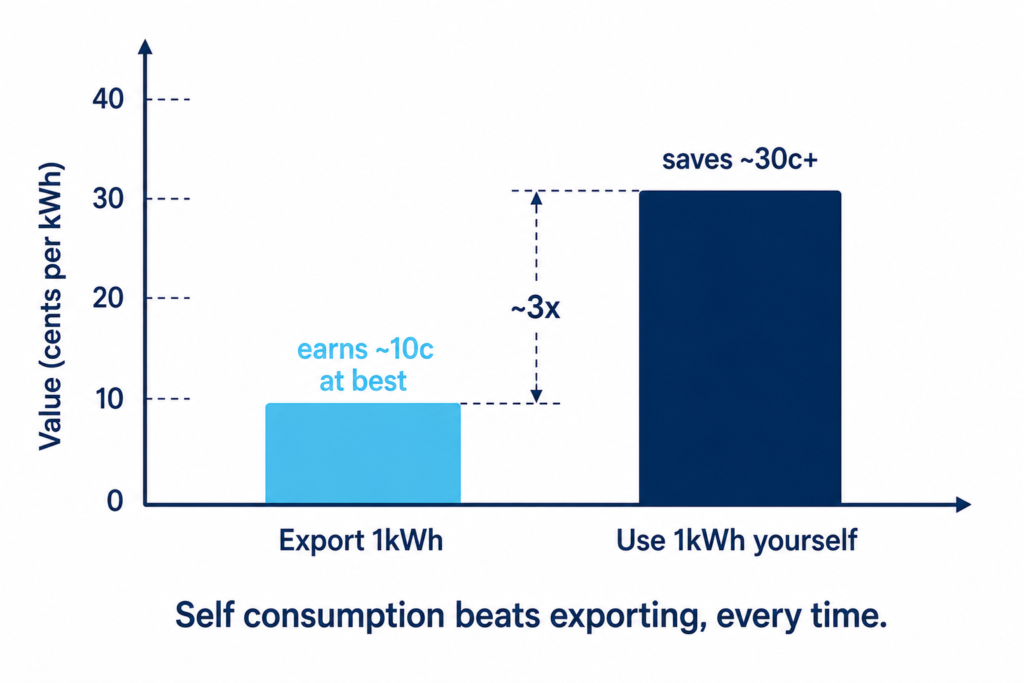
One of the most practical reasons for adding a battery to your solar system is simple: it lets you use more of the energy your panels produce.

Without a battery, your solar system powers your home during the day — but any excess energy goes straight back to the grid. At night, you buy power back from your retailer at a much higher rate.

With a battery, it works differently:

  • During the day, your battery stores any unused solar power.
  • At night, it supplies that stored energy back to your home.
  • You only draw from the grid if your battery runs out.
Sigenergy Battery install - outside of home

This increases your solar self-consumption — meaning more of the energy you generate actually gets used in your home. And with feed-in tariffs dropping and electricity rates rising, that shift makes a big difference to your bill.

If your panels are producing well but your bill still feels too high, this is often the missing link. Adding a battery to your solar setup lets you hold onto the value you’re already generating.

Protection from Rising Electricity Prices

Electricity prices in Australia have continued to rise. Since 1 July 2025, residential consumers in the default market offer areas have seen increases ranging from 0.5% to 9.7%, depending on their usage and location (dcceew.gov.au).

In this environment, adding a battery to your solar system becomes more valuable: you can rely more on the energy you’ve already generated, rather than paying more for grid power as prices climb.

Here’s how it works:

  • Your battery stores excess solar during the day
  • You use that stored energy in the evening, when electricity from the grid is most expensive
  • You only draw from the grid when your battery runs out

The result? Smaller bills and more control — especially if you use most of your energy in the late afternoon or evening when solar alone can’t cover your needs.

Tesla Powerwall 3 installed outside of home providing back up power

Backup Power During Blackouts

One of the most talked-about advantages of adding a battery to your solar system is backup power — and for good reason.

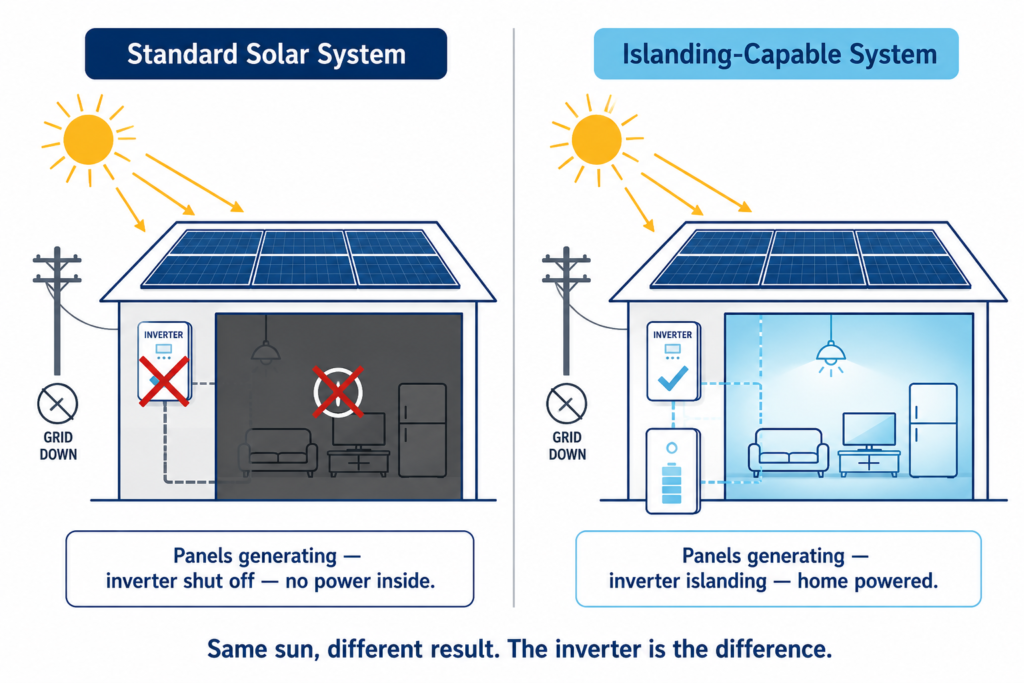
Most solar-only systems shut down during a blackout. But with a battery that includes backup capability, your home can stay partially powered even when the grid goes down.

Here’s what that can look like:

  • Keep essentials running — like your fridge, modem, lighting, or medical equipment
  • Avoid food spoilage during extended outages
  • Maintain internet access and basic comforts during storms or network failures

If you have three-phase power, you’ll need a battery system designed to back up all three phases — some only cover one, which may limit what stays on.

It’s also worth noting that not all batteries include backup functionality by default. So if this feature is important to you, make sure to confirm it when designing your system.

Whether you live in a rural area prone to outages or just want peace of mind, adding a battery to your solar gives you more energy independence when it counts most.

Access to New Government Rebates

If you’ve been put off by battery prices in the past, this might change your thinking.

From 1 July 2025, the Australian Government launched the Cheaper Home Batteries Program, offering eligible households a rebate to help reduce the upfront cost of installing a battery. The rebate amount depends on the size of the battery and where you live, but it can bring the total price down by thousands of dollars.

Lenergy helps customers apply for this rebate, and we always recommend checking the official program details yourself to ensure you’re eligible. You can read the full criteria on the government’s website: 

If you’ve been considering adding a battery to your solar system, this rebate could be the tipping point — especially when paired with long-term energy savings and blackout protection.

A Smarter Way to Future-Proof Your Energy Setup

Batteries aren’t just about storing power — they’re becoming the foundation for smarter home energy systems.

By adding a battery to your solar system, you’re setting yourself up for a future where:

  • You can participate in Virtual Power Plants (VPPs) and get paid for sharing stored energy
  • You can integrate your system with electric vehicle (EV) charging, using your solar to power your car
  • You have more control over how and when your energy is used — especially with smart apps and time-of-use automation
diagram of a VPP sending power to and from the grid. Highlighting the benefit of adding a battery to solar

If you’re already thinking about getting an EV or joining a VPP, having a battery makes it easier to take that next step. Some batteries can even be expanded later on if your energy needs grow — for example, if you add a pool, upgrade appliances, or start working from home more often.

It’s about more than just today’s savings. Adding a battery to your solar is a way to build flexibility, resilience, and long-term value into your home’s energy setup.

How Much Do Batteries Actually Cost in 2025?

One of the biggest questions people have when considering adding a battery to their solar system is: how much will it cost?

As of October 2025, here are the starting prices for some of the most popular home batteries installed by Lenergy:

  • ESY Sunhome Battery – from $9,210
  • Sungrow Battery – from $10,650
  • Enphase Battery – from $11,499
  • Sigenergy Battery – from $12,000
  • Tesla Powerwall 3 – from $15,800

Keep in mind:

  • These are starting prices and will vary depending on your system size, energy usage, and installation requirements
  • If you’re installing solar at the same time, some costs (like inverters or monitoring systems) can be bundled more efficiently
Lenergy staff member, Ziad standing in front of solar panels

Not sure which one fits your home? Most people choose based on a combination of budget, brand preferences, system compatibility, and whether they need full backup or VPP access. If you’re unsure, speaking with an installer can help match the right battery to your goals.

Is a Battery Right for Every Home?

While there are clear benefits to adding a battery to your solar system, it’s not always the right move for everyone.

Here are a few situations where a battery might not make sense — at least right now:

  • You use very little power at night: If most of your energy use is during the day and your bills are already low, a battery might not deliver a strong return.
  • Your solar system is small: If your system doesn’t produce much excess energy, there may not be enough surplus to charge a battery consistently.
  • You’re on a tight budget: Even with rebates, a battery is still a significant investment. In some cases, it might be smarter to maximise solar first and revisit battery storage later.
  • Your electricity rates are low: If you’re in a region or on a plan with low usage rates, the financial advantage of a battery could be smaller.

That said, many households still choose batteries for non-financial reasons — like blackout protection, future-proofing, or environmental values.

If you’re unsure, it’s worth speaking with an installer who can help you model your usage, solar output, and payback timeline. That way, you can make the decision based on real numbers — not just sales pitches.

What to Do Next if You’re Battery-Curious

Adding a battery to your solar system can be a smart, future-ready move — but it depends on your energy use, goals, and budget.

For many Australian homeowners, a battery helps:

  • Use more of your solar energy
  • Reduce exposure to rising electricity prices
  • Keep essential power running during blackouts
  • Access government rebates that lower the upfront cost
  • Prepare for a future with electric vehicles, VPPs, and more smart energy choices

That said, it’s not the right fit for every home — and that’s okay. The key is understanding how a battery fits your specific situation.

At Lenergy, we take a practical, no-pressure approach. If you’re curious about battery storage, we’d be happy to help.

Is Your Home Ready for Solar Panels?

Most people start looking into solar because of one thing: the power bill. But before you jump into quotes and product options, there’s a more basic question to answer first: Is your home actually ready for solar panels?

Not every house is solar-ready from day one. And that’s okay. It doesn’t mean you can’t get solar — just that a few things may need checking or updating before you install.

At Lenergy, we’ve helped hundreds of homeowners across NSW prepare for solar. We know what can delay an install, and more importantly, how to avoid it.

In this article, you’ll learn the key factors that make a home solar-ready — from roof condition to switchboard safety — and how to tell if your place is good to go.

Why Solar Readiness Matters

Not every home is set up for solar straight away. And that’s not a problem — but it does mean you want to know what’s involved before you commit to an install.

2 Lenergy branded van parked on driveway next to solar installation

Getting a proper assessment upfront helps avoid:

  • Delays on install day
  • Extra costs from unexpected upgrades
  • Safety issues during installation

This is exactly why we start every project at Lenergy with a free solar assessment. It’s about making sure your home is suitable, safe, and that solar will actually deliver the savings you’re expecting.

Is Your Roof in Good Condition?

Before installing solar panels, your roof needs to be structurally sound and safe to work on. Here’s what that typically means:

  • No major damage — cracked tiles, rusted sheets, or visible sagging can delay or prevent installation.
  • Not due for replacement — if your roof will need replacing in the next few years, it’s usually best to do that before installing solar.
  • Safe to access — steep pitches or brittle materials like old terracotta can complicate installs, but not always rule them out.
Lenergy staff  members installing solar on tiled roof

If there’s any doubt, your installer may recommend a roof inspection or repairs before proceeding. It’s better to sort this early than remove panels later for roof work — which adds time and cost.

Does Your Roof Get Enough Sun?

Solar panels work best with plenty of direct sunlight — especially during the middle of the day. However not every roof has perfect conditions.

Here’s what we look for:

  • North-facing sections are ideal, but east and west can still work well.
  • Minimal shading from trees, chimneys, or neighbouring buildings. Even partial shade can impact performance.
  • Good tilt and angle help with solar production, but panels can still perform well on flatter or steeper roofs.

If shading is a concern, solutions like microinverters or optimisers can help minimise the impact. A proper site inspection will determine whether your roof’s orientation and shade levels are suitable for solar — or if some trimming or repositioning might help.

Sometimes, a few small adjustments can make a big difference. One of our customers, Andrew, found that trimming back a few overhanging branches gave his system more sunlight and improved its overall output.

Do You Have Enough Roof Space for Solar?

The amount of roof space you need depends on how much power you want to generate. Most 6.6kW systems — a common size for Australian homes — need around 30–35 square metres of usable roof area.

What counts as “usable”?

  • Unshaded space
  • Clear of vents, skylights or obstacles
  • Oriented in the right direction for solar gain

If space is limited, you might still be able to install a smaller system — or use higher-efficiency panels that generate more power in less area.

Your solar provider will measure your available space during the quoting or assessment stage to help size your system correctly.
What’s the State of Your Switchboard?

Your solar panels will connect directly to your home’s main switchboard, so it needs to be up to modern standards. Older or overloaded boards can cause issues with safety and compliance.

Here’s what to look out for:

  • Old fuse-style boards: If your switchboard still uses ceramic fuses instead of circuit breakers, it will need upgrading before solar can be installed.
  • Limited space: Your switchboard must have room for new circuit breakers to connect your inverter.
  • Safety switches: Modern installations require RCDs (safety switches) to protect against electrical faults.

A licensed electrician or solar installer will check this during your site inspection. If your board needs an upgrade, it’s a straightforward fix — and a worthwhile one for safety and compliance.

Are There Any Access Issues?

Before installation, your installer will check how easy it is to access your roof and switchboard. A few small details can make a big difference on the day.

Here’s what helps keep things smooth:

  • Clear access to the driveway and roof area. Keep vehicles, bins, or garden tools out of the way so installers can set up ladders and safely unload panels.
  • Open gates and side access. If your switchboard or inverter location is behind a locked fence, make sure it’s open
  • Secure pets indoors. Installers will need to move between your roof, meter box, and inverter location throughout the day.

It’s all about creating a safe, efficient workspace. If you’d like to see what installation day looks like in more detail, check out Lenergy’s guide:

Do You Know What You’re Trying to Solve?

Before installing solar, it’s worth thinking about why you want it — because that shapes the kind of system you need.

Ask yourself:

  • Are you mainly trying to cut your power bill?
  • Do you want energy independence — to rely less on the grid?
  • Or are you planning to add a battery later for storage and backup?

Your energy goals determine your ideal system size and design. For example:

  • If your main goal is lowering bills, your system should match your daytime energy use.
  • If you plan to charge an electric vehicle or add a battery later, your installer may size it slightly larger to future-proof your setup.

When you book a free solar assessment with Lenergy, your energy usage and goals are reviewed to ensure the system suits how you actually live — not just how much roof space you have.

What If Your Home Isn’t Ready Yet?

If your home isn’t quite solar-ready, don’t stress — it’s more common than you might think. Most issues are simple to fix, such as:

  • Replacing cracked or ageing roof tiles
  • Upgrading an old switchboard
  • Trimming nearby trees that cause shade
  • Adjusting inverter or solar panel placement

Your solar installer will outline what needs attention during your free solar assessment, so there are no surprises later. Once those small upgrades are handled, you’ll be ready to move forward with confidence.

Lincoln from Lenergy standing in front of branded neon sign.

Quick Solar Readiness Checklist

Use this list to get a sense of where things stand before your assessment:

☐ Roof is in good condition (no major damage or leaks)
☐ Roof receives good sunlight most of the day
☐ Around 30–35 m² of clear, usable roof space
☐ Switchboard is modern with circuit breakers and safety switches
☐ Easy access to roof and inverter location
☐ Energy goals are clear (bill savings, battery, EV, etc.)

Getting solar installed is an exciting step — however making sure your home is ready first saves you time, money, and frustration. A short assessment can tell you everything you need to know before committing.

Lenergy offers free solar assessments to help you understand what’s required, whether your home’s ready today, or what needs a quick update before it is.

What to Expect on Your Battery Install Day

You have booked in to get your battery installed and you’re wondering… Do you need to be home all day? Is it loud? How long does it take? And once it’s installed… then what?

We hear these questions all the time from homeowners. Adding a battery is one of the smartest moves you can make — especially with power prices rising and solar feed-in tariffs falling — but the installation day itself can feel like a bit of a mystery.

At Lenergy, we’ve installed batteries from brands like Sigenergy, Pylontech, ESY, and Anker Solix X1 in homes across NSW. We know what makes for a smooth install — and the common points where confusion creeps in.

In this guide, you’ll learn exactly what to expect on the day your battery gets installed. We’ll break it down step-by-step — including what happens during the install, what you need to do, when your system will go live, and how to avoid common surprises.

How Long Does a Battery Installation Take?

Most residential battery installations take half to one full day. If your setup is fairly standard — a single battery unit being added to an existing solar system — you can expect the team to arrive early (usually around 7:30 AM) and be done by mid-to-late afternoon.

Lenergy staff member installing a Tesla Powerwall 2 battery at home

That said, a few things can affect the timeline:

  • System size and complexity: Larger systems or multi-battery stacks (like a Sigenergy or ESY tower) may require extra time, especially if your home needs three-phase compatibility or additional cabling.
  • Indoor vs outdoor placement: Batteries installed indoors (in a garage or utility room) may take a little longer due to access or ventilation adjustments.
  • Pre-existing site conditions: If your existing solar inverter or switchboard needs upgrades, that can add hours or even an extra visit.

In most cases, your installer will confirm whether it’s a one-day or two-day job ahead of time — but rest assured, no one will leave you in the dark mid-install. The system won’t be left half-finished.

Do You Need to Be Home All Day?

You won’t need to shadow the installers all day — but someone does need to be home for most of it and here’s why:

Access to Key Areas

The battery installation involves work both inside and outside your home. Installers will need access to:

  • Your main switchboard
  • Any internal wall or garage where the battery is mounted
  • Possibly your roof cavity or manhole (especially if cabling needs to be run through internal spaces)

If you’re not home, the install may need to pause until access is available, which can cause delays.

Final Walkthrough

Toward the end of the day, your installer will walk you through:

  • How your system works
  • What to do in a blackout (if applicable)
  • How to monitor your usage and savings using the battery app

This part only takes 10–15 minutes, however it’s important. It’s your chance to ask questions and get comfortable using your new system from day one.

Will the Install Be Noisy or Disruptive?

Compared to other home improvements, a battery installation is relatively quiet — but you can expect some mild disruption during the day.

Here’s what you might notice:

Drilling and wall mounting
Battery systems like the Anker Solix X1 or Pylontech often get wall-mounted in a garage, utility room or under eaves. Mounting the bracket and securing the battery will involve drilling into masonry or timber, which can generate short bursts of noise.

Switchboard work
Some minor rewiring is needed to connect the battery to your main switchboard. This usually happens quietly, but there may be brief power interruptions while the system is safely integrated.

Installer movement
If the battery is being installed indoors or cabling is routed through your ceiling space, you may hear light foot traffic or tools in use — especially if access is through a manhole or roof cavity.

No jackhammers or power saws
If you’re picturing a full construction site — don’t. Most of the work is clean, controlled, and won’t disrupt your whole day.

If you’re working from home or have pets sensitive to noise, you’ll want to plan for occasional interruptions — but nothing too intrusive.

What Happens After the Battery Is Installed?

Once the physical installation is complete, the job’s not over — and that’s a good thing. Your installer will walk you through how to use your new system and make sure everything is working as expected before they leave.

System Testing and Commissioning

The installer will test your battery to confirm:

  • It’s correctly charging and discharging
  • The inverter recognises the battery and is communicating with it
  • Any blackout protection (if included) works as intended

If you’re installing a Sigenergy, ESY, or Anker Solix X1, this testing is often handled via a mobile app that also gives you remote access and performance data.

A person monitoring a battery app, after solar and batteries have been installed

Monitoring App Setup

You’ll be guided through how to:

  • Use the app or web portal to track performance
  • Check your battery’s charge level, solar input, and usage stats
  • Know what’s happening during peak usage or blackout events

The app setup is important — this is how you’ll keep an eye on your system day-to-day. If the brand supports remote firmware updates (like Sigenergy or ESY), the installer may also run one before finishing up.

Final Handover

Before leaving, your installer should also:

  • Show you how to reboot the system if needed
  • Explain what to expect in the first few days
  • Provide contact details for support or questions

At this point, the system is physically ready — but it still needs to be integrated with your energy retailer before it goes live.

What Steps Involve Your Energy Retailer?

After your battery is installed and tested, the final step is to ensure your energy meter is compatible — especially if your system is new or older than six years. In these cases, it’s likely you won’t have a smart meter, which is essential for tracking energy flows between your solar, battery, and the grid.

Do You Need a Smart Meter?

Yes — smart meters are required for your battery system to work correctly with your energy retailer. They measure:

  • How much energy your battery stores and discharges
  • What you export to the grid
  • When you’re using power from the grid vs your battery

Without a smart meter, your battery’s performance — and any benefits like VPP participation or time-of-use optimisation — will be limited.

Who Organises This?

In most cases, this will be managed by your installer directly with your chosen retailer. At Lenergy, we take care of the entire process for you. We’ll submit the supply request, coordinate with your energy retailer, and make sure everything is ready for your battery to go live. You won’t need to fill out forms or make follow-up calls.

All you need to do is let us know which energy retailer you want to use — especially if you’re planning to trade your stored power through a Virtual Power Plant (VPP).

Once your smart meter is installed and your account is updated, your battery will be fully operational — charging, discharging, and reducing your reliance on the grid.

For a clear breakdown of benefits and how to apply, read our article below:

Want to Join a VPP or Add More Storage Later?

Once your battery is up and running, you might start thinking about what else it can do — and whether you can get even more value out of it.

Thinking About a VPP?

A Virtual Power Plant (VPP) is a program that links your battery to a network of other batteries. This allows your energy provider to draw stored energy from your system during peak times, often in exchange for payments, bill credits, or higher feed-in rates.

Diagram of how a Virtual Power Plant (VPP) works in conjunction with the grid.

Some batteries, like the Sigenergy or ESY systems, are compatible with VPPs and offer app-based opt-in features. But be aware — VPPs aren’t for everyone.

Before joining one, make sure you understand:

  • How often your battery may be discharged
  • What compensation you’ll receive
  • Whether it limits your control or backup functions

Adding More Storage Later

If you’ve installed a modular battery system like Pylontech, Sigenergy, or ESY, you may be able to add more storage capacity down the line — without replacing your current setup.

Sigenergy Battery install day - outside of home

This can be useful if:

  • Your energy usage increases (e.g. electric vehicle, larger family)
  • You want longer backup protection in case of outages
  • Your existing system doesn’t fully charge/discharge each day

If future flexibility is important to you, speak with your installer before making a final product choice — not all systems are equally easy to expand. To find out how to choose the right battery size, see our recent article below.

Ready to Take the Next Step?

Have questions about your upcoming battery install or want to explore options like VPPs or future expansion? Get in touch with our team — we’re here to help you get the most out of your solar investment, from install day to every day after.

How to Use the Tesla App to Monitor Your Powerwall

At Lenergy, we’ve helped hundreds of Australian families install and manage their Powerwalls. One of the most common things we hear afterwards is: “The Tesla app looks great — but I’m not really sure what I’m looking at.”

The Tesla App is powerful and well-designed, however, if you haven’t had someone walk you through it, it can be hard to know where to start. Some parts are intuitive, others are less obvious — and unless someone has explained things like Backup Reserve or Self‑Powered mode, it’s easy to miss features that could help you get more from your system.

In this article, you’ll learn how to use the Tesla mobile app to monitor and manage your Powerwall. From setup to backup settings to understanding what your battery is doing at any given moment — we’ll break it down, based on real questions we get from Lenergy customers.

By the end, you’ll feel confident using the app to stay informed, stay in control, and get the most out of your energy system.

Why the Tesla App Matters for Your Powerwall

Most of what your Powerwall does happens quietly in the background — charging, discharging, switching between solar and grid. The Tesla app is how you see what’s going on and, importantly, how you control it.

It shows you how your home is using energy in real time: what’s coming in from your solar panels, what’s being stored in the battery, what you’re drawing from the grid, and what’s being exported. This kind of visibility makes it much easier to spot patterns, track your savings, or troubleshoot when something feels off.

But the app isn’t just for monitoring — it’s where you adjust how the Powerwall behaves. For example, you can set aside backup power in case of an outage, or switch to Time-Based Control if you’re on a time-of-use electricity plan. These aren’t just nice-to-have features — they can make a real difference in how effectively your system works for your household.

The bottom line: if you want to get the full value out of your Tesla Powerwall, understanding the app is a big part of it. And once you know what each setting does, you’ll feel more in control of your energy use.

Getting Started: Installation & Setup

Before you dive into the features, it’s worth making sure your Tesla app and Powerwall are properly set up. Most of this is handled during installation, but here’s a quick rundown of what you (or your installer) should have completed:

1. Download the Tesla App

Head to the App Store or Google Play and search for the Tesla app. This is the same app Tesla uses for vehicles, solar, and energy storage — so if you already have a Tesla product, you don’t need a separate download.

2. Create Your Tesla Account

If you don’t already have one, you’ll need a Tesla account to log into the app. This is where your Powerwall system is registered, and it’s what connects your app to your specific hardware. Your installer will typically invite you to join or create your Tesla account during or shortly after installation.

3. Register the Powerwall

Your installer should link your Powerwall to your Tesla account. If that hasn’t happened or you’re taking over a system from someone else, you may need to submit a Powerwall registration request.

4. Connect to Wi-Fi

For the app to work properly, your Powerwall needs a stable internet connection. This is usually via Wi-Fi, but in some cases a wired connection or backup 4G dongle may be used. If your app isn’t updating regularly or is showing offline, this is the first thing to check.

5. Add Additional Users (Optional)

Want a partner, family member or property manager to have access? You can add another user through your Tesla account. Each person needs their own login — you can’t share a single account across devices.

Once the basics are set, the app will start displaying your system’s activity — including solar generation, home usage, battery charge level, and more. From here, it’s time to explore what the app can do.

Backup & Security Features

One of the biggest reasons people invest in a Tesla Powerwall is to keep the lights on during a blackout. The Tesla app makes it easy to manage this — and gives you a clear picture of how much backup power you actually have.

Backup Reserve

This setting lets you choose how much of your battery’s capacity to hold in reserve in case of an outage. For example, if you set your reserve to 20%, the Powerwall will stop discharging below that point — even if you’re using a lot of power — to make sure you’ve got something left if the grid goes down.

The right reserve level depends on your energy habits and your risk tolerance. Some homeowners set it low to maximise daily savings, while others prefer to keep more in the tank during storm season or in areas with unreliable power.

You can adjust your reserve level directly in the app:

  • Tap Settings > Backup Reserve
  • Use the slider to increase or decrease your backup threshold

If your Powerwall ever drops below this level, the app will let you know — so you can choose whether to reduce usage or allow it to dip into your reserve temporarily.
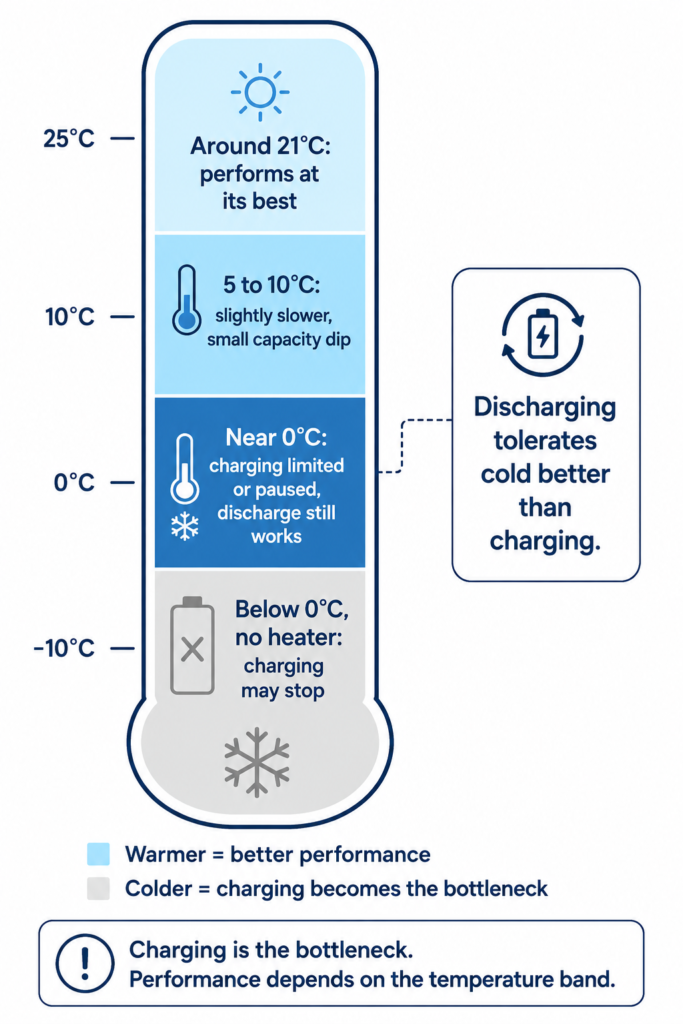
See more about the Tesla App back up reserve feature here

Storm Watch

Storm Watch is Tesla’s built-in safeguard for extreme weather. When enabled, it automatically prepares your Powerwall for outages by charging it to full capacity ahead of severe events like cyclones, thunderstorms, bushfires, or floods.

The system monitors weather alerts issued by the Bureau of Meteorology and will activate Storm Watch when a watch or warning is in place.

You’ll get a push notification when Storm Watch kicks in. From that point, your Powerwall will charge as quickly as possible to 100% to give you the best chance of riding out a grid outage. Once the weather risk has passed, your Powerwall returns to your normal settings.

How to Enable Storm Watch:
To turn it on:

  • Open the Tesla app
  • Go to Settings > Storm Watch
  • Toggle it on

Note: Storm Watch requires your phone to be paired with your Powerwall and Grid Charging to be enabled. This setting is usually configured by your installer, but if you can’t access it, contact your installer (like Lenergy) for assistance.

If a severe weather alert hasn’t triggered Storm Watch but you’d still like extra protection, the easiest option is to raise your Backup Reserve manually through the app.

See more information here on the Telsa App’s storm watch

Energy Optimisation Modes & Controls

Beyond just backing you up in a blackout, your Powerwall can also help you lower your electricity bills — especially if you’re on a time-of-use plan or generating more solar than you use during the day. The Tesla app gives you several ways to control how your battery behaves, depending on your priorities.
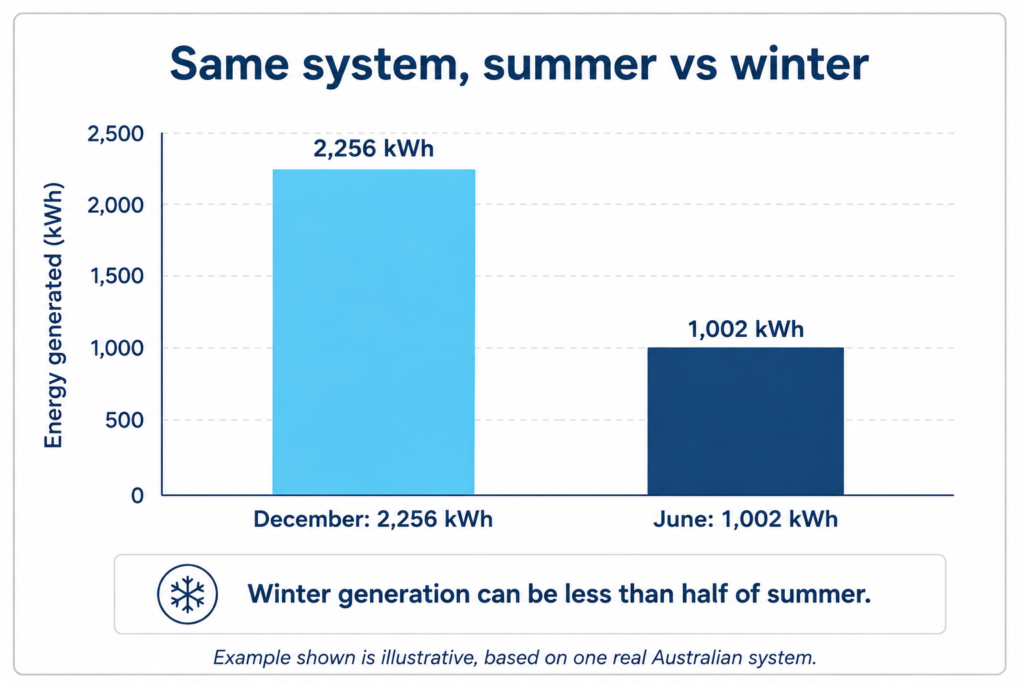
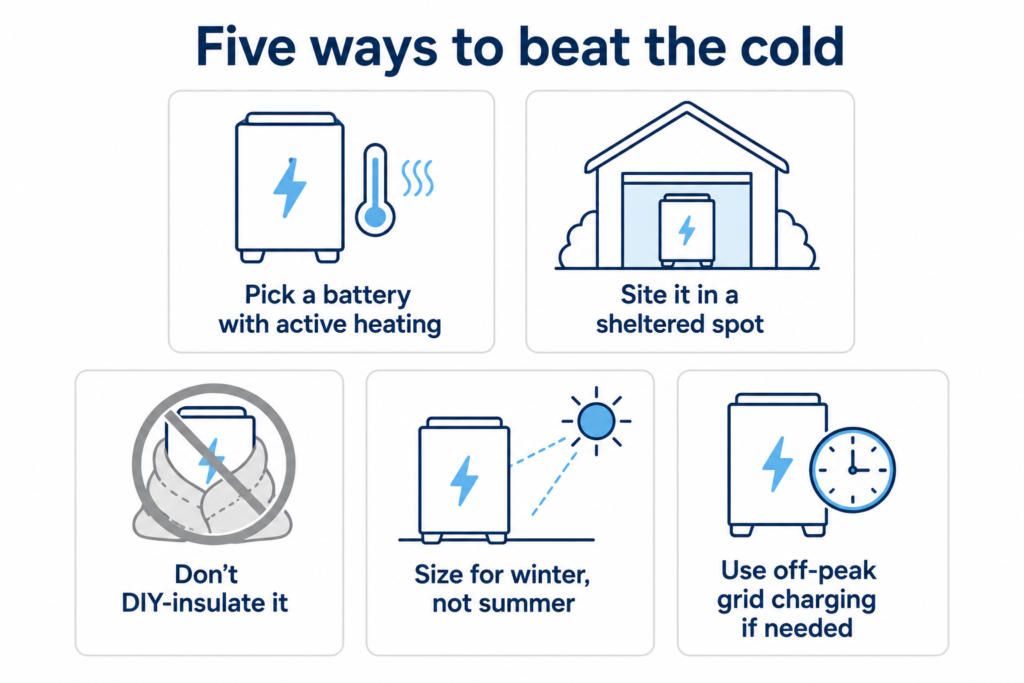
Self‑Powered Mode

This mode prioritises using your own solar energy instead of drawing from the grid. During the day, your solar panels power your home and charge the Powerwall. At night, your Powerwall discharges to supply your energy needs.

If your main goal is to use as little grid electricity as possible, Self‑Powered mode is a good default setting.

You can enable it by going to:

Settings > Open Powerwall Menu > Under Operational Mode, select Self-Powered

Then set your preferred Backup Reserve by adjusting the slider at the top of the screen

Time-Based Control

If you’re on a time-of-use electricity plan (where prices vary depending on the time of day), Time-Based Control helps your Powerwall charge and discharge strategically to avoid high-cost periods.

There are two options:

  • Cost Saving: Designed to reduce your energy bill, even if it means drawing from the grid occasionally.
  • Balanced: Aims to maximise your use of solar while still reducing grid costs.

To enable Time-Based Control, go to Settings > Powerwall > Operational Mode, then select Time-Based Control. From there, tap the Utility Rate Plan card to choose your tariff type (e.g. peak/off-peak or time-of-use). You can also adjust your Backup Reserve using the slider at the top of the screen to decide how much battery capacity to hold in case of an outage.

Once enabled, the Powerwall will begin learning your energy patterns — and over the following weeks, it will start making smarter decisions based on your usage, solar generation, and the tariff schedule you provide.

Advanced Settings

In addition to mode selection, you can adjust more detailed behaviours like:

  • Your energy rate plan (for time-based billing)
  • Whether or not to allow grid charging
  • Your minimum backup reserve, which interacts with whichever mode you’re in

Many of these features work well with the default settings, but if you’re confident using the app, you can adjust them to better align with your household’s energy usage and preferences.

If you’re unsure which settings to start with, we generally recommend enabling Self‑Powered or Balanced mode, then reviewing how your battery performs over a week or two. From there, you can tweak your preferences based on what you see.

Troubleshooting & Common Issues

While the Tesla app is generally reliable, you might occasionally run into issues — especially if your internet connection drops out or if your system settings were never fully configured. Here are some common problems and how to resolve them.

1. Powerwall Appears Offline

If your Powerwall isn’t showing any data or appears offline in the app, the most common cause is a loss of internet connection.

Check these first:

  • Is your home Wi-Fi working?
  • Has your router been moved or changed recently?
  • Has the Powerwall been disconnected from the network?

You can reconnect it by accessing your Powerwall gateway (typically located near your switchboard) or by contacting your installer for support. If the issue persists, Tesla support may need to re-establish the system connection.

2. App Not Updating or Showing Old Data

If the app isn’t showing current information, try force-closing and reopening it. Also check for app updates in your device’s app store.

If your phone is showing older energy data or nothing at all, it may be a sign that your Powerwall has lost connectivity, not that the app is faulty.

3. Need to Restart or Reset Your Powerwall

In rare cases, your installer or Tesla support may advise a system reset — for example, after a major firmware update or configuration change. This shouldn’t be done unless requested, but if needed, Lenergy can walk you through the process or send a technician.

What You Can Control, and What Tesla Manages

The Tesla app gives you more control than most people expect — from setting how your Powerwall responds to grid outages, to choosing how and when it charges and discharges. For many homeowners, that control translates into lower bills, greater energy independence, and peace of mind during extreme weather.

That said, not everything needs to (or should) be manually managed. Tesla’s systems are designed to handle most decisions in the background — learning your usage patterns, responding to your electricity tariff, and adjusting behaviour based on weather conditions. The app gives you the option to fine-tune, but it doesn’t demand constant attention.

If you’ve just had your Powerwall installed — or if you’ve had it for a while but haven’t explored the app — this guide should help you feel more confident navigating the features that matter most.

And if something still doesn’t look quite right, or you’re unsure how to adjust a setting, don’t hesitate to reach out. At Lenergy, we’re here to help you get the most out of your system — long after the installation is done.

Female Lenergy staff member standing in front of branded Lenergy sign

Pylontech Battery Review – Is It a Good Fit for Your Home in 2025?

Pylontech isn’t the most well-known name in solar batteries — but that doesn’t mean it should be overlooked. Their Force H3X model is gaining traction as an affordable, stackable option for homes that want reliable backup and smart energy use without the premium price tag.

At Lenergy, we’ve recently added Pylontech to our battery offering. Here’s why — and what you should know before deciding if it’s the right fit for your home.

What Is the Pylontech Force H3X?

The Force H3X is Pylontech’s high-voltage battery designed for residential and small commercial solar storage. It’s a modular system — meaning each battery unit stacks vertically, letting you choose the capacity that suits your home now, and expand later if needed.

Each module stores 5.12kWh of usable energy. You can start with two modules for around 10.24kWh, or scale all the way up to 35.84kWh with seven — depending on your power use and future plans.

The Force H3X pairs with a hybrid inverter and is designed to handle both on-grid and off-grid scenarios. It supports three-phase backup, has a smart energy management system, and includes a clear visual display so you can check your battery status at a glance.

In short, it’s a flexible, all-in-one battery solution built for growing families, EV owners, and anyone looking to get more out of their solar — without going all-in on premium brands.

What Makes the Force H3X Different from Other Batteries?

While many solar batteries on the market offer similar core functions — energy storage, backup power, app monitoring — the Pylontech Force H3X stands out in a few practical ways:

Modular, Stackable Design

Singular module of a Pylontech battery

This battery is built with flexibility in mind. Each module stacks vertically in a clean tower format. That means no wall mounting, no messy wiring across shelves — just a tidy, floor-standing unit that’s easy to scale as your energy needs change.

Affordable Without Cutting Corners

Compared to higher-end brands, Pylontech offers solid value for money. It may not have the brand recognition of Tesla, but you’re still getting high-performance lithium iron phosphate (LFP) cells, decent efficiency, and robust safety features — at a lower price point.

Hybrid Integration

The H3X is part of a full hybrid system. The inverter, battery management system (BMS), and energy monitoring all work together, meaning fewer compatibility headaches and smoother performance — especially for blackout protection and time-of-use optimisation.

Visual Display

Unlike many other batteries that rely solely on an app, the Force H3X includes a built-in screen that shows live system status. It’s a small detail, but handy for homeowners who like to see what’s going on at a glance without opening their phone.

Three-Phase Backup Support

For homes with three-phase power, many batteries only back up one phase. The Force H3X supports full three-phase backup, which is critical if you want to keep large appliances or all circuits running during an outage.

Display of Pylontech batteries

Pros and Cons of the Pylontech Force H3X

Every battery has trade-offs. Here’s a balanced breakdown of where the Pylontech Force H3X performs well — and where it might fall short depending on your setup.

Pros

Modular and expandable
Start with as little as 10kWh and scale up to over 35kWh as your needs grow. Ideal for families, EV owners, or anyone expecting to use more power in future.

Good value for money
Offers strong performance and safety features at a more accessible price point than premium brands.

Visual status display
Not all batteries include this — handy if you prefer checking your system without using an app.

Three-phase backup capable
Unlike many batteries that only support single-phase backup, the Force H3X can support full three-phase homes.

High round-trip efficiency
Rated peak efficiency up to 98%, meaning you lose less energy storing and retrieving power.

All-in-one hybrid setup
Battery, inverter, and energy management are designed to work together — streamlining installation and performance.

Cons

Less brand recognition
Not as well-known as Tesla or Enphase in Australia. May raise questions for buyers who value brand reputation or resale.

Requires floor space
Because it stacks vertically, you need a dedicated floor area — which won’t suit every install location.

Relies on good system design
Because the Force H3X is part of a hybrid system, performance depends on quality installation and inverter matching.

Limited app feedback in Australia
Some users — especially in newer deployments — have raised questions about the app’s data depth and responsiveness. We’re monitoring how the software evolves as more homes adopt the system.

Who Is the Pylontech Force H3X a Good Fit For?

Not every battery suits every home. Here’s where the Force H3X tends to make the most sense.

Budget-conscious buyers who want reliability
If you’re looking for a dependable battery but don’t want to stretch to premium prices, Pylontech offers strong value — especially for homes that use a lot of power after dark or during peak grid times.

Homes with three-phase power
If your home has a three-phase setup, and you want full-house backup during outages (not just one circuit), the H3X supports this out of the box. That’s a big plus over many single-phase-only systems.

Households planning to grow
Thinking of adding an EV? Installing more solar later? Anticipating a bigger power bill down the track? The H3X is modular — so you can start with two or three modules, and stack more as needed without replacing the system.

Homeowners who value visual feedback
Not everyone wants to open an app every time they check their power usage. The built-in display gives you basic status info on the spot — a small feature, but one many homeowners appreciate.

Those wanting a hybrid all-in-one setup
Because Pylontech offers an integrated inverter and battery setup, it can simplify design, installation, and service. That’s especially useful if you’re installing a full solar + battery system for the first time.

It may not be ideal if you’re focused purely on brand prestige, or if you have tight installation constraints where a wall-mounted battery is the only option. But for many homes, it offers a practical and future-proof balance between performance and price.

Pylontech 7 stackable modules in battery

Final Thoughts: Is Pylontech Right for You in 2025?

If you’re looking for a solar battery that’s reliable, flexible, and more affordable than many of the big names — the Pylontech Force H3X is well worth considering.

It’s a solid fit for homes that want:

  • Full three-phase backup
  • Stackable storage that grows with your needs
  • A more affordable path to energy independence
  • Simplicity in installation and system management

It’s not about chasing brand recognition. It’s about getting a battery that fits your home, your usage, and your budget — without compromise where it counts.

If you’d like to find out if the Pylontech Force H3X is the right match for your home, get in touch with the team at Lenergy. We’ll walk you through your options — no pressure, just straight advice.

Female Lenergy staff member standing in front of branded Lenergy sign