Can Getting an EV Actually Protect You From the Fuel Crisis?
Every time you pull into a petrol station right now, you’re feeling the impact of something happening thousands of kilometres away. The conflict affecting the Strait of Hormuz, one of the world’s most critical oil shipping routes, has pushed fuel prices higher and made supply unpredictable. For most Australians, that means more money leaving your pocket every week, with no end in sight and nothing you can do about it.
That’s the part that’s really frustrating. It’s not just the cost. It’s the fact that you have no control over it. You’re not overspending because of anything you’ve done. You’re overspending because of a geopolitical situation on the other side of the world.
You’re not alone in feeling that way, and it makes sense to start looking at other options.
The good news is that a sustainable solution exists, and more Australians are using it right now to protect themselves from exactly this kind of volatility. Switching to an electric vehicle paired with solar and a battery doesn’t just reduce your fuel costs. It removes your dependence on fuel markets entirely, putting control of your energy into your own hands. This article explains how it works, what the right setup looks like, and why a new government scheme launching in July 2026 makes now one of the best times to make the move.
Why Switching to an EV Alone Doesn’t Solve the Problem
When people first think about switching from petrol to an EV, the assumption is that electricity is cheaper than fuel, so the savings take care of themselves. That’s partly true, however it misses something important.
If you charge your EV from the grid the same way most people do, by plugging in at night when you get home, you’re buying electricity at your standard evening rate. Depending on your plan and state, that can be anywhere from 30 to 50 cents per kilowatt-hour. It’s still cheaper than petrol, and you’re still dependent on a price set by someone else, a retailer, a wholesale market, or a government policy.
The real opportunity is to charge your car using energy you’ve already generated yourself, for free, from your own roof. That’s where solar and a battery come in, and that’s where real energy independence begins.
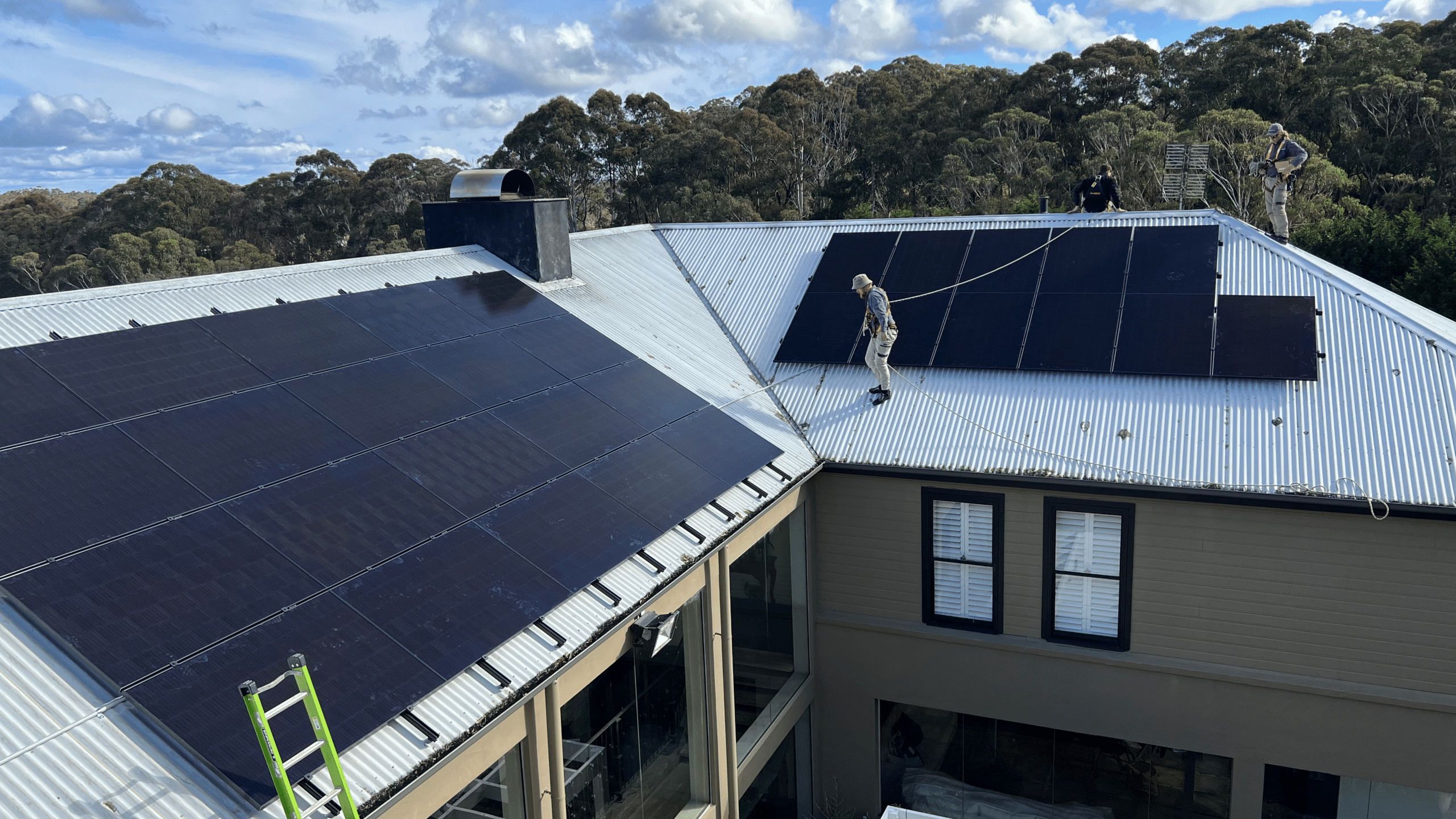
How Solar and a Battery Change the Equation
A solar panel system generates electricity during the day. If your household isn’t using all of that electricity at the time it’s produced, the excess gets sent to the grid and you receive a feed-in tariff, typically between 0 and 6 cents per kilowatt-hour depending on your retailer. That’s a very low return compared to what you’d pay to buy that same electricity back later.
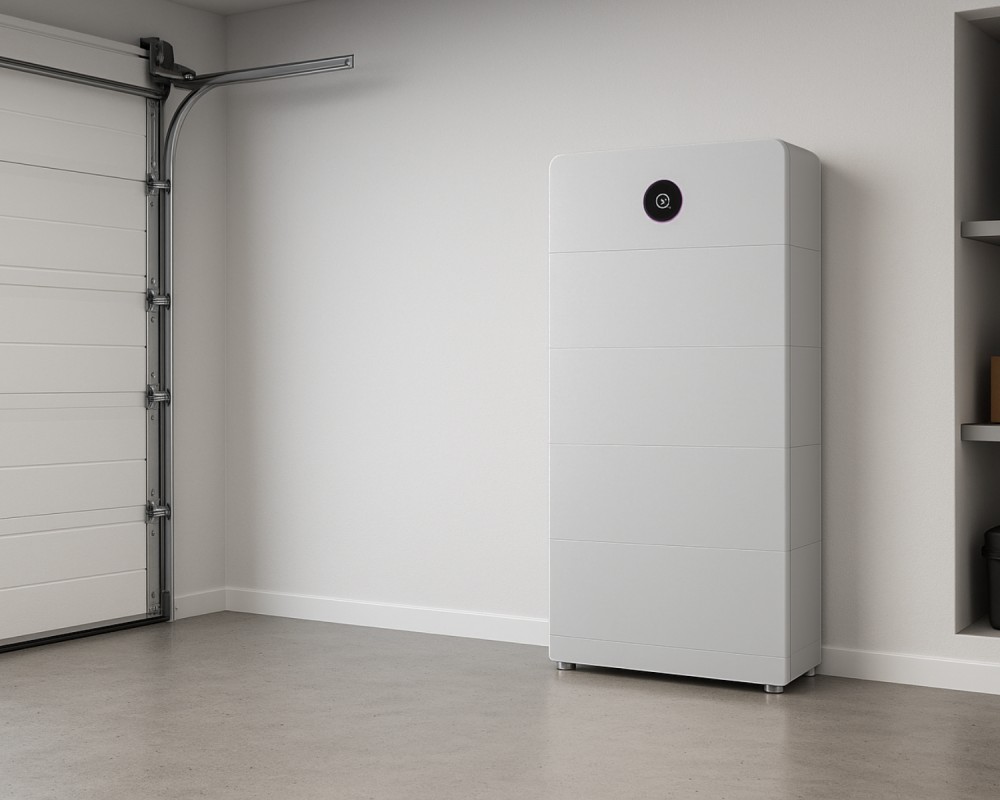
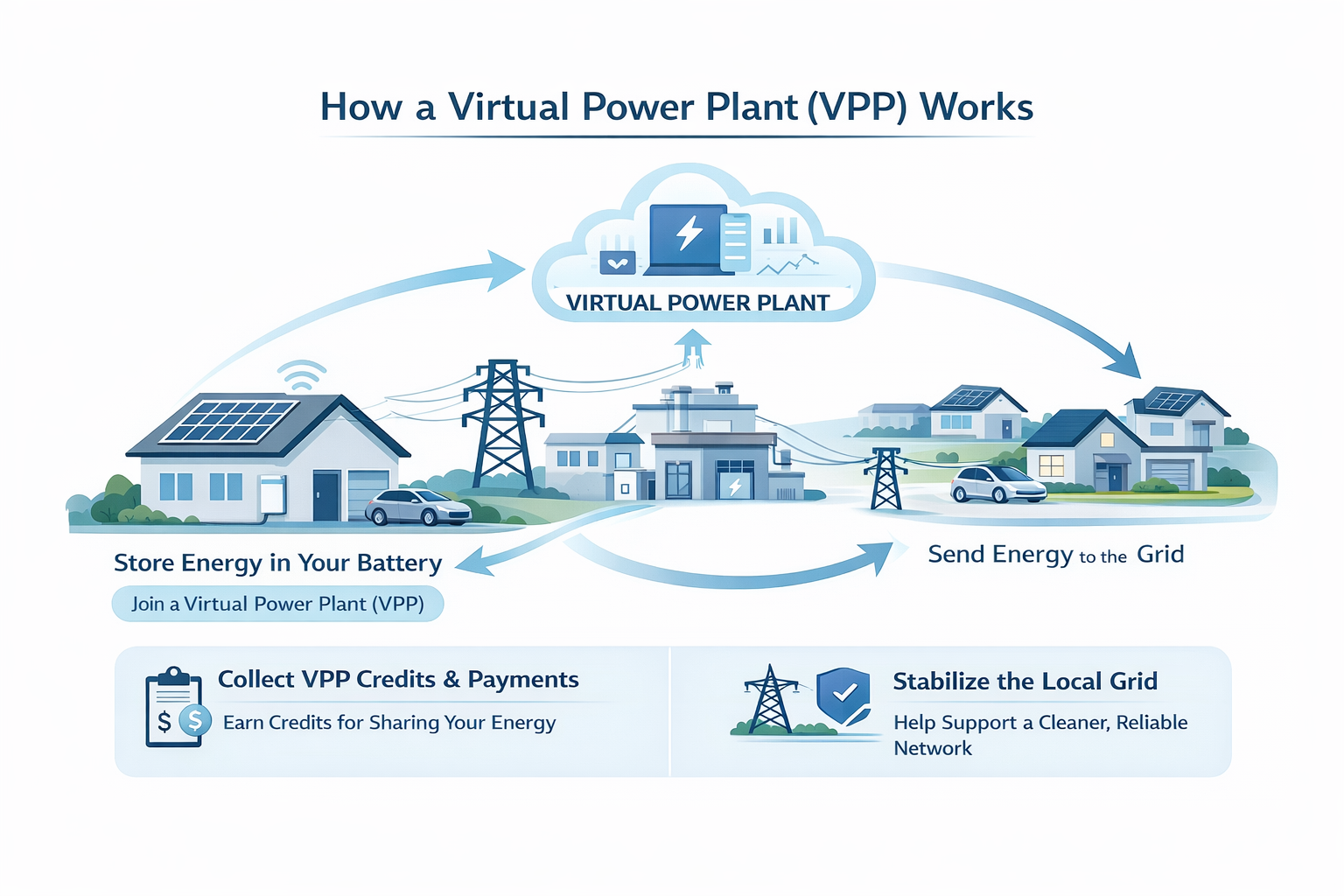
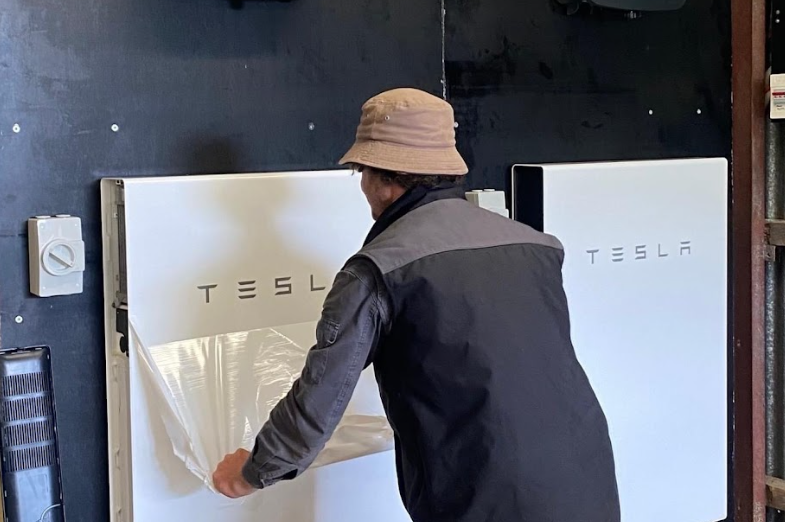
A home battery changes this completely. Instead of exporting that excess solar to the grid for almost nothing, the battery stores it. You then use that stored energy in the evening and overnight, including to charge your EV, effectively at no cost.
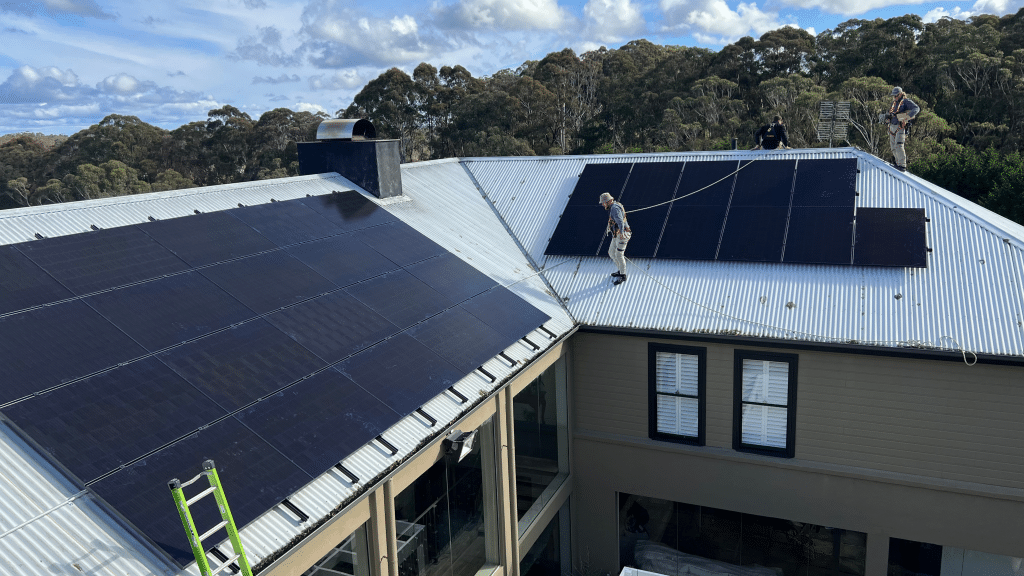
This is how it works in practice: generate during the day, store what you don’t immediately use, and power your home / car from what you’ve made yourself. Your electricity comes from your roof, not from a market you have no influence over. If you’d like to understand more about whether a battery makes financial sense for your home specifically, our article on the 5 practical reasons to add a battery to your solar system breaks it down clearly.

The Solar Sharer Offer: Free Electricity Is Now Government Policy
From 1 July 2026, the Federal Government is mandating that every electricity retailer with more than 1,000 customers must offer an opt-in plan called the Solar Sharer Offer. This plan gives households three consecutive hours of completely free electricity every day.
The free windows, as confirmed by the Australian Energy Regulator’s Draft Default Market Offer 2026-27, are:
- 11am to 2pm in New South Wales and South East Queensland
- 12pm to 3pm in South Australia
These times were chosen because they align with peak solar generation, when so much rooftop solar is feeding into the grid that wholesale electricity prices drop to zero or below. The government is essentially passing that benefit directly to households.
The daily cap is 24 kilowatt-hours of free electricity. To put that in context, a typical Australian household uses around 16 to 20 kilowatt-hours per day in total. The cap is set high enough that for most households, including those charging an EV and a battery simultaneously, it will rarely be an issue. You can run your air conditioning, charge your EV for the full three hours, and run appliances during the window without hitting it. If you do go over 24 kWh, there’s no penalty. You simply start paying your normal daytime rate for anything beyond that.
Critically, the Solar Sharer Offer consultation outcomes paper confirms that the offer is designed so that any household actively using the free window will end up better off overall, even accounting for any slight adjustments to rates outside the window.
This isn’t a promotional offer from a single retailer. It is regulated, government-enforced free electricity, available to anyone with a smart meter who opts in.
For context on the broader solar sharing scheme and how it fits into the energy landscape, our article on the Federal Government’s solar sharing scheme covers the background in detail.
How EV Owners Can Capture the Full Benefit With a Battery
The free window is real, and from July it will be universally available. Capturing it properly, though, isn’t automatic, and most EV owners will miss out on a significant portion of it. The three-hour free window falls in the middle of the day when most people are at work, which means their car isn’t at home to be charged. Even if you are home and the car is plugged in, a basic EV charger has no awareness of electricity pricing. It charges when the car is connected, at whatever rate is currently applicable, and won’t automatically start charging just because electricity became free at 11am. Without a battery, the problem compounds further. Solar energy generated during the free window that your home isn’t currently using gets exported to the grid for a few cents per kilowatt-hour, your home is unable to take advantage of the energy your system is generating and has to once again rely on the grid when you need power later.
A battery solves all of this. It removes the need for perfect timing entirely, and in doing so, removes one of the last remaining ways that external factors can interfere with your energy costs. During the free window, solar generation fills the battery instead of being exported. By the time your EV is plugged in that evening, the battery is holding energy that cost you nothing to produce. Your car charges from that stored energy overnight, and your fuel cost for the day is effectively zero.
You can also be more deliberate about this. Some systems allow you to force-charge your battery from the grid during the free window, meaning even on a cloudy day when your solar isn’t producing much, you can still fill the battery with free grid electricity before the window closes. This gives you a full battery at zero cost regardless of the weather, and a degree of certainty over your energy costs that simply doesn’t exist with petrol. This combination of solar, battery, and smart EV charger separates households that have taken control of their energy from households that are still at the mercy of markets they can’t influence. For a closer look at how energy plans and VPPs interact with this kind of setup, our article on the best VPPs for solar batteries is worth reading alongside this one.
What a Smart EV Charger Actually Does Differently
Not all EV chargers are the same. A basic charger is simply a fast power point for your car. It delivers electricity when the car is connected and stops when it’s full. There’s no intelligence, no system awareness, and no ability to optimise when or how the car charges, which means you’re leaving the timing decisions to chance.
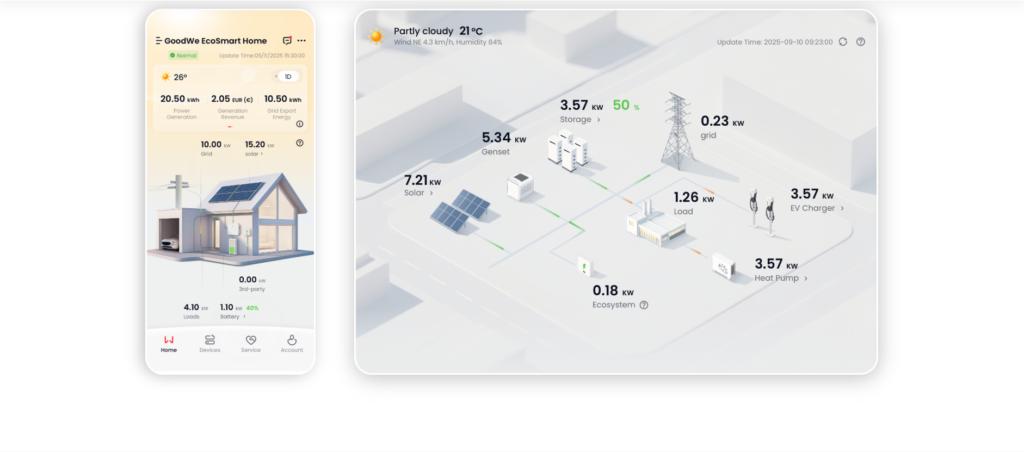
A smart EV charger communicates with your solar system, your battery, and your energy plan. It knows what electricity costs right now, how much your solar panels are producing, how full your battery is, and what time of day it is, and it uses all of that to make continuous decisions about the best moment to charge your car. For households on a Solar Sharer plan from July 2026, the system handles all of it automatically. Your only job is to plug the car in.
That’s what makes energy independence practical for a real household with a real schedule. It doesn’t require you to be home at 11am or remember to switch anything on. The system works around your life, not the other way around.
What Sigenergy’s EV Charger Shows About What’s Possible
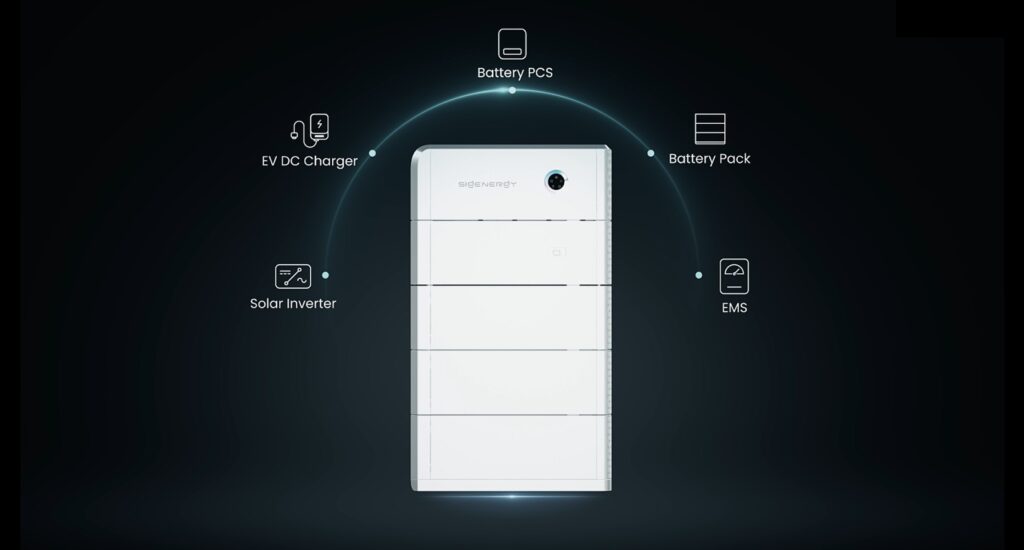
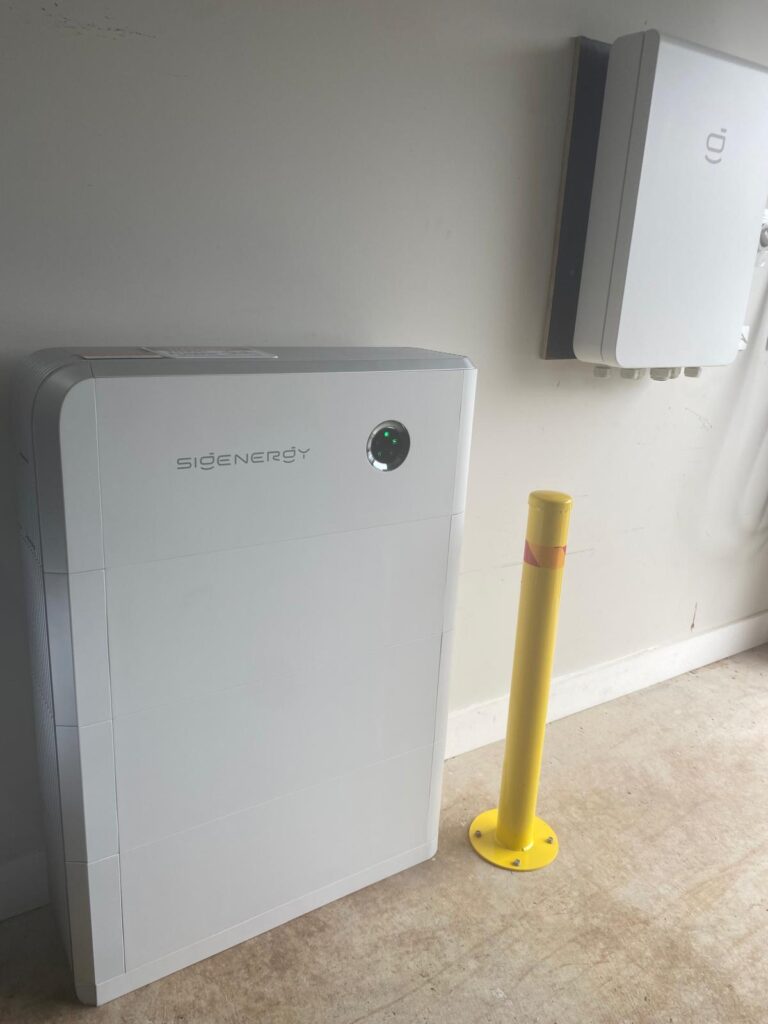
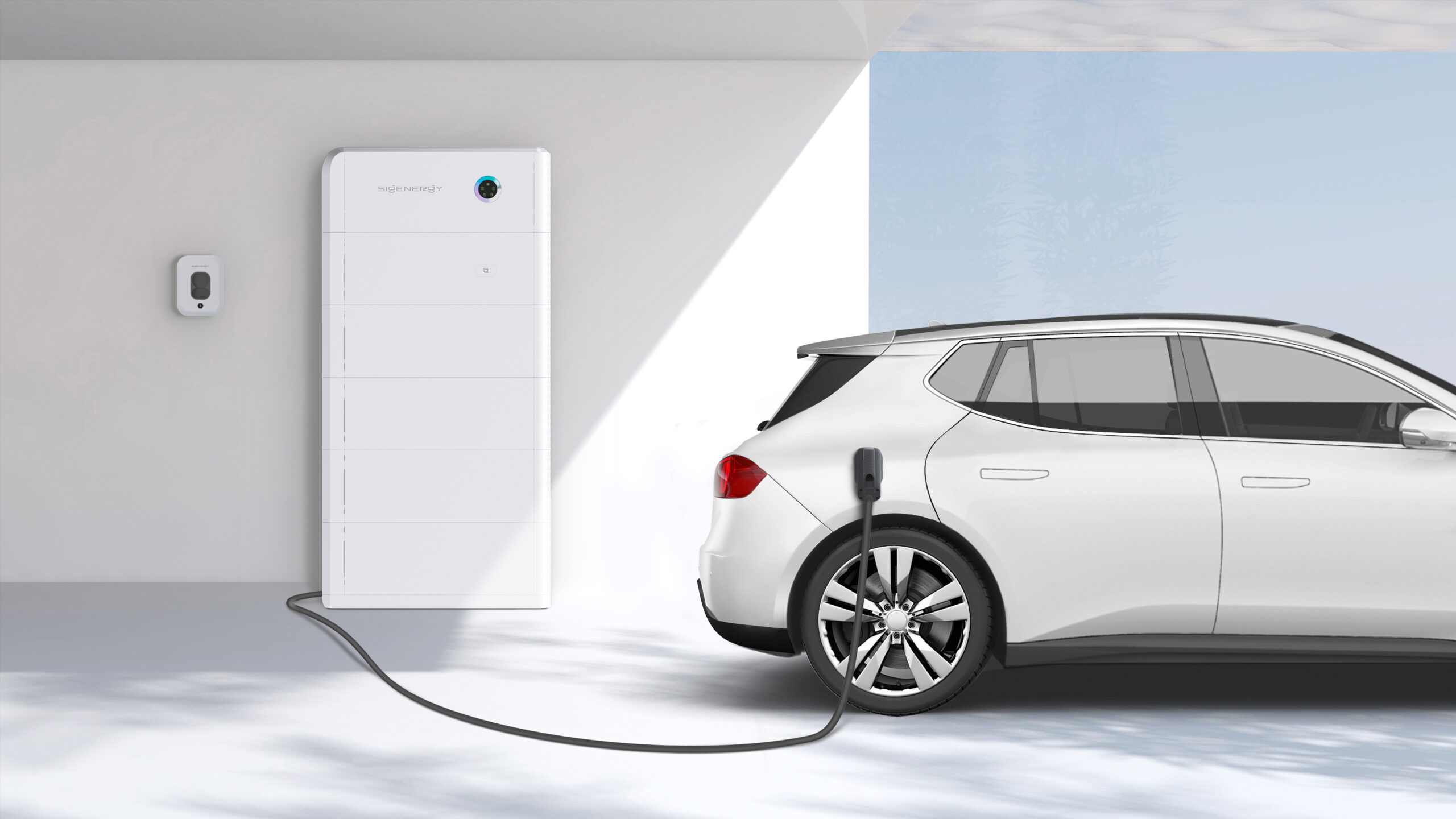
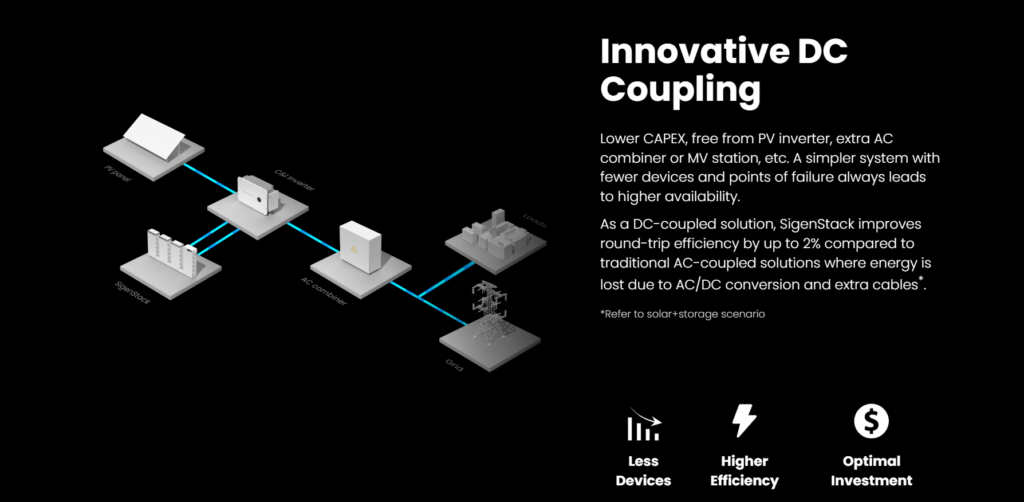
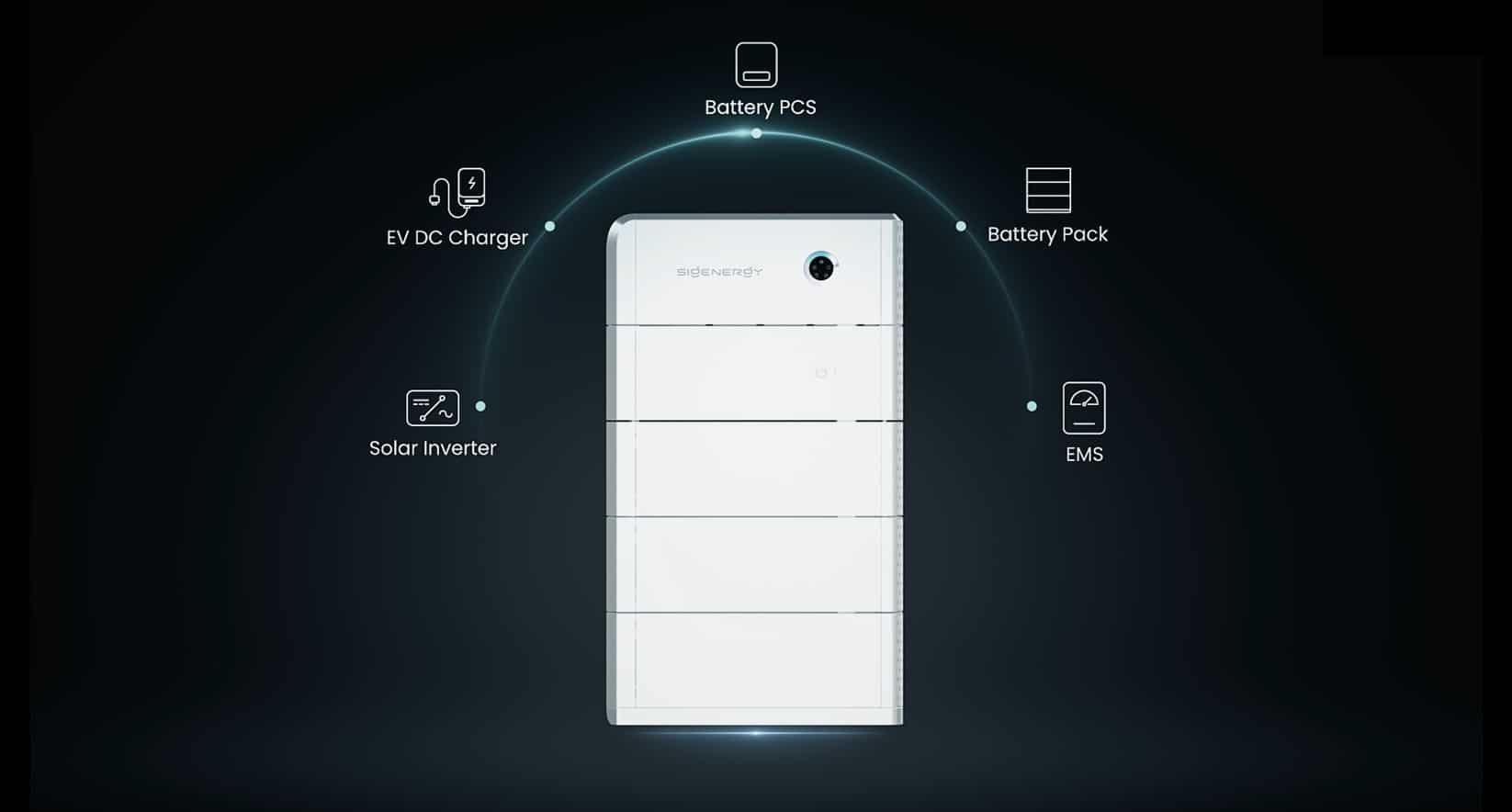
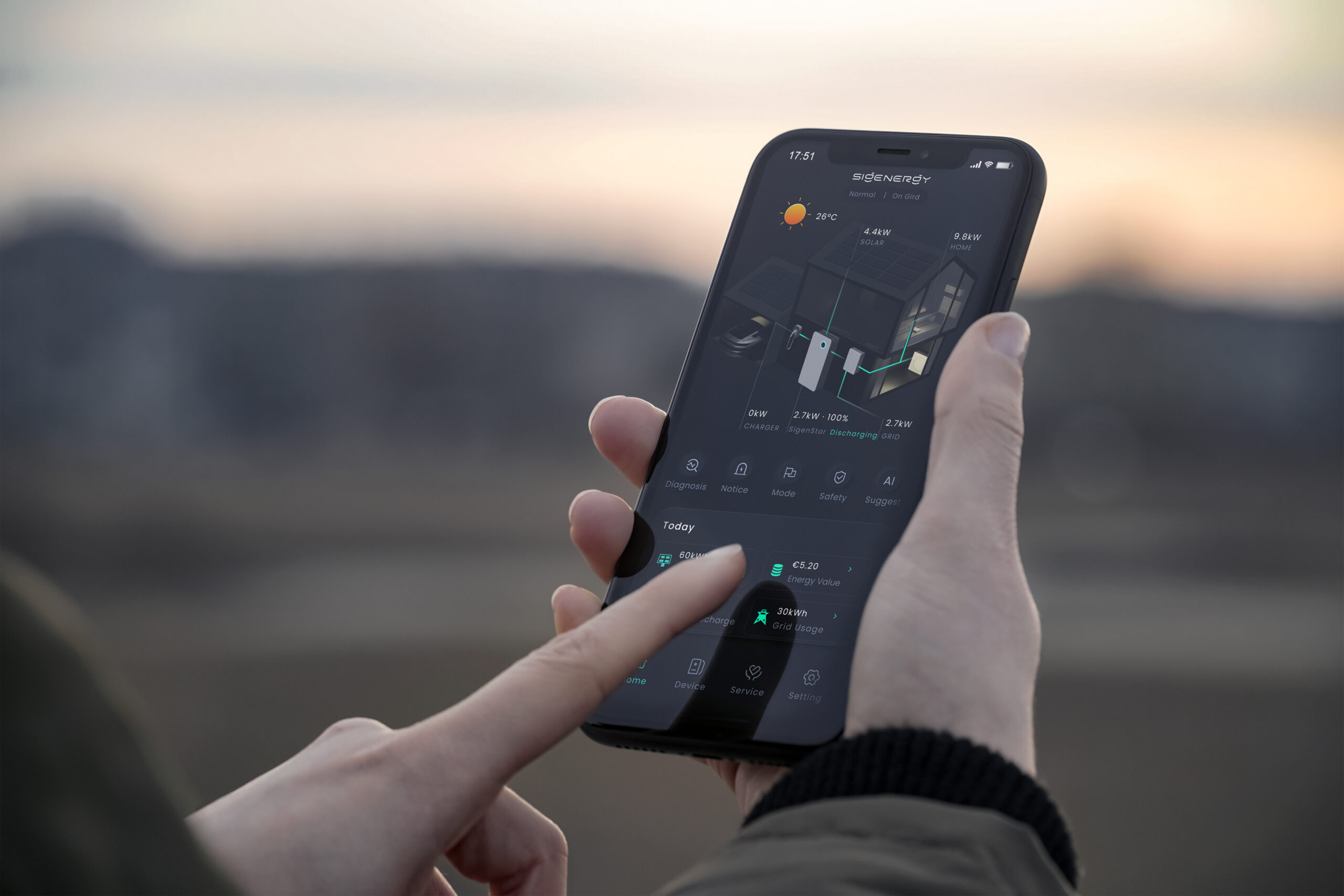
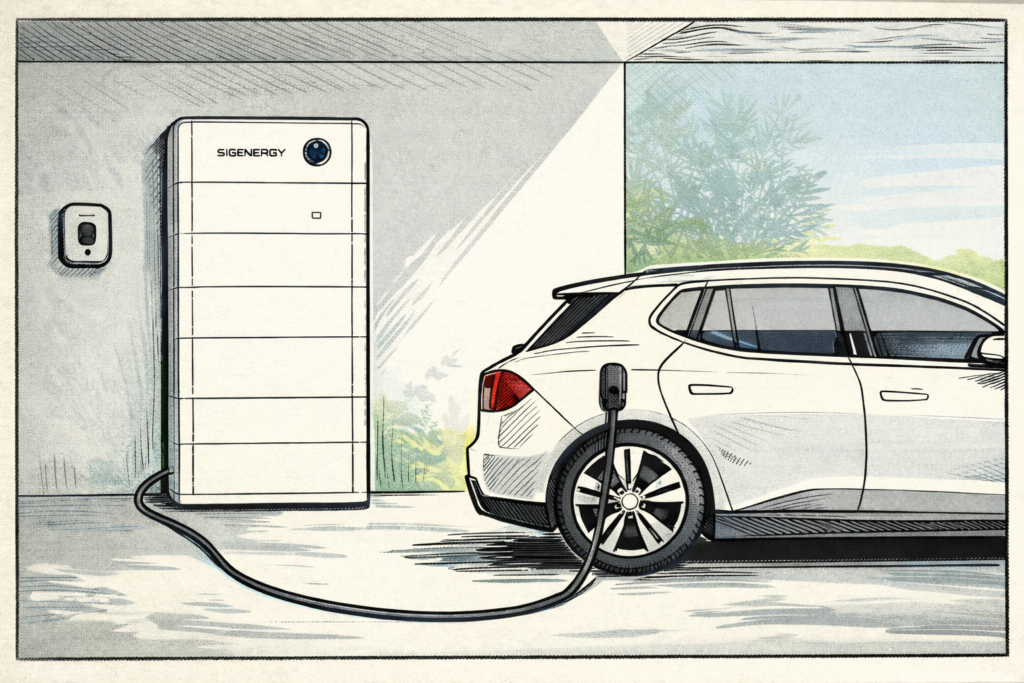
One of the industry leaders in Australia right now is Sigenergy, and their AC EV charger has functionality that goes beyond most others on the market, particularly when integrated with their battery system. The combination uses AI to manage your home’s energy as efficiently as possible, coordinating solar, battery, and EV charging as a single system rather than three separate devices.
The full review of the Sigenergy AC EV Charger covers the technical details, and a few features that are worth understanding, showing clearly why integration matters.
It adjusts its output continuously between 1.4kW and 7.4kW. Rather than running at a fixed speed, it responds to what’s available in real time. If your solar panels are producing more than your home needs right now, that surplus goes into the car. If production drops, the charge rate adjusts rather than pulling from the grid to compensate. Over a three-hour free window, this continuous adjustment means the car absorbs as much free energy as possible.
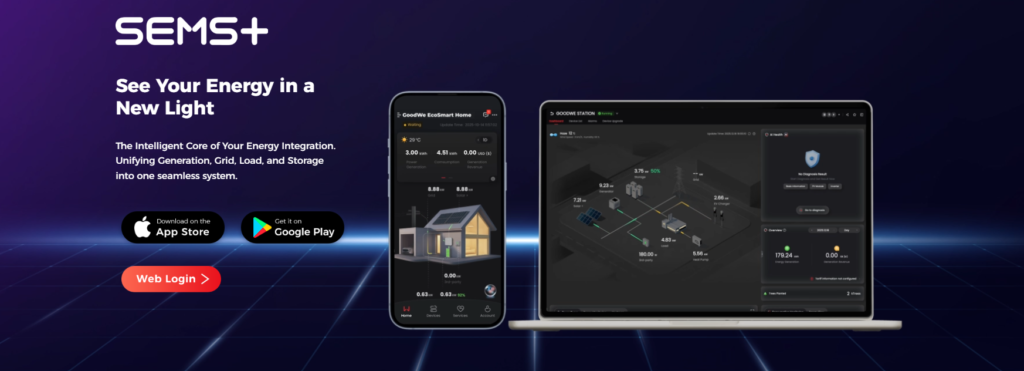
It communicates directly with Sigenergy’s energy management system. The charger has visibility into your battery state, your solar output, and your grid pricing at any given moment, and makes charging decisions based on all three. For a household on a Solar Sharer plan, this means the charger automatically aligns to the free window each day without needing to be manually programmed.
It integrates natively with the SigenStor battery. The EV charger and battery operate as a single coordinated unit. The battery fills during the day, the car charges from the battery at night, and the energy management layer decides the most cost-effective sequence based on current conditions. The household’s energy comes from a system they own and control, not from a retailer’s pricing schedule.
It suits most Australian homes. Available in single-phase (7.4kW) and three-phase configurations, it adds approximately 40 to 50km of driving range per hour in single-phase mode. For a typical commuter, a full three-hour free window covers the entire day’s driving.
Sigenergy is not the only charger that offers this kind of integration. The broader point is that any properly integrated smart EV charger, one that communicates with your solar system and battery, will outperform a basic charger dramatically when it comes to capturing free energy windows and reducing your dependence on the grid. Sigenergy is simply one of the clearest examples in the Australian market of what that integration looks like in practice.
What Does This Look Like Day to Day?
Compare a household running this setup to a petrol car. At current prices, a typical Australian filling up weekly is spending somewhere between $80 and $150 depending on how much they drive, and when factors well outside your control, such as the current situation with the Strait of Hormuz, affect global oil supply, that figure can climb sharply with no warning. Over a year, that’s $4,000 to $8,000 in fuel costs, entirely determined by factors you have no say in.
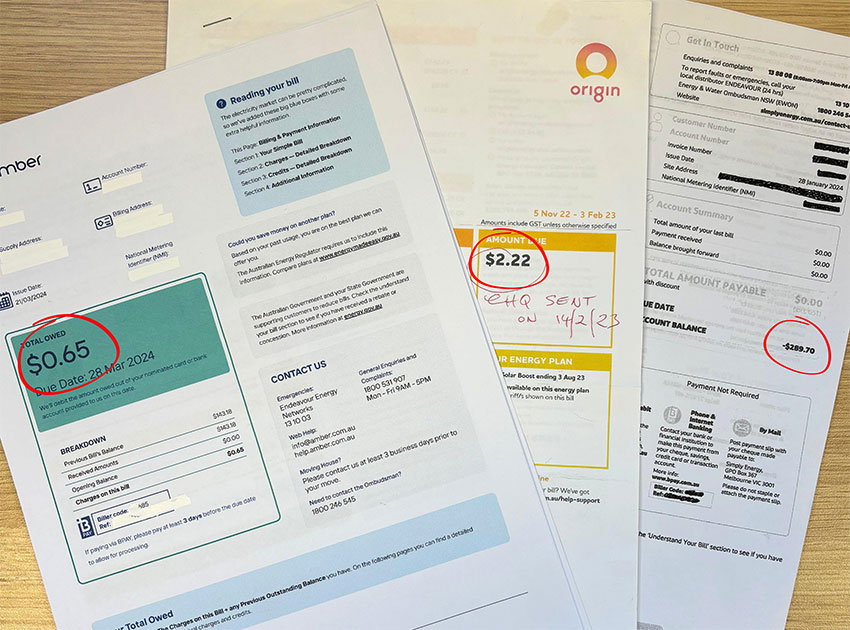
With the right solar, battery, and EV charger setup, that number approaches zero. More importantly, it stays there. Not because prices are low right now, and not because a retailer has chosen to offer a discount, but because the energy powering your car comes from your roof, stored in your battery, and dispensed on your terms.
Hear from one of our clients Harry about how installing Solar, batteries and an ev charger have helped him save money.
Is This the Right Move for Your Home?
The combination of an EV, solar, battery, and smart charger makes the most sense if you currently spend a large amount on fuel, you’re already considering solar or already have it installed, and you want to protect yourself from energy price volatility rather than just reduce your current bill.
It makes less sense if you drive very rarely, are renting with no ability to install equipment, or need the absolute lowest upfront cost with no investment.
The key takeaway is that an EV on its own doesn’t achieve energy independence. It’s the full system working together; solar generating free energy, a battery storing it, and a smart charger deploying it at the right time, that gets your fuel cost to zero and keeps it there regardless of what happens to global oil markets, shipping routes, or the price board at your local servo.
If you’re ready to stop leaving your fuel costs up to chance, the team at Lenergy can help you figure out exactly what that system looks like for your home. We work with Australian homeowners every day to design solar, battery, and EV charging setups that are built around their energy usage, their budget, and their goals. Whether you’re starting from scratch or already have solar and want to take the next step, we can walk you through your options and make sure you have a system tailored to your exact circumstances.
Reach out to the team at Lenergy to get started.