Author: Donna Wentworth

Best VPPs for Solar Batteries: Who They Suit, What They Pay, and What to Watch Out For

You got a solar battery to offset your night time usage and gain energy independence, with the recent changes in the Federal Battery Rebate and the new solar sharing scheme, being smart with how you use your battery is more important now than ever. Many new methods for maximising the value that you get from your battery are emerging such as Virtual Power Plants (VPPs), solar sharing, community batteries, and new ways of “participating in the energy market.” It all sounds promising — the idea that your stored solar could help power the neighbourhood or earn you credits through smart trading.

Are VPPs really about sharing power — or giving it away?
As the energy system shifts, so do the rules. Feed-in tariffs are shrinking. Retailers are offering new kinds of incentives, and suddenly, there’s more pressure than ever to hand over battery control in exchange for monthly payments and app-based promises.

At Lenergy, we believe in helping you understand what’s actually on offer — and what it means for your power, your battery, and your bottom line.

In this article, you’ll learn:

  • What a VPP actually is
  • Which batteries are compatible — and which programs are worth a look
  • What you give up (and gain) by joining
  • How VPPs compare to other battery strategies like force charging
  • And how to decide what level of grid participation is right for you

What Is a Virtual Power Plant (VPP)?

A Virtual Power Plant (VPP) is a network of solar and battery systems coordinated by a central operator — often an energy retailer — to help balance the electricity grid. When energy demand surges or the grid needs support, the VPP can tap into its members’ stored battery power to discharge energy back into the grid, usually in exchange for some form of payment or credit. Read more about VPP’s in our recent article How Does A Virtual Power Plant (VPP) Work?

On the surface, it sounds like a win-win: your battery gets put to work when it’s needed most, and you’re rewarded for contributing. However, they are not for everyone. They work your battery harder, surrender some of your control to the energy retailer and can require some work to set up.

The level of control you surrender depends entirely on the program. Some VPPs allow you to set usage limits or reserve a portion of your battery for personal use. Others may take full control during peak events or maintain access at all times. Some let you opt in or out of specific events — others don’t.

Not all VPPs are created equal, and the difference between them can have a real impact on your savings, backup protection, and peace of mind.

How Do VPPs Work With Solar Batteries?

When you join a Virtual Power Plant, your solar battery becomes part of a distributed energy resource — meaning it’s not just powering your home anymore, it’s also helping to support the wider grid.

Here’s what typically happens behind the scenes:

  • Your battery charges during the day using excess solar energy from your rooftop panels.
  • The VPP monitors grid conditions in real time. When demand is high, the VPP operator can remotely discharge power from your battery back into the grid.
  • You receive compensation for this contribution, which may come as a flat payment, usage-based credit, or time-based reward, depending on the plan.

Some VPPs allow you to set a reserve limit, or opt in or out of specific events. Others may maintain access to your battery at all times, regardless of your preferences.

What That Actually Looks Like in Real Plans

Here are some real-world examples that show how much control different VPPs give you:

VPPs That Let You Keep Some Control

  • Amber: Amber’s model allows users to keep high levels of battery control, including reserve settings.
  • Nectr VPP: Nectr gives you the option to set a battery reserve limit (e.g. 20% state of charge), ensuring part of your battery is kept for your own use. 
  • Plans with kWh limits: Some VPPs cap the amount of energy they can access from your battery over a year. This provides predictability and avoids excessive discharging. Specific plans vary by state and battery model. 

VPPs Where the Operator Has More Control

  • AGL Bring Your Own Battery: AGL’s VPP terms give AGL full access to your battery during grid events. There is less flexibility for opting out of events or setting strict reserve levels. Learn more
  • Origin Loop: Origin’s Loop plan allows them to dispatch your battery during events to support the grid. The terms vary depending on the battery brand and plan, and reserve settings may not be guaranteed. Learn more
  • EnergyAustralia: Designed to give the operator control over battery output during peak periods to stabilise the grid. Battery discharge events are not user-controlled. Learn more

That’s why reading the fine print matters. VPPs fundamentally change how your battery is used — and who it’s used for.

A diagram showing how a virtual power plant words from household to the grid

Pros and Cons of Joining a VPP

Pros

  • Extra income or bill credits from solar exports for participation
  • Grid support and contribution to a cleaner, more stable energy system
  • Smart monitoring apps that help you track performance and optimise usage
  • Eligibility for certain battery rebates that are contingent on a VPP in some states (NSW, WA, & SA)

Cons

  • Loss of control over when and how your battery is used
  • Increased wear and tear from more frequent charging and discharging
  • Retailer lock-in that may limit your plan choices or flexibility
  • Unclear returns that depend heavily on usage patterns and program terms

A good VPP can add value, but only if the terms suit your household’s needs.

Which Solar Batteries Are VPP-Ready in Australia?

Not every solar battery can be used in a Virtual Power Plant. Your system needs to be compatible with the VPP provider’s software and control requirements. Below are some commonly supported batteries:

Battery BrandModels Commonly VPP-Ready
SigenergySigenStor
TeslaPowerwall 2, Powerwall 3
Sonneneco, hybrid, sonnenBatterie Evo
Alpha ESSSmile5, Smile T10, Storion series
EnphaseEnphase IQ Battery
BYDHVS, HVM (with Fronius/SMA)
SolarEdgeSolarEdge Energy Bank
RedbackSmart Hybrid System
EguanaEvolve
SungrowSBR096/SBR128 (with Hybrid Inverter)
LG ChemRESU10/13 (with compatible hybrid inverters)
SenecSENEC.Home
GoodWeLynx Home F/H (with GoodWe Hybrid Inverter)

Always check with the VPP provider or your installer to confirm compatibility. If you don’t have a battery yet and are still deciding which one is right for you, check out our article “5 Tips For Choosing The Right Battery For Your Home.”

VPP Comparison Table: What They Pay, What They Require, and Who They Suit

VPP ProviderBatteries Approved for UseIncentive / Payment NotesKey Eligibility / Notes
Amber (for batteries)Multiple brands incl. Tesla, AlphaESS, Sungrow, GoodWe, SigenergyNo direct subsidy from Amber; access to state VPP-linked rebatesWide compatibility; varies by state
Origin Battery LiteTesla, LG, SolarEdgeSignup credits, plus ongoing event creditsRequires Origin electricity plan
AGL Bring Your Own BatteryAlphaESS, Sungrow, Sigenergy, Empower, Tesla PW2/PW3Per-event payments or plan-linked incentivesMust be an AGL customer
ENGIE VPP AdvantageTesla Powerwall onlyExport payments linked to ENGIE electricity planTesla-only compatibility
ShineHubGoodWe, Sungrow, AlphaESS, Growatt, LG, HiveExport bonus schemes and bill creditsOften bundled with installation
Diamond Energy WATTBANKSolaX, Triple PowerBill credits and plan bonusesBundled with energy plan
GloBird ZeroHero-CTesla, Alpha ESS, Redback, others3-hour free energy window dailyTechnically a VPP, but user retains control
Synergy Battery Rewards (WA)Varies (state rebate-linked batteries)Up to $130/kWh rebate (capped)WA only
Plico Energy VPPLAVOBrand-specific incentivesPlico installation required

Note: Always review the provider’s website for the most up-to-date program conditions, payment models, and control terms.

VPPs vs Solar Sharing Plans with Free Energy Windows

As VPPs become more common, a newer breed of energy plan is also emerging — ones that offer free daily electricity windows to encourage smarter battery use. Some of these plans are part of broader VPP arrangements, while others give you more control over when and how your battery charges.

These are a part of the government’s solar sharing scheme and they’re changing the game for households who want to use their battery more effectively — especially if your solar system doesn’t fully charge your battery every day.

What Are Free Energy Window Plans?

These plans offer three hours of free electricity from the grid every day. You can set your battery to force-charge during that window — even if your solar isn’t producing — and then use that stored energy during expensive peak times.

Two examples currently available in Australia:

RetailerPlan NameFree Charging WindowBattery ControlVPP Participation?
GloBird EnergyZeroHero-C3-hour fixed window (late morning to early afternoon)You control when to chargeYes — technically a VPP, but no forced discharge
OVO EnergyThe Free 3 PlanCustomisable 3-hour daily windowYou control charging and dischargingNo

These plans are designed to reward customers for shifting their energy use. They still support grid stability, but in a way that gives you more autonomy than many traditional VPPs.

Globird Energy's promotional picture of solar panels, windmills and logo with text overlay saying "Free, unlimited energy just needs to be tapped"

VPPs vs Free Energy Plans — A Quick Comparison

FeatureFree Energy PlansTraditional VPPs
Charging SourceGrid (during free window)Solar only (usually)
Battery ControlUser-controlledVPP operator-controlled
GoalShift grid load via user habitsGrid stability via coordinated discharge
Financial ModelSaves money by avoiding peak ratesEarns income through grid support
FlexibilityHighVaries (some lock-in)
Best ForHomes with low solar outputHomes with large solar surplus

These plans offer an alternative way to get more out of your battery — especially if you value predictability and control.

Thinking of Joining a VPP? Here Are a Few Things to Keep in Mind

Virtual Power Plants can offer great benefits — especially for homes with large batteries and plenty of excess solar. However, that doesn’t mean they suit everyone. If you’re on the fence, these tips will help you assess whether a VPP aligns with your setup and priorities.

Value Battery Control? Read the Fine Print

Some VPPs let you keep a portion of your battery reserved for personal use. Others may discharge your battery at any time, including when you’d rather keep it full. If maintaining full control or backup power is important to you, check the program’s control settings carefully.

Limited Solar Generation? Consider Other Options

If your battery rarely fills because of system size, shade, or high daytime usage, there may not be much surplus to offer a VPP. In this case, a plan like OVO’s or GloBird’s 3-hour free energy option might offer better value — letting you charge from the grid when solar falls short.

Ovo-energy solar battery consumption and monitoring via their app showing 3-hour free energy option.

Watch for Lock-Ins with Retailers

Most VPPs are tied to a specific electricity provider. That means you may lose access to the program (or get hit with exit fees) if you decide to switch plans. If flexibility matters to you, weigh this carefully.

Understand the Real-World Returns

VPP marketing often highlights earnings potential, but in practice, returns are usually modest — often between $100–$200 a year, depending on your usage, battery size, and the plan’s structure. Make sure you’re comfortable with the trade-off between control and financial gain.

Prefer Simplicity? Go with Something More Predictable

VPPs can involve software setups, app monitoring, and participation in grid events. If you want something more hands-off, a straightforward energy plan with free off-peak charging may suit you better — no events, no control surrender, just simple savings.

Check Availability and Compatibility First

Not all VPPs are available in all regions, and not all batteries are supported. Before going too far down the path, check that your equipment, location, and energy plan are eligible for the program you’re considering.

A good VPP can make a lot of sense — but only if the terms align with your goals and comfort level. If not, there are other ways to maximise your battery’s value without giving up control.

Are VPPs Worth It?

Virtual Power Plants are one of the most promising developments in the home energy space, however, they are new and constantly evolving in how they function. When the fit is right, they can help you earn extra value from your battery, support the grid, and participate in a smarter energy future.

They are by no means a must-do for every homeowner. If your battery rarely fills, if you value full control, or if you’re already seeing strong savings through a free charging plan, a VPP might not add much — and could even work against your goals.

The good news is that you have options.

You can:

  • Join a VPP that gives you flexible control
  • Stick with a simple plan that rewards smart charging habits
  • Or hold off for now and reassess as your usage or tech evolves

The key is understanding how these programs work — and what trade-offs they involve. If you want to speak to an expert on whether a VPP could make getting a battery a viable option for you, reach out to us at Lenergy.

A team member from Lenergy standing in front of a panel, smiling with a black branded polo with a Lenergy logo

Mistakes to Avoid When Buying a Solar Battery

Buying a solar battery in 2026 can be overwhelming

With the federal battery rebate in full swing and electricity prices climbing, interest in home batteries has never been higher. But while the ads make it sound simple — “grab your rebate and start saving” — the reality is a little trickier. From choosing the wrong size, to falling for a too-good-to-be-true finance offer, to missing out on thousands in rebates because of poor timing, we’ve seen too many homeowners make decisions they regret later.

At Lenergy, we’ve helped hundreds of Australian families choose solar and battery systems that actually fit their lifestyle and save them money. We have also seen the common mistakes that trip people up — the ones that are often overlooked until it’s too late.

In this blog, you’ll learn what not to do when buying a battery in 2026. We’ll cover the technical traps, timing mistakes, and dodgy deals to avoid — and show you how to set yourself up with a system that works now and well into the future.

1. Jumping In Without Doing the Maths

One of the biggest mistakes homeowners make is buying a battery without understanding their actual energy use. It’s easy to get swept up in the idea of “saving money” or “being more independent,” but unless you’ve looked at how much power you use — and when — you’re flying blind.

Solar batteries save you the most when they’re storing solar power that you would otherwise send to the grid for a low feed-in tariff, and then discharging it when you’d normally be buying expensive electricity. That’s called self-consumption, and it’s where batteries shine.

However, every household’s pattern is different. Some use more power in the evenings, others during the day. If you’re not home when the sun’s out — or if your solar system doesn’t produce much excess energy — your battery might sit half-empty and take years longer to pay off.

Diagram showing solar battery energy flow during day and night, with solar panels powering a home and charging a battery during the day, and the battery supplying power to the home at night

A quick way to check your numbers:

Even if your bill doesn’t break down what times you are using electricity, you can still get a solid read on whether a battery will help.

  • Start by comparing your average daily imports and exports. Most energy bills will show how many kilowatt-hours (kWh) you import from the grid and how much excess solar you export. If your export number is high — and you’re still importing a decent amount — a battery could store that excess and offset your evening use.
  • If you have a monitoring app, check when your usage spikes. If most of your power use happens after sunset (e.g. cooking, heating, entertainment), your solar isn’t helping during those hours — and that’s exactly where a battery fits in.
  • Not sure why your bill’s still high? Without a battery, your excess solar is often sold to the grid for just 0–5 cents per kWh — only to be bought back later for 30–50 cents per kWh. That’s why aligning your solar with your usage matters — and batteries are the tool that makes that possible.

    More can be found on this in our article – “I Have Solar — Why Am I Still Getting an Electricity Bill?”.
Rooftop solar panels on a residential home with the text overlay “I Have Solar — Why Am I Still Getting an Electricity Bill?”

Still unsure? Ask your installer for a consumption model based on your bills and system data. It’s the fastest way to get a reality check on whether a battery stacks up.

2. Assuming All Batteries Are Created Equal

It’s tempting to think all solar batteries do the same thing — store excess energy and release it when you need it. However, the truth is, there are major differences between brands, technologies, and features that can affect your savings, flexibility, and reliability over time.

Key factors that separate one battery from another:

  • Battery chemistry: Most modern batteries use lithium-ion, but there are different types. Lithium iron phosphate (LiFePO4), for example, is known for being safer and more thermally stable. Other chemistries may offer higher energy density but shorter life spans.
  • Round-trip efficiency: This is how much of your solar energy the battery stores and successfully delivers back to your home. The Sigenergy SigenStor, for example, offers up to 98% round-trip efficiency when DC-coupled — meaning almost no energy is lost between storage and use. In comparison, the AlphaESS SMILE-G3-S5 battery system lists a maximum inverter efficiency of 97.3% and a Depth of Discharge (DoD) of 95%, with real-world round-trip efficiency typically estimated between 90–93% . While a few percentage points may not seem like much, over 10+ years of daily charging and discharging, this can add up to hundreds of kilowatt-hours — and hundreds of dollars either saved or lost.
  • Backup capability: Not all batteries provide backup power during blackouts. Some need additional hardware, while others may only support partial home backup. If you want peace of mind during outages, confirm whether your system supports whole-home or essential-load backup — and what’s included in the quote. Good examples of batteries that provide full blackout protection are the Tesla Powerwall 3 and the Sigenergy Enstor.
  • Scalability: Some systems let you add more capacity later. Others don’t. If you’re planning to increase your energy use in future — say with an EV, pool, or electric heating — it’s smart to choose a battery that lets you scale up without replacing everything.
  • Monitoring and smart features: Most systems offer basic app monitoring, but some are far more advanced. Look for smart batteries that can learn your usage patterns, respond to energy price signals, and help you optimise savings without needing to babysit the system.
Tesla app home screen showing real-time solar production, home energy use, and Powerwall battery charge levels.
  • Warranty and local support: Most batteries come with a 10-year warranty — but what’s actually covered, and for how long, can vary a lot. Some warranties are based on time alone. Others are capped by how much energy the battery stores and discharges over its life — called energy throughput. If you cycle the battery heavily, that type of warranty could run out earlier than expected.

Here’s how some of the better-known brands compare:

  • Enphase IQ Battery 5P
    Offers a 15-year warranty in Australia, and it’s based on time — not capped by usage for most households. That means even if you use it daily, you’re covered. Enphase also has strong local support if something goes wrong.
  • Sigenergy SigenStor
    Comes with a 10-year warranty, and is designed with modular parts. If one battery unit fails, it can be replaced without touching the rest. That makes it easier and cheaper to maintain long-term.
  • Sungrow SBH Battery
    Also has a 10-year warranty, while it’s mainly time-based, the battery needs to be used within certain limits (which your installer should explain). It’s a popular choice because Sungrow has good reliability and Australian support.
  • Tesla Powerwall 2 & 3
    The Powerwall 2 comes with a 10-year warranty, but it also includes a cap of 37.8 megawatt-hours (MWh) of total energy use. If you cycle the battery heavily — such as in a Virtual Power Plant (VPP) or full-home backup scenario — you could reach that limit before the 10 years are up. The newer Powerwall 3, however, does not have a specified throughput cap in its Australian warranty. It offers a straight 10-year time-based warranty, which is simpler and more flexible for everyday users — as long as the unit remains properly connected and maintained.
Exterior of a modern home at night with a wall-mounted Tesla Powerwall battery visible outside, and interior lights glowing through windows

3. Ignoring the CEC Approval List

Not all batteries sold in Australia are created equal — and not all of them qualify for government rebates. One of the most overlooked but critical checks is making sure the battery you’re considering is on the Clean Energy Council (CEC) Approved Products List.

Why it matters:

To be eligible for rebates under the Federal Battery Incentive or any state-level Virtual Power Plant (VPP) schemes, your battery must be on the CEC’s approved list. This ensures:

CEC-approved battery eligibility for rebates, showing a checklist that includes Australian safety standards, local testing, legal grid connection, and consumer law protection

If you skip this step and install an unlisted battery, you could lose thousands in rebates — and be left with a product that can’t be serviced locally or supported under warranty.

Where to check:

The CEC publishes an up-to-date Approved Batteries List showing usable and nominal capacities, safety certifications, and recent updates. For example:

  • Alpha ESS, Enphase, and Sigenergy all appear in recent updates with revised capacity ratings.
  • Even reputable brands regularly revise their listed specs — so double-check the model number against the official document before signing anything.

If the battery brand or model you’re being offered isn’t listed, walk away — or ask your installer why.

4. Underestimating Installation Compatibility and Limitations

It’s easy to assume any battery can be plugged into your existing solar system — but that’s not always the case. Not every battery works with every inverter, and some setups require extra gear or cabling that can add thousands to your install cost.

Things that often get overlooked:

  • Inverter compatibility matters — but it’s usually solvable:
    For example, the AlphaESS SMILE-G3-S5 is a hybrid battery system with its own built-in inverter, typically used in new solar + battery installs. But if you already have a solar system with a non-hybrid inverter, that’s not a dealbreaker. You can simply AC-couple the AlphaESS battery — installing it as a separate system that works alongside your existing panels. This is a common setup for retrofits and doesn’t require you to replace your current inverter. Just make sure your installer includes any additional components (like a smart meter or switchboard isolator) needed to make the two systems work smoothly together.
  • The Sigenergy SigenStor can be either AC- or DC-coupled. DC-coupling gives you higher efficiency and is ideal for full new systems, while AC-coupling makes it a clean retrofit for homes that already have solar installed.
  • Three-phase homes need extra planning: If your home uses three-phase power (common in larger houses or homes with ducted air con), not all battery systems can provide full backup across all three phases. The SigenStor stands out here — it’s one of the few systems that can support three-phase whole-home backup, while many others (including AlphaESS) only back up a single phase unless extra hardware is added.
  • Switchboard upgrades aren’t always optional: Depending on your existing setup, installing a battery may require switchboard upgrades, extra circuit protection, or isolator switches. These can add hundreds — or even thousands — to the install if not accounted for upfront.
Team member from Lenergy in a branded uniform doing work on a switchboard to prepare for an AlphaESS SMILE-G3-S3 installation

What to do:

Before you commit, ask your installer:

  • Will this battery work with my existing inverter?
  • Is it AC- or DC-coupled, and which suits my setup?
  • Can it back up my whole home (especially if I’m on three-phase)?
  • Will I need any switchboard upgrades, isolators, or new cabling?
  • Is everything quoted upfront?

The key is to make sure the system you’re buying is designed for your house, your power supply, and your usage patterns — not just what’s convenient for the installer to sell.

5. Being Sold on a ‘Bargain Battery’ That Isn’t a Bargain

Every week, people get pulled in by battery quotes that seem way cheaper than the rest. But once the install is done — or even halfway through — the real costs begin to surface.

These cut-price quotes often hide crucial details like:

  • The brand and model of the battery (or a vague promise of “premium quality”)
  • Whether backup power is included
  • What’s excluded from the install (e.g. switchboard upgrades, cabling, software setup)
  • Who actually honours the warranty — and whether there’s any local support at all

Some of the lowest battery prices advertised online are only achievable because:

  • The rebate is quietly pocketed by the installer instead of passed through to you
  • The battery is a lesser-known or unapproved brand not on the CEC list
  • Essential features like blackout protection, smart monitoring, or even a basic warranty are left out
  • You’re locked into a non-refundable deposit before seeing the full scope of the system

What starts as a cheap deal can quickly balloon into:

  • A system that doesn’t meet your needs
  • Add-on costs for extra hardware or installation steps
  • Frustration when support is slow — or nonexistent

What to do instead:

  • Ask for a full itemised quote that includes make, model, battery size, and key features
  • Check if the battery is CEC-approved
  • Confirm whether blackout protection, monitoring, and smart controls are included
  • Avoid quotes that don’t clearly show where the rebate goes
  • Stick with installers who provide transparent pricing and explain what’s included — and what’s not

If the price looks too good to be true — and the details are vague — you’re probably not getting the deal you think you are.

6. Choosing a Battery That’s Too Small for Your Needs

Many homeowners are tempted to “just get a small one for now.” However, with the federal battery rebate only available once per home, and the amount you receive tied directly to the size of your battery, going small can mean missing out on thousands in support — and a system that underdelivers for years to come.

How the rebate actually works:

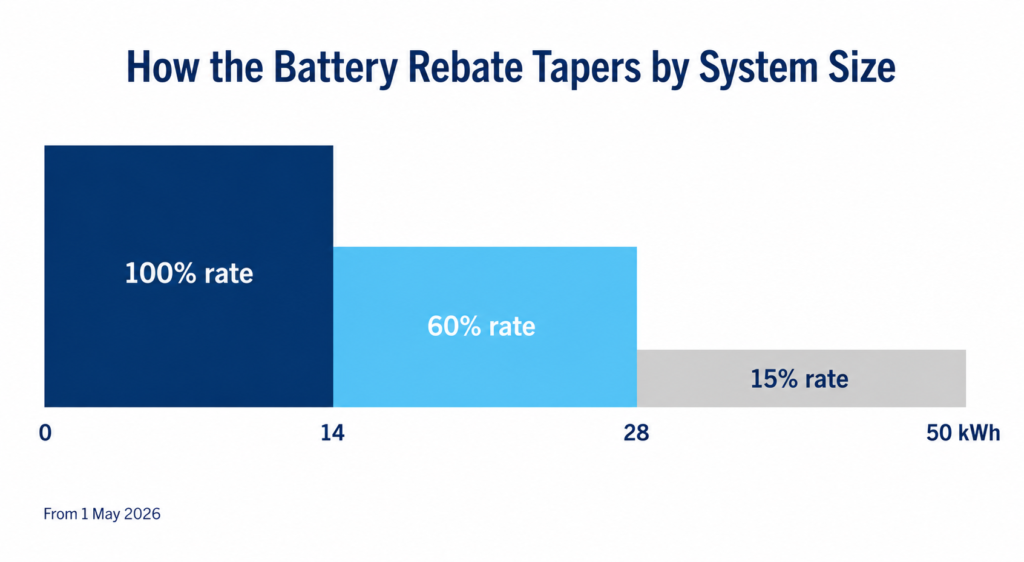
Under the Updated Federal Cheaper Home Batteries Program, rebate amounts are based on your battery’s usable kilowatt-hour (kWh) capacity, using a sliding STC (Small-scale Technology Certificate) factor:

  • 0–14 kWh: You receive 100% of the rebate rate per kWh
  • >14–28 kWh: You receive 60% of the rate for any kWh above 14
  • >28–50 kWh: You receive 15% of the rate for any kWh above 28
  • >50 kWh: No additional rebate applies (capped at 50 kWh)

 View the Smart Energy Council rebate tier chart

That means you still receive some rebate benefit all the way up to 50 kWh — and in many cases, oversizing pays off both upfront and over time.

Why going bigger makes sense

  • A 20–28 kWh system hits the sweet spot for families with higher evening usage, electric vehicles, or electric heating. You’ll get most of the rebate and plenty of storage for shifting your energy use off the grid.
  • Going to 40–50 kWh maximises future flexibility. Even though the rebate per kWh drops significantly after 28 kWh, you’re future-proofing against rising usage, time-of-use pricing, and potential VPP participation — especially if you plan to electrify your home or add a second EV. This option is also great for solar systems that are not producing enough energy as it provides plenty of spare storage that can be force-charged from the grid.
  • Smaller batteries (under 14 kWh) leave little room to grow. You may save money upfront, but you’ll lose out on rebate value and need to draw more power from the grid during peak times — exactly when energy is most expensive.

And remember: you only get one shot.

Because the rebate is only available once per household, most experts now recommend sizing your battery to meet not just today’s usage — but tomorrow’s needs too. Oversizing now is usually more cost-effective than replacing or upgrading later.

7. Waiting Too Long and Missing Out on the 2026 Rebate Window

The federal battery rebate has been a game-changer — but from 1 May 2026, it’s about to get less generous.

According to the Smart Energy Council, the rebate changes are part of a planned adjustment to ensure the long-term viability of the program. While the CHBP is still backed with $5 billion in funding and expected to support over 1.25 million battery installs by 2030, the window to maximise your return is now.

What’s changing in May 2026?

The federal rebate is tiered based on your battery’s usable capacity. From 1 May 2026, the STC factors used to calculate the rebate will be reduced. That means:

  • A battery installed in April 2026 could receive up to $1,000 more than the same battery installed in June
  • The per-kWh rebate value will drop across all tiers, affecting systems of all sizes
  • You’ll still receive a rebate — but the total amount will be significantly lower

What does that look like in real dollars?

Battery SizeRebate If Installed Before May 2026Rebate If Installed After May 2026Savings Lost
15 kWh$5,040.00$3,960.00$1,080
30 kWh$10,080.00$6,160.00$3,920
50 kWh$16,800.00$6,960.00$9,840

The Smart Energy Council put together a comprehensive graph that shows just how much homeowners stand to lose if they delay:

Why act now?

  • Installers are already booking out — especially for large or complex installs
  • Battery prices are rising due to global demand and supply chain pressure
  • Delaying could mean missing the rebate entirely if you can’t get installed in time

If you’re planning to add a battery in 2026, the next few months are your best chance to lock in the higher rebate and avoid disappointment.

8. Overlooking What You Want To Achieve Long-term 

Too often, homeowners choose a battery based only on what they need right now — without thinking about how their electricity use might grow or what they want the battery to do long-term. This short-term mindset can lead to frustration, underperformance, and missed opportunities.

Ask yourself: what do you want your battery to do — now and in future?

Here are some common priorities — and why they matter when choosing the right system:

  • Provide backup power during blackouts
    If energy security matters to you, make sure the battery includes blackout protection — and check what it actually covers. Some systems only support a few circuits, like your fridge and lights. Others, like Sigenergy’s SigenStor, support whole-home backup, even in three-phase homes.
  • Lower your power bills through load shifting
    Many homes are now on time-of-use tariffs, where evening electricity is far more expensive than daytime power. A battery lets you store your excess solar and use it during these peak pricing windows — especially useful if your evening usage is high.
  • Join a Virtual Power Plant (VPP)
    If earning money from your battery appeals to you, look into VPP programs that pay you to export stored energy back to the grid during demand peaks. Most VPPs require 10 kWh or more of capacity, and not all batteries are compatible — so check if the system is VPP-ready.
  • Support future electrification
    Planning to buy an EV, get rid of gas heating, or install a pool or spa? These changes will all increase your power use — especially in the evenings. Installing a larger battery now (e.g. 20–50 kWh) helps cover this extra demand without needing an expensive upgrade later.

Your battery is a long-term investment

A well-chosen battery should support your home for the next 10–15 years. That means:

  • Thinking ahead to how your usage might change
  • Choosing a system with the flexibility to grow
  • Making sure it can deliver on the things that matter most to you — whether that’s lower bills, blackout protection, or earning from a VPP

If you’re not sure what your future usage might look like, a good installer should help you model different scenarios and recommend a system that gives you room to grow. Chat to our team at Lenergy for a no obligation energy assessment.

How to Avoid Regret and Choose the Right Battery

Buying a solar battery isn’t something you do every day — and once it’s installed, you’re living with that choice for the next decade or more. That’s why taking the time to understand your energy use, your future plans, and how the rebate works can make a huge difference in both your savings and your satisfaction.

Here’s a quick checklist to avoid the most common mistakes:

  • Run the numbers — don’t guess at savings or size
  • Make sure the battery is CEC-approved for safety and rebate eligibility
  • Choose a system that’s compatible with your existing setup — or get a clear plan for upgrades
  • Don’t go too small — the rebate only applies once, and future expansion isn’t always easy
  • Act before May 2026 to avoid losing thousands in rebate value
  • Think about your long-term goals — like EVs, electrification, and blackout protection

If you’re after more guidance on how to make a smart battery decision, check out this in-depth guide:

A good battery can cut your bills, reduce your reliance on the grid, and future-proof your home. But only if it’s the right battery — for you, your house, and your goals

Understanding Your Electricity Bill: What You’re Really Paying For

You open your electricity bill. The number on the front page makes your stomach drop. You think, “How on earth am I using that much power?” When you try to dig into the details, it’s a wall of jargon. Supply charges, time-of-use rates, controlled loads, kilowatt-hours — and then there’s a mystery credit you didn’t expect. It’s hard to tell what you’re actually paying for, let alone whether it’s fair.

To make things worse? Rates have quietly gone up — again. There’s no big announcement, no warning, just a higher price per kilowatt-hour tucked away in the fine print. You feel like you’re being charged more and getting less, without really knowing why.

You’re not alone. Electricity bills are designed to show the information — not explain it. For those who have added solar, it often introduces another layer of complexity to the bill.

At Lenergy, we speak to homeowners every week who are paying too much, not just because they use too much power — but because they don’t fully understand what they’re being charged for, or how to check it. Often, they’ve already taken steps to reduce usage or install solar, yet they still feel like they’re still paying more than they expected.

In this guide, you’ll learn how to read your electricity bill with confidence.
We’ll show you exactly what to look for — step by step — with visual examples to help you follow along. Whether you have solar or not, you’ll understand what each charge means, why your bill fluctuates across the year, and how to spot red flags — such as sneaky rate increases.

Why Electricity Bills Feel So Confusing

Most electricity bills are designed for accountants, not everyday homeowners. They’re packed with technical terms, hard-to-follow tables, and totals that don’t tell the full story. Even if your usage is consistent, your bill can still go up — and you’re left wondering what changed.

A big part of the confusion comes from how energy is priced. You’re not just paying for how much electricity you use. You’re also paying:

  • A daily supply charge just to be connected to the grid
  • Different usage rates depending on when you use power (peak, off-peak, shoulder)
  • Extra costs or credits if you have solar
  • And sometimes, sudden rate increases that aren’t clearly flagged

Then there’s the issue of how you pay. Many households are on weekly or fortnightly direct debits — and while this can make bills feel more manageable, it can also mask how much you’re actually spending. The payments feel small, but the total across a billing cycle (especially quarterly ones) can be surprisingly high.

It’s no wonder people look at the “Amount Due” on the front page and feel blindsided. It might include weeks of backdated charges or spread across a long billing period. If you’re not tracking your usage or the rising rates underneath, it’s easy to miss the bigger picture.

If you’ve ever thought, “My usage hasn’t changed, but my bill has,” — this section will explain why.

What to Look for When You Open Your Bill

Before you start scanning rows of numbers or wondering what a kilowatt-hour actually costs — pause. The most useful thing you can do with your electricity bill is to start with four key metrics. These tell you how your charges are calculated, how long they cover, and whether anything looks off.

Here’s what to look for:

Billing Period

This tells you the exact dates the bill covers. Some people get billed monthly, others quarterly. If you don’t notice this upfront, it’s easy to misjudge how high your bill really is.

An example electricity bill from Lenergy highlighting the billing period with a Lenergy logo watermark

Always double-check how many days your bill is spread across. A $500 bill might seem massive — until you realise it’s covering 90 days, not 30.

Average Daily Usage

This shows how much electricity you use on an average day, usually in kilowatt-hours (kWh). It’s one of the easiest ways to track whether your usage is changing — especially useful across seasons.

An example electricity bill showinf rhw average daily usage with a Lenergy logo watermark

Compare this to your past bills to spot trends. Some retailers also compare your usage to “similar homes” — which can be helpful, but take it with a grain of salt.

Usage Rates

You might be paying different rates for electricity depending on when you use it:

  • Flat rate: One rate for all hours
  • Time-of-use (TOU): Higher rates during peak hours, lower off-peak
  • Shoulder rates: Mid-tier pricing between peak and off-peak periods
  • Controlled load: A separate rate for specific appliances like electric hot water systems, usually at night
An example electricity bill from Lenergy showing the peak usage, shoulder usage and off peak usages

Understanding your rates helps you match your habits. If you’re on TOU pricing and running appliances during peak times, your costs can climb quickly — even if your usage is low. Knowing when shoulder and off-peak periods apply can help you shift usage and save.

Daily Supply Charge

This is a fixed amount you pay every day just to be connected to the grid — even if you use no electricity at all.

It’s usually listed separately to usage rates and often surprises people. Multiply it by the number of days in your billing period to see how much it really adds up to.

An example electricity bill from Lenergy highlighting the Service to property charge with a Lenergy logo watermark.

Learning to spot these four things takes just a minute — but it gives you a clearer picture of what you’re really paying for.

Breaking Down the Metrics: What You’re Actually Being Charged For

Once you’ve found the basics — billing period, usage, supply charge, and rates — the next step is understanding what all those line items on your bill actually mean. This section gives you a simple breakdown of the most common charges and credits you’ll see.

Daily Supply Charge

This is a fixed fee just for being connected to the electricity grid — it’s charged per day, no matter how much or how little power you use. It usually ranges from 90 cents to $1.30 per day depending on your plan and provider.

If your bill covers 90 days, and your supply charge is $1.10/day, that is adding $99 in connection fees alone to your bill — before accounting for a single kilowatt-hour of energy.


Some plans — especially controlled load and time-of-use (TOU) tariffs — may include additional daily supply charges for each metering configuration. For example:

  • If you have a controlled load for your electric hot water system, you might see a second supply charge just for that meter.
  • Some TOU plans may break out supply charges per rate type or meter, depending on your setup.

This means your fixed daily charges could include two or even three separate daily supply fees — and they all add up.

An example Lenergy electricity bill highlighting the daily supply and daily supply controlled.

Usage Charges

This is the part of your bill based on how much electricity you actually use, measured in kilowatt-hours (kWh). You might see one flat rate, or several rates depending on your pricing structure:

  • Peak rate: Highest rate, usually weekday afternoons and evenings (e.g. 4–9 pm)
  • Shoulder rate: Moderate pricing, often mornings or mid-day periods
  • Off-peak rate: Cheapest rate, usually overnight or weekends.
    Some providers are now introducing midday off-peak rates due to high levels of solar generation feeding into the grid. This reflects a broader shift in how energy is priced — and new options like solar sharing schemes are also starting to emerge.
    You can read more about that here.
  • Controlled load: A lower rate for specific appliances like electric hot water systems, usually metered separately and run at off-peak times.
An example electricity bill from Lenergy highlighting the charging window with a Lenergy logo watermark.

Understanding how your rates work helps you make smarter choices about when to run power-hungry appliances — and can help you avoid using electricity during the most expensive times of day.

Solar Feed-in Credits (for solar households)

If you have solar panels, any excess power your system exports to the grid is credited to your bill at a “feed-in tariff” — usually between 0 and 7 cents per kWh.

This will appear as a line item or section on your bill, often labelled “solar export” or “feed-in credit.” It’s subtracted from your total charges, not paid out in cash unless you’re in credit.

It’s important to note: just having solar doesn’t mean your bill will be zero. You still pay for any grid power you use outside solar hours — and your daily supply charge still applies.

An example electricity bill from Lenergy showing feed-in credits and how they offset usage.

Other Items You Might See

Depending on your provider and plan, you might also notice:

  • GreenPower charges (if you’ve opted in to pay for renewable energy)
  • Metering fees (for remotely read smart meters)
  • Credit adjustments or late payment fees
  • Government rebates or concessions, if applicable

Each of these should be listed with clear labels — but unfortunately, that’s not always the case.

How Solar Affects Your Bill (And What to Watch Out For)

If you’ve installed solar panels, you probably expected a sharp drop in your power bills — maybe even a $0 balance. However, for many households, the first post-solar bill brings a surprise: you’re still paying more than expected. Here’s why that happens, and how to read your bill correctly with solar in the mix.

You Still Use Grid Power — Just Not as Much

Your solar system generates power during the day, and when you’re using electricity at the same time, your home will use that solar power first. This is where most solar savings actually come from — because you’re avoiding buying electricity from the grid at full retail prices.

However, your electricity bill does not show this self-consumed solar energy. The bill only records what passes through the meter:

  • Electricity you import from the grid
  • Electricity you export back to the grid

So while your solar system may be powering much of your home during the day, that benefit happens “behind the meter” and isn’t visible as a line item. The charges you see are simply the remaining gap — the grid power you still need at night, during poor weather, or during high-usage periods.

Feed-in Tariffs Don’t Show the Full Picture

Any unused solar energy is exported to the grid and credited at a feed-in tariff (FiT). These rates are typically much lower than what you pay to buy electricity — often around 0–7 cents per kWh compared to 30–50 cents per kWh for usage charges.

Because your bill only shows exports, it can make solar look less effective than it really is. Even if your feed-in credit seems small, that doesn’t mean your system isn’t saving you money. It means the self-consumed solar energy — the portion you used directly in your home — isn’t measured by the meter and therefore doesn’t appear on your bill.

This is why a single electricity bill often understates the real financial benefit of solar. For a more accurate understanding of how your solar is saving you money depending on the system you have you can refer to your solar tracking app such as the mySigen App, or setup your AlphaCloud app. These will give you a full breakdown of how your Solar + Battery system is powering your home.

Some is holding an ipad and the ipad is showing a data screen from the AlphaCloud battery app

You Still Pay the Daily Supply Charge

Even if you export more electricity than you import, you’ll still be charged daily supply fees — and if you’re on a time-of-use or controlled load plan, there might be more than one. In some cases, the supply charge alone can account for a third (or more) of your total bill.

Billing Mistakes with Solar Are Common

Not all electricity retailers handle solar exports accurately. If something looks off — for example, if your feed-in credits seem unusually low, or your export figures are missing altogether — it’s worth checking:

  • Your inverter’s export data
  • Your smart meter reads (if accessible)
  • Whether your FiT rate matches what your plan promised

Errors do happen, especially if your meter wasn’t properly reconfigured after installation.

Solar is a great investment, but it doesn’t eliminate your bill entirely — especially without a battery. The key is understanding how your solar generation and feed-in credits appear on the bill, and recognising that most of your savings are happening quietly in the background, powering your home without ever being recorded.

Why Your Bill Changes With the Seasons

Even if your energy habits stay the same, your electricity bill probably won’t. One quarter your usage looks normal — the next, it spikes. Or maybe your solar seems to carry you through summer, but not winter. This isn’t just you — it’s the season.

Energy Use Rises in Summer and Winter

For most homes, energy use increases during extreme temperatures:

  • In summer, air conditioners run longer and harder
  • In winter, heaters, electric blankets, and dryers get used more often

Even if you’re being energy-conscious, these appliances are some of the most power-hungry — and they can quickly drive up your usage.

Solar Performs Better in Summer

Solar systems generate more power in summer, thanks to longer days and more sunlight hours. This often helps offset higher summer usage — especially if you use power during the day and benefit from self-consumption.

But in winter, generation drops off:

  • Days are shorter
  • The sun is lower in the sky
  • Cloud cover is more frequent

This means your solar covers less of your usage, and you end up importing more from the grid — often just as your usage increases due to heating.

Comparing Bills Without Context Can Be Misleading

It’s easy to look at your last bill and think something’s gone wrong when it’s higher than the one before — but without checking the billing period, season, and weather, that comparison may not tell you much.

It’s more useful to compare the same season across years (e.g. winter this year vs winter last year), and to track your average daily usage, not just the total amount due.

Monthly vs Quarterly Billing — Why It Matters

If you’re only looking at the amount due on your bill, it’s easy to assume your energy usage has suddenly spiked. However, the frequency in which you are billed plays a big role in how high that number looks — and how much attention you should pay to it. 

Quarterly Bills Feel Bigger

Many electricity retailers bill quarterly — every 90 or so days. That means instead of getting a $200 bill every month, you might receive a $600 bill every three months. It’s the same amount of energy, but because it’s bundled together, it feels much more confronting.

This can catch people off guard, especially during high-usage periods like summer or winter.

Monthly Billing Can Feel More Manageable — But Still Adds Up

Some retailers offer monthly billing, which spreads your costs out over time. The bills feel smaller, but the total spend across the quarter may be exactly the same — or more if your usage creeps up.

That’s why it’s important not to compare one bill to the next by dollar amount alone. Instead, look at:

  • The billing period length
  • Your average daily usage
  • Seasonal trends (e.g. cooling or heating use)

Direct Debits Can Hide the Real Cost

If you’re on a payment plan that deducts money weekly or fortnightly, it’s even easier to lose track of what you’re spending overall. You might be paying $50 a week — but over 13 weeks, that’s $650 that has been taken off prior to how much is due on the first page of your bill.

Many households don’t realise how much they’re paying across a full quarter until they see the bill — and by then, the money’s already gone.

To stay in control, check:

  • Your current usage vs last quarter
  • Whether your payments are keeping pace with your usage
  • If you’re in credit, or at risk of falling behind

How to Spot Problems or Overcharging

Most people assume their electricity bill is correct — but that’s not always the case. Billing systems can make mistakes, solar configurations can be set up incorrectly, and rate changes can sneak in without notice. Here’s how to check if you’re being charged more than you should be.

Check the Meter Read Type

Look for terms like:

  • Actual read (based on meter data)
  • Estimated read (used when your meter couldn’t be accessed)

If your bill is based on an estimate — especially after a long time between reads — it may not reflect your real usage. Check whether the next bill corrects it, or if there’s a sharp adjustment.

If you have solar and the meter read is estimated, your feed-in credits may also be inaccurate.

Compare Rates to Your Plan

Bills don’t always make it easy to see what rates you’re being charged. But check carefully:

  • Are your usage rates (peak, shoulder, off-peak) what you signed up for?
  • Is your feed-in tariff correct?
  • Have any new fees or charges appeared?

If your provider has increased your rates, they should have notified you. It’s worth cross-checking your bill against your current plan details on the provider’s website. Feel as if you are being done badly by your energy provider? Check out another one of our articles on the best energy providers right now

Powerlines distributing electricity with text overlay saying "Best energy providers NSW 2025: Compare Plans & Rates"

Confirm Your Solar Exports Are Being Counted

If you have solar, check that your feed-in credits appear on your bill — and that they look reasonable. Compare the export figures on your bill with what your inverter or monitoring app shows.

If your system was recently installed or upgraded, make sure the meter was reconfigured correctly. It’s not uncommon for feed-in data to be missing entirely due to administrative delays.

Look for One-Off Spikes

Sometimes, one faulty appliance (like a pool pump, old fridge, or misconfigured hot water system) can drive up your usage. If your average daily usage has suddenly jumped, ask:

  • Did anything change in your home that month?
  • Is the spike consistent, or isolated to certain times of day?

Your retailer’s usage graph or online portal may help you spot patterns.

Don’t Ignore Small Errors — They Add Up

Even small discrepancies in daily supply charges or controlled load rates can cost you over time. If something doesn’t look right, contact your retailer and ask for an explanation. Keep your past bills handy so you can reference historical data.

Make Your Electricity Bill Work for You

Understanding your electricity bill isn’t just about knowing what you owe — it’s about learning how your home uses energy, spotting issues early, and making smarter decisions moving forward.

Once you know how to read it properly, your bill becomes a tool — not just a headache.

Here’s what to check each billing cycle:

  • Billing period — monthly or quarterly?
  • Average daily usage — is it trending up or down?
  • Rates — check your usage and feed-in tariffs
  • Supply charges — are you paying more than one?
  • Meter read type — actual or estimated?
  • Solar credits — are they showing up?
  • Total payments made — especially if you’re on direct debit

Your bill can tell you when your usage spikes, how well your solar is performing, and whether your current energy plan is still working for you. It can also reveal whether seasonal changes or subtle shifts in habits — like running the air con more or working from home — are having a bigger impact than expected.

Want help making sense of your bill — or figuring out how to lower it?
Send it through to us at Lenergy. We’ll take a look and help you understand exactly what’s going on, and what steps you can take to bring your costs down.

Lenergy staff member, Ziad standing in front of solar panels smiling

Can You Force-Charge a Battery from the Grid? What You Need to Know

Ever thought about getting a battery but worried your solar just wouldn’t cut it?
Maybe your roof’s partly shaded, or it doesn’t have enough space to fit the number of panels you’d need to power both your home and a battery. Your electricity consumption might also be unusually high — whether it’s from a large family, running a home office, or blasting the air con through summer.

If that sounds familiar, you’re not alone — and until recently, you might’ve been right to hesitate.

Fortunately, there’s now an alternative worth considering: force-charging.

At Lenergy, we have been discussing the viability of this option with clients every day. In this article, you’ll learn:

  • What force-charging is and how it works
  • When it makes financial and practical sense
  • Which plans and batteries support it (including Sigenergy’s SigenStor)
  • Why it’s a solid option even if your solar output is limited
  • And what to consider before making it part of your setup

What Does “Force Charging a Battery from the Grid” Actually Mean?

Up until recently there has been only one source for charging a solar battery — through solar panels. With the recent changes in the grid a new option is becoming available: charging your battery using electricity from the grid, often referred to as force-charging.

Force-charging means your battery is set up to draw electricity from the grid to charge your solar battery. It usually happens during a specific window in the middle of the day — typically 11am to 2pm — when there’s excess renewable energy flooding the grid. Retailers like OVO Energy and GloBird now offer plans that give you access to free electricity around these times, which you can use to charge your battery.

Rather than letting that clean energy go to waste, you’re capturing it and using it when it’s more valuable — like in the evening when power prices peak. This is especially useful if:

  • Your solar system doesn’t generate enough to fill a battery
  • You live in a shaded area or have limited roof space
  • You want to offset your night time usage, but don’t have room to expand your solar

It’s called force-charging because it requires a battery that allows for controlled charging from the grid, not just passive solar input. Your system is configured to import and store energy on command, typically through a smart inverter or battery software that knows when the “free” window opens.

An illustration demonstrating how force charging a battery from the grid works.

Why Would You Want to Charge Your Battery from the Grid?

Not everyone has the perfect setup for solar. Even if you already have panels, they might not produce enough energy to fully charge a battery — especially in winter, on cloudy days, or if your roof isn’t ideally placed. That’s where grid charging becomes a game-changer.

Here are the main reasons you might want to force-charge your battery:

1. You Use More Power Than Your Panels Can Produce
Some households simply use a lot of energy. If you’ve got a large family, a home business, a pool pump, ducted air con, or an EV charger — your energy needs might outpace what your panels can generate, even on a sunny day. Force-charging allows you to top up your battery using grid energy, so you’re not forced to buy expensive peak power later.

2. Your Property Doesn’t Get Enough Sun
Many Australian homes are affected by roof shading from trees, neighbouring buildings, or poor orientation. Some simply don’t have enough roof space to fit a large solar array. Force-charging means you’re no longer reliant on your own solar production — you can now take advantage of surplus grid energy instead.

3. You Want to Maximise Battery Value Without Expanding Solar
If you’re already producing enough solar to cover most of your daytime usage but not quite enough to fill a battery, adding more panels may not be practical or cost-effective. Force-charging lets you get more value from your existing system — by giving your battery another way to charge, without needing more panels.

4. You’re Preparing for Blackouts or Want Energy Security
Force-charging also means you can guarantee your battery is full before an expected outage, regardless of how much sun your panels are producing that day. For households in bushfire-prone areas (such as rural NSW & VIC), rural zones, or regions with frequent outages (QLD), this adds another layer of resilience.

One of the most common objections we hear at Lenergy is, “I’d love a battery, but I just don’t produce enough solar to make it worthwhile.” And — until recently, that was a valid concern. Force-charging changes that. It removes the reliance on your own solar generation and gives you another way to fill your battery — using excess energy from the grid during free midday windows. In other words, the grid becomes a second solar source, making battery ownership possible even for homes with limited production.

What Retail Plans Support Force-Charging in Australia?

If you’re going to charge your battery from the grid, you need the right electricity plan — one that allows force-charging, and ideally, rewards you for it. A small but growing number of energy retailers in Australia now offer dedicated force-charging windows, where electricity is either free or heavily discounted during the middle of the day.

Here are two plans that currently support this:

OVO Energy – The Free 3 Plan
OVO’s “The Free 3” plan gives you three hours of free electricity every day, usually from 11am to 2pm. This window aligns with the time when there’s often an oversupply of solar in the grid — meaning you’re helping stabilise the network while storing energy at no cost.

During this free window, you can run high-usage appliances (like washing machines or pool pumps) — and if your system allows, charge your battery at no cost. This energy can then be used later in the evening when prices are higher. The key is having a compatible battery that supports force-charging and a system setup that can take advantage of the window.

GloBird Energy – Zero Hero Plan
GloBird’s “Zero Hero” plan works in a similar way. It offers zero-cost electricity during a specified solar soak window — again, typically 11am to 2pm — allowing you to draw from the grid when there’s a surplus of renewable energy.

The idea is simple: instead of letting that excess solar go to waste, the plan gives you a way to use it — whether that’s for running appliances or force-charging your battery. The plan is part of a broader effort to support smarter energy use, reduce pressure on the grid, and reward customers for helping balance supply and demand.

These types of plans are expected to become more common — and they’re not just a passing trend. The federal government is actively encouraging this shift through its solar sharing scheme, which promises access to free three-hour energy plans for homes that participate. By offering these midday “solar soak” periods, the scheme aims to ease pressure on the grid and reward homeowners for storing or using energy when it’s most abundant.

What Batteries Can Be Force-Charged? (Example: Sigenergy SigenStor)

Not all batteries on the market can be charged from the grid — at least, not out of the box. To take advantage of a force-charging plan, you need a battery that supports controlled charging from external sources, not just from your rooftop solar. This capability is usually built into the battery’s software or inverter settings.

One of the best examples of a battery that supports force-charging is the Sigenergy SigenStor.

Sigenergy battery installation at home

Some key features that make the SigenStor a good fit for force-charging:

  • Smart scheduling: You can set it to only charge during specific hours (like the free three-hour windows).
  • AI optimisation: It uses artificial intelligence to manage charging and discharging based on energy prices, solar availability, and usage habits.
  • Full-cycle control: Unlike some systems that only allow passive charging from solar, the SigenStor gives you control over how and when energy is stored.

As force-charging becomes more common, we expect more battery manufacturers to add this functionality. If you’re installing or upgrading now, it’s worth confirming with your installer that your battery and inverter can support controlled grid charging — and that it’s configured correctly to make use of these free windows.

Does Force-Charging Hurt Battery ROI or Warranty?

If you’re charging your battery from the grid instead of just solar, will it wear out faster? Will it void the warranty? And is it still worth the investment?

Battery Lifespan and Charging Cycles

Most modern batteries, like the Sigenergy SigenStor, are designed for daily use and come with long warranties — typically covering up to 10 years or a set number of cycles (for example, 6,000 full charge/discharge cycles).

Whether your battery is charged by solar or by the grid doesn’t really matter — what matters is how often it’s cycled and how deeply it’s discharged. Force-charging during a free midday window is typically just one cycle per day, and in many cases, it’s replacing a solar cycle rather than adding to it.

This means the overall wear is no greater than using solar alone. In fact, force-charging can reduce strain on your system by ensuring your battery charges at a steady, controlled rate, even on cloudy days.

Warranties and Force-Charging

If you’re using a battery that’s built to handle controlled grid input — like the SigenStor — then force-charging won’t void the warranty. What’s important is that your system is installed and configured correctly by a Clean Energy Council (CEC)-approved installer and that it follows the manufacturer’s recommended operating settings.

If in doubt, always ask your installer to confirm in writing that force-charging is supported and covered under warranty. Batteries that aren’t designed for this purpose may require firmware updates or configuration tweaks to enable grid charging safely.

Is It Still Worth It Financially?
Absolutely — and even more so if you act soon.

Force-charging gives you the ability to fill your battery during free midday solar soak windows, instead of relying only on your own solar production. That means you’re storing energy that costs you nothing and using it when grid prices are at their highest — often 35 to 50 cents per kilowatt-hour during the evening peak. For homes with high energy usage or limited solar generation, this can significantly accelerate your battery’s return on investment.

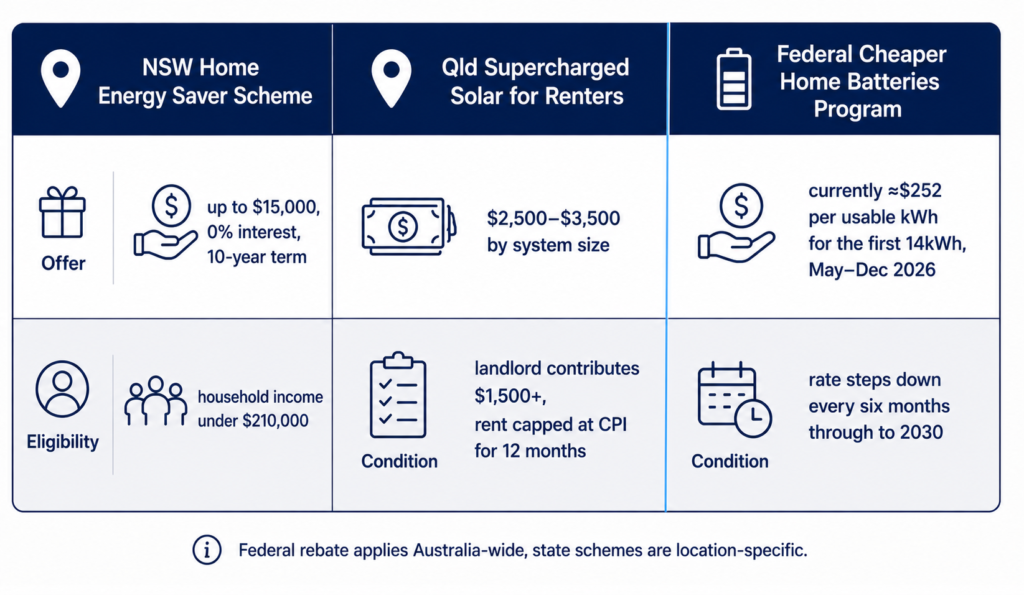
And there’s another layer of savings: the federal battery rebate, which helps reduce upfront costs for eligible households. It’s important to know the rebate won’t stay at its current level. It’s set to scale down every six months until 2030, so the sooner you install a battery, the more you can save.

Together, force-charging and the federal rebate make battery storage not only viable, but financially smart — especially for households that previously thought they couldn’t make it work.

Will These Force-Charging Plans Last?

If you’re hearing about “free electricity” from retailers like OVO and GloBird, it’s natural to wonder: How long will this last? Is it just a promo? Will my force charging setup be redundant in a few years?

Backed by the Federal Government’s Solar Sharing Scheme

There is a long-term shift occurring in how the Australian energy market works. The federal government isn’t just aware of midday solar oversupply — it’s building policy around it. Through the solar sharing scheme, the government has explicitly promised to support the rollout of free three-hour plans (like those from OVO and GloBird) to households willing to participate. This isn’t about sales promotions — it’s about grid management.

An image of Chris Bowen, the Energy Minister of Australia with text overlay saying "Federal Government Launches Solar Sharing Scheme"

Retailers Want to Avoid Paying Penalties

It’s also in the best interest of retailers. When the grid is flooded with excess solar, wholesale prices can crash — or even go into the negative. If too much energy is sent back to the grid, it costs retailers money. By offering free electricity during the day, they’re incentivising you to use or store that energy instead — which actually saves them money.

That’s why plans like these aren’t likely to disappear. If anything, more will emerge as battery uptake increases and grid pressures grow.

While electricity plans always change over time, force-charging is aligned with the future of Australia’s energy strategy — and it’s backed by both policy and market incentives. It’s not a short-term perk; it’s a structural shift.

Is Force-Charging Right for You?

Force-charging isn’t for everyone — but for a growing number of homeowners, it’s turning battery ownership from a “maybe later” into a “let’s do it now.”

Here’s who stands to benefit the most:

1. You use a lot of power, especially in the evenings.
If your daytime solar doesn’t stretch far enough to charge a battery and run your household, force-charging lets you top up your battery using free energy in the middle of the day— so you’re not stuck buying peak power at night.

2. You have limited roof space or shading.
Can’t fit a large solar system? Shaded roof sections reducing output? Force-charging provides an alternative way of filling up your battery — one that doesn’t rely on your panels doing all the work.

3. You want to take advantage of government-backed plans.
With federal support behind solar soak windows, and plans like OVO’s “Free 3” and GloBird’s “Zero Hero” already live, now is a smart time to act. These aren’t one-off deals — they’re part of a broader energy shift that rewards battery owners.

4. You want more control during outages.
Force-charging gives you the ability to guarantee your battery is full when you need it — even on cloudy days. That’s especially useful if you live in a rural area, face frequent blackouts, or want extra energy security.

Should You Make the Switch?

If you’ve held off on getting a battery because your solar output didn’t seem high enough, force-charging changes the equation. It allows you to store energy directly from the grid — often for free — and use it when it matters most.

This doesn’t just make batteries more flexible. It makes larger batteries more practical. The bigger your storage capacity, the more of that free midday energy you can soak up from plans like OVO’s Free 3 or GloBird’s Zero Hero — which means more evening coverage, better blackout protection, and greater savings.

Additionally, there’s another reason to act soon: the federal battery rebate is scaling down every six months until 2030. That means the earlier you install, the more you’ll save — especially if you’re investing in a larger battery that’s built to take full advantage of force-charging.

Still unsure? Reach out to us at Lenergy and speak with one of our Solar Specialists about whether force-charging could be an option for you.

A team member from Lenergy standing in front of a panel, smiling with a black branded polo with a Lenergy logo

Alpha ESS vs Sigenergy SigenStor: Which Solar Battery Is Right for You

Two of Australia’s Most Talked-About Batteries — But Which One’s Right for You?

If you’re reading this, you’ve probably already heard of Alpha ESS and Sigenergy SigenStor — and for good reason. These two battery systems are among the most commonly recommended in Australia right now. They’re both compatible with rooftop solar, offering storage flexibility, and they both have strong reputations in the industry.

However, that doesn’t mean they’re the same — or that either one is automatically the best fit for your home.

What makes this comparison especially important in 2026 is how quickly the energy landscape is shifting. Feed-in tariffs have dropped, grid electricity rates are rising, pushing Australian families to consider batteries not just for savings, but for energy independence — and in some cases, backup during blackouts.

While both batteries are solid performers, they’re designed with different types of households in mind. One offers a more affordable approach with a proven brand track record. The other is a fully integrated, premium system with smart automation and seamless whole-home backup.

In the sections ahead, you’ll see how each system stacks up — so you can choose the one that actually suits the way you use power.

How Are Alpha ESS and SigenStor Designed Differently?

The first key difference between Alpha ESS and SigenStor is how their systems are structured — particularly when it comes to how modular components are integrated and managed.

Alpha ESS: Modular and Traditional

Alpha ESS batteries use a modular design, where separate battery units are paired with an external inverter. This gives homeowners flexibility in choosing storage size and configuring the system to suit their existing solar infrastructure. It’s a more traditional setup — straightforward and cost-effective.

The battery modules are scalable, and the system design allows you to add more capacity over time. However, integration with energy management systems, EV chargers, and blackout protection features will depend on the additional components you include.

Sigenergy SigenStor: Modular and Fully Integrated

SigenStor is also a modular system — but with a much higher level of built-in integration. It combines five components into one stackable unit:

Sigenergy Sigenstor battery showing 5 in 1 modular design and features.
  • Solar inverter
  • Battery pack (modular and stackable)
  • Power Conversion System
  • Energy Management System
  • Optional EV DC charger

Each battery stack can be scaled from 5kWh up to 48kWh, making it suitable for homes or small businesses. The modular design simplifies installation while maintaining a compact footprint.

The system also includes a dedicated Gateway, which handles communications, VPP integration, and seamless whole-home backup during blackouts. It’s not just modular — it’s smart, compact, and designed to work as a unified energy solution out of the box.

Which Battery Is More Reliable?

When it comes to solar batteries, reliability is about more than just performance specs. It’s also about ongoing support, brand track record, and how well a company handles issues when they arise.

Alpha ESS: Established Brand with Local Support

Alpha ESS has been around for over a decade and has built a strong presence in Australia. One of its key advantages is the availability of local customer service offices across the country. This means when things go wrong — or even if you just need support post-installation — you can rely on someone who understands the local market and will get back to you in a timely manner.

A Map of Australia showing highlighted areas of where Alpha sales and support offices are located on the map.

The brand also uses lithium iron phosphate (LFP) battery chemistry — widely considered one of the most stable and durable in residential batteries.

Sigenergy: Fast-Growing with Proven Performance

Sigenergy is a newer player, having entered the market in 2022. Despite its short history, it’s quickly gained traction for delivering high-performing, AI-driven energy systems. In fact, it was voted the #1 battery in Australia three months in a row.

Sigenergy did experience a recall of some inverter units, however, the issue was handled quickly and transparently. The company provided a formal replacement process, and there have been no further reported faults since.

Safety Features and Protection Against Battery Fires

Battery safety is understandably one of the biggest concerns for homeowners. Both Alpha ESS and Sigenergy are regarded as safe, well‑engineered battery systems that use stable lithium iron phosphate (LFP) chemistry — one of the safest battery chemistries available for residential use.

That said, there are differences in how far each brand goes when it comes to built‑in safety layers.

Alpha ESS: Proven and Thermally Stable

Alpha ESS batteries are designed with a five‑layer comprehensive protection system, an IP66-rated weatherproof enclosure, and LFP chemistry that’s known for its thermal stability and reliability in Australian conditions.

While Alpha doesn’t publicly disclose detailed component‑level fire mitigation systems, its long track record, conservative design approach, and stable chemistry have made it a trusted option for many Australian homes.

Sigenergy: More Advanced, Multi-Layered Protection

Sigenergy takes safety a step further with a six‑layer, industry‑leading protection system built directly into the battery stack. These features are designed to detect, contain, and suppress issues before they escalate:

  • Full-coverage temperature monitoring with 8 sensors tracking 12 cells in real time
  • High-temperature resistant insulation pads that block over 80% of heat transfer between cells and preventing thermal runaway
  • Built-in smoke sensor with rapid response and extremely high detection accuracy
  • Automatic decompression valve to safely release internal pressure
  • Integrated fire extinguishing kit that absorbs heat and chemically inhibits combustion within seconds
  • High-temperature insulation and heat isolation layer rated up to 650°C to prevent DC arcing and heat spread

Sigenergy Sigenstor installed outside of home mounted on concrete industrial wall next to window.

These additional layers make Sigenergy one of the more sophisticated safety designs currently available in the residential battery market.

The Bottom Line on Safety

Both batteries are safe and suitable for Australian homes. Alpha ESS offers proven reliability and stable design, while Sigenergy adds more advanced detection and suppression systems for homeowners who want the highest level of built‑in protection.

As with any battery system, correct installation by an accredited installer is just as important as the hardware itself.

Compatibility: Which Works Better with Your Existing Solar Setup?

Whether you’re adding a battery to an existing solar system or building one from scratch, compatibility is a key factor. The good news is that both Alpha ESS and Sigenergy SigenStor work well with new and existing systems, and can be configured for most properties.

Alpha ESS: Flexible, Installer-Friendly, and Single Phase Ready

Alpha ESS is a popular option for both retrofits and new builds. It works with a wide range of inverters and system configurations — whether you’re using a hybrid setup or AC coupling — and is generally straightforward to install.

Two Lenergy staff standing with an Alpha ESS battery in Lenergy's HQ and warehouse

The single-phase Alpha battery is ideal for most homes and can even be installed on a three-phase property, though it will only supply one phase. For homeowners with existing three-phase solar systems — or those looking to install a larger, more balanced setup — a three-phase battery is typically the better option.

As of 21 January 2026, Alpha’s three-phase battery is not yet approved by the CEC. However, Lenergy has been advised directly by Alpha that approval is expected by March 2026. That said, CEC approvals can be delayed. If you’re planning a three-phase battery install and want to take full advantage of current rebates before they drop in May, you may want to consider an alternative that’s already approved.

Sigenergy SigenStor: Fully Integrated and Three-Phase Ready

Sigenergy is available in both single and three-phase models, with CEC approval already in place and installations underway across Australia. While it’s often installed as a complete, integrated system, it can also be retrofitted to existing solar setups. The system includes its own inverter and Gateway, which can take over from older or less efficient components — making it ideal for homeowners with high energy consumption looking to back up their existing three-phase system or install a new system altogether.
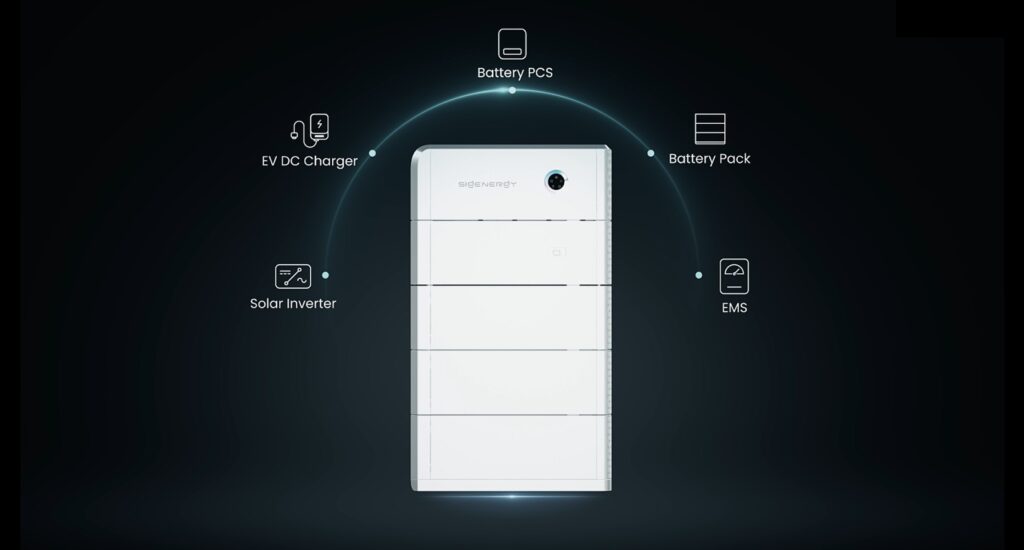
For homes with a three-phase solar system, choosing a three-phase battery like Sigenergy allows energy to be distributed evenly across all phases — a real advantage for larger homes or households with high energy demands.

Bottom Line

Both batteries are compatible with most Australian solar systems, whether you’re starting fresh or retrofitting. The main differences lie in installation design, three-phase availability, and how soon you’re looking to get up and running — particularly if you’re trying to time your install around rebate changes.

Backup Power: What Happens in a Blackout?

Blackout protection is one of the top reasons homeowners look at adding a battery. However, not all systems handle outages the same way — and not everyone needs full-home backup.

Alpha ESS: Basic Backup for Essential Circuits

With Alpha ESS, you’ll get some level of blackout protection, but it’s limited to essential circuits only. Most homeowners using Alpha set it up to keep things like a fridge, Wi-Fi, and one or two lights running during an outage. It’s practical and reliable — but not designed to power your entire home.

If your main goal is just to have a little peace of mind — enough to keep the basics on — Alpha does the job well without the added cost of a full backup setup.

Sigenergy SigenStor: Seamless Whole-Home Backup

Sigenergy, on the other hand, includes a dedicated Gateway as part of the system, which allows for seamless full-home backup in the event of a blackout. That means the switchover is instant, and you won’t need to pick and choose which appliances stay on — the system keeps everything running, provided you’ve sized your battery correctly.

Not sure what size battery you’d actually need to back up your whole home? Get in touch with Lenergy for a personalised quote — we’ll help you size your system based on your usage, priorities, and budget.

Smart Features: What Tech Comes Built-In?

Both Alpha ESS and Sigenergy come with app-based monitoring, allowing you to track your solar production, battery charge level, and household energy usage in real time. This gives you a clear picture of how your system is performing and helps you make more informed decisions about your energy use.

Some is holding an ipad and the ipad is showing a data screen from the AlphaCloud battery app

Alpha ESS: Simple, Reliable Interface

The AlphaCloud app focuses on providing the essentials. You can view real-time and historical energy data, monitor how much power your system is generating, storing and using. It’s reliable, straightforward and easy to navigate — ideal for those who want clear insights without the need for advanced features.

Sigenergy: More Customisation, More Control

While both systems offer visibility, Sigenergy stands out for its advanced AI software, which gives you more insight, more customisation and ultimately more control over how your system operates.

Through the mySigen app, you can:

  • Monitor system performance in more detail
  • Track battery behaviours like charge and discharge windows
  • Optimise backup reserve levels
  • Manage optional EV charging settings to rely on the grid as little as possible to charge your EV
person sitting down using the mySigen app for a Sigenergy Battery

VPP Suitability: Which Battery Is Battery Optimised?

Virtual Power Plants (VPPs) are becoming more common in Australia, especially as battery ownership grows and energy retailers look for smarter ways to balance grid conditions. When you join a VPP, you allow your battery to buy and sell electricity from the grid according to current supply and demand — meaning, done right, you can profit off your battery.

Not all battery systems connect equally well to these programs. A recent SolarQuotes VPP comparison shows just how much variation there is between providers, eligibility criteria, and battery compatibility. That’s why it’s important to choose a system that gives you flexibility if joining a VPP is on your radar — now or in the future.

An illustration showing shows how multiple home batteries are linked together to form a network that communicates with the energy retailer. During high demand periods, the VPP can draw stored energy from these batteries and feed it into the grid. Homeowners receive financial benefits or credits for participating. Diagram includes icons for solar panels, batteries, homes, the grid, and the energy retailer.

Alpha ESS: Compatible With Most VPPs

Alpha ESS batteries are widely supported across many of Australia’s major VPP programs. Most energy retailers that run VPPs list Alpha as a compatible option, making it a safe and flexible choice if you want to take part in one down the line.

Sigenergy: Built With VPPs in Mind

Sigenergy systems — particularly with the built-in Gateway — are well-suited to VPP participation. The Gateway enables real-time communication with energy retailers, which can help improve response times, accuracy of control, and eligibility for advanced VPP offerings.

What Is Force Charging and Which Battery Does It Best?

Force-charging is quickly becoming a valuable workaround for households that can’t generate enough solar to meet their energy needs — whether due to limited roof space, shading, or other constraints. With more electricity retailers now offering “free power” plans during off-peak windows, it’s a trend worth paying attention to.

What Is Force Charging?

Some electricity plans such as OVO and Globird now offer a few hours of free electricity each day, typically for a 3–4 hour window in the middle of the day. During this time, homeowners can draw unlimited power from the grid — without paying for it.

an illustration showing how homeowners with limited solar production can charge their battery from the grid during a 3–4 hour free electricity window, helping offset nighttime usage.

For homeowners with a battery you can “force-charge” your battery from the grid during this free period, storing energy so that you can offset your night time usage. It’s a smart strategy for households that don’t produce enough excess solar to fully charge their battery on sunshine alone.

Which Battery Handles It Better?

Both Alpha ESS and Sigenergy can be configured to force-charge from the grid. The difference between the two comes down to the rate in which your inverter can charge your solar battery.

  • Alpha ESS batteries are fully capable of force-charging during these windows, and for many households, it’s enough to take advantage of most free power plans.
  • Sigenergy SigenStor, however, has an edge here thanks to its larger inverter capacity. Which means it can draw more energy in a shorter amount of time, helping you maximise the value of a short force-charging window — especially if your household has higher usage or a larger battery bank to fill.

Why It Matters

If you live in a shaded area, have limited roof space, or are simply looking for more creative ways to reduce your power bill, force-charging could be a major advantage. And as the government continues rolling out its solar sharing program, more households will be encouraged to draw and store low-cost power from the grid at off-peak times.

Pricing: What Can You Expect to Pay?

Alpha ESS: Budget-Friendly and Scalable

Alpha ESS is typically considered the more affordable option of the two. Its modular design and compatibility with existing systems help keep installation costs lower. It’s well-suited for homeowners who want to store solar, lower their bills, and comes VPP ready without spending top dollar.

It offers good value for money, particularly if you don’t need advanced features or full-home backup.

Sigenergy: Premium Features, Premium Price

Sigenergy sits at the higher end of the market, and the price reflects its all-in-one design, built-in Gateway, smart software, advanced safety features including 6 levels of fire protection, and seamless backup capabilities. You’re not just paying for battery storage — you’re investing in a tightly integrated energy system with smarter controls and future-ready features (like optional integrated EV charging and AI optimisation).

Quick Comparison Table

FeatureAlpha ESS SMILE-G3Sigenergy SigenStor
DesignModular battery with external inverterModular, all-in-one system with integrated inverter, EMS, and Gateway
System TypeTraditional setupFully integrated 5-in-1 system
Blackout ProtectionKey circuits onlySeamless whole-home backup (via Gateway)
App MonitoringYesYes
App FeaturesBasic monitoringAdvanced AI software with customisation and control
EV Charging OptionNoYes (optional integrated EV DC charger)
VPP CompatibilityVPP readyVPP ready with enhanced Gateway integration
Best ForBudget-conscious installs, proven track record, and customer carePremium systems with full automation, blackout protection, and smart energy control
Typical Price PositioningMore affordableHigher upfront cost, more features

Which One Should You Choose?

Alpha ESS vs Sigenergy Sigenstor – At the end of the day, both are solid choices — but they’re built for slightly different priorities.

Choose Alpha ESS if:

  • You’re looking for a cost-effective battery with a proven track record.
  • You want local support and customer care you can rely on.
  • Your focus is on lowering bills, not necessarily automating or backing up your entire home.
  • You’re happy with basic blackout protection for key circuits, like your fridge and a light or two.

Choose Sigenergy SigenStor if:

  • You want a fully integrated energy system with more automation and control.
  • You need seamless full-home backup in the event of a blackout.
  • You plan to charge an EV or want to get ahead of future energy trends.
  • You like the idea of having advanced software and AI optimising your system behind the scenes.
  • You’re open to a higher upfront cost in exchange for more long-term capability.

Both batteries are VPP-ready, modular, and compatible with existing or new solar systems. The right one for you will come down to how much control you want, how much backup you need, and how much you’re looking to invest.

At Lenergy, we help homeowners compare options like Alpha ESS vs Sigenergy every day. If you’d like advice that’s based on your energy goals get in touch with our team here.

How to Set Up the AlphaCloud App for AlphaESS Batteries

Just got your AlphaESS battery installed and wondering what the AlphaCloud app actually does — or how to set it up? You’ve invested in solar storage, and now you want to see the benefits — real-time power tracking, savings, usage insights — right from your phone.

At Lenergy, we’ve helped hundreds of Australian homeowners transition to clean energy with AlphaESS battery systems. This guide will walk you through exactly how to set up the AlphaCloud app — step by step. You’ll finish feeling confident and in control of your battery setup, ready to monitor your system from wherever you are.

A Lenergy team member standing next to a recently installed Alpha Battery Installation mounted on a red brick wall

What Is the AlphaCloud App and Why Do You Need It?

The AlphaCloud app is the mobile companion for your AlphaESS battery system. It lets you view and manage your solar energy storage from your phone — whether you’re at home or on the go.

In short: it’s how you see what your battery is doing.

With AlphaCloud, you can:

  • Check how much energy your solar system is generating
  • See how much energy your home is using
  • Track how much power you’re drawing from or sending to the grid
  • Monitor battery charge levels in real time
  • View historical data to understand your usage patterns

For most homeowners, this isn’t just a handy feature — it’s essential. You’ve invested in solar and battery storage to gain energy independence and reduce power bills. AlphaCloud shows you how well that’s working. Without it, you’re flying blind.

The app is free and works on both Android and iOS devices. And once it’s set up, you don’t need to do much — it runs in the background, gathering data and giving you insights whenever you open it.

Before You Begin: What You’ll Need for Setup (Fact Checked)

Before you start the setup, gather the following:

  • A smartphone or tablet with internet access
  • The AlphaCloud app installed from the App Store or Google Play
  • A reliable home Wi‑Fi connection so your system can send data to the cloud
  • Your system’s serial number (SN) printed on your AlphaESS battery unit

Having these ready will make the setup process smoother.

Step‑by‑Step: How to Set Up the AlphaCloud App

Step 1: Download the App

  • Search for “AlphaCloud” in the App Store or Google Play and install the app.

Step 2: Register or Log In

  • Open the app. You may be prompted to register a new account (for end users, not installers).
  • Enter a valid email and set a secure password to create your account.
  • After entering all required details, tap “OK.” An activation email will be sent to your email address. Open the email and follow the link inside to activate your account before continuing.

Step 3: Associate Your AlphaESS Device

After you’ve activated your account and logged in to the AlphaCloud app, you will see the homepage and a system list if your account is already associated with a system. The system list displays the serial number (SN) of each device linked to your account.

To view your specific battery system:

  • Look for your AlphaESS system SN in the list.
  • Tap the SN to open your system dashboard and see real‑time data.

If the system isn’t showing or your installer hasn’t linked it yet, contact your installer and ask them to associate your AlphaESS battery with your AlphaCloud account.

Step 4: Configure Wi‑Fi (If Needed)

  • The app guides you through connecting your system’s Wi‑Fi module to your home network, enabling cloud monitoring.
  • If it shows offline, it generally means the system is not connected to Wi‑Fi.

What You Can Do After Setup (Quick Overview of Features)

Once your AlphaCloud app is set up and linked to your battery, you can start monitoring and managing your system. Here’s a quick look at what you can do inside the app:

View Real-Time System Status

  • See how much solar power you’re generating
  • Monitor how much energy is being stored in your battery
  • Check if your home is drawing from the grid, battery, or solar

Track Daily Energy Flow

  • View daily graphs of solar generation, battery charge/discharge, and household consumption
  • Understand your peak usage times and how much power you’re exporting

Access Historical Data

  • Look back at energy performance by day, week, or month
  • See how your solar and battery setup is performing over time

Get Alerts and Notifications

  • Be notified if your system goes offline or experiences faults
  • Stay informed with system updates or app changes

Use Data to Optimise Your Energy Use

  • Identify the best times to run appliances
  • Spot patterns in your usage to reduce grid reliance
  • Monitor how changes in your routine or weather affect performance

You don’t need to be glued to the app — but checking in regularly helps you make the most of your solar and battery investment.

Where to Get Help If You’re Stuck

If you’ve followed the steps and still can’t get your AlphaCloud app working properly, don’t worry — there’s help available.

Start with Your Installer
Your installer is your first point of contact. They can:

  • Confirm your system is online and properly configured
  • Help with SN code or Wi-Fi connection issues

If you’re a Lenergy customer, get in touch with our support team below.

AlphaESS Support (Australia)
For app-specific issues (like errors, bugs, or account lockouts), you can contact AlphaESS Australia directly.

  • Phone: 1300 968 933
  • Email: australia@alpha-ess.com
  • Website: www.alpha-ess.com.au

Other Resources

Getting the app connected might feel like a small step — but it unlocks a lot of value from your battery system. Once it’s running, you’ll wonder how you ever managed without it.

What Is a Home Battery’s Ingress Protection (IP) Rating? What You Should Know

You’re comparing solar batteries and everything sounds promising. Good warranty, solid capacity, strong brand name. But then your installer mentions something about an “IP rating” — and suddenly, you’re nodding politely while secretly thinking: What’s that?

IP ratings are often overlooked on a home battery spec sheet. However, it is important to note that if you’re planning to install your battery outdoors — whether it’s in storm-prone Queensland, chilly Canberra, or a coastal area with high humidity — it’s worth understanding what that rating actually means.

At Lenergy, we’ve worked with homeowners across a wide range of Australian conditions — from dry inland areas to coastal and tropical zones. Choosing a battery with the right level of environmental protection helps ensure it performs reliably over time, especially in outdoor installations.

In this article, you’ll learn exactly what an IP rating is, why it matters, and how to match the right rating to your home.

What Does an IP Rating Actually Mean?

“IP” stands for Ingress Protection. It’s a two-digit code that tells you how well a battery (or any electrical enclosure) is protected from two things: solid particles (like dust or debris) and liquids (like rain or condensation).

The first number refers to protection against solids and ranges from 0 to 6. The second number refers to protection against water and ranges from 0 to 8. The higher each number is, the more protection the enclosure offers.

For example, if a battery has an IP66 rating:

  • The first 6 means it’s completely dust-tight.
  • The second 6 means it can handle high-pressure water jets from any direction (like driving rain in a storm).

So, when you’re comparing batteries, that little “IP” label is doing more work than it looks. It tells you whether the battery is only suited to a sheltered indoor location, or whether it can be installed on an exterior wall exposed to the elements.

A screenshot from Sigenergy's datasheet with two arrows highlighting the IP rating of the battery sitting at IP66

Which IP Rating Is Right for Your Home?

Not every home battery needs the highest IP rating — but you do need one that matches where and how you plan to install it.

Here’s how to think about it:

Installing Indoors

If you’re placing the battery in a garage or enclosed space, it’s already protected from weather. In this case, an IP55 rating is usually enough. It offers basic dust protection and resistance to low-pressure water jets — more than adequate for indoor use.
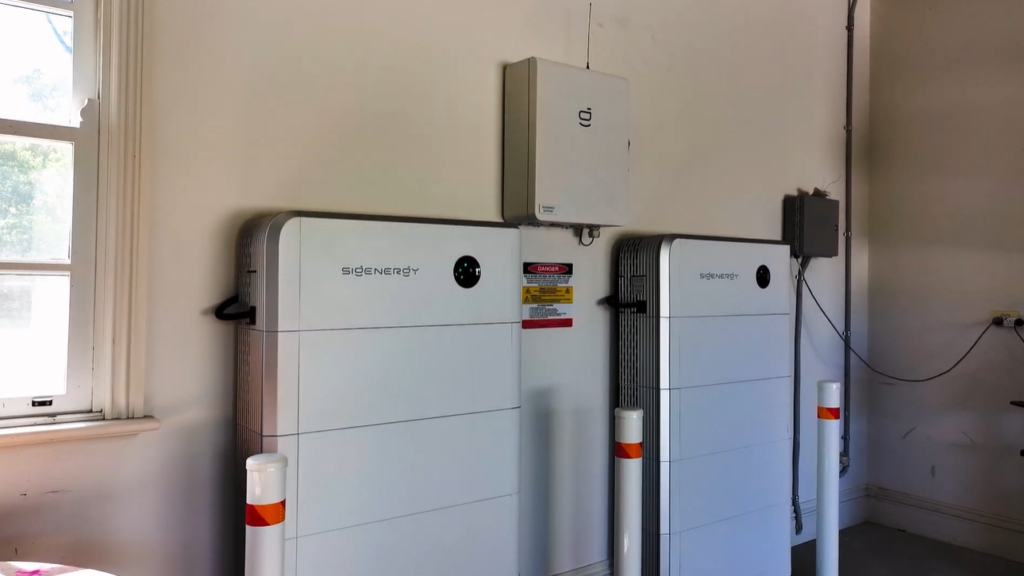
For example, a battery installed in a weather-sealed garage in suburban Sydney may not need higher protection.

Installing Outdoors in a Sheltered Spot

If your battery will be mounted under a carport, eave, or on a wall with partial weather shielding, consider an IP65 rating. It offers full dust protection and handles rain or angled spray — but it still benefits from being out of direct weather.

Alpha Home battery installed under cover, hidden from elements

For instance, an Alpha ESS or Sungrow battery on a side wall under an eave in Newcastle would suit IP65.

Fully Exposed Outdoor Installations

For areas where your battery will face direct exposure to wind, dust, or rain — especially in places with storms, bushfire risk, or coastal salt air — an IP66 or higher rating is ideal. It ensures the battery is sealed against dust and can withstand powerful water jets (like driving rain or storm runoff).

In Brisbane’s storm season or coastal areas like Wollongong, IP66 is strongly recommended.

Flood-Prone or Persistently Wet Areas

If you live in a flood zone or a high-rainfall region with poor drainage, a battery rated IP67 may be worth considering. It can handle temporary submersion in water (typically up to 1 metre for 30 minutes), providing extra peace of mind.

For example, the Tesla Powerwall 3 has an IP67 rating, making it well-suited for exposed areas in flood-affected parts of Northern NSW.

If you’re unsure which IP rating makes sense for your home, your best next step is to compare battery models side-by-side.

You can browse a range of options — including Sigenergy, Tesla, Alpha ESS and Sungrow — on Lenergy’s solar battery page. Each listing includes the IP rating and product specs, so you can filter by what suits your location and installation type.

Can I Install a Battery Outdoors in Australia?

Yes — many solar batteries today are designed to be installed outdoors. But not all outdoor spaces are equal, and the right setup depends heavily on where you live and the conditions your battery will face.

Here are a few real-world considerations:

Queensland: Storms, Humidity, and Heat

If you’re in Brisbane or the Sunshine Coast, your battery may be exposed to intense summer storms and year-round humidity. In this case, look for at least IP66 to handle driving rain and high moisture levels. Also consider ventilation and heat dissipation — batteries don’t like extreme heat.

Canberra & Southern Highlands: Frost and Cold

Cold winters won’t necessarily damage a battery, however frost-prone areas can still expose it to moisture over time. An IP65 or IP66 rating is usually a safe bet. Just ensure the battery is installed off the ground to avoid water pooling.

Coastal NSW: Salt Air and Corrosion Risk

Living near the ocean means dealing with airborne salt, which is tough on electronics. A dust-tight enclosure (IP6X) is a must, and a location sheltered from prevailing sea breezes is recommended. Some installers also use corrosion-resistant mounting hardware.

Bushfire Zones: Dust and Debris

Inland areas and bushfire-prone zones (like parts of regional NSW or Victoria) can expose batteries to fine dust and debris. An IP66 or IP67 rating helps protect against intrusion during high-wind events and fire season fallout.

IP Rating Comparison Table

Below is a simplified guide to the most common IP ratings you’ll see on home batteries in Australia, and what each rating means in terms of dust and water protection.

IP RatingDust ProtectionWater ProtectionSuitable For
IP55Limited protection from dust (not fully sealed)Protected from low-pressure water jets from any directionIndoor or garage installation
IP65Dust-tight (no dust ingress)Protected from low-pressure water jets (e.g. rain, angled spray)Outdoors in semi-sheltered areas
IP66Dust-tightProtected from high-pressure water jets (e.g. storm-driven rain)Fully exposed outdoor installations
IP67Dust-tightCan withstand short-term immersion (up to 1 metre for ~30 minutes)Flood-prone areas or extreme wet conditions

Keep in mind: while IP67 batteries can handle temporary immersion, it doesn’t mean they should be installed where flooding is expected — they simply offer more resilience if the unexpected happens.

Why IP Isn’t the Only Thing to Consider

While IP ratings help you understand how well a battery can handle dust and moisture, they’re not the full story. There are a few other important factors to consider before installation:

Lenergy staff member installing a Tesla Powerwall 2 battery at home

Mounting Location

Even the most weatherproof battery will last longer if it’s installed in a spot with some natural protection — like under an eave, beside a fence, or in a shaded area. This helps reduce exposure to UV, wind, and extreme heat.

Ventilation and Heat

Batteries don’t perform well in extreme heat. If you’re in a hot region, check whether the battery can safely dissipate heat — especially if it’s in a narrow side passage or an area with limited airflow.

Electrical Compliance

Your battery must be installed by a qualified professional according to Australian Standards and manufacturer guidelines. Some IP-rated enclosures also require specific clearances or mounting methods to retain their protection level.

Compatibility

Some batteries only work with specific inverters or require certain communications protocols (e.g. Alpha ESS vs Sungrow vs Tesla). Make sure your installer checks compatibility — especially if you’re retrofitting to an older solar system.

Looking to compare IP ratings across different battery brands?

Head over to Lenergy’s battery page to explore models like Tesla, Sigenergy, Alpha ESS and Sungrow — each with clearly listed specs and suitability for different home environments.

How Long Do Solar Panels Really Last? What to Expect in Australia

You’ve probably heard solar panels last “25 to 30 years.” But what does that actually mean?

Do they suddenly stop working after 25 years? Will you need to replace them before then? Or is it just a warranty number manufacturers throw around to make you feel better?

These are questions we hear all the time from homeowners trying to understand whether solar is really a long-term investment — or just an expensive experiment.

At Lenergy, we’ve installed thousands of panels across Australian rooftops — and we’ve also gone back years later to check how they’re holding up. So we’ve seen firsthand what lasts, what doesn’t, and what to look out for if you want optimal performance.

In this article, you’ll learn how long solar panels actually last in Australian conditions, what affects their performance over time, and how to separate marketing ploys from facts that matter to your bottom line.

Do Solar Panels Really Last 25 Years (Or More)?

Most solar panels sold today come with a performance warranty of 25 years. However, that doesn’t mean they stop working specifically on day 9,126. It just means that by the end of that period, the manufacturer expects the panels to still be operating at a certain percentage of their original output — usually around 80–85%.

In practice, most quality panels will last beyond 25 years.

It’s worth noting, though, that not all panels are created equal. A cheap panel might not make it through a decade without losing a chunk of its performance. A well-made panel from a proven manufacturer (like Aiko, REC, or Jinko) can keep producing reliably for decades.

In other words, the “25-year lifespan” is more of a baseline than a hard limit — and quality, installation, and care all play a role in how far beyond that number your panels can go.

How Solar Panels Degrade Over Time

All solar panels degrade over time. That means they slowly produce less electricity as they age. This is normal and expected with any solar panel, regardless of brand.

The important thing to understand is that this degradation happens gradually, not suddenly.

Rather than stating a single “average” degradation rate, SolarQuotes explains panel degradation by looking at performance warranties, which set the maximum amount a panel is allowed to degrade each year under warranty terms.

a graphic image of performance warranties on solar panels degrading up until 25 years +

According to SolarQuotes, many modern solar panels sold in Australia are warranted to degrade at between roughly 0.25% and 0.55% per year, depending on the brand and model. Some premium panels are warranted at the lower end of that range, while others sit closer to the upper limit. These figures represent the worst‑case degradation allowed under warranty, not necessarily what happens in real‑world conditions.

What this means in practical terms is that a well‑made solar panel is still expected to be producing a high percentage of its original output decades after installation. Under warranty assumptions alone, many panels are guaranteed to still be producing around 88–92% of their original capacity after 25 years, depending on their warranted degradation rate.

Just as importantly, SolarQuotes notes that panels often perform better than their minimum warranty guarantees in real life, especially when they’re well installed and operating in suitable conditions.

This decline in output is steady and predictable. You don’t wake up one day to find your solar system producing half the power it did the year before. Instead, it’s a small reduction spread out over many years — something most homeowners never notice day to day.

In simple terms, degradation usually looks like this over time:

  • Early years: Output remains very close to original levels
  • Mid‑life: Small, gradual reductions that still leave panels producing most of their rated power
  • 25+ years: Panels continue generating usable electricity, just at a slightly lower level than when new

Degradation isn’t a flaw — it’s a normal part of how solar panels work. The goal isn’t to eliminate it entirely, but to choose panels with clear, conservative warranties and a strong track record. That’s why SolarQuotes places so much emphasis on proven manufacturers and transparent performance warranties.

At Lenergy, this is exactly why we focus on Tier 1 manufacturers and panels like the Aiko Neostar 2P, which come with clearly defined degradation limits and long‑term performance backing, so you know what to expect over the life of your system.

What Affects the Lifespan of a Solar Panel?

Not all panels age at the same pace. Several factors influence how well a solar panel holds up over time — and how long it continues delivering solid performance.

1. Panel Quality
This is the biggest factor. High-quality panels from reputable manufacturers are built with better materials, undergo more rigorous testing, and are less likely to suffer from faults like microcracks, moisture ingress, or delamination.
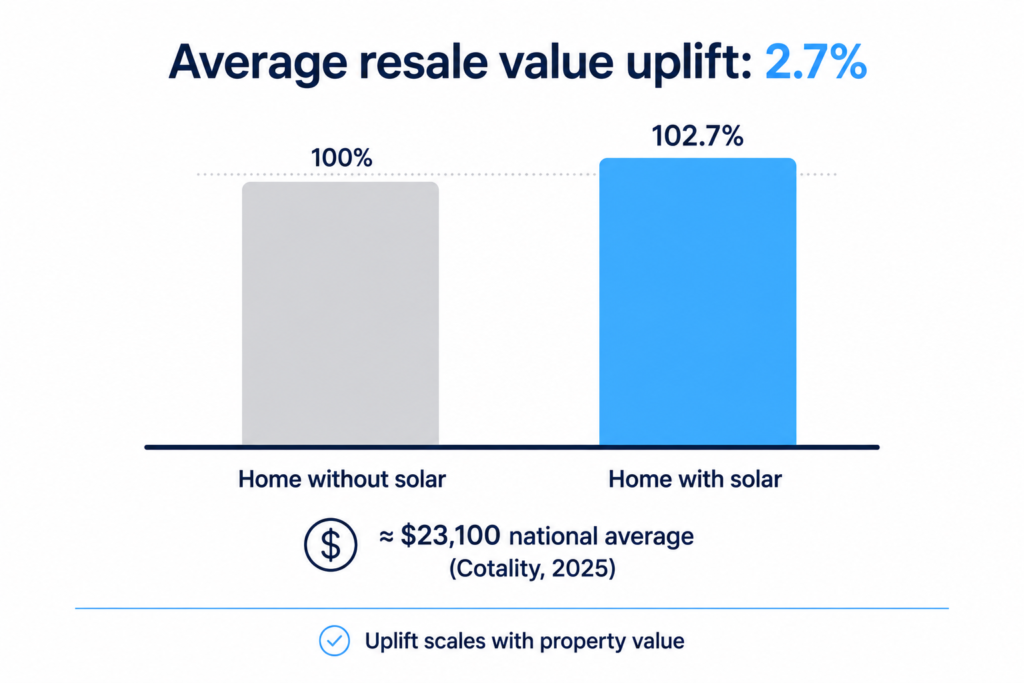
If you’re using panels like the Aiko Neostar 2P, for example, you’re getting modern N‑Type ABC cell technology, which is designed to limit performance loss over time because it avoids some degradation mechanisms that older panel types are more susceptible to. According to Aiko’s own technical specification, these panels are warranted to degrade no more than about 0.35% per year after the first year, following an initial ≤1% drop in Year 1. Panels with lower warranted degradation figures tend to hold a higher percentage of their original output over the long term, which can make a difference in real‑world performance and long‑term energy production

2. Installation Quality
Even the best panel won’t last if it’s poorly installed. Shoddy mounting, loose wiring, or improper sealing can lead to moisture ingress, fire risk, or stress on the panel frame — all of which shorten its lifespan. And no, installers should never walk on the panels. It might look like they’re built to handle it, but foot pressure can cause microcracks in the cells, which reduces performance and accelerates degradation. Choosing a qualified installer matters just as much as the gear itself.

An edited image showing you not to walk on solar panels with a photoshopped person standing on top of solar panels with an X next to a worker who is standing on roof tiles with a tick

3. Environmental Conditions
Australia’s climate can be harsh — from the heat of Dubbo to coastal salt spray in Port Macquarie. UV exposure, heat, hail, salt, and humidity can all wear on a panel over time. That’s why it’s important to choose panels with IEC certifications for extreme conditions, like salt mist and ammonia resistance if you’re near the coast.

4. Shading and Dirt
While dirt or shade won’t directly “wear out” a panel, they can contribute to hotspots — small areas of excessive heat on a panel’s surface. Over time, this can cause cell damage. A clean, unobstructed array with proper airflow lasts longer and performs better.

Understanding Solar Panel Warranties

If you’ve been researching solar panels, you’ve likely come across two types of warranties: product warranties and performance warranties. They sound similar, but they cover different things — and it’s important to understand both before making a decision.

A graphic image showing the difference between product warranty and performance warranty by years and what they cover

Product Warranty (Also Called Equipment Warranty)
This is the manufacturer’s guarantee that the panel is free from defects in materials and workmanship. If a panel fails due to a manufacturing fault within this period, it should be replaced or repaired.

  • Typical length: 12 to 25 years
  • Premium brands (like Aiko) often offer 25-year product warranties

This is your first line of protection. A longer product warranty often indicates the manufacturer’s confidence in build quality — and gives you peace of mind if something fails early.

Performance Warranty
This warranty guarantees how much power your solar panels will produce over time. It doesn’t cover defects — instead, it sets a minimum expected energy output (usually 80–85% of the original capacity after 25 years). Nearly all modern panels come with a 25-year performance warranty. It helps you understand how the panel is expected to degrade — slowly and predictably — over its life.

What the Warranties Don’t Tell You
Warranties are useful, but they’re not crystal balls. They don’t mean your panel will fail after 25 years — just that the manufacturer won’t guarantee its output beyond that point. Many panels continue operating well for 30 years, especially if they’re well cared for.

The real value is this: good warranties plus good installation equals long-term confidence.

When Will I Actually Need to Replace My Panels?

This is one of the most common — and most misunderstood — questions about solar.

The truth is, you usually don’t need to replace your panels just because the warranty ends. Most quality solar panels keep generating power well beyond 25 years. Instead, panel replacement typically only happens for a few practical reasons:

1. Severe Physical Damage
Panels can crack, break, or delaminate if hit by falling branches, major hailstorms, or installation faults. In these cases, the panel may stop working entirely — and you’ll need to replace it to keep your system running efficiently.

2. Performance Drops Too Low
If your panels degrade faster than expected and fall below the performance warranty threshold, you might consider a warranty claim — or simply choose to upgrade if they’re no longer meeting your energy needs.

3. System Upgrades or Expansion
Sometimes people replace panels not because they’ve failed, but because their energy needs have changed. Maybe you’ve added a pool pump, air con, or an EV — and your original system is no longer cutting it.

4. Roof Renovation or Re-roofing
If you’re replacing your roof or adding an extension, panels may need to be temporarily removed — and occasionally, older panels get replaced during the process, especially if newer, more efficient options are available.

Bottom line: panel replacement isn’t a scheduled event. It’s something that happens when there’s damage, performance drops below acceptable levels, or your energy needs change. For most homeowners with quality gear, that’s decades down the track.

Not Sure If Your Panels Need Replacing?

If you’re noticing a drop in performance or your system’s over 10 years old, it might be time for a check-up. At Lenergy, we can assess the health of your panels, help you understand if they’re still working as they should, and talk through your options if a replacement or upgrade is worth considering.

Do Some Solar Panels Last Longer Than Others?

Absolutely — not all solar panels are built to the same standard. Some brands degrade faster, are more prone to faults, or simply don’t have the same track record for long-term reliability.

If your goal is to install once and have it last 25–30 years, here’s what to look for:

Panel Type Matters
Modern N-Type panels typically last longer than older P-Type panels. They degrade slower, have better resistance to light-induced degradation, and often perform better in heat.

Lenergy installs Aiko Neostar 2P panels, which use N-Type, All-Back-Contact (ABC) technology. These panels are among the most efficient and durable available — and they come with a 25-year product and 30-year performance warranty.

Aiko solar panels installed by Lenergy on roof with ample sun in the Southern Highlands

Panels built with modern N‑Type cell technology are generally more resistant to certain degradation mechanisms — such as light‑induced degradation — compared with many older P‑Type panels, which can help them retain a higher proportion of their original power output over years of use.

When evaluating brands, a manufacturer’s inclusion on BloombergNEF’s Tier 1 list indicates strong financial backing and bankability, which can be reassuring for long‑term support and warranty fulfilment. However, Tier 1 status alone isn’t a technical quality rating — it’s one of several factors to consider.

High‑quality panels should also be tested to recognized industry standards for issues like potential‑induced degradation (PID), salt mist corrosion, and mechanical load resistance. These independent tests help verify that panels can cope with real‑world stresses over decades of service

What You Can Expect From a Well-Installed Solar System

If you’re buying quality panels, working with a reputable installer, and keeping your system in good condition, you can expect your solar panels to last 25 years — and then some.

Yes, performance will gradually taper off. However, well-chosen solar panels don’t just stop at year 25. They keep producing usable energy, often well into their third decade, with minimal maintenance and no moving parts.

Here’s what it comes down to:

  • Choose proven, durable technology (like N-Type panels)
  • Avoid cheap panels with unclear origins
  • Work with an installer who knows how to mount panels securely and protect your roof
  • Keep your panels clean and your system monitored

Do that, and you’re setting yourself up for decades of savings — not just a quick return.

At Lenergy, we install systems designed to go the distance — because solar isn’t just about today’s power bill. It’s about making a smart, long-term decision that still makes sense ten or twenty years from now.

Lenergy staff member, Ziad standing in front of solar panels smiling

Cheaper Home Battery Program Reduction: What It Means for You in 2026

On 13 December 2025, the Australian Government announced major adjustments to the Cheaper Home Battery Program (CHBP) — a national subsidy designed to make battery storage more accessible for Australian households and small businesses.

Following unexpectedly high demand and rapid uptake, the program’s original $2.3 billion budget is being expanded to $7.2 billion over the next four years. The expansion is expected to support more than 2 million battery installations and deliver around 40 gigawatt-hours of new storage capacity by 2030.

To ensure the scheme remains financially sustainable and continues offering fair support across a range of battery sizes, the government will introduce a revised tiered rebate structure and updated STC (Small-scale Technology Certificate) factors from 1 May 2026.

This article outlines:

  • Why the rebate is changing
  • What the new structure will look like
  • How different battery sizes will be affected
  • What these changes mean for households planning an installation

All information is drawn directly from official government updates and public statements, including reporting from ABC News and the Department of Climate Change, Energy, the Environment and Water.

Why is the Federal Battery Rebate Changing?

Chris Bowen in front of Parliament House, the Minister for Climate Change and Energy for Australia

When the Cheaper Home Battery Program launched in July 2025, it came with a $2.3 billion budget and a clear goal: to help more Australians access battery storage by offering an upfront rebate on eligible systems. The response was immediate and strong. Within six months, most of the original rebate funds had already been claimed.

Federal Energy Minister Chris Bowen described it as “a program of success and strength,” noting the enormous enthusiasm from households and small businesses. However, ABC News reported that the level of demand allegedly raised concerns from within the solar and battery industries, with some warning of a potential “boom-bust cycle” if the scheme wasn’t adjusted to manage long-term sustainability.

In response, the government moved quickly. As part of the December 2025 mid-year budget update, an additional $5 billion was allocated to the scheme, bringing the total to $7.2 billion over four years. This expansion is expected to enable more than 2 million battery installations across the country by 2030, with a projected 40 gigawatt-hours of additional energy storage coming online.

However, the scale of that ambition also required structural changes. According to the government, the revised rebate model is designed to:

  • Keep discounts aligned with falling battery costs over time
  • Maintain fairness across small, medium and large battery systems
  • Ensure support remains available until 2030, as originally promised

With those goals in mind, the government will introduce a new tiered rebate structure and adjust the STC factor — the mechanism used to calculate battery subsidies — beginning 1 May 2026.

What Changes Are Being Made to the Rebate?

To make the Cheaper Home Batteries Program more sustainable over the long term, the government is updating how the battery rebate is calculated. From 1 May 2026, the program will shift to a tiered support model that varies depending on the size of the battery and the date it’s installed. These changes are designed to keep the discount at around 30% for a range of battery sizes, align with falling battery prices, and ensure the rebate remains available through to 2030.

Two key changes will take effect from 1 May 2026, subject to regulations being finalised:

1. STC Factor Reductions Over Time

The rebate is delivered through the creation of Small-scale Technology Certificates (STCs), which are issued based on the usable kilowatt-hour (kWh) capacity of the battery. The number of STCs a system is eligible for is determined by the STC Factor.

From May 2026, the STC Factor will:

  • Decline more frequently (every 6 months instead of annually)
  • Decline at a steeper rate, reducing the rebate amount over time

You can see the full schedule of proposed STC factor reductions below:

Cheaper Home Battery Program - STC Tier value until 2030

Source: Australian Government – Department of Climate Change, Energy, the Environment and Water

The rebate you’re entitled to is based on the STC factor at the time your battery is installed — not when you apply or receive a quote. This means timing your installation could make a significant difference in rebate value.

2. Tiered Support Based on Battery Size

Currently, all eligible systems up to 100kWh receive the same STC factor per kWh. Under the new structure, the rebate will scale down as battery size increases, applying different percentages of the STC factor across three tiers:

  • 0–14kWh (inclusive):
    Full 100% of the STC factor applies
  • >14kWh to 28kWh (inclusive):
    60% of the STC factor applies
  • >28kWh to 50kWh (inclusive):
    15% of the STC factor applies
  • >50kWh to 100kWh:
    No additional rebate (capped at 50kWh of supported capacity)

This means if you installed a 98kWh battery system, you would get STCs on the first 50kWh and nothing on the remainder. If you Installed a 110kWh system then you would not be eligible for any rebates (as it would be over the permissible 100kWh limit).

This approach keeps the rebate proportional, discouraging over-sizing purely to maximise subsidy value while still supporting medium and large systems with some discount.

These changes, according to Energy Minister Chris Bowen, are designed to ensure the program continues to deliver value “right up to 2030 like we promised at the last election.”

How Does Battery Size Affect the Rebate?

Let’s say you install a 30kWh battery:

A diagram of showing the tiered STC rating of the Cheaper Home Battery Program
  • The first 14kWh gets 100% of the STC factor
  • The next 14kWh gets 60% of the STC factor
  • The final 2kWh gets 15% of the STC factor

If you install a 12kWh battery, the entire system qualifies for the full 100% STC rate — which may make smaller systems especially appealing for homeowners looking to maximise rebate value.

Why This Matters

Under the current system, all batteries up to 100kWh receive the same rebate rate per kWh — regardless of size. But under the new structure, larger systems will see their rebate taper off significantly. The government’s goal is to align support with typical residential needs and avoid over-subsidising systems that exceed household usage.

At the same time, this still allows homes with larger energy demands to claim a partial rebate on bigger systems — just with a steeper drop-off after 28kWh.

The new rules aim to ensure fairness, prevent overspending, and stretch the program’s budget to support more households over time.

Plan With the Cheaper Home Battery Program Timeline in Mind

The Cheaper Home Batteries Program has already helped more than 160,000 Australian households access battery storage, with the vast majority of those installations in suburbs and regional areas. Now, with a larger budget and a tiered structure in place, the scheme is set to continue — but in a more targeted, tapered format.

If you’re considering a battery for your home or business, it’s important to understand both the timing and the sizing implications:

  • The install date determines what STC factor applies
  • The system size determines how much of that factor you receive

While support will still be available through to 2030, the most generous terms are front-loaded, favouring earlier and smaller installations. That doesn’t mean you should rush — but it does mean planning matters.

To see how these changes could impact your installation — or to get tailored advice based on your energy usage and goals — reach out to our team. We can help you size your battery appropriately, explore eligible systems, and lock in your rebate while the current rates still apply. Contact Lenergy today to find out what your battery rebate could look like before the changes take effect.

Adding a Battery to Your Solar: AC vs DC Coupling

Ever tried to make sense of how to add a battery to your solar system… and ended up with more questions than answers? You’re not alone. If you’re here, you’re probably trying to figure out how a battery actually fits into your existing solar setup — or whether you need to plan differently for a new install. And then someone throws around terms like “AC vs DC”, and it starts to sound more like a physics class than a home energy upgrade.

Solar panels generate direct current (DC) electricity, whereas household appliances operate on alternating current (AC). Batteries also store energy in DC form. So, somewhere between your roof and your appliances, something needs to convert, control, and manage the flow of power.

This is where the difference between AC and DC coupling comes in — and why choosing the right setup matters for efficiency, compatibility, and cost.

What Does It Mean to Add a Battery to Your Solar System?

When you install a solar system, your panels generate electricity during the day — but that energy only helps you while the sun’s shining. A battery changes that. It stores the excess solar energy your panels produce so you can use it later, like at night or during a blackout.

The challenge however, is that solar panels produce DC (direct current) electricity. Whereas your home runs on AC (alternating current) electricity. That’s why every solar system includes an inverter — to convert solar DC into usable AC.

Batteries also charge and discharge DC electricity, which means you need a system in place to manage how the power flows between your panels, your battery, your appliances, and the grid. That’s where AC and DC coupling comes into play.

There are two main ways to connect a battery to your solar system:

  • DC Coupling, where your solar panels and battery share a single hybrid inverter.
  • AC Coupling, where the battery and solar system each have their own inverter and work more independently.

Choosing between the two depends on whether you already have solar installed, how much flexibility you need, and whether efficiency or ease-of-retrofit matters more.

What’s the Difference Between AC and DC Electricity?

To understand how batteries connect to your solar system, you need to know the basics of AC and DC power — and why the difference matters.

A diagram showing the difference between AC couple battery systems and DC coupled battery systems

DC (Direct Current) electricity is the type of power that solar panels generate. It’s also how batteries store energy. The current flows in one direction, which makes it ideal for generating and storing energy.

AC (Alternating Current) electricity is what powers your home and the grid. It changes direction rapidly (50 times per second in Australia — that’s 50Hz), which makes it better for travelling long distances across power lines.

Since most household appliances are built to run on AC power, and solar panels produce DC, an inverter is essential. It converts the DC power from your panels into AC so your home can use it.

Batteries also need conversion.

Because batteries store power in DC and your home runs on AC, any system that includes a battery needs a way to manage those energy conversions — both when storing and using that power. The method used to handle this — whether through a shared or separate inverter — has a direct impact on how efficient the system is, how much it costs to install, and how flexible it will be in the future.

How Does DC-Coupled Battery Storage Work?

In a DC-coupled system, your solar panels and battery share a single hybrid inverter. This is often called a “one box” or “all in one” solution because it combines the functionality of a solar inverter and a battery inverter into a single unit.

Here’s how it works:

  1. DC from solar panels flows directly into the hybrid inverter.
  2. The inverter sends that DC either:
    • To your battery (still as DC) for charging, or
    • Through conversion to AC to power your home.
  3. When you need power at night, the battery discharges its DC energy, and the hybrid inverter converts it into AC for your household use.
  4. Some hybrid inverters can also convert AC from the grid back into DC to charge your battery — although this isn’t always standard.

Because the system avoids extra conversion steps (like turning DC into AC, then back to DC), DC coupling is generally more efficient. There are fewer “energy stops” along the way, which means less power is lost in translation.

But there’s a trade-off. DC-coupled systems rely on specific hybrid inverters that are only compatible with certain battery brands or models. If you’re installing both solar and battery at the same time, that’s usually fine. But if you’re planning to add a battery later, or want flexibility to upgrade, DC coupling may limit your options.

How Does AC-Coupled Battery Storage Work?

An AC-coupled system treats your battery as a separate unit — with its own inverter. This is known as a “two box” solution: one inverter for your solar panels and another for your battery.

Here’s what happens in an AC-coupled setup:

  1. DC power from the solar panels is sent to the solar inverter, where it’s converted into AC for use in your home.
  2. If your home doesn’t use all that energy, the battery’s inverter then converts some of the AC back into DC to store it.
  3. Later, when you need that stored power, the battery discharges as DC — and the battery inverter turns it into AC for your home.

Because the power is converted multiple times (DC → AC → DC → AC), AC-coupled systems are slightly less efficient than DC-coupled ones. Each step creates small energy losses.

That said, AC coupling has some clear advantages:

  • It’s ideal for retrofitting a battery onto an existing solar system.
  • It’s more flexible, because the battery system works independently of the original solar inverter. This means you can mix and match brands more easily.
  • It can also provide redundancy — if your solar inverter fails, the battery inverter can still function independently.

Some AC-coupled batteries, like the Tesla Powerwall 3, come with a built-in inverter. Others, such as Sungrow, require a separate battery inverter to be installed alongside them.

two side by side comparisons of a Tesla Powerwall 3 which text saying "in-built inverter" and a Sungrown battery with an inverter installed above with text highlighting this

DC-Coupled Batteries: Pros and Cons

DC-coupled systems make a lot of sense — especially if you’re installing solar and battery together from day one. Here’s a clear breakdown of the main advantages and drawbacks:

Pros

  • Higher Efficiency: Because there are fewer conversions between DC and AC, more of your solar energy is stored and used. That translates into better performance.
  • Lower Upfront Cost (for new systems): You only need one hybrid inverter, which reduces equipment and installation costs for new builds.
  • Bypasses Grid Inverter Limits: With only one inverter handling both solar and battery, you avoid Distributed Network Service Provider (DNSP) limits on total inverter capacity. This is especially useful in areas with tight restrictions (e.g. 5kW limits in parts of South Australia).

Cons

  • Compatibility Limits: Hybrid inverters usually only work with specific battery brands or models. That can lock you in — or limit your future upgrade options.
  • Not Ideal for Retrofits: If you already have solar installed with a standard inverter, switching to a hybrid system for DC coupling often means replacing your existing inverter — which adds cost and complexity.
  • Single Point of Failure: With only one inverter managing everything, if it fails, both your solar and battery go offline.

In short, DC coupling is efficient and streamlined — but it’s best suited for new solar + battery installs, not retrofits.

AC-Coupled Batteries: Pros and Cons

AC-coupled systems shine when you’re adding a battery to an existing solar setup — but they come with their own trade-offs. Here’s a look at where they excel, and where they fall short.

Pros

  • Easy to Retrofit: Already have solar? AC coupling lets you add a battery without replacing your current inverter.
  • Brand Flexibility: Because the battery system runs independently, you’re not locked into a specific inverter–battery combo. This opens up more product options.
  • Redundancy: With separate inverters for solar and battery, one can keep working if the other fails — handy for resilience and backup.

Cons

  • Lower Efficiency: Power gets converted multiple times — DC to AC, then back to DC to charge the battery, and then AC again to power your home. That creates small energy losses.
  • Higher Installation Cost (for new systems – Solar + a Battery): You’ll need two inverters — one for solar, one for the battery — which adds to the cost.
  • Inverter Capacity Limits: Some DNSPs count your solar and battery inverters together toward grid limits. So if your solar inverter is 6kW and your battery has a 5kW inverter (like the Tesla Powerwall 2), you might hit a 10kW cap per phase and be told no.

In summary, AC coupling is perfect for adding a battery to an existing solar system — just be aware of potential network limitations and slightly reduced efficiency.

Solar panels installed by Lenergy on top of tin roof with the sun reflecting off

Which Setup Is Right for You?

Choosing between AC and DC coupling isn’t about which one is “better” — it’s about which one suits your situation.

Here’s our simple rule of thumb:

If you’re installing solar and a battery together:

DC coupling is usually the smarter choice.
You’ll get higher efficiency, lower overall cost, and a simpler, all-in-one setup with a hybrid inverter. Just keep in mind the brand compatibility — your battery and inverter will likely need to be matched.

If you already have solar and want to add a battery:

AC coupling is typically the easier and more flexible option.
You can keep your existing solar inverter, choose from a wider range of batteries, and avoid replacing gear that’s still working well.

That said, it’s worth checking one important thing before you decide: your local network’s inverter limits. Some DNSPs limit the total inverter capacity per phase — and that might affect whether an AC-coupled battery is even allowed on your system. In those cases, a DC-coupled system may offer a workaround.

If you’re planning a new solar-plus-battery setup, DC coupling offers streamlined efficiency. If you’re retrofitting a battery, AC coupling is likely more cost-effective and flexible. Either way, understanding these options puts you in control of your energy future — and helps you avoid expensive mistakes.

Still not sure which setup fits your home best?

At Lenergy, we’ve helped hundreds of Australian homeowners navigate their battery options with honest, jargon-free advice. Whether you’re adding storage to an existing system or starting from scratch, we’ll walk you through it — no pressure, just clarity.

Will the Federal Battery Rebate Run Out in 2026?

The Federal Battery Rebate, otherwise knows as the Government’s $2.3 billion Cheaper Home Batteries Program offers roughly 30% off battery storage systems to Australian households. When it launched in July 2025, no one predicted batteries would start flying off warehouse shelves at the pace it did and energy retailers like Origin are warning: we could hit the rebate cap by mid-2026.

In this article, you’ll get a clear breakdown of:

  • What’s driving this spike in battery installs
  • How close we really are to the rebate running dry
  • What could happen next — and what that means for you

What Is the Federal Battery Rebate and Why Is It So Popular?

If you’ve looked into adding a solar battery lately, you’ve probably heard about the Cheaper Home Batteries Program (CHBP) — a federal rebate launched in July 2025 to help more Australians afford energy storage.

The rebate covers roughly 30% off the cost of an eligible home battery system (up to 50kWh). For most households, that equates to $2,000–$4,000 back, depending on the battery brand, size, and your energy setup.

The response has been massive.

  • In the program’s first month alone, 19,592 batteries were installed.
  • By early September, that figure had climbed to 43,500+ installations, averaging around 888 installations per day.
  • By November, Energy Minister Chris Bowen reported 136,000 batteries installed since July — more than double the typical yearly total before the rebate.

One chart shared by The Today Show showed some of the most active states in the first month — with NSW and QLD leading, followed closely by VIC and SA.

A screenshot from the Today Show with a graph showing the Federal battery rebate uptake of solar battery installations in July 2025

So what’s behind this rush?

For many homeowners, it comes down to affordability and timing:

  • Batteries have become significantly cheaper over the past two years.
  • Add roughly 30% rebate on top, and the payback period has dropped for most households.
  • With power prices rising and feed-in tariffs falling, many people now see a battery as the best way to self-use their solar energy and reduce peak-time grid reliance.

How Fast Are the Funds Being Used?

When the federal government announced the Cheaper Home Batteries Program with a $2.3 billion budget, it was pitched as a long-term incentive — running until 2030, however, this timeline now looks extremely optimistic.

According to SolarQuotes, an analysis which examined Clean Energy Regulator data and installation trends:

  • Over 90,000 systems had been processed for rebate claims as of 31 October 2025, with more pending.
  • That early wave of installs had already chewed through around $678 million in just four months.
  • At that pace, the entire $2.3 billion could be exhausted in 13–14 months — pointing to a mid-2026 cutoff.

Energy Minister Chris Bowen said 125,000 households had installed batteries by mid-November, not just the 90,000 that had been fully processed for certificates. That’s a 21% higher figure, and it changes the maths.

SolarQuotes’ revised analysis, using Bowen’s higher number, suggests the rebate could be fully allocated by June 2026 — or as early as May if demand keeps accelerating.

That projection is backed by Origin Energy, who warned battery installs had surged to up to 1,800 per day in some periods, and that the funding “will probably run out by the middle of next year on this kind of run rate”.

The driving force is not just the rebate itself, but also:

  • A shift in homeowner behaviour — people want to keep their solar energy instead of exporting it for a few cents.
  • Falling battery prices and rising energy bills.
  • A growing awareness of blackout protection, especially in summer.

Another key factor accelerating the depletion of funds is the increasing average size of battery systems. Since the rebate is calculated based on usable battery capacity, the shift from an assumed average of 17kWh to more than 20kWh per system means larger payouts per installation than initially projected.

This combination of high uptake and growing system sizes has led some analysts to conclude that the program’s 2030 end date is unlikely to be realised without further government intervention.

Penny Sharpe and Chris Bowen Ministers of Energy standing in front of a solar panels

Could the Federal Battery Rebate Be Extended or Adjusted?

It’s possible — however not guaranteed.

The federal government hasn’t yet announced any top-up or structural changes to the Cheaper Home Batteries Program. However, with uptake far exceeding early expectations, both energy experts and industry groups are now openly calling for action.

Potential outcomes to look out for

Reducing the Cap per Household?

One suggestion from SolarQuotes is to cut the maximum eligible battery size for the rebate — not to shrink rebates for typical households, but to slow down uptake at the top end.

Currently, you can claim a rebate for up to 50kWh of usable storage — far more than most homes need. Reducing that cap to 25kWh could stretch the funding further while still covering 99% of residential use cases.

The upside? More households could benefit.

The risk? It might discourage larger households or early adopters wanting future-proofed systems — particularly those aiming for full off-grid capability or participating in VPPs.

More Rules, More Problems?

Some experts warn against over-complicating the program.

If policymakers try to engineer the “perfect” battery rollout through stricter sizing, inverter pairing rules, or eligibility tests, they risk:

  • Slowing installs
  • Creating confusion
  • Opening new loopholes for dodgy operators to exploit

As SolarQuotes analyst Ronald Brakels points out: “Making the scheme more complex can do more harm than good… We may get better results just by requiring installers to inform homeowners of drawbacks.”

What’s Most Likely?

Given the federal battery rebates popularity — and its positive impacts on grid reliability and household bills — some form of adjustment or extension seems politically smart. However, until it’s announced, homeowners are in a race against the funding clock.

If you’re weighing up whether a battery makes sense for your home — with or without the rebate — you can get in touch with Lenergy for straightforward advice. We’re available to answer questions, explain how the rebate works, and help you explore what’s suitable based on your usage.

Do Solar Panels Work in Colder, Cloudier Climates?

If you’ve ever asked that question — especially from somewhere like the Southern Highlands, Goulburn or Canberra — you’re not alone. It’s one of the most common hesitations people have when considering solar. Maybe you’ve heard that solar panels“only works in the sun,” or that cloudy weather means zero output. And if you’re investing thousands into a system, you want to be sure it will actually deliver.

Here’s the good news: solar panels do work in colder and cloudier climates. And in many cases, they perform better than you might expect.

At Lenergy, we’ve helped hundreds of homeowners across NSW and beyond install solar in a wide range of conditions — from frosty to fog. We’ve seen how different weather affects performance, and we’ve designed systems to suit homes just like yours.

In this article, you’ll learn how cloud cover, temperature, and rain really affect solar output — and what that means for your panels and battery performance. We’ll break down common myths, share installer insights, and help you decide whether solar is still a smart investment in your location.

Do Solar Panels Still Work on Cloudy Days?

Yes — solar panels still generate electricity on cloudy days, just not at full capacity.

It’s a common misconception that solar only works in full, direct sunlight. In reality, panels are activated by sunlight when it hits the solar panels, the photovoltaic (PV) cells within the panels absorb the light energy, which still passes through clouds. That means even on overcast days, your system keeps producing — just at a reduced rate.

Here’s what to expect:

  • Partly cloudy days: Output may drop by 10–25% depending on how dense and frequent the clouds are.
  • Heavily overcast days: Output can dip by up to 50%. On particularly dark, stormy days, it may drop even further.

But this isn’t the full picture.

Modern solar systems are designed with these fluctuations in mind. Your solar inverter adjusts dynamically to capture whatever sunlight is available — and will scale production back up instantly when the sun reappears, even briefly.

In fact, on days with patchy clouds, intermittent bursts of sunshine (called “edge-of-cloud” events) can sometimes boost output above normal levels for short periods.

And remember, solar production is a long game. What matters most is annual generation, not individual cloudy days. If your home receives a decent amount of sunlight across the year — even if it’s seasonal — your system can still be financially and environmentally worthwhile.

What Happens to Solar Panels Output on Rainy Days?

Rainy days affect solar panels in much the same way as overcast ones — by reducing the amount of light that reaches the panels. But rain also brings a surprising bonus.

Let’s break it down:

  • During rain: Solar production typically slows down due to heavier cloud cover. Output may fall by 40–80%, depending on how dark the skies get.
  • After rain: Once the clouds clear, panels can perform better than before — because the rain naturally washes away dust, dirt, and pollen that build up over time. Cleaner panels = better efficiency.

So yes, you’ll get slower solar output during the rain. But unlike snow or extreme weather (which aren’t concerns in most Australian regions), rain doesn’t block light entirely, and it actually helps maintain panel performance in the long run.

From a system design perspective, solar installers factor in local weather patterns when sizing your array. If your region has regular rain in winter, your installer may recommend slightly higher capacity or a battery to ensure you’ve got backup energy on low-output days.

It’s also worth knowing that solar monitoring apps help you track this in real time. You’ll be able to see how your system performs through different seasons — and spot the post-rain boost when it comes.

4 separate moch iphone screens showing the Tesla Monitoring app which helps track power from a solar and battery system

Can Solar Batteries Still Charge Without Full Sunlight?

Yes — your solar battery can still charge on cloudy or rainy days. Just not as quickly.

This is one of the biggest misunderstandings about solar storage. Many people assume if the sun isn’t out, the battery sits idle. But that’s not true. As long as your panels are generating some electricity — and they usually are — that energy can be directed to charge your battery.

The key difference is in charging speed:

  • Sunny days: Your battery might fully charge by mid-afternoon.
  • Cloudy/rainy days: Charging is slower, and your battery may only fill partially.

That’s where battery sizing and system design matter. A good installer will configure your setup so that even partial charging gives you meaningful backup — particularly during peak evening hours when power is most expensive.

It’s also why stored energy becomes more valuable in bad weather. On a stormy evening when solar production is low, your battery gives you a buffer — reducing how much you draw from the grid.

So while clouds slow down charging, your battery doesn’t stop working — and on balance, it’s still doing its job of reducing grid reliance and protecting you from high prices.

Does Cold Weather Help or Hurt Solar Panels?

This might surprise you — cold weather can actually improve solar panel performance.

It’s not heat that generates electricity in solar panels — it’s sunlight. And like most electronics, solar panels operate more efficiently in cooler temperatures. So, while the amount of sunlight is what determines how much power you get, the temperature affects how efficiently your panels convert that light into electricity.

On a cold, sunny winter’s day, panels often perform better than they do on scorching summer afternoons. That’s because:

  • High temperatures can decrease panel efficiency
  • Cooler conditions reduce resistance in electrical components, making them more effective.

So if you’re worried your region’s lower average temperatures make solar a bad idea, rest easy: sunlight is the real driver, not heat.

How Does Heat Impact Solar Panels and Batteries?

Hotter doesn’t mean better when it comes to solar.

In fact, excessive heat can reduce solar panel efficiency and shorten the lifespan of your battery if it’s not installed properly.

For solar panels:

  • Most panels are rated for optimal performance at 25°C.
  • For every degree above that, efficiency can drop by around 0.3% to 0.5%.
  • On a hot summer day (say, 40°C), panel output can decline by 5–10%, even with full sun.

For solar batteries:

Lithium-ion batteries also prefer cooler, stable conditions.

  • The ideal operating range is 10°C to 30°C.
  • Prolonged exposure to 40°C+ can degrade performance and reduce lifespan.
  • Without proper installation — especially in direct sun or poorly ventilated garages — your battery could heat up quickly during summer.

That’s why ventilation and shading matter. A reputable installer will mount your battery in a shaded or insulated spot, like a southern-facing wall or under an eave, and ensure there’s airflow to help regulate internal temperature.

A Sigenergy solar battery installed under cover to protect from elements such as the heat from direct sunlight

So while heat doesn’t break your system, it’s something to be aware of — and good design helps manage it.

Is Solar Worth It in the Southern Highlands, Goulburn, or Canberra?

Yes — even in cooler, cloudier inland areas like the Southern Highlands, Goulburn, and Canberra, solar can still deliver solid results.

These regions experience a mix of seasonal fog, rain, and clear skies. While overcast conditions will reduce daily output, solar panels don’t need heat to work — just light. In fact, they often perform better on crisp, sunny winter days thanks to improved efficiency in cooler temperatures.

The key is to size your system appropriately and manage expectations around seasonal variation. With energy prices rising and modern systems built to perform across a range of conditions, solar is still a smart investment in these parts of NSW.

What Should You Look for in a Solar System for Colder or Cloudier Areas?

If you live in a region where cloud cover or cooler weather is more common, the type of system you choose — and how it’s designed — becomes even more important.

Optimise system orientation and tilt

  • North-facing panels are ideal.
  • A steeper tilt can help capture winter sun.
  • Avoid shading from trees, buildings, chimneys or antennas.

Consider microinverters or DC optimisers

These help each panel work independently — ideal for patchy clouds or uneven light. They also let you track performance panel-by-panel.

A diagram showing how micro inverters work in relation to solar panels and providing electricity to a home.

Add a battery if you can

A battery helps store power for use during cloudy evenings or grid outages — even if it doesn’t fully charge every day.

Keep your panels clean

Rain helps, but in damp climates, it’s smart to schedule a professional panel clean every 1–2 years for best performance.

Is Solar a Smart Investment in a Cooler Climate?

Yes — solar is still a smart long-term investment, even if you live in a colder or cloudier part of Australia. With the right system design and expectations, solar can still deliver real savings — and help you take control of rising energy costs.

Thinking about going solar in a cooler or cloudier part of NSW?
Our team at Lenergy can help you assess your roof, design a system tailored to your conditions, and answer any questions about performance, battery options, or rebates.