This article will break down how much the rebate is, who qualifies and whether it is worth the investment for both the Landlord and the tenants.
What Is the Supercharged Solar for Renters Program — and Why It Matters for Queensland Tenants
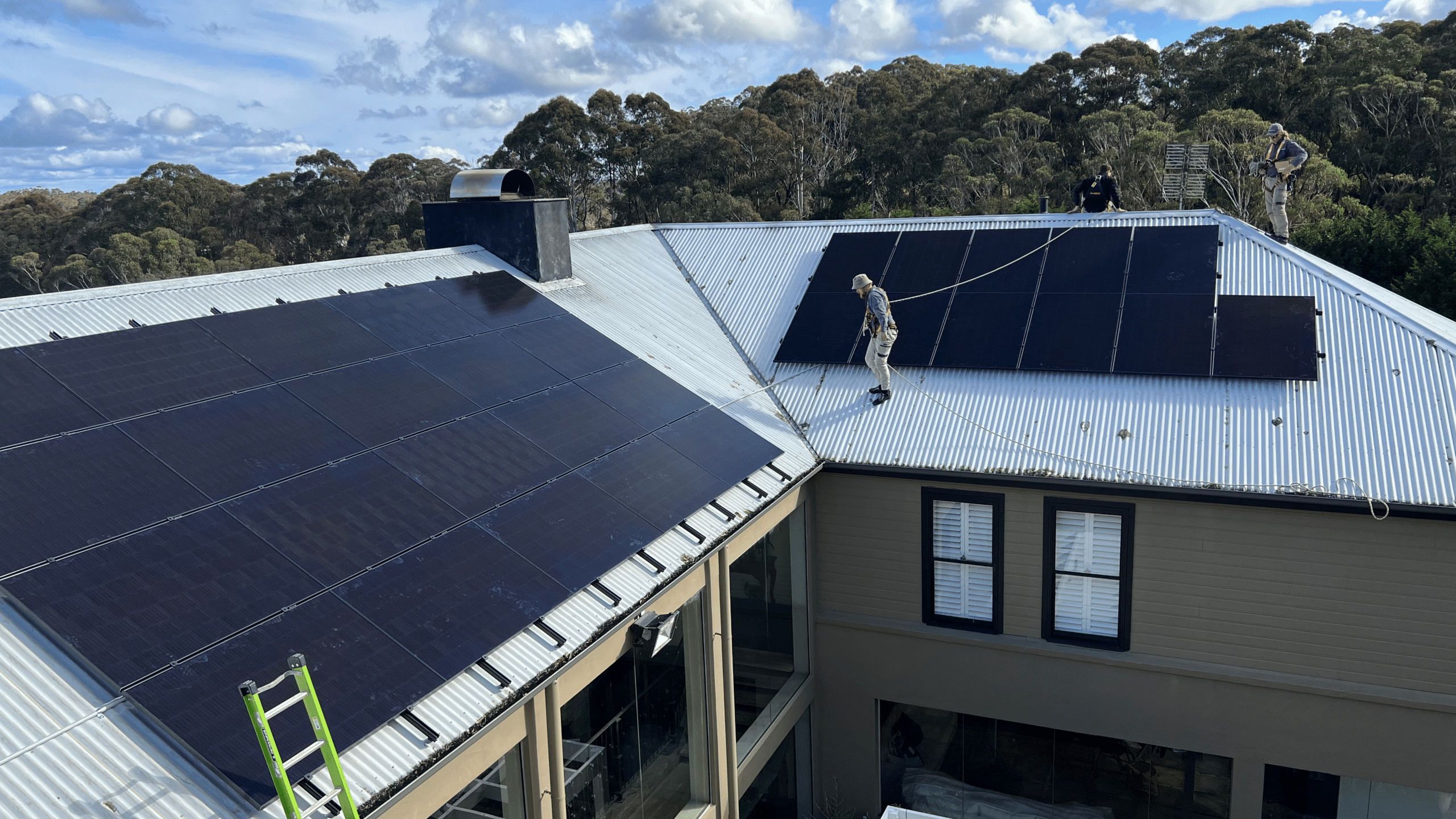
The program provides a government rebate to eligible landlords to install rooftop solar systems on rental properties.
The latest funding round opened on the 12th of December 2025 and is capped at 6,500 properties statewide. Once those allocations are approved, the round closes.
The goal is simple:
Lower electricity costs for eligible tenants
Encourage landlords to install solar
Improve the energy efficiency of Queensland’s rental housing
Unlike most solar rebates, this one specifically targets rental properties — a sector traditionally excluded from rooftop solar benefits.
How Much Is the Rebate? The Real Numbers Behind Queensland’s Solar for Renters Scheme
The rebate amount depends on the size of the solar system.
System capacity refers to the inverter size or total panel capacity — whichever is lower.
There is no upper size limit — but the maximum rebate remains $3,500 once the system reaches 5 kW.
Landlords must also contribute a minimum of $1,500 toward the system cost.
In practical terms, most systems installed under this program will likely sit in the 4–6.6 kW range, depending on roof space and budget.
Because the rebate plateaus at 5 kW, landlords choosing to install larger systems will have to fund the additional capacity themselves.
That doesn’t prevent larger installations — it simply means the government contribution stops increasing beyond that point. Which unfortunately means that these systems are likely not going to be large enough to fully cover a home’s needs.
Who Qualifies for the Supercharged Solar for Renters Rebate? Eligibility Explained Simply
Both landlord and tenant must qualify.
Tenant Income Thresholds (December 2025 Round)
Combined annual household taxable income must be:
Up to $66,667 for a single adult household
Up to $100,000 for households with two or more adults
The tenant must be on a valid lease and consent to the application.
Landlord Requirements
The landlord must:
Own a Queensland rental property
Install a minimum 3 kW grid-connected system
Use an accredited installer
Agree not to increase rent above CPI for at least 12 months after installation
If the tenant moves out later, the system remains with the property.
How Much Could Tenants Actually Save on Power Bills? A Realistic Look at Solar Savings
Solar savings depend largely on daytime electricity usage. So it will depend on whether the tenant is able to adjust their usage habits. With feed in tariffs dropping as low as they are these days, the tenant will have to work towards day time usage if they want to see substantial savings.
For a typical 4–6 kW system in Queensland:
Annual generation: roughly 6,000–8,500 kWh
Estimated bill reduction: $400–$1,000 per year, depending on usage patterns
Because batteries are not part of the program, excess daytime energy is exported at standard feed-in tariffs, and evening demand still relies on grid power.
This keeps costs lower — but with feed in tariffs dropping to almost zero these days it limits how much of the total bill can be offset.
Is the Program Worth It for Landlords? The Hidden Value of Solar on Rental Properties
The return for landlords isn’t direct electricity savings — it adds value to their asset..
With government funding covering up to $3,500, the required capital contribution is modest compared to many other upgrades.
Rental Appeal
Solar can make a property more attractive to cost-conscious tenants and may reduce vacancy risk.
Property Value
Broader market data supports solar as a value-adding feature.
Recent analysis from property insights firm Cotality found in their report Watts It Worth, that Australian homes with solar panels can sell for thousands more than comparable properties without solar.
While that research relates to home sales rather than rentals, it reflects a clear market trend: solar is increasingly viewed as a desirable property feature.
For long-term landlords, installing solar under a co-funded scheme may strengthen resale appeal in future.
Could These Systems Become Undersized? The Quiet Trade-Off Behind the Rebate Structure
Because the rebate tops out at 5 kW in value terms, some installations may be sized to meet — but not exceed — that threshold.
That may mean:
Partial bill offset rather than full coverage
No battery storage
Future expansion funded privately if energy needs increase
The program prioritises access and affordability rather than maximum system capacity.
For many renters, some bill reduction now may be more valuable than waiting for a fully future-proofed solution.
Pros and Cons of the Supercharged Solar for Renters Rebate
Pros
Tiered rebate up to $3,500
Lower electricity bills for eligible tenants
Improved rental competitiveness
Permanent property upgrade
Cons
Income restrictions apply
No battery included
Savings depend on daytime usage
Larger systems require additional landlord funding
Final Thoughts: Is the Supercharged Solar for Renters Program a Good Deal?
Well its a step in the right direction.
The Supercharged Solar for Renters program creates a structured, co-funded pathway for rental properties to install rooftop solar.
It won’t eliminate power bills. It doesn’t include batteries. It may not fully offset high-consumption households.
However, it does lower the barrier meaningfully.
For eligible tenants and long-term landlords, it’s a practical step toward more energy-efficient rental housing in Queensland.
To learn more about the solar industry check out our Lenergy Learning Centre, where we post articles all the time keeping consumers up to date on everything solar.
For many Tesla Powerwall 2 owners, the frustration of expanding their battery system may soon be over.
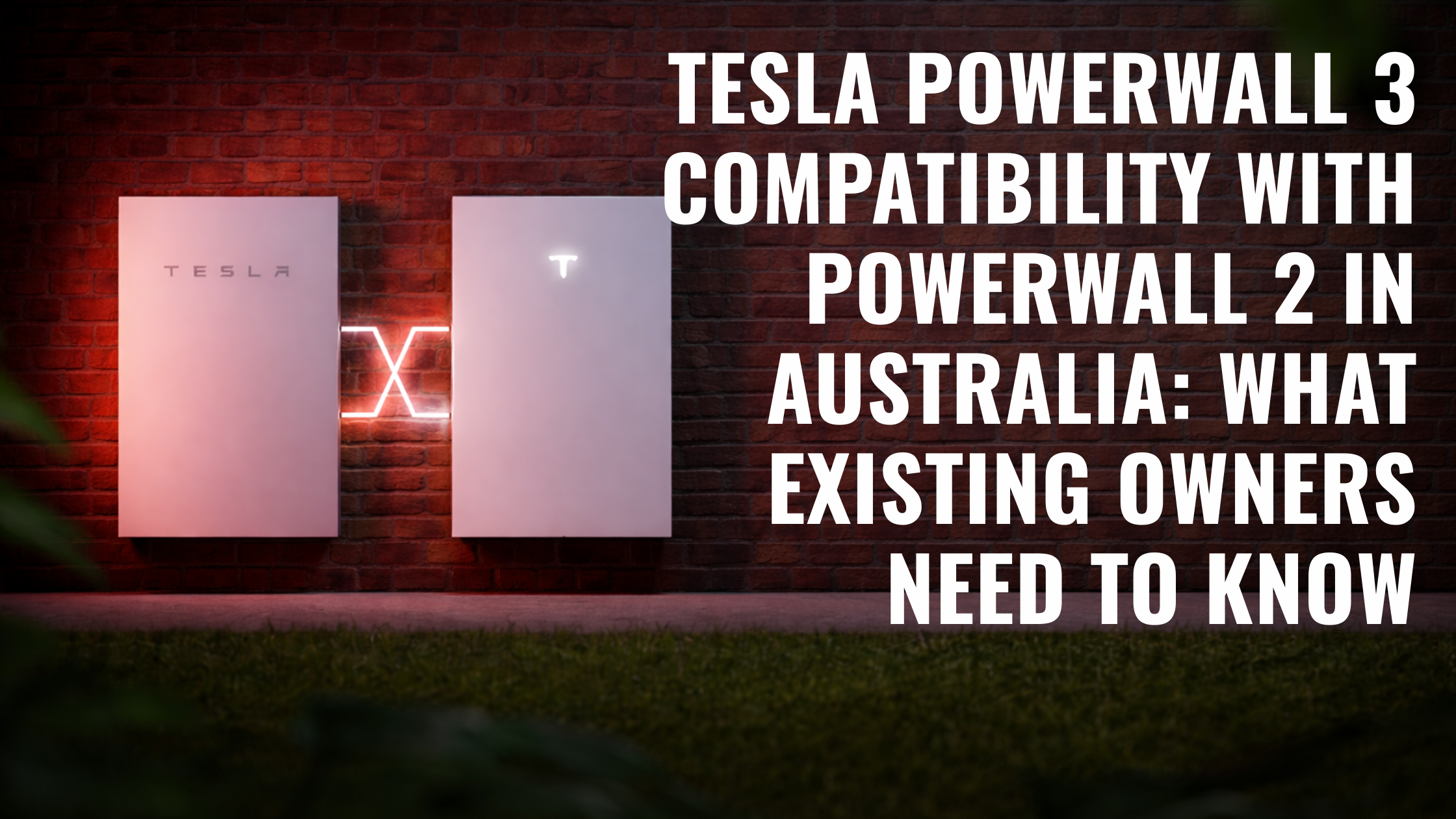
Tesla has confirmed that Powerwall 3 will soon be compatible with Powerwall 2, with Australia chosen as the first country globally to receive the rollout.
Since Powerwall 3 launched, existing Powerwall 2 owners have faced a frustrating situation. With Powerwall 2 no longer available for new installations in Australia, increasing battery storage has often meant replacing perfectly functional systems.
This upcoming update finally changes that.
Once compatibility is enabled, Powerwall 2 owners will be able to add a Powerwall 3 to their existing system, increasing their storage capacity without removing the battery they already have.
For the more than 100,000 Powerwall 2 systems installed across Australia, it provides a long-awaited upgrade pathway.
Can Powerwall 3 Finally Work With Powerwall 2 in Australia?
Yes. Tesla has confirmed that Powerwall 3 will soon be compatible with Powerwall 2 in Australia. Once enabled, homeowners with an existing Powerwall 2 will be able to add a Powerwall 3 to expand their battery storage without replacing their current system. Australia will be the first country globally to receive the update.
Powerwall 3 Powerwall 2 Compatibility in Australia: A Change That Was Long Overdue
When Powerwall 3 first launched, it couldn’t communicate with existing Powerwall 2 systems. Around the same time, Powerwall 2 was discontinued for new installations in Australia, leaving many homeowners in a frustrating position.
If you already had a Powerwall 2 and wanted more battery storage, your options were limited. In some cases, homeowners were even forced to remove perfectly functioning Powerwall 2 systems just to install newer batteries or qualify for available battery rebates.
That situation never made much sense. Solar and battery systems are long-term investments, and homeowners reasonably expect new technology to build on what they already have, not replace it entirely.
This update finally fixes that gap.
Once the compatibility feature is available, Powerwall 2 owners will be able to add a Powerwall 3 to their existing system, increasing their total battery storage without removing their current battery. It will also unlock the ability to add Powerwall Expansion Packs, allowing larger and more flexible storage systems.
Just as importantly, the update means many existing Powerwall 2 owners will finally be able to expand their systems while accessing battery incentives and rebate programs, something that has been difficult to do until now.
In short, homeowners who invested early in Powerwall technology will soon have the option to build on the system they already own instead of starting over.
When Will Powerwall 3 Be Compatible With Powerwall 2?
Tesla has confirmed that Powerwall 3 backwards compatibility with Powerwall 2 is coming soon, although an exact rollout date has not yet been announced.
Australia has been selected as the first country globally to receive the update, largely due to the large installed base of Powerwall systems locally.
The rollout will likely happen in stages:
Tesla enables compatibility through software updates
Homeowners can begin expanding existing systems with Powerwall 3
While Tesla hasn’t confirmed the exact timing yet, the announcement suggests the update is expected relatively soon.
Can Powerwall 2 Owners Access the Cheaper Home Batteries Program and Tesla’s Powerwall Rebate?
Another reason this update matters is that it may finally allow existing Powerwall 2 owners to expand their systems while taking advantage of available battery incentives before they reduce over time.
Until now, the lack of compatibility between Powerwall 2 and Powerwall 3 made it difficult for some homeowners to increase their battery storage without replacing existing equipment.
One important deadline to be aware of is that sign-ups for the Tesla rebate close March 31, with installations scheduled before September 30.
Who This Update Matters Most For
This update is most relevant for homeowners who already have a Powerwall 2 installed.
Existing Powerwall 2 Owners
If you already have a Powerwall 2, the update gives you a clear pathway to expand your battery storage without replacing your system.
Homes With Growing Energy Demand
Households adding electric vehicles, electrified heating, or larger solar systems may benefit from additional storage to maximise their solar energy use.
Homeowners Planning Long-Term Energy Independence
Solar and battery systems are long-term investments. Compatibility between Powerwall generations helps ensure your system can adapt as technology evolves.
If you’re interested in how the newer model compares, you can read more about Powerwall 3 lifespan and warrantyhere.
What This Update Means for the Future of Powerwall Systems
Battery technology evolves quickly, and compatibility between generations isn’t always guaranteed.
Tesla enabling Powerwall 3 compatibility with Powerwall 2 suggests a different approach — one that allows existing systems to grow rather than become obsolete.
For the 100,000+ Powerwall 2 systems already installed across Australia, this update means homeowners will soon have the option to expand their storage using newer technology without replacing the battery they already own.
With Australia chosen as the first country globally for the rollout, it highlights just how significant the local Powerwall market has become.
Thinking About Expanding Your Powerwall System?
If you already have a Powerwall 2 installed and are considering adding more battery storage, it may be worth speaking with a specialist before making any decisions.
Compatibility updates, rebate eligibility, and system design can vary depending on your existing solar setup, energy usage, and installation details.
If you’d like help understanding whether adding a Powerwall 3 to your current system makes sense, you can speak with a battery specialist at Lenergy who can review your setup and walk you through your options.
Here at Lenergy we are a Platinum Sigenergy installer, read more about what this means and why we made this choice here.
If you’re about to spend $8,000–$15,000 on a system, you don’t want a headline — you want clarity.
Does solar genuinely increase resale value? And if so, by how much?
Solar isn’t a small purchase. A standard 6.6kW system in Australia typically costs between $6,500 and $10,000. Add a battery and that can climb well beyond $15,000.
So the real question is simple:
Is solar just a bill-saving feature — or does it materially strengthen your property’s value?
The good news is we now have credible Australian data.
In September 2025, property analytics firm Cotality released its national report “Watt’s It Worth?”, analysing residential sales data across Australia.
Their key finding:
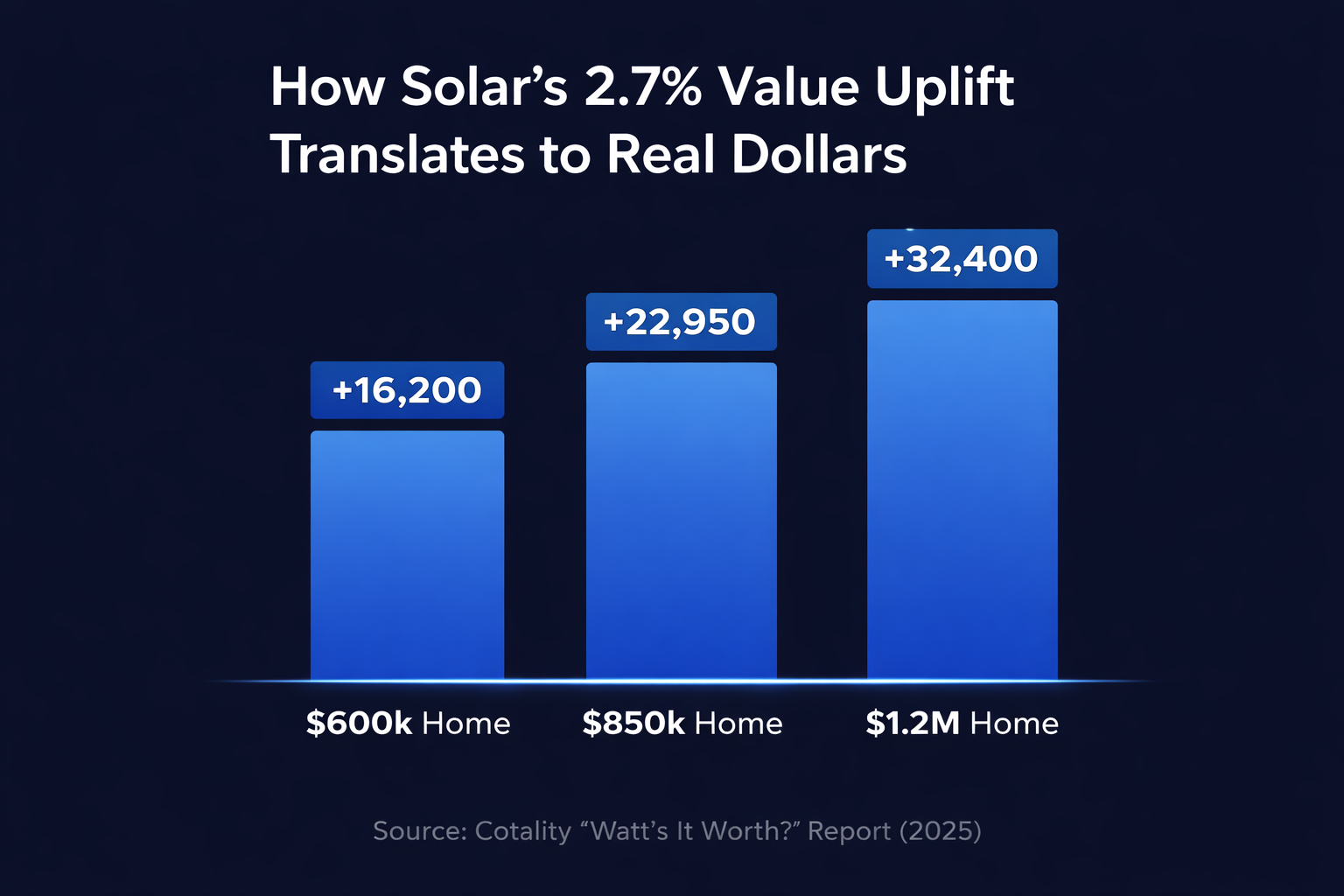
Homes with solar panels sell for an average of 2.7% more than comparable homes without solar. Nationally, that equates to roughly $23,100 in added value.
That’s where the headline comes from.
However, headlines only tell part of the story.
In this article, we’ll break down what the data actually shows — how solar impacts property values across Australia, why the uplift varies by location, and what factors like system size, warranties, and energy efficiency mean for resale.
What Increase Your Home Value By 2.7% Actually Means
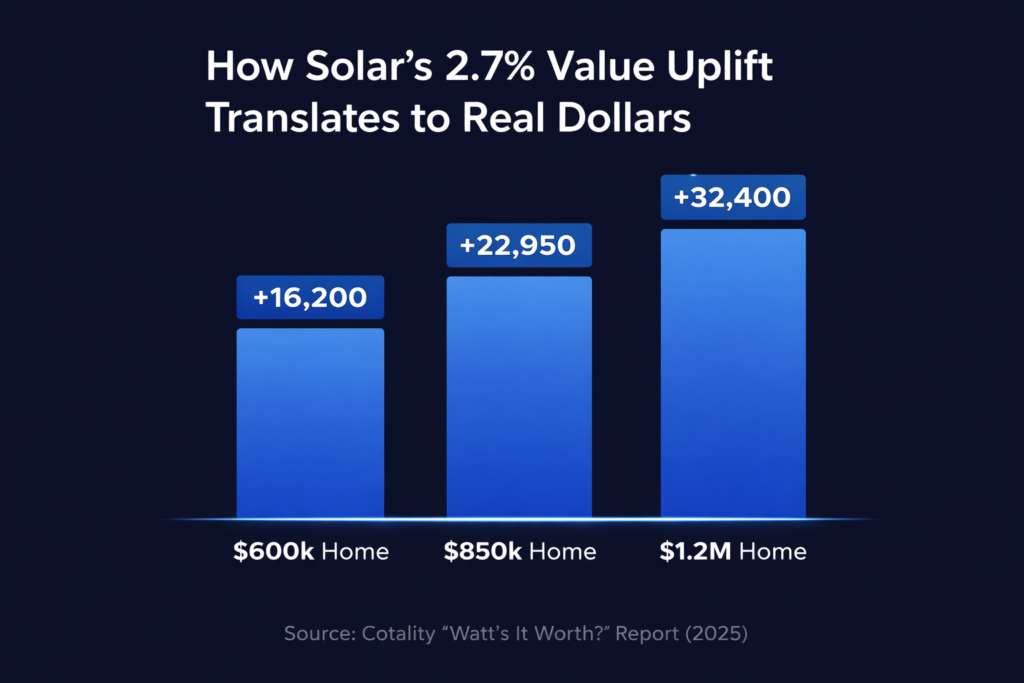
The Data shows that the uplift tends to be percentage-based — not a flat bonus. Meaning that the higher value of the home the more value returned when it is sold, for example:
$600,000 home → ~2.7% = $16,200
$850,000 home → ~2.7% = $22,950
$1.2M home → ~2.7% = $32,400
The $23,100 figure is simply the national average across price brackets.
Importantly, Cotality’s modelling compares like-for-like homes, meaning the uplift isn’t just because “better homes happen to have solar.” It reflects actual sale price behaviour in the market showing exactly how having solar will increase your home value.
That doesn’t mean every system adds exactly 2.7%.
It means that statistically, homes with solar are achieving stronger sale prices.
Why Some Cities See Bigger Gains
Exactly how much solar will increase your home value varies by location.
For example:
Hobart: ~6.9% uplift
Darwin: ~5–6% uplift
Adelaide & Perth: strong gains
Sydney: ~1.6% uplift
Why the variation?
Electricity prices vary by state
Climate and cooling loads differ
Solar penetration rates differ
Buyer expectations differ
In markets with high power prices or strong sun exposure, solar carries more financial weight.
In premium Sydney suburbs, solar may be increasingly expected — protecting value rather than dramatically increasing it.
Bigger Systems Tend to Carry More Weight
When it comes to resale value, size matters.
A small legacy 3kW system on a four-bedroom home doesn’t carry the same impact as a system that materially reduces electricity bills.
Today:
6.6kW is entry-level standard
10–13kW systems are common on larger homes
Homes with pools, ducted air-conditioning, or EV charging often benefit from even larger systems
How does investing in a solar system really save you money?
Depending on location and usage:
A 6.6kW system may save $1,200–$1,800 per year
A 10–13kW system may save $1,800–$3,000+ per year
Over five years:
$1,200/year = $6,000
$2,500/year = $12,500
While Cotality doesn’t break uplift down by system size, it’s reasonable to infer:
The stronger the real-world financial benefit, the stronger the perceived contribution to value.
Solar isn’t just panels on a roof.
It’s lower future household expenses.
The bigger the reduction, the more weight it tends to carry.
Longevity Builds Buyer Confidence
Modern solar panels aren’t short-term assets.
Most reputable panels now come with:
25-year product warranties
25–30 year performance warranties
If your system is only five years old, it likely still has 20 years of manufacturer coverage remaining.
That matters at resale.
Buyers aren’t just inheriting savings — they’re inheriting long-term infrastructure backed by transferable warranties.
Where Solar May Add Less Value
Solar doesn’t guarantee uplift in every situation.
Value may be limited if:
The system is 10–15+ years old
It’s undersized for the home
Documentation is missing
Installation quality is poor
The buyer intends to renovate or rebuild
In these cases, solar may protect competitiveness — but not drive premium pricing.
What About Batteries?
Battery uptake has increased significantly in recent years, driven by:
Falling feed-in tariffs
Rising electricity prices
Federal and state incentives
Under the current Federal Cheaper Home Batteries Program, the rebate reduces every six months. Early adopters receive larger subsidies, lowering effective system costs.
This stepped reduction may influence how buyers perceive recently installed batteries in coming years.
However, large-scale resale modelling hasn’t yet caught up.
The Cotality report isolates solar panels, not battery systems. There isn’t yet strong national data showing a defined percentage uplift tied directly to batteries.
That doesn’t mean they add no value.
It means the data is still maturing.
Solar has been mainstream for over a decade. Battery adoption is only now entering that phase.
Over the next 3–5 years, clearer resale patterns are likely to emerge.
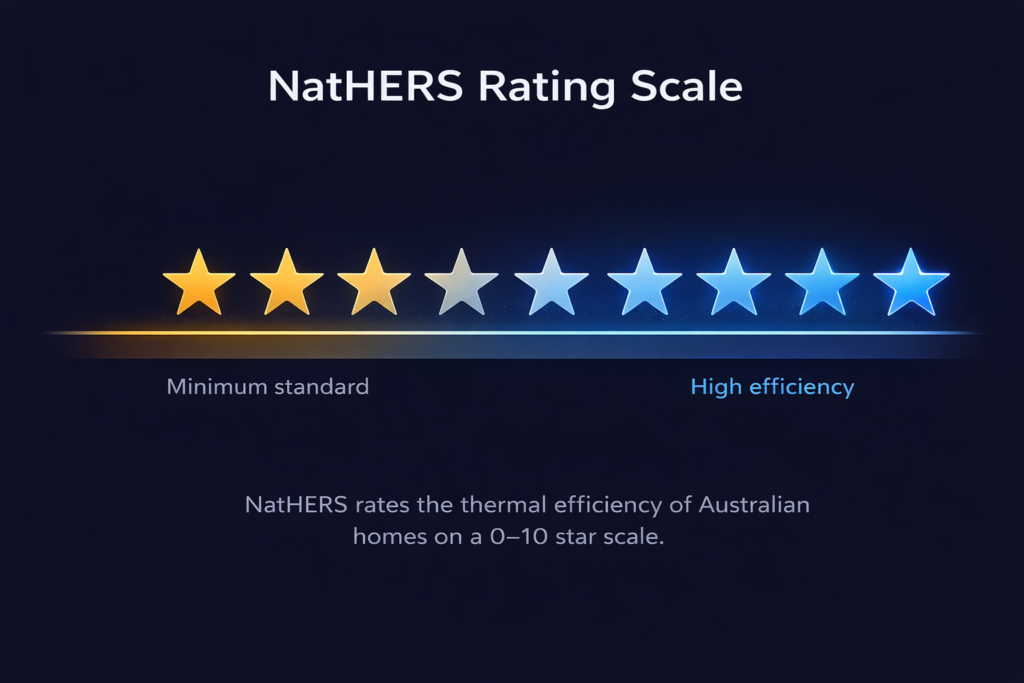
While solar itself isn’t what NatHERS measures, energy-efficient homes are increasingly outperforming less efficient ones.
Solar strengthens the broader narrative of lower running costs.
As energy disclosure becomes more prominent in Australian property markets, efficiency is likely to play a larger role in valuation.
Does solar increase your home’s value?
Based on the strongest Australian data available:
Yes — on average, by around 2.7%.
However, solar works best when viewed as more than a resale play.
It’s a way to:
Reduce your electricity bills
Protect yourself against rising tariffs
Improve comfort and energy resilience
Strengthen your home’s long-term appeal
If you install solar, benefit from years of savings, and then decide to sell, any resale uplift becomes an added bonus — not the sole justification for the investment.
In most cases, the larger and more effective the system, the stronger that overall value story becomes.
Want to Know How much Solar Could Increase Your Home Value?
Every property is different.
Location, electricity rates, roof space, system size — they all influence both savings and potential resale impact.
If you’re considering solar and want to understand:
What size system makes sense
What you could realistically save
How it may influence your home’s value
Reach out to us at Lenergy to speak with one of our specialists and start with a proper assessment of your home and usage.
When you understand the numbers clearly, the decision becomes much easier.
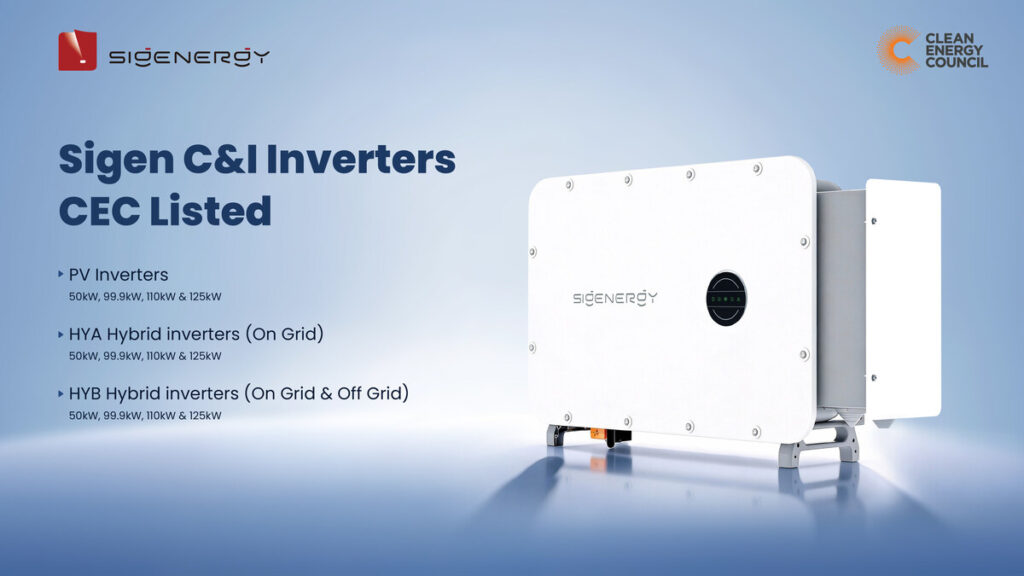
That means it meets Australian standards and is ready to be installed on commercial and industrial solar projects right now. If you’ve been waiting for a battery-ready commercial inverter that’s compliant locally — this is it.
Designed for Real Commercial Loads
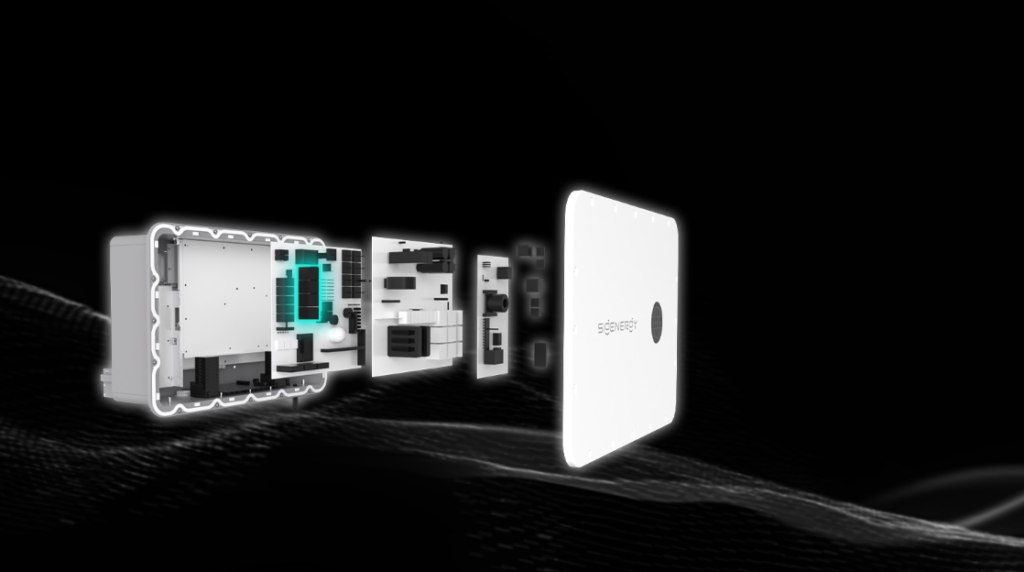
The Sigen C&I inverter range is built specifically for commercial and industrial systems — not residential hardware scaled up.
Key specs include:
Power output: 50kW, 99.9kW, 110kW & 125kW models
Maximum efficiency: Up to 98.8%
Up to 10 MPPTs (model dependent)
Maximum DC input voltage: 1100V
IP66 rating for outdoor installation
Full three-phase support
What that means for your business:
Greater string flexibility for complex roof layouts
High-efficiency power conversion
Suitable for warehouses, factories, schools and large office buildings
Outdoor-ready installation capability
Approved Models
The following models are now CEC approved and available for installation in Australia:
PV Inverters
50kW
99.9kW
110kW
125kW
HYA Hybrid Inverters (On-Grid Only)
50kW
99.9kW
110kW
125kW
HYB Hybrid Inverters (On-Grid & Off-Grid)
50kW
99.9kW
110kW
125kW
This gives commercial projects flexibility depending on whether you’re installing solar only, hybrid on-grid, or hybrid with off-grid capability.
DC-Coupled and Battery Ready
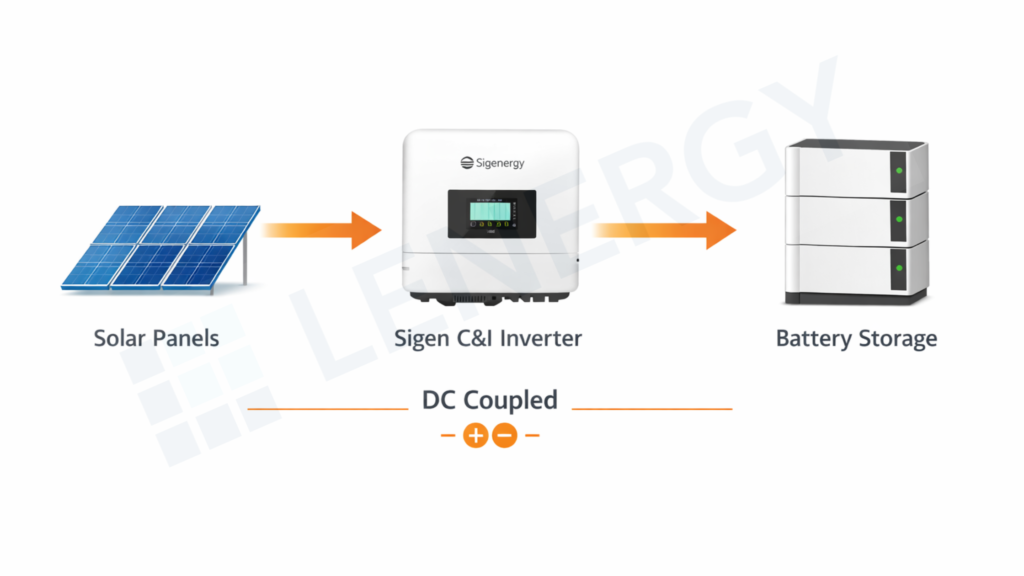
The Sigen C&I inverter uses a DC-coupled architecture, which allows solar energy to charge batteries directly.
Why that matters:
Fewer energy conversion steps
Higher system efficiency
Simpler battery integration
No major redesign required later
If you want to install solar now and integrate battery storage either today or in the future, the Sigen C&I inverter is designed to support both. With the SigenStack batteries now CEC approved, businesses have the flexibility to add storage when it suits their energy strategy and capital planning. For commercial projects managing investment carefully, that flexibility helps reduce long-term risk. If you’d like to understand the difference between AC and DC coupling more read our article on it here.
Battery Approval Status
The SigenStack12kWh batteries now CEC approved, which a fully integrated Sigenergy commercial battery solution is available now.
Integrated Smart Energy Management
The inverter includes a built-in Energy Management System (EMS).
This enables:
Real-time system monitoring
Solar self-consumption optimisation
Load control
Support for peak demand management
For sites exposed to demand charges or time-of-use tariffs, intelligent energy control can unlock additional savings beyond basic solar generation.
Built for Expansion
Energy usage evolves. If your business grows, adds EV charging, or changes operating hours, the Sigen C&I inverter supports:
Parallel installation
System expansion
Future battery integration
Sigenergy’s focus is always on designing its hardware to be ready to adapt and evolve according to what you need.
What the CEC Approval Means
The recent CEC approval simply means the Sigen C&I inverter range is ready for compliant installation in Australia. That’s it, it’s available for commercial deployment today. They can be found on the CEC approved list of inverters here.
Talk to Lenergy About Your Commercial Solar Project
At Lenergy, we design commercial solar systems around your real-world load profile, tariff exposure and long-term plans — not just hardware specifications.
If you’re considering commercial solar or want to explore a battery-ready design using the Sigen C&I inverter range, speak with our team.
We’ll assess your site and recommend a system that makes sense financially and operationally.
At $14,000–$18,000 installed, the real question isn’t how it performs on day one — it’s how it performs in year eight, nine, and ten.
We’ve worked directly with Powerwall systems for years and have reviewed Tesla’s official Australian warranty documents in detail. What we’ve learned is most confusion around battery lifespan doesn’t come from the technology itself. It comes from misunderstood expectations.
There’s a big difference between:
How long a battery can operate
How fast it degrades
And what Tesla actually guarantees in writing
In this article, you’ll get a clear breakdown of how long the Tesla Powerwall 3 is expected to last, exactly what the 10-year warranty covers (based on Tesla’s own documents), how degradation plays out in real homes, and what the recent Powerwall recall tells you about long-term support.
How Long Does the Tesla Powerwall 3 Actually Last?
The Warranty Answer: 10 Years
Tesla provides a 10-year product and performance warranty in Australia (see Tesla’s official AU warranty document).
That covers:
Manufacturing defects
Performance guarantee
Minimum capacity retention
But a 10-year warranty does not mean it dies in year 11.
The Realistic Lifespan: 10–15+ Years
Powerwall 3 uses LFP (Lithium Iron Phosphate) chemistry. That’s:
More stable than older lithium blends
Better for high cycle life
Less prone to thermal runaway
Based on real-world Powerwall 2 data and current LFP performance, most units should comfortably operate 10–15+ years, assuming normal residential use. It won’t be operating at full capacity in 12 years but if it has been taken care of it will most likely still be running.
What Does the 10-Year Warranty Actually Guarantee?
So for someone who installs a single Powerwall 3 with the usable capacity = 13.5 kWh. At 70%, that’s: 9.45 kWh guaranteed at year 10. If it drops below that inside warranty, Tesla must repair or replace it.
How Much Will It Degrade?
All batteries degrade in time.
With LFP chemistry, you’re typically looking at:
~1.5–2.5% per year
Slight early drop, then steady decline
By year 10, you’re likely somewhere around 70–80% capacity.
That doesn’t mean it stops working.
It means your 13.5 kWh battery might feel like a 10–11 kWh battery.
How Do You Offset Degradation Over Time?
Simple strategy: oversize your system from day one.
If you’re eligible for a battery rebate (like Tesla’s incentive or state/federal programs), that rebate is calculated on installed capacity and can only be claimed once.
Installing slightly more storage upfront:
Maximises rebate value
Gives you more usable capacity early
Offsets natural degradation later
Future-proofs EV charging or load growth
In other words, instead of buying exactly what you need today, you allow for what you usage might look like in 10 years.
There are batteries with longer warranties such as Enphase which offers a 15-year warranty on some of its battery systems.
On paper, that longer term can look appealing — and for some homeowners, it may absolutely suit their priorities, particularly if long-term warranty coverage is high on the list.
However, warranty length shouldn’t be viewed in isolation. Enphase systems typically sit at a higher price point, so it’s important to consider whether the additional five years of coverage meaningfully changes your long-term outcome.
For many households, the performance difference between year 10 and year 15 may be modest, especially when battery technology and pricing are likely to continue evolving over that timeframe.
A longer warranty can provide peace of mind — but it’s worth weighing whether the premium aligns with your goals, usage profile, and budget.
Tesla, by comparison, sits in the strong middle of the market:
10-year warranty
70% retention guarantee
No residential throughput cap
Backed by large-scale global support
It’s not positioned as the longest warranty available. It’s positioned as stable, clear, and commercially balanced. For many homeowners, that combination is what matters most.
What the Powerwall 2 Recall Taught Us (And Why It Matters)
In 2025, Tesla issued a recall affecting certain Powerwall 2 units installed in Australia due to a component-related overheating risk.
Let’s be clear about what it wasn’t.
It wasn’t a widespread battery fire crisis. It wasn’t a chemistry failure. It wasn’t a systemic collapse of the Powerwall platform.
It was a batch-specific component issue that required corrective action.
How Tesla Responded
This is where the real takeaway sits.
Tesla:
Identified affected units through remote monitoring systems
Notified impacted customers directly
Coordinated inspections and replacement pathways
Worked through certified installers
Managed communication through official channels
It was handled as a formal recall — not quietly dismissed or delayed.
For homeowners, that matters.
No manufacturer operating at global scale is immune from component faults. The difference is how they respond when something surfaces. In this case, Tesla responded publicly, systematically, and with replacement solutions in place.
When you’re buying a battery expected to sit on your wall for 10–15 years, the warranty document is only part of the equation.
Manufacturer behaviour is the other half.
The recall demonstrated that:
Tesla has remote diagnostic capability
Tesla has Australian support infrastructure
Tesla has supply chain capacity to address issues
Powerwall 3 is a different internal architecture from Powerwall 2. That doesn’t make it immune from future issues — no product is. However it does show that when problems arise, Tesla has shown it will act at scale, and long-term support capability is just as important as warranty wording.
What Could Void Your Warranty?
Most warranty failures come down to:
Poor installation
Environmental misuse (flood exposure etc.)
Disconnecting internet long-term
Unauthorised modifications
Powerwall 3 must remain connected for monitoring and firmware updates.
VPP participation is allowed, however, it is important to be aware that more cycling = more wear.
When it comes to these batteries the warranty itself is not the distinguishing feature, if you’re wanting to dive deeper into how they differ read more here:
It will degrade. It will lose capacity. It will age.
However:
It’s contractually protected for 10 years
It’s guaranteed to retain at least 70% capacity
It should realistically operate 10–15+ years
It’s backed by a manufacturer that has shown it responds when issues arise
The smarter play isn’t chasing the longest warranty number.
It’s:
Sizing it properly
Installing it correctly
Planning for natural degradation
Choosing a brand that will still exist in year 9
Picking a quality installer
Here at Lenergy we are a Platinum Sigenergy installer, read more about what this means and why we made this choice here.
Or if you are ready to speak to a specialist about what battery is the right option for you, reach out to our staff at Lenergy to speak with one of our specialists.
FAQ: Tesla Powerwall 3 Lifespan & Warranty
How long does the Tesla Powerwall 3 last?
Realistically 10–15+ years under normal residential use.
What is the Tesla Powerwall 3 warranty?
10 years with a guaranteed minimum of 70% usable capacity at year 10.
Does Powerwall 3 have a throughput limit?
No throughput cap for standard residential self-consumption use.
Will joining a VPP void the warranty?
No, if operated within Tesla-approved parameters. But increased cycling increases natural wear.
What happens after 10 years?
The battery continues operating — it’s just no longer under guaranteed performance terms.
Is a 15-year battery warranty better?
Not automatically. Brands like Enphase offer 15 years, but often at a price premium that doesn’t deliver proportionate value.
How can I protect against degradation?
Oversize slightly at install to maximise rebate value and ensure usable capacity remains strong in year 10+.
If you’re planning a solar battery, you’re probably focused on battery size, brand, and rebates. That’s where most of the attention goes — and understandably so. However, there’s another decision underneath all of that which has a major impact on how your system actually performs once it’s installed: how power flows through your home when you need it. This is where inverter size — the brains of your system — becomes critical.
At Lenergy, we take the time to understand exactly how you use power in your home before sizing your inverter — because we know how critical that decision is.
The inverter is the control centre of your system. It converts high-voltage DC electricity from your solar panels into usable 230V AC power for your home. In battery systems, it also manages the charging and discharging of stored energy. It optimises solar output through Maximum Power Point Tracking, manages grid exports, responds to network signals, provides monitoring through an app, communicates with smart devices like EV chargers, and shuts down safely during outages.
Underneath all that intelligence, it performs one fundamental job: converting DC energy into usable AC power — whether that energy originates from your solar panels or your battery. Its size, measured in kilowatts (kW), determines the maximum rate at which that conversion can occur. In practical terms, the inverter’s kW rating sets the upper limit on how much power can flow from your solar panels and battery into your home at any given moment.
To understand why that matters, it’s important to separate two measurements that are often confused: kW and kWh.
Kilowatt-hours (kWh) measure total stored or consumed energy.
Kilowatts (kW) measure instantaneous power — the rate at which energy is delivered.
A 5 kW inverter is rated to deliver up to 5 kW of AC power under standard operating conditions. If it operates at full output for one hour, that equates to 5 kWh of energy delivered over that hour.
That instantaneous limit determines:
How quickly your battery can charge
How much battery power your home can draw at once
Whether your system hits a ceiling during high-demand moments
This is the moment many homeowners realise why their neighbour’s battery “never seems full” — even though the sun is out all day. When inverter sizing is wrong, the system doesn’t fail — it just never quite performs the way you expected. This is where system architecture begins to matter.
If I Already Have Solar, Does My Inverter Limit My Battery Options?
If you already have solar and you’re adding a battery, the key question isn’t just “can a battery be added?”
It’s this:
How much power can my home access from solar and battery at any given time?
Most existing solar homes add batteries as AC-coupled systems.
That means:
Your solar inverter continues converting panel output
The battery connects through its own inverter
Power capability is distributed
In this setup, the battery inverter’s kW rating determines how fast the battery can charge and discharge.
If the battery inverter is rated at 5 kW, it can deliver up to 5 kW of power to the home. Larger batteries will still store more energy, but they can only move energy at the inverter’s rated speed.
A large battery paired with a modest battery inverter may take many hours to fully charge — and may struggle to reach full charge during winter without sufficient solar production hours.
Nothing is faulty. The system is simply operating within its power limits.
What Happens When Solar and a Battery Are Installed Together?
When solar and a battery are installed at the same time, many systems use a hybrid inverter (DC-coupled system).
In these systems, solar and battery energy are both managed and converted through the hybrid inverter before supplying AC power to the home.
The inverter’s AC output rating ultimately determines how much power can be delivered to the home at once.
For example:
12 kW solar array
10 kW hybrid inverter
Battery capable of 10 kW discharge
If the home demands 16 kW, the inverter can supply up to 10 kW. The balance must be supplied by the grid. This does not indicate inefficiency. It reflects the inverter’s rated AC output capacity.
Hybrid systems can perform extremely well — but inverter size must account for expected simultaneous loads. In practice, this is where most underperformance originates — not from poor hardware, but from conservative inverter size during the original design.
What’s the Difference Between DC-Coupled and AC-Coupled Battery Systems?
Understanding this difference is critical when planning inverter size, to gain an in depth understanding of the difference have a read of another one of our articles Adding a Battery to Your Solar: AC vs DC Coupling. To put it simply
DC-Coupled (Hybrid) Systems
One inverter manages solar conversion and battery integration
Total AC power delivery is capped by that inverter’s rating
High simultaneous loads can reach that ceiling
AC-Coupled Systems (most common for battery retrofits)
Solar and battery have separate inverter pathways
Power from both sources can contribute simultaneously
Inverter limits are distributed rather than centralised
(System-wide constraints such as grid connection limits, switchboard capacity and phase limits still apply.)
The right choice depends less on which architecture is “better” and more on whether you have an existing solar system.
Can a Large Battery Underperform If the Inverter Size Is Too Small?
Yes — and this is where expectations often fall apart.
A battery can only charge or discharge as fast as both the inverter and the battery’s own internal limits allow.
A 40 kWh battery paired with a 5 kW inverter:
Can only deliver up to 5 kW at any moment
Will take many hours to charge at full rate
May struggle to reach full charge during shorter winter solar days
The battery isn’t the problem. The inverter simply limits how quickly energy can move. This is why two homes with identical batteries on paper can see very different real-world results.
How Do All-in-One Systems Like Sigenergy and Alpha ESS Affect Inverter Size?
All-in-one systems combine:
Battery
Inverter
Control system
into a single integrated unit.
This simplifies installation — but in most cases, inverter power is largely defined upfront. As federal battery rebates are tied to battery capacity (kWh), there can be commercial pressure to prioritise storage size.
If inverter power is not considered alongside capacity, a system may technically qualify and operate correctly — but may not allow full access to the installed storage under peak conditions. Which is a design consideration, not a hardware fault.
With systems like Sigenergy SigenStor and Alpha ESS, careful inverter selection matters — particularly for homes with EV charging, high simultaneous loads, or future electrification plans.
Click here for more information on how these two batteries compare.
What Are the Most Common Inverter Sizing Mistakes?
Focusing on battery kWh and ignoring inverter kW
Assuming “battery-ready” means optimised
Underestimating peak household loads
Prioritising rebate-driven battery size without matching inverter power
Locking in inverter capacity without planning 5–10 years ahead
The result isn’t system failure. It’s reduced access to the energy you’ve paid for.
How Do You Choose the Right Inverter Size?
Start with power demand, not daily energy use.
Ask:
How much power does my home use at once?
Where does the system hit a power ceiling?
How fast can this battery realistically charge?
If we add an EV later, what becomes the limiting factor?
If an installer can clearly explain where the power limits sit in your system, you’re likely dealing with someone who understands battery design properly.
Not Sure If Your Inverter Is Sized Correctly?
Most battery disappointments aren’t caused by bad equipment. They’re caused by mismatched power design. Before you commit to a battery system, make sure you understand where the power limits sit — and whether they match how your home actually uses energy. A well-sized inverter doesn’t make headlines. But a well-designed system does.
The difference usually comes down to the installer — not the hardware. A quality installer won’t just ask how big a battery you want. They’ll ask how your home actually uses power, where the limits sit, and how to design around them properly.
If you’d like clarity around your own setup — whether you’re adding a battery to existing solar or starting from scratch — reach out to us at Lenergy. You can speak with one of our specialists who will design a system tailored to how your home actually uses energy. Battery performance isn’t determined by brand alone. It’s determined by the thinking behind the system.
Despite what much of the fancy marketing shows, no qualified installer in Australia is putting a solar battery inside your living space. It doesn’t happen. Under strict Australian battery positioning guidelines, home batteries are installed in garages, on external walls, or in sheds — not in bedrooms, hallways, or next to your couch. If someone suggests otherwise, that’s your cue to walk away.
So why is the topic of fire safety in regard to batteries so prominent?
You’ve likely seen news stories about lithium battery fires or heard about battery recalls. You might have been warned by a neighbour, or come across conflicting information online that made the risk feel bigger than it is.
Here at Lenergy, we have this conversation with our clients every day. When you’re considering installing a large battery in your home, asking “Is this actually safe?” isn’t being overly cautious — it’s a sensible question to ask before making a long-term decision.
Here’s the problem: most of what you hear about “battery fires” isn’t actually about home solar batteries at all. A lot of the concern traces back to a specific LG battery recall, combined with a growing number of fires involving e-bikes, power tools, phones, and cheap lithium chargers. Those stories get lumped together, and suddenly it feels like every battery is a ticking time bomb — even though modern home energy storage systems are designed, regulated, and installed very differently.
In this article, you’ll get a clear, fact-based answer to the question you actually care about: how safe are solar batteries in Australian homes, really? You’ll see real fire data from recent years, understand what safety systems are built into modern batteries, learn why installer quality matters more than brand hype, and decide for yourself whether the risk is acceptable for your home — or not.
Where Solar Batteries Are (and Aren’t) Installed in Australia
Before talking about fire risk, it’s important to clear up one of the biggest misconceptions around home batteries. A compliant solar battery is not installed inside your living space. No qualified installer will mount a battery in a bedroom, hallway, living room, or anywhere inside of your family home.
In Australia, battery installation locations are governed by strict national guidelines. These rules exist to reduce risk in the unlikely event something goes wrong. Under current Australian standards, a home battery will typically be installed in one of three places:
• In your garage • On an external wall of the house • In a detached shed or outbuilding
Installers must also maintain minimum clearances from windows, doors, vents, and ignition sources, and ensure the battery is protected from physical damage and excessive heat.
If an installer suggests placing a battery somewhere that doesn’t meet these rules — or dismisses them as “overkill” — that’s a red flag. The standards are not optional.
Why Are People Worried About Battery Fires in the First Place?
The concern around solar battery fires didn’t come out of nowhere. It was triggered by a very specific, real event — and then amplified.
Much of today’s fear traces back to the LG Energy Solution battery recall, which followed a small number of residential battery fires in Australia and overseas. Those incidents were investigated, and affected systems were recalled, replaced, or shut down.
That recall was the correct outcome. It showed that safety systems, regulators, and consumer protections worked.
The problem is what happened next.
Many headlines failed to explain that: • The issue related to specific LG battery models • The number of incidents was very small relative to installations • The recall applied to older battery designs
At the same time, unrelated lithium battery fires — involving e-bikes, power tools, phones, and chargers — became more common and more visible.
Those incidents started being mentally linked with home batteries, even though they are completely different technologies.
Are Home Solar Batteries Actually Catching Fire in Australia?
When you look at Australian regulator and fire authority data, a clear picture emerges: home solar battery fires are rare.
Australia has seen tens of thousands of residential batteries installed. In that context, only a small number of confirmed incidents involving fixed home battery systems have been recorded over several years.
Most confirmed incidents are linked to: • Recalled or early-generation systems • Installations completed before current standards existed • Non-compliant installations
If you are looking for more information on these incidents here are some helpful links:
The majority of lithium battery fires reported by fire services involve portable batteries — not fixed home energy storage systems.
Why Most Lithium Battery Fires Have Nothing to Do With Home Batteries
Most lithium battery fire statistics relate to:
• E-bikes and e-scooters • Power tools and chargers • Phones, laptops, and power banks
These batteries are frequently handled, dropped, charged indoors, and often poorly manufactured or misused.
Home solar batteries are fundamentally different. They are:
• Fixed in place • Installed by licensed electricians • Actively monitored • Designed to shut down automatically if faults occur • Installed under strict Australian standards
This distinction is critical — and often missing from public discussion.
What Makes Modern Solar Batteries Safer Than Older Lithium Batteries?
Safer battery chemistry
Most modern home batteries use Lithium Iron Phosphate (LFP) chemistry. LFP batteries are:
• More thermally stable • Far less prone to thermal runaway • Free of cobalt • Slower and more predictable to degrade
Active monitoring and shutdown
All compliant batteries include a Battery Management System (BMS) that constantly monitors temperature, voltage, and current. If anything moves outside safe limits, the system can isolate or shut down automatically.
Physical containment
Modern batteries are housed in robust enclosures with internal separation, venting pathways, and pressure relief systems designed to contain faults safely.
What Fire Protection Exists Inside Different Solar Batteries?
Modern batteries rely on multiple layers of protection, including:
• Battery Management Systems • Multi-point thermal monitoring • Cell and module isolation • Pressure relief and venting • Fire-retardant materials • In some systems, internal fire suppression
The goal is not to fight fires after they start — it’s to prevent faults from escalating in the first place.
Solar Battery Fire Safety Comparison: What Protections Do Different Batteries Use?
Why the Installer Matters More Than the Battery Brand
Most serious battery issues trace back to installation quality, not the battery itself.
A good installer ensures: • Correct placement • Required clearances • Adequate ventilation • Proper electrical protection • Full commissioning and compliance
Cheap installs often cut corners. That’s where risk increases. If you are looking for a quality installer in your area, reach out to us at Lenergy to speak with one of our specialists and figure out whether we could be the right option for you.
Where a Solar Battery Should Be Installed to Minimise Fire Risk
Clearance rules apply to doors, windows, vents, gas meters, and ignition sources. Placement is a passive safety layer that further reduces risk.
Should Fire Risk Stop You From Getting a Solar Battery?
For most homes, no.
Solar batteries are not risk-free, but the risk is low, understood, and managed when: • A reputable battery is chosen • A qualified installer is used • Australian standards are followed • The battery is installed in the right place
A battery might not be right for you if: • You don’t have a compliant installation location • You’re considering an installer that is oddly cheap • You’re uncomfortable with any additional electrical risk • The financial return doesn’t stack up
There’s nothing wrong with deciding a battery isn’t for you — as long as the decision is informed, not fear-driven.
Want to talk through battery safety for your home?
If you’re considering a solar battery and want to understand what’s safe, what’s compliant, and what actually makes sense for your home, Lenergy can help.
Lenergy installs solar and battery systems across Australia and works strictly within current Australian safety and installation standards. That means looking at:
• Whether your home has a suitable battery location • What battery types are appropriate for your setup • How to minimise risk through correct design and installation
If you’d like an honest assessment of whether a battery is right for your home, speak with the team at Lenergy.
You’ve narrowed your shortlist down to the Sigenergy SigenStor. The specifications are strong. The modular design offers flexibility. The monitoring app is polished and intuitive. It’s also become one of the fastest-growing home battery systems in Australia.
At the same time, it’s a newer brand locally. That naturally raises questions about long-term reliability, warranty strength, and how issues are handled if something goes wrong. The recent recall has also prompted closer scrutiny of the fine print.
When you’re investing $10,000–$25,000 into a battery system, the warranty isn’t a minor detail. It’s your safety net. Understanding what’s covered — and what isn’t — is essential before signing a contract.
This article provides a straightforward breakdown of the Sigenergy SigenStor warranty, including warranty length, performance guarantees, operating limits, connectivity requirements, what can void coverage, and what we learnt from the recent recall.
Sigenergy’s Growth in Australia: Why Warranty Scrutiny Matters
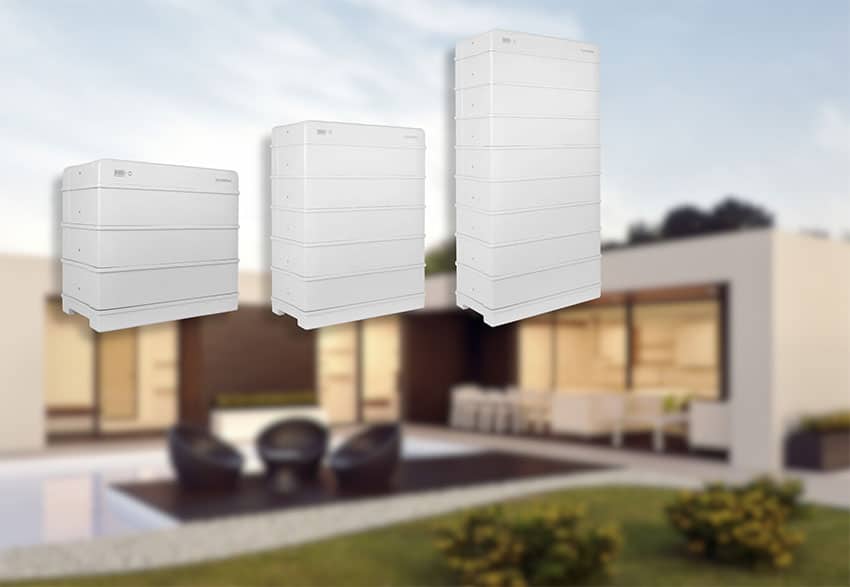
Sigenergy has expanded quickly across the Australian residential battery market. The SigenStor all-in-one battery system combines modular battery stacks, hybrid inverter functionality, EV charging integration, and advanced software controls in one platform. That integrated design has driven strong installer adoption.
Rapid growth isn’t inherently risky. However, it does mean new systems in the field and early real-world testing. With any newer brand, warranty clarity becomes more important.
Established players like Tesla, BYD, Sungrow, Enphase and Alpha ESS have longer Australian track records. Independent platforms such as SolarQuotes’ battery reviewsshow how different brands have performed over time. Sigenergy is building its dataset now. That doesn’t make it weaker — it just means transparency matters.
A home battery is built to last for years. The warranty tells you who’s responsible if issues occur.
This aligns with the premium residential market standard for home energy storage systems.
If you’re unsure how hybrid systems differ from retrofitted options, our guide on AC-coupled vs hybrid battery systemsexplains the integration differences clearly.
Performance Warranty
The battery modules are covered by a minimum 70% retained usable capacity at Year 10, provided operating conditions are met.
For example, if someone installs a 24 kWh system, it must retain at least 16.8 kWh usable capacity at Year 10.
This 70% threshold is consistent with the Tesla Powerwall 3 warranty structure and several other premium lithium iron phosphate (LFP) battery brands.
Time vs Throughput Structure
Sigenergy primarily uses a time-and-capacity model rather than a strict published MWh throughput cap.
That means:
The warranty runs for 10 years
The battery must retain at least 70% usable capacity
Operation must remain within defined limits
Some models from BYD and Sungrow define warranty performance more explicitly around total energy discharged. Sigenergy instead links performance to compliant operation within system safeguards.
What About the Sigenergy Gateway Warranty?
If your SigenStor system includes a Sigenergy Gateway for whole-home backup, that device carries its own warranty terms.
Coverage applies to manufacturing defects and hardware faults under normal operating conditions.
It does not include a performance retention component, as it is a switching and control device rather than an energy storage unit.
The Gateway manages:
Grid isolation
Backup switchover
Circuit control during outages
If blackout protection is one of your main reasons for installing a battery, the Gateway is critical to that function.
What the Gateway Warranty Covers
Internal switching components
Control electronics
Hardware faults under normal use
What It Does Not Cover
Incorrect installation or wiring
Damage caused by grid faults outside specification
Environmental damage (flood, fire, impact)
Unauthorised modification
Because the Gateway connects directly to your switchboard, correct installation by a licensed and accredited electrician is essential.
In a SigenStor setup, the overall structure typically looks like this:
Battery modules → 10 years / 70% capacity
Energy controller → 10 years
Gateway (if installed) → 5 years standard
Operating Limits That Matter
Warranty eligibility depends on operating within manufacturer specifications.
Depth of Discharge (DoD)
The SigenStor system manages discharge automatically through its internal Battery Management System (BMS). Default settings are designed to protect longevity and prevent over-discharge. Tampering with reserve buffers or discharge limits can affect coverage.
Temperature Range
Typical operating range is approximately –10°C to 50°C, though the optimal range is narrower.
Sustained exposure to extreme heat, poor ventilation, or flood-prone environments may compromise eligibility. That’s why installation location matters — particularly in hotter parts of Australia. Our article Are Solar Batteries Safe outlines what considerations need to be made when identifying where to place a battery.
Internet Connectivity Requirement
Sigenergy requires systems to remain connected for monitoring and firmware updates.
If the system is offline for more than 90 consecutive days, warranty eligibility may be affected.
This clause exists to:
Enable firmware safety updates
Maintain operational logs
Allow remote diagnostics
For most metropolitan homes with stable broadband, this is rarely an issue. It becomes more relevant in remote or seasonal properties. Short Wi-Fi dropouts do not trigger problems — extended, uninterrupted disconnection does.
What Is Covered
The warranty generally covers:
Manufacturing defects
Hardware faults
Premature degradation below 70% within 10 years
Energy controller failures under compliant operation
Repair or replacement is determined by the manufacturer.
Coverage applies to the product itself. Installation-related faults fall under installer responsibility, which is why choosing an installer that is currently accredited by Solar Accreditation Australia matters.
What Is Not Covered
Exclusions are standard for the industry and typically include:
Incorrect installation or commissioning
Unlicensed installation
Flood, fire, lightning or physical damage
Unauthorised hardware additions
Firmware tampering
Operating outside environmental limits
Extended monitoring disconnection
Forcing operation beyond manufacturer safeguards
Most void scenarios are linked to non-compliant installation or modification — not normal use.
If you’re unsure what separates reputable providers from risky operators it is best to seek out an independent reviewer such as SolarQuotes to check the quality of potential installers.
VPP Participation and Cycling
Virtual Power Plant participation does not automatically void the Sigenergy warranty.
The performance warranty is based on:
A 10-year period
Retention of at least 70% usable capacity
Operation within manufacturer-defined specifications
Sigenergy does not publish a simple “maximum cycles per day” rule. Instead, compliance depends on whether the system is operated within its intended residential parameters and default protection settings.
If a VPP program operates within manufacturer-integrated settings and does not override system safeguards, it remains within warranty intent. Where risk may arise is if the system is deliberately pushed beyond its configured protections.
The Sigenergy Recall: What Happened and What It Means
Recalls happen, it is just the reality of any industry. What is important is to observe how brands respond when incidents occur. In late 2025, a voluntary recall was issued for certain Sigenergy single-phase 8 kW, 10 kW and 12 kW energy controllers used within SigenStor systems in Australia.
The recall related to the AC terminal plug connection within the energy controller. In some installations, the terminal connection could overheat if not properly terminated, creating a potential fire risk.
Regulatory coverage, including the ACCC recall notice, indicated that the issue was associated with the AC plug design and termination sensitivity — not the battery cells themselves.
Importantly:
The recall applied to specific single-phase models
The issue was component-specific
There were no reports of serious injury
The recall was conducted under Australian regulatory oversight
What Actions Were Taken
The response included:
A firmware update to reduce sustained output while units awaited replacement
Direct notification to affected customers
Free replacement of impacted energy controllers
Introduction of a revised AC plug design
An additional 2-year warranty extension on replaced units
A recall does not void a product warranty. It is a corrective safety action. In this case, affected units were identified, mitigated, replaced where required, and provided with extended coverage.
Comparison to Tesla, Sungrow, BYD, Enphase and Alpha ESS
At a structural level, Sigenergy’s warranty aligns with the premium residential battery segment in Australia.
A 10-year product warranty is standard across Tesla Powerwall, Sungrow, BYD, Enphase, Alpha ESS and Sigenergy.
A minimum 70% retained capacity at Year 10 is common among premium LFP systems including Sigenergy, Tesla, Enphase and Alpha ESS.
Where differences begin to appear is in backup hardware. Tesla’s Backup Gateway typically aligns with its broader system warranty structure, while Sigenergy’s Gateway carries a 5-year standard product warranty. Other brands integrate switching differently within the inverter architecture.
The more meaningful distinctions between brands are not in headline duration but in:
Brand tenure in Australia
Installed base size
Length of local service history
Support infrastructure maturity
Sigenergy is newer and expanding rapidly, meaning long-term Australian field data is still accumulating.
Is It Strong Enough?
On paper, the warranty aligns with the premium residential segment. It is neither unusually short nor unusually generous.
The bigger factors influencing real-world protection are:
Installation quality
Operating compliance
Monitoring connectivity
Manufacturer support response
The recall demonstrated regulatory oversight and hardware replacement — which is how safety events should be handled.
For homeowners comfortable with a rapidly growing platform backed by structured warranty terms, the framework is defensible. For those prioritising longest-established brands, that preference is understandable.
The warranty itself is not the outlier.
If SigenStor is on your shortlist, the important thing isn’t just the headline 10-year warranty. It’s understanding how the entire system is covered — battery modules, energy controller, Gateway, monitoring requirements — and how that applies to your home.
Warranty terms only work properly when the system is:
Designed correctly
Installed to manufacturer specification
Commissioned properly
Set up with compliant monitoring
If you’re exploring whether the Sigenergy SigenStor is right for your home, Lenergy can walk you through the warranty structure, recall status, installation requirements and long-term considerations before you make a decision.
That way, you’re not just choosing a battery — you’re choosing a system that’s installed and supported correctly from day one.
You got a solar battery to offset your night time usage and gain energy independence, with the recent changes in the Federal Battery Rebate and the new solar sharing scheme, being smart with how you use your battery is more important now than ever. Many new methods for maximising the value that you get from your battery are emerging such as Virtual Power Plants (VPPs), solar sharing, community batteries, and new ways of “participating in the energy market.” It all sounds promising — the idea that your stored solar could help power the neighbourhood or earn you credits through smart trading.
Are VPPs really about sharing power — or giving it away? As the energy system shifts, so do the rules. Feed-in tariffs are shrinking. Retailers are offering new kinds of incentives, and suddenly, there’s more pressure than ever to hand over battery control in exchange for monthly payments and app-based promises.
At Lenergy, we believe in helping you understand what’s actually on offer — and what it means for your power, your battery, and your bottom line.
In this article, you’ll learn:
What a VPP actually is
Which batteries are compatible — and which programs are worth a look
What you give up (and gain) by joining
How VPPs compare to other battery strategies like force charging
And how to decide what level of grid participation is right for you
What Is a Virtual Power Plant (VPP)?
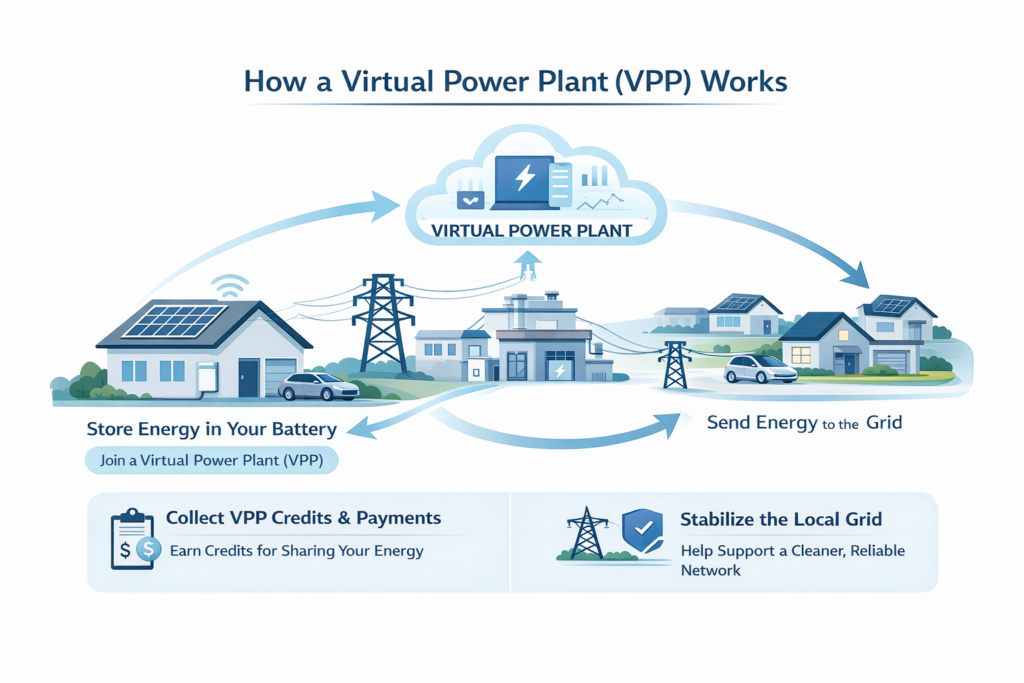
A Virtual Power Plant (VPP) is a network of solar and battery systems coordinated by a central operator — often an energy retailer — to help balance the electricity grid. When energy demand surges or the grid needs support, the VPP can tap into its members’ stored battery power to discharge energy back into the grid, usually in exchange for some form of payment or credit. Read more about VPP’s in our recent article How Does A Virtual Power Plant (VPP) Work?
On the surface, it sounds like a win-win: your battery gets put to work when it’s needed most, and you’re rewarded for contributing. However, they are not for everyone. They work your battery harder, surrender some of your control to the energy retailer and can require some work to set up.
The level of control you surrender depends entirely on the program. Some VPPs allow you to set usage limits or reserve a portion of your battery for personal use. Others may take full control during peak events or maintain access at all times. Some let you opt in or out of specific events — others don’t.
Not all VPPs are created equal, and the difference between them can have a real impact on your savings, backup protection, and peace of mind.
How Do VPPs Work With Solar Batteries?
When you join a Virtual Power Plant, your solar battery becomes part of a distributed energy resource — meaning it’s not just powering your home anymore, it’s also helping to support the wider grid.
Here’s what typically happens behind the scenes:
Your battery charges during the day using excess solar energy from your rooftop panels.
The VPP monitors grid conditions in real time. When demand is high, the VPP operator can remotely discharge power from your battery back into the grid.
You receive compensation for this contribution, which may come as a flat payment, usage-based credit, or time-based reward, depending on the plan.
Some VPPs allow you to set a reserve limit, or opt in or out of specific events. Others may maintain access to your battery at all times, regardless of your preferences.
What That Actually Looks Like in Real Plans
Here are some real-world examples that show how much control different VPPs give you:
VPPs That Let You Keep Some Control
Amber: Amber’s model allows users to keep high levels of battery control, including reserve settings.
Nectr VPP: Nectr gives you the option to set a battery reserve limit (e.g. 20% state of charge), ensuring part of your battery is kept for your own use.
Plans with kWh limits: Some VPPs cap the amount of energy they can access from your battery over a year. This provides predictability and avoids excessive discharging. Specific plans vary by state and battery model.
VPPs Where the Operator Has More Control
AGL Bring Your Own Battery: AGL’s VPP terms give AGL full access to your battery during grid events. There is less flexibility for opting out of events or setting strict reserve levels. Learn more
Origin Loop: Origin’s Loop plan allows them to dispatch your battery during events to support the grid. The terms vary depending on the battery brand and plan, and reserve settings may not be guaranteed. Learn more
EnergyAustralia: Designed to give the operator control over battery output during peak periods to stabilise the grid. Battery discharge events are not user-controlled. Learn more
That’s why reading the fine print matters. VPPs fundamentally change how your battery is used — and who it’s used for.
Pros and Cons of Joining a VPP
Pros
Extra income or bill credits from solar exports for participation
Grid support and contribution to a cleaner, more stable energy system
Smart monitoring apps that help you track performance and optimise usage
Eligibility for certain battery rebates that are contingent on a VPP in some states (NSW, WA, & SA)
Cons
Loss of control over when and how your battery is used
Increased wear and tear from more frequent charging and discharging
Retailer lock-in that may limit your plan choices or flexibility
Unclear returns that depend heavily on usage patterns and program terms
A good VPP can add value, but only if the terms suit your household’s needs.
Which Solar Batteries Are VPP-Ready in Australia?
Not every solar battery can be used in a Virtual Power Plant. Your system needs to be compatible with the VPP provider’s software and control requirements. Below are some commonly supported batteries:
Battery Brand
Models Commonly VPP-Ready
Sigenergy
SigenStor
Tesla
Powerwall 2, Powerwall 3
Sonnen
eco, hybrid, sonnenBatterie Evo
Alpha ESS
Smile5, Smile T10, Storion series
Enphase
Enphase IQ Battery
BYD
HVS, HVM (with Fronius/SMA)
SolarEdge
SolarEdge Energy Bank
Redback
Smart Hybrid System
Eguana
Evolve
Sungrow
SBR096/SBR128 (with Hybrid Inverter)
LG Chem
RESU10/13 (with compatible hybrid inverters)
Senec
SENEC.Home
GoodWe
Lynx Home F/H (with GoodWe Hybrid Inverter)
Always check with the VPP provider or your installer to confirm compatibility. If you don’t have a battery yet and are still deciding which one is right for you, check out our article “5 Tips For Choosing The Right Battery For Your Home.”
VPP Comparison Table: What They Pay, What They Require, and Who They Suit
Note: Always review the provider’s website for the most up-to-date program conditions, payment models, and control terms.
VPPs vs Solar Sharing Plans with Free Energy Windows
As VPPs become more common, a newer breed of energy plan is also emerging — ones that offer free daily electricity windows to encourage smarter battery use. Some of these plans are part of broader VPP arrangements, while others give you more control over when and how your battery charges.
These are a part of the government’s solar sharing scheme and they’re changing the game for households who want to use their battery more effectively — especially if your solar system doesn’t fully charge your battery every day.
What Are Free Energy Window Plans?
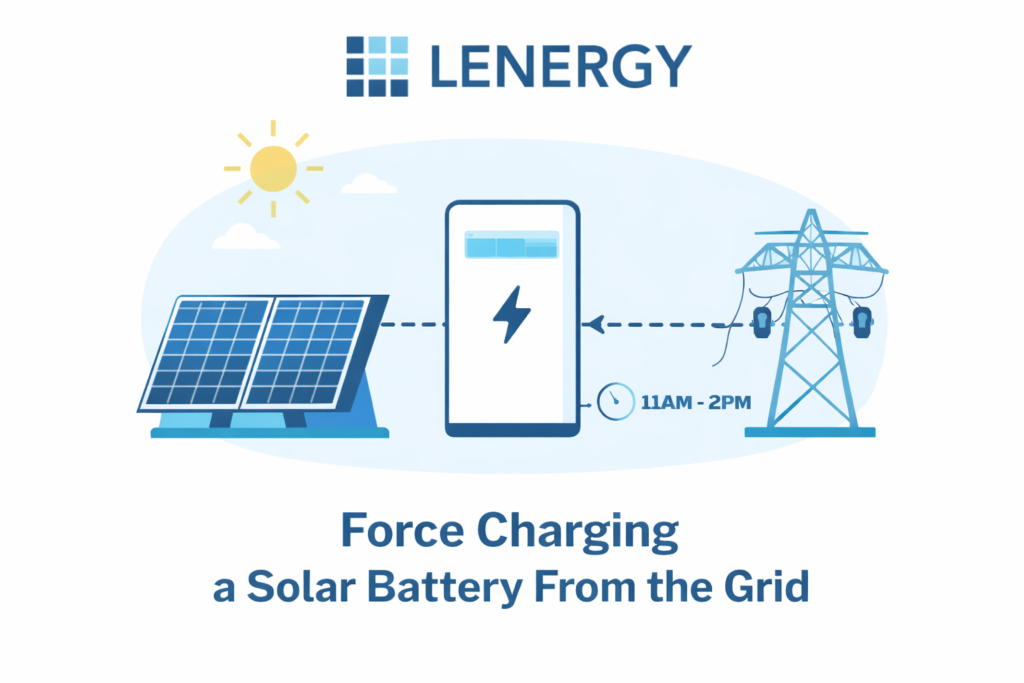
These plans offer three hours of free electricity from the grid every day. You can set your battery to force-charge during that window — even if your solar isn’t producing — and then use that stored energy during expensive peak times.
Two examples currently available in Australia:
Retailer
Plan Name
Free Charging Window
Battery Control
VPP Participation?
GloBird Energy
ZeroHero-C
3-hour fixed window (late morning to early afternoon)
You control when to charge
Yes — technically a VPP, but no forced discharge
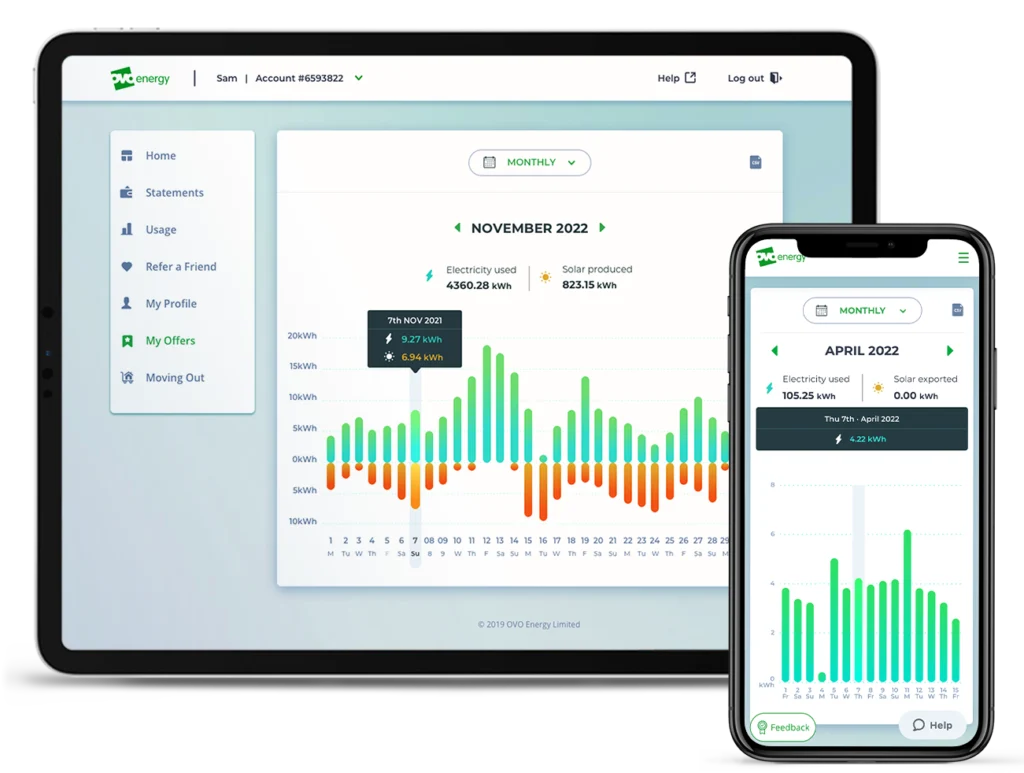
OVO Energy
The Free 3 Plan
Customisable 3-hour daily window
You control charging and discharging
No
These plans are designed to reward customers for shifting their energy use. They still support grid stability, but in a way that gives you more autonomy than many traditional VPPs.
VPPs vs Free Energy Plans — A Quick Comparison
Feature
Free Energy Plans
Traditional VPPs
Charging Source
Grid (during free window)
Solar only (usually)
Battery Control
User-controlled
VPP operator-controlled
Goal
Shift grid load via user habits
Grid stability via coordinated discharge
Financial Model
Saves money by avoiding peak rates
Earns income through grid support
Flexibility
High
Varies (some lock-in)
Best For
Homes with low solar output
Homes with large solar surplus
These plans offer an alternative way to get more out of your battery — especially if you value predictability and control.
Thinking of Joining a VPP? Here Are a Few Things to Keep in Mind
Virtual Power Plants can offer great benefits — especially for homes with large batteries and plenty of excess solar. However, that doesn’t mean they suit everyone. If you’re on the fence, these tips will help you assess whether a VPP aligns with your setup and priorities.
Value Battery Control? Read the Fine Print
Some VPPs let you keep a portion of your battery reserved for personal use. Others may discharge your battery at any time, including when you’d rather keep it full. If maintaining full control or backup power is important to you, check the program’s control settings carefully.
Limited Solar Generation? Consider Other Options
If your battery rarely fills because of system size, shade, or high daytime usage, there may not be much surplus to offer a VPP. In this case, a plan like OVO’s or GloBird’s 3-hour free energy option might offer better value — letting you charge from the grid when solar falls short.
Watch for Lock-Ins with Retailers
Most VPPs are tied to a specific electricity provider. That means you may lose access to the program (or get hit with exit fees) if you decide to switch plans. If flexibility matters to you, weigh this carefully.
Understand the Real-World Returns
VPP marketing often highlights earnings potential, but in practice, returns are usually modest — often between $100–$200 a year, depending on your usage, battery size, and the plan’s structure. Make sure you’re comfortable with the trade-off between control and financial gain.
Prefer Simplicity? Go with Something More Predictable
VPPs can involve software setups, app monitoring, and participation in grid events. If you want something more hands-off, a straightforward energy plan with free off-peak charging may suit you better — no events, no control surrender, just simple savings.
Check Availability and Compatibility First
Not all VPPs are available in all regions, and not all batteries are supported. Before going too far down the path, check that your equipment, location, and energy plan are eligible for the program you’re considering.
A good VPP can make a lot of sense — but only if the terms align with your goals and comfort level. If not, there are other ways to maximise your battery’s value without giving up control.
Are VPPs Worth It?
Virtual Power Plants are one of the most promising developments in the home energy space, however, they are new and constantly evolving in how they function. When the fit is right, they can help you earn extra value from your battery, support the grid, and participate in a smarter energy future.
They are by no means a must-do for every homeowner. If your battery rarely fills, if you value full control, or if you’re already seeing strong savings through a free charging plan, a VPP might not add much — and could even work against your goals.
The good news is that you have options.
You can:
Join a VPP that gives you flexible control
Stick with a simple plan that rewards smart charging habits
Or hold off for now and reassess as your usage or tech evolves
The key is understanding how these programs work — and what trade-offs they involve. If you want to speak to an expert on whether a VPP could make getting a battery a viable option for you, reach out to us at Lenergy.
Buying a solar battery in 2026 can be overwhelming
With the federal battery rebate in full swing and electricity prices climbing, interest in home batteries has never been higher. But while the ads make it sound simple — “grab your rebate and start saving” — the reality is a little trickier. From choosing the wrong size, to falling for a too-good-to-be-true finance offer, to missing out on thousands in rebates because of poor timing, we’ve seen too many homeowners make decisions they regret later.
At Lenergy, we’ve helped hundreds of Australian families choose solar and battery systems that actually fit their lifestyle and save them money. We have also seen the common mistakes that trip people up — the ones that are often overlooked until it’s too late.
In this blog, you’ll learn what not to do when buying a battery in 2026. We’ll cover the technical traps, timing mistakes, and dodgy deals to avoid — and show you how to set yourself up with a system that works now and well into the future.
One of the biggest mistakes homeowners make is buying a battery without understanding their actual energy use. It’s easy to get swept up in the idea of “saving money” or “being more independent,” but unless you’ve looked at how much power you use — and when — you’re flying blind.
Solar batteries save you the most when they’re storing solar power that you would otherwise send to the grid for a low feed-in tariff, and then discharging it when you’d normally be buying expensive electricity. That’s called self-consumption, and it’s where batteries shine.
However, every household’s pattern is different. Some use more power in the evenings, others during the day. If you’re not home when the sun’s out — or if your solar system doesn’t produce much excess energy — your battery might sit half-empty and take years longer to pay off.
A quick way to check your numbers:
Even if your bill doesn’t break down what times you are using electricity, you can still get a solid read on whether a battery will help.
Start by comparing your average daily imports and exports. Most energy bills will show how many kilowatt-hours (kWh) you import from the grid and how much excess solar you export. If your export number is high — and you’re still importing a decent amount — a battery could store that excess and offset your evening use.
If you have a monitoring app, check when your usage spikes. If most of your power use happens after sunset (e.g. cooking, heating, entertainment), your solar isn’t helping during those hours — and that’s exactly where a battery fits in.
Not sure why your bill’s still high? Without a battery, your excess solar is often sold to the grid for just 0–5 cents per kWh — only to be bought back later for 30–50 cents per kWh. That’s why aligning your solar with your usage matters — and batteries are the tool that makes that possible.
Still unsure? Ask your installer for a consumption model based on your bills and system data. It’s the fastest way to get a reality check on whether a battery stacks up.
2. Assuming All Batteries Are Created Equal
It’s tempting to think all solar batteries do the same thing — store excess energy and release it when you need it. However, the truth is, there are major differences between brands, technologies, and features that can affect your savings, flexibility, and reliability over time.
Key factors that separate one battery from another:
Battery chemistry: Most modern batteries use lithium-ion, but there are different types. Lithium iron phosphate (LiFePO4), for example, is known for being safer and more thermally stable. Other chemistries may offer higher energy density but shorter life spans.
Round-trip efficiency: This is how much of your solar energy the battery stores and successfully delivers back to your home. The Sigenergy SigenStor, for example, offers up to 98% round-trip efficiency when DC-coupled — meaning almost no energy is lost between storage and use. In comparison, the AlphaESS SMILE-G3-S5 battery system lists a maximum inverter efficiency of 97.3% and a Depth of Discharge (DoD) of 95%, with real-world round-trip efficiency typically estimated between 90–93% . While a few percentage points may not seem like much, over 10+ years of daily charging and discharging, this can add up to hundreds of kilowatt-hours — and hundreds of dollars either saved or lost.
Backup capability: Not all batteries provide backup power during blackouts. Some need additional hardware, while others may only support partial home backup. If you want peace of mind during outages, confirm whether your system supports whole-home or essential-load backup — and what’s included in the quote. A good examples of batteries that provide full blackout protection is Sigenergy’s Sigenstor.
Scalability: Some systems let you add more capacity later. Others don’t. If you’re planning to increase your energy use in future — say with an EV, pool, or electric heating — it’s smart to choose a battery that lets you scale up without replacing everything.
Monitoring and smart features: Most systems offer basic app monitoring, but some are far more advanced. Look for smart batteries that can learn your usage patterns, respond to energy price signals, and help you optimise savings without needing to babysit the system.
Warranty and local support: Most batteries come with a 10-year warranty — but what’s actually covered, and for how long, can vary a lot. Some warranties are based on time alone. Others are capped by how much energy the battery stores and discharges over its life — called energy throughput. If you cycle the battery heavily, that type of warranty could run out earlier than expected.
Here’s how some of the better-known brands compare:
Enphase IQ Battery 5P Offers a 15-year warranty in Australia, and it’s based on time — not capped by usage for most households. That means even if you use it daily, you’re covered. Enphase also has strong local support if something goes wrong.
Sigenergy SigenStor Comes with a 10-year warranty, and is designed with modular parts. If one battery unit fails, it can be replaced without touching the rest. That makes it easier and cheaper to maintain long-term.
Sungrow SBH Battery Also has a 10-year warranty, while it’s mainly time-based, the battery needs to be used within certain limits (which your installer should explain). It’s a popular choice because Sungrow has good reliability and Australian support.
Tesla Powerwall 2 & 3 The Powerwall 2 comes with a 10-year warranty, but it also includes a cap of 37.8 megawatt-hours (MWh) of total energy use. If you cycle the battery heavily — such as in a Virtual Power Plant (VPP) or full-home backup scenario — you could reach that limit before the 10 years are up. The newer Powerwall 3, however, does not have a specified throughput cap in its Australian warranty. It offers a straight 10-year time-based warranty, which is simpler and more flexible for everyday users — as long as the unit remains properly connected and maintained.
3. Ignoring the CEC Approval List
Not all batteries sold in Australia are created equal — and not all of them qualify for government rebates. One of the most overlooked but critical checks is making sure the battery you’re considering is on the Clean Energy Council (CEC) Approved Products List.
Why it matters:
To be eligible for rebates under the Federal Battery Incentive or any state-level Virtual Power Plant (VPP) schemes, your battery must be on the CEC’s approved list. This ensures:
If you skip this step and install an unlisted battery, you could lose thousands in rebates — and be left with a product that can’t be serviced locally or supported under warranty.
Where to check:
The CEC publishes an up-to-dateApproved Batteries List showing usable and nominal capacities, safety certifications, and recent updates. For example:
Alpha ESS, Enphase, and Sigenergy all appear in recent updates with revised capacity ratings.
Even reputable brands regularly revise their listed specs — so double-check the model number against the official document before signing anything.
If the battery brand or model you’re being offered isn’t listed, walk away — or ask your installer why.
4. Underestimating Installation Compatibility and Limitations
It’s easy to assume any battery can be plugged into your existing solar system — but that’s not always the case. Not every battery works with every inverter, and some setups require extra gear or cabling that can add thousands to your install cost.
Things that often get overlooked:
Inverter compatibility matters — but it’s usually solvable: For example, the AlphaESS SMILE-G3-S5 is a hybrid battery system with its own built-in inverter, typically used in new solar + battery installs. But if you already have a solar system with a non-hybrid inverter, that’s not a dealbreaker. You can simply AC-couple the AlphaESS battery — installing it as a separate system that works alongside your existing panels. This is a common setup for retrofits and doesn’t require you to replace your current inverter. Just make sure your installer includes any additional components (like a smart meter or switchboard isolator) needed to make the two systems work smoothly together.
The Sigenergy SigenStor can be either AC- or DC-coupled. DC-coupling gives you higher efficiency and is ideal for full new systems, while AC-coupling makes it a clean retrofit for homes that already have solar installed.
Three-phase homes need extra planning: If your home uses three-phase power (common in larger houses or homes with ducted air con), not all battery systems can provide full backup across all three phases. The SigenStor stands out here — it’s one of the few systems that can support three-phase whole-home backup, while many others (including AlphaESS) only back up a single phase unless extra hardware is added.
Switchboard upgrades aren’t always optional: Depending on your existing setup, installing a battery may require switchboard upgrades, extra circuit protection, or isolator switches. These can add hundreds — or even thousands — to the install if not accounted for upfront.
What to do:
Before you commit, ask your installer:
Will this battery work with my existing inverter?
Is it AC- or DC-coupled, and which suits my setup?
Can it back up my whole home (especially if I’m on three-phase)?
Will I need any switchboard upgrades, isolators, or new cabling?
Is everything quoted upfront?
The key is to make sure the system you’re buying is designed for your house, your power supply, and your usage patterns — not just what’s convenient for the installer to sell.
5. Being Sold on a ‘Bargain Battery’ That Isn’t a Bargain
Every week, people get pulled in by battery quotes that seem way cheaper than the rest. But once the install is done — or even halfway through — the real costs begin to surface.
These cut-price quotes often hide crucial details like:
The brand and model of the battery (or a vague promise of “premium quality”)
Whether backup power is included
What’s excluded from the install (e.g. switchboard upgrades, cabling, software setup)
Who actually honours the warranty — and whether there’s any local support at all
Some of the lowest battery prices advertised online are only achievable because:
The rebate is quietly pocketed by the installer instead of passed through to you
The battery is a lesser-known or unapproved brand not on the CEC list
Essential features like blackout protection, smart monitoring, or even a basic warranty are left out
You’re locked into a non-refundable deposit before seeing the full scope of the system
What starts as a cheap deal can quickly balloon into:
A system that doesn’t meet your needs
Add-on costs for extra hardware or installation steps
Frustration when support is slow — or nonexistent
What to do instead:
Ask for a full itemised quote that includes make, model, battery size, and key features
Check if the battery is CEC-approved
Confirm whether blackout protection, monitoring, and smart controls are included
Avoid quotes that don’t clearly show where the rebate goes
Stick with installers who provide transparent pricing and explain what’s included — and what’s not
If the price looks too good to be true — and the details are vague — you’re probably not getting the deal you think you are.
6. Choosing a Battery That’s Too Small for Your Needs
Many homeowners are tempted to “just get a small one for now.” However, with the federal battery rebate only available once per home, and the amount you receive tied directly to the size of your battery, going small can mean missing out on thousands in support — and a system that underdelivers for years to come.
How the rebate actually works:
Under theUpdatedFederal Cheaper Home Batteries Program, rebate amounts are based on your battery’s usable kilowatt-hour (kWh) capacity, using a sliding STC (Small-scale Technology Certificate) factor:
0–14 kWh: You receive 100% of the rebate rate per kWh
>14–28 kWh: You receive 60% of the rate for any kWh above 14
>28–50 kWh: You receive 15% of the rate for any kWh above 28
>50 kWh: No additional rebate applies (capped at 50 kWh)
That means you still receive some rebate benefit all the way up to 50 kWh — and in many cases, oversizing pays off both upfront and over time.
Why going bigger makes sense
A 20–28 kWh system hits the sweet spot for families with higher evening usage, electric vehicles, or electric heating. You’ll get most of the rebate and plenty of storage for shifting your energy use off the grid.
Going to 40–50 kWh maximises future flexibility. Even though the rebate per kWh drops significantly after 28 kWh, you’re future-proofing against rising usage, time-of-use pricing, and potential VPP participation — especially if you plan to electrify your home or add a second EV. This option is also great for solar systems that are not producing enough energy as it provides plenty of spare storage that can be force-charged from the grid.
Smaller batteries (under 14 kWh) leave little room to grow. You may save money upfront, but you’ll lose out on rebate value and need to draw more power from the grid during peak times — exactly when energy is most expensive.
And remember: you only get one shot.
Because the rebate is only available once per household, most experts now recommend sizing your battery to meet not just today’s usage — but tomorrow’s needs too. Oversizing now is usually more cost-effective than replacing or upgrading later.
7. Waiting Too Long and Missing Out on the 2026 Rebate Window
The federal battery rebate has been a game-changer — but from 1 May 2026, it’s about to get less generous.
According to the Smart Energy Council, the rebate changes are part of a planned adjustment to ensure the long-term viability of the program. While the CHBP is still backed with $5 billion in funding and expected to support over 1.25 million battery installs by 2030, the window to maximise your return is now.
What’s changing in May 2026?
The federal rebate is tiered based on your battery’s usable capacity. From 1 May 2026, the STC factors used to calculate the rebate will be reduced. That means:
A battery installed in April 2026 could receive up to $1,000 more than the same battery installed in June
The per-kWh rebate value will drop across all tiers, affecting systems of all sizes
You’ll still receive a rebate — but the total amount will be significantly lower
Installers are already booking out — especially for large or complex installs
Battery prices are rising due to global demand and supply chain pressure
Delaying could mean missing the rebate entirely if you can’t get installed in time
If you’re planning to add a battery in 2026, the next few months are your best chance to lock in the higher rebate and avoid disappointment.
8. Overlooking What You Want To Achieve Long-term
Too often, homeowners choose a battery based only on what they need right now — without thinking about how their electricity use might grow or what they want the battery to do long-term. This short-term mindset can lead to frustration, underperformance, and missed opportunities.
Ask yourself: what do you want your battery to do — now and in future?
Here are some common priorities — and why they matter when choosing the right system:
Provide backup power during blackouts If energy security matters to you, make sure the battery includes blackout protection — and check what it actually covers. Some systems only support a few circuits, like your fridge and lights. Others, like Sigenergy’s SigenStor, support whole-home backup, even in three-phase homes.
Lower your power bills through load shifting Many homes are now on time-of-use tariffs, where evening electricity is far more expensive than daytime power. A battery lets you store your excess solar and use it during these peak pricing windows — especially useful if your evening usage is high.
Join a Virtual Power Plant (VPP) If earning money from your battery appeals to you, look into VPP programs that pay you to export stored energy back to the grid during demand peaks. Most VPPs require 10 kWh or more of capacity, and not all batteries are compatible — so check if the system is VPP-ready.
Support future electrification Planning to buy an EV, get rid of gas heating, or install a pool or spa? These changes will all increase your power use — especially in the evenings. Installing a larger battery now (e.g. 20–50 kWh) helps cover this extra demand without needing an expensive upgrade later.
Your battery is a long-term investment
A well-chosen battery should support your home for the next 10–15 years. That means:
Thinking ahead to how your usage might change
Choosing a system with the flexibility to grow
Making sure it can deliver on the things that matter most to you — whether that’s lower bills, blackout protection, or earning from a VPP
If you’re not sure what your future usage might look like, a good installer should help you model different scenarios and recommend a system that gives you room to grow. Chat to our team at Lenergy for a no obligation energy assessment.
Buying a solar battery isn’t something you do every day — and once it’s installed, you’re living with that choice for the next decade or more. That’s why taking the time to understand your energy use, your future plans, and how the rebate works can make a huge difference in both your savings and your satisfaction.
Here’s a quick checklist to avoid the most common mistakes:
Run the numbers — don’t guess at savings or size
Make sure the battery is CEC-approved for safety and rebate eligibility
Choose a system that’s compatible with your existing setup — or get a clear plan for upgrades
Don’t go too small — the rebate only applies once, and future expansion isn’t always easy
Act before May 2026 to avoid losing thousands in rebate value
Think about your long-term goals — like EVs, electrification, and blackout protection
If you’re after more guidance on how to make a smart battery decision, check out this in-depth guide:
A good battery can cut your bills, reduce your reliance on the grid, and future-proof your home. But only if it’s the right battery — for you, your house, and your goals
You open your electricity bill. The number on the front page makes your stomach drop. You think, “How on earth am I using that much power?” When you try to dig into the details, it’s a wall of jargon. Supply charges, time-of-use rates, controlled loads, kilowatt-hours — and then there’s a mystery credit you didn’t expect. It’s hard to tell what you’re actually paying for, let alone whether it’s fair.
To make things worse? Rates have quietly gone up — again. There’s no big announcement, no warning, just a higher price per kilowatt-hour tucked away in the fine print. You feel like you’re being charged more and getting less, without really knowing why.
You’re not alone. Electricity bills are designed to show the information — not explain it. For those who have added solar, it often introduces another layer of complexity to the bill.
At Lenergy, we speak to homeowners every week who are paying too much, not just because they use too much power — but because they don’t fully understand what they’re being charged for, or how to check it. Often, they’ve already taken steps to reduce usage or install solar, yet they still feel like they’re still paying more than they expected.
In this guide, you’ll learn how to read your electricity bill with confidence. We’ll show you exactly what to look for — step by step — with visual examples to help you follow along. Whether you have solar or not, you’ll understand what each charge means, why your bill fluctuates across the year, and how to spot red flags — such as sneaky rate increases.
Most electricity bills are designed for accountants, not everyday homeowners. They’re packed with technical terms, hard-to-follow tables, and totals that don’t tell the full story. Even if your usage is consistent, your bill can still go up — and you’re left wondering what changed.
A big part of the confusion comes from how energy is priced. You’re not just paying for how much electricity you use. You’re also paying:
A daily supply charge just to be connected to the grid
Different usage rates depending on when you use power (peak, off-peak, shoulder)
Extra costs or credits if you have solar
And sometimes, sudden rate increases that aren’t clearly flagged
Then there’s the issue of how you pay. Many households are on weekly or fortnightly direct debits — and while this can make bills feel more manageable, it can also mask how much you’re actually spending. The payments feel small, but the total across a billing cycle (especially quarterly ones) can be surprisingly high.
It’s no wonder people look at the “Amount Due” on the front page and feel blindsided. It might include weeks of backdated charges or spread across a long billing period. If you’re not tracking your usage or the rising rates underneath, it’s easy to miss the bigger picture.
If you’ve ever thought, “My usage hasn’t changed, but my bill has,” — this section will explain why.
What to Look for When You Open Your Bill
Before you start scanning rows of numbers or wondering what a kilowatt-hour actually costs — pause. The most useful thing you can do with your electricity bill is to start with four key metrics. These tell you how your charges are calculated, how long they cover, and whether anything looks off.
Here’s what to look for:
Billing Period
This tells you the exact dates the bill covers. Some people get billed monthly, others quarterly. If you don’t notice this upfront, it’s easy to misjudge how high your bill really is.
Always double-check how many days your bill is spread across. A $500 bill might seem massive — until you realise it’s covering 90 days, not 30.
Average Daily Usage
This shows how much electricity you use on an average day, usually in kilowatt-hours (kWh). It’s one of the easiest ways to track whether your usage is changing — especially useful across seasons.
Compare this to your past bills to spot trends. Some retailers also compare your usage to “similar homes” — which can be helpful, but take it with a grain of salt.
Usage Rates
You might be paying different rates for electricity depending on when you use it:
Flat rate: One rate for all hours
Time-of-use (TOU): Higher rates during peak hours, lower off-peak
Shoulder rates: Mid-tier pricing between peak and off-peak periods
Controlled load: A separate rate for specific appliances like electric hot water systems, usually at night
Understanding your rates helps you match your habits. If you’re on TOU pricing and running appliances during peak times, your costs can climb quickly — even if your usage is low. Knowing when shoulder and off-peak periods apply can help you shift usage and save.
Daily Supply Charge
This is a fixed amount you pay every day just to be connected to the grid — even if you use no electricity at all.
It’s usually listed separately to usage rates and often surprises people. Multiply it by the number of days in your billing period to see how much it really adds up to.
Learning to spot these four things takes just a minute — but it gives you a clearer picture of what you’re really paying for.
Breaking Down the Metrics: What You’re Actually Being Charged For
Once you’ve found the basics — billing period, usage, supply charge, and rates — the next step is understanding what all those line items on your bill actually mean. This section gives you a simple breakdown of the most common charges and credits you’ll see.
Daily Supply Charge
This is a fixed fee just for being connected to the electricity grid — it’s charged per day, no matter how much or how little power you use. It usually ranges from 90 cents to $1.30 per day depending on your plan and provider.
If your bill covers 90 days, and your supply charge is $1.10/day, that is adding $99 in connection fees alone to your bill — before accounting for a single kilowatt-hour of energy.
Some plans — especially controlled load and time-of-use (TOU) tariffs — may include additional daily supply charges for each metering configuration. For example:
If you have a controlled load for your electric hot water system, you might see a second supply charge just for that meter.
Some TOU plans may break out supply charges per rate type or meter, depending on your setup.
This means your fixed daily charges could include two or even three separate daily supply fees — and they all add up.
Usage Charges
This is the part of your bill based on how much electricity you actually use, measured in kilowatt-hours (kWh). You might see one flat rate, or several rates depending on your pricing structure:
Peak rate: Highest rate, usually weekday afternoons and evenings (e.g. 4–9 pm)
Shoulder rate: Moderate pricing, often mornings or mid-day periods
Off-peak rate: Cheapest rate, usually overnight or weekends. Some providers are now introducing midday off-peak rates due to high levels of solar generation feeding into the grid. This reflects a broader shift in how energy is priced — and new options like solar sharing schemes are also starting to emerge. You can read more about that here.
Controlled load: A lower rate for specific appliances like electric hot water systems, usually metered separately and run at off-peak times.
Understanding how your rates work helps you make smarter choices about when to run power-hungry appliances — and can help you avoid using electricity during the most expensive times of day.
Solar Feed-in Credits (for solar households)
If you have solar panels, any excess power your system exports to the grid is credited to your bill at a “feed-in tariff” — usually between 0 and 7 cents per kWh.
This will appear as a line item or section on your bill, often labelled “solar export” or “feed-in credit.” It’s subtracted from your total charges, not paid out in cash unless you’re in credit.
It’s important to note: just having solar doesn’t mean your bill will be zero. You still pay for any grid power you use outside solar hours — and your daily supply charge still applies.
Other Items You Might See
Depending on your provider and plan, you might also notice:
GreenPower charges (if you’ve opted in to pay for renewable energy)
Metering fees (for remotely read smart meters)
Credit adjustments or late payment fees
Government rebates or concessions, if applicable
Each of these should be listed with clear labels — but unfortunately, that’s not always the case.
How Solar Affects Your Bill (And What to Watch Out For)
If you’ve installed solar panels, you probably expected a sharp drop in your power bills — maybe even a $0 balance. However, for many households, the first post-solar bill brings a surprise: you’re still paying more than expected. Here’s why that happens, and how to read your bill correctly with solar in the mix.
You Still Use Grid Power — Just Not as Much
Your solar system generates power during the day, and when you’re using electricity at the same time, your home will use that solar power first. This is where most solar savings actually come from — because you’re avoiding buying electricity from the grid at full retail prices.
However, your electricity bill does not show this self-consumed solar energy. The bill only records what passes through the meter:
Electricity you import from the grid
Electricity you export back to the grid
So while your solar system may be powering much of your home during the day, that benefit happens “behind the meter” and isn’t visible as a line item. The charges you see are simply the remaining gap — the grid power you still need at night, during poor weather, or during high-usage periods.
Feed-in Tariffs Don’t Show the Full Picture
Any unused solar energy is exported to the grid and credited at a feed-in tariff (FiT). These rates are typically much lower than what you pay to buy electricity — often around 0–7 cents per kWh compared to 30–50 cents per kWh for usage charges.
Because your bill only shows exports, it can make solar look less effective than it really is. Even if your feed-in credit seems small, that doesn’t mean your system isn’t saving you money. It means the self-consumed solar energy — the portion you used directly in your home — isn’t measured by the meter and therefore doesn’t appear on your bill.
This is why a single electricity bill often understates the real financial benefit of solar. For a more accurate understanding of how your solar is saving you money depending on the system you have you can refer to your solar tracking app such as the mySigen App, or setup your AlphaCloud app. These will give you a full breakdown of how your Solar + Battery system is powering your home.
You Still Pay the Daily Supply Charge
Even if you export more electricity than you import, you’ll still be charged daily supply fees — and if you’re on a time-of-use or controlled load plan, there might be more than one. In some cases, the supply charge alone can account for a third (or more) of your total bill.
Billing Mistakes with Solar Are Common
Not all electricity retailers handle solar exports accurately. If something looks off — for example, if your feed-in credits seem unusually low, or your export figures are missing altogether — it’s worth checking:
Your inverter’s export data
Your smart meter reads (if accessible)
Whether your FiT rate matches what your plan promised
Errors do happen, especially if your meter wasn’t properly reconfigured after installation.
Solar is a great investment, but it doesn’t eliminate your bill entirely — especially without a battery. The key is understanding how your solar generation and feed-in credits appear on the bill, and recognising that most of your savings are happening quietly in the background, powering your home without ever being recorded.
Why Your Bill Changes With the Seasons
Even if your energy habits stay the same, your electricity bill probably won’t. One quarter your usage looks normal — the next, it spikes. Or maybe your solar seems to carry you through summer, but not winter. This isn’t just you — it’s the season.
Energy Use Rises in Summer and Winter
For most homes, energy use increases during extreme temperatures:
In summer, air conditioners run longer and harder
In winter, heaters, electric blankets, and dryers get used more often
Even if you’re being energy-conscious, these appliances are some of the most power-hungry — and they can quickly drive up your usage.
Solar Performs Better in Summer
Solar systems generate more power in summer, thanks to longer days and more sunlight hours. This often helps offset higher summer usage — especially if you use power during the day and benefit from self-consumption.
But in winter, generation drops off:
Days are shorter
The sun is lower in the sky
Cloud cover is more frequent
This means your solar covers less of your usage, and you end up importing more from the grid — often just as your usage increases due to heating.
Comparing Bills Without Context Can Be Misleading
It’s easy to look at your last bill and think something’s gone wrong when it’s higher than the one before — but without checking the billing period, season, and weather, that comparison may not tell you much.
It’s more useful to compare the same season across years (e.g. winter this year vs winter last year), and to track your average daily usage, not just the total amount due.
Monthly vs Quarterly Billing — Why It Matters
If you’re only looking at the amount due on your bill, it’s easy to assume your energy usage has suddenly spiked. However, the frequency in which you are billed plays a big role in how high that number looks — and how much attention you should pay to it.
Quarterly Bills Feel Bigger
Many electricity retailers bill quarterly — every 90 or so days. That means instead of getting a $200 bill every month, you might receive a $600 bill every three months. It’s the same amount of energy, but because it’s bundled together, it feels much more confronting.
This can catch people off guard, especially during high-usage periods like summer or winter.
Monthly Billing Can Feel More Manageable — But Still Adds Up
Some retailers offer monthly billing, which spreads your costs out over time. The bills feel smaller, but the total spend across the quarter may be exactly the same — or more if your usage creeps up.
That’s why it’s important not to compare one bill to the next by dollar amount alone. Instead, look at:
The billing period length
Your average daily usage
Seasonal trends (e.g. cooling or heating use)
Direct Debits Can Hide the Real Cost
If you’re on a payment plan that deducts money weekly or fortnightly, it’s even easier to lose track of what you’re spending overall. You might be paying $50 a week — but over 13 weeks, that’s $650 that has been taken off prior to how much is due on the first page of your bill.
Many households don’t realise how much they’re paying across a full quarter until they see the bill — and by then, the money’s already gone.
To stay in control, check:
Your current usage vs last quarter
Whether your payments are keeping pace with your usage
If you’re in credit, or at risk of falling behind
How to Spot Problems or Overcharging
Most people assume their electricity bill is correct — but that’s not always the case. Billing systems can make mistakes, solar configurations can be set up incorrectly, and rate changes can sneak in without notice. Here’s how to check if you’re being charged more than you should be.
Check the Meter Read Type
Look for terms like:
Actual read (based on meter data)
Estimated read (used when your meter couldn’t be accessed)
If your bill is based on an estimate — especially after a long time between reads — it may not reflect your real usage. Check whether the next bill corrects it, or if there’s a sharp adjustment.
If you have solar and the meter read is estimated, your feed-in credits may also be inaccurate.
Compare Rates to Your Plan
Bills don’t always make it easy to see what rates you’re being charged. But check carefully:
Are your usage rates (peak, shoulder, off-peak) what you signed up for?
Is your feed-in tariff correct?
Have any new fees or charges appeared?
If your provider has increased your rates, they should have notified you. It’s worth cross-checking your bill against your current plan details on the provider’s website. Feel as if you are being done badly by your energy provider? Check out another one of our articles on the best energy providers right now.
Confirm Your Solar Exports Are Being Counted
If you have solar, check that your feed-in credits appear on your bill — and that they look reasonable. Compare the export figures on your bill with what your inverter or monitoring app shows.
If your system was recently installed or upgraded, make sure the meter was reconfigured correctly. It’s not uncommon for feed-in data to be missing entirely due to administrative delays.
Look for One-Off Spikes
Sometimes, one faulty appliance (like a pool pump, old fridge, or misconfigured hot water system) can drive up your usage. If your average daily usage has suddenly jumped, ask:
Did anything change in your home that month?
Is the spike consistent, or isolated to certain times of day?
Your retailer’s usage graph or online portal may help you spot patterns.
Don’t Ignore Small Errors — They Add Up
Even small discrepancies in daily supply charges or controlled load rates can cost you over time. If something doesn’t look right, contact your retailer and ask for an explanation. Keep your past bills handy so you can reference historical data.
Make Your Electricity Bill Work for You
Understanding your electricity bill isn’t just about knowing what you owe — it’s about learning how your home uses energy, spotting issues early, and making smarter decisions moving forward.
Once you know how to read it properly, your bill becomes a tool — not just a headache.
Here’s what to check each billing cycle:
Billing period — monthly or quarterly?
Average daily usage — is it trending up or down?
Rates — check your usage and feed-in tariffs
Supply charges — are you paying more than one?
Meter read type — actual or estimated?
Solar credits — are they showing up?
Total payments made — especially if you’re on direct debit
Your bill can tell you when your usage spikes, how well your solar is performing, and whether your current energy plan is still working for you. It can also reveal whether seasonal changes or subtle shifts in habits — like running the air con more or working from home — are having a bigger impact than expected.
Want help making sense of your bill — or figuring out how to lower it? Send it through to us at Lenergy. We’ll take a look and help you understand exactly what’s going on, and what steps you can take to bring your costs down.
Ever thought about getting a battery but worried your solar just wouldn’t cut it? Maybe your roof’s partly shaded, or it doesn’t have enough space to fit the number of panels you’d need to power both your home and a battery. Your electricity consumption might also be unusually high — whether it’s from a large family, running a home office, or blasting the air con through summer.
If that sounds familiar, you’re not alone — and until recently, you might’ve been right to hesitate.
Fortunately, there’s now an alternative worth considering: force-charging.
At Lenergy, we have been discussing the viability of this option with clients every day. In this article, you’ll learn:
What force-charging is and how it works
When it makes financial and practical sense
Which plans and batteries support it (including Sigenergy’s SigenStor)
Why it’s a solid option even if your solar output is limited
And what to consider before making it part of your setup
What Does “Force Charging a Battery from the Grid” Actually Mean?
Up until recently there has been only one source for charging a solar battery — through solar panels. With the recent changes in the grid a new option is becoming available: charging your battery using electricity from the grid, often referred to as force-charging.
Force-charging means your battery is set up to draw electricity from the grid to charge your solar battery. It usually happens during a specific window in the middle of the day — typically 11am to 2pm — when there’s excess renewable energy flooding the grid. Retailers like OVO Energy and GloBirdnow offer plans that give you access to free electricity around these times, which you can use to charge your battery.
Rather than letting that clean energy go to waste, you’re capturing it and using it when it’s more valuable — like in the evening when power prices peak. This is especially useful if:
Your solar system doesn’t generate enough to fill a battery
You live in a shaded area or have limited roof space
You want to offset your night time usage, but don’t have room to expand your solar
It’s called force-charging because it requires a battery that allows for controlled charging from the grid, not just passive solar input. Your system is configured to import and store energy on command, typically through a smart inverter or battery software that knows when the “free” window opens.
Why Would You Want to Charge Your Battery from the Grid?
Not everyone has the perfect setup for solar. Even if you already have panels, they might not produce enough energy to fully charge a battery — especially in winter, on cloudy days, or if your roof isn’t ideally placed. That’s where grid charging becomes a game-changer.
Here are the main reasons you might want to force-charge your battery:
1. You Use More Power Than Your Panels Can Produce Some households simply use a lot of energy. If you’ve got a large family, a home business, a pool pump, ducted air con, or an EV charger — your energy needs might outpace what your panels can generate, even on a sunny day. Force-charging allows you to top up your battery using grid energy, so you’re not forced to buy expensive peak power later.
2. Your Property Doesn’t Get Enough Sun Many Australian homes are affected by roof shading from trees, neighbouring buildings, or poor orientation. Some simply don’t have enough roof space to fit a large solar array. Force-charging means you’re no longer reliant on your own solar production — you can now take advantage of surplus grid energy instead.
3. You Want to Maximise Battery Value Without Expanding Solar If you’re already producing enough solar to cover most of your daytime usage but not quite enough to fill a battery, adding more panels may not be practical or cost-effective. Force-charging lets you get more value from your existing system — by giving your battery another way to charge, without needing more panels.
4. You’re Preparing for Blackouts or Want Energy Security Force-charging also means you can guarantee your battery is full before an expected outage, regardless of how much sun your panels are producing that day. For households in bushfire-prone areas (such as rural NSW & VIC), rural zones, or regions with frequent outages (QLD), this adds another layer of resilience.
One of the most common objections we hear at Lenergy is, “I’d love a battery, but I just don’t produce enough solar to make it worthwhile.” And — until recently, that was a valid concern. Force-charging changes that. It removes the reliance on your own solar generation and gives you another way to fill your battery — using excess energy from the grid during free midday windows. In other words, the grid becomes a second solar source, making battery ownership possible even for homes with limited production.
What Retail Plans Support Force-Charging in Australia?
If you’re going to charge your battery from the grid, you need the right electricity plan — one that allows force-charging, and ideally, rewards you for it. A small but growing number of energy retailers in Australia now offer dedicated force-charging windows, where electricity is either free or heavily discounted during the middle of the day.
Here are two plans that currently support this:
OVO Energy – The Free 3 Plan OVO’s “The Free 3” plan gives you three hours of free electricity every day, usually from 11am to 2pm. This window aligns with the time when there’s often an oversupply of solar in the grid — meaning you’re helping stabilise the network while storing energy at no cost.
During this free window, you can run high-usage appliances (like washing machines or pool pumps) — and if your system allows, charge your battery at no cost. This energy can then be used later in the evening when prices are higher. The key is having a compatible battery that supports force-charging and a system setup that can take advantage of the window.
GloBird Energy – Zero Hero Plan GloBird’s “Zero Hero” plan works in a similar way. It offers zero-cost electricity during a specified solar soak window — again, typically 11am to 2pm — allowing you to draw from the grid when there’s a surplus of renewable energy.
The idea is simple: instead of letting that excess solar go to waste, the plan gives you a way to use it — whether that’s for running appliances or force-charging your battery. The plan is part of a broader effort to support smarter energy use, reduce pressure on the grid, and reward customers for helping balance supply and demand.
These types of plans are expected to become more common — and they’re not just a passing trend. The federal government is actively encouraging this shift through its solar sharing scheme, which promises access to free three-hour energy plans for homes that participate. By offering these midday “solar soak” periods, the scheme aims to ease pressure on the grid and reward homeowners for storing or using energy when it’s most abundant.
What Batteries Can Be Force-Charged? (Example: Sigenergy SigenStor)
Not all batteries on the market can be charged from the grid — at least, not out of the box. To take advantage of a force-charging plan, you need a battery that supports controlled charging from external sources, not just from your rooftop solar. This capability is usually built into the battery’s software or inverter settings.
One of the best examples of a battery that supports force-charging is the Sigenergy SigenStor.
Some key features that make the SigenStor a good fit for force-charging:
Smart scheduling: You can set it to only charge during specific hours (like the free three-hour windows).
AI optimisation: It uses artificial intelligence to manage charging and discharging based on energy prices, solar availability, and usage habits.
Full-cycle control: Unlike some systems that only allow passive charging from solar, the SigenStor gives you control over how and when energy is stored.
As force-charging becomes more common, we expect more battery manufacturers to add this functionality. If you’re installing or upgrading now, it’s worth confirming with your installer that your battery and inverter can support controlled grid charging — and that it’s configured correctly to make use of these free windows.
Does Force-Charging Hurt Battery ROI or Warranty?
If you’re charging your battery from the grid instead of just solar, will it wear out faster? Will it void the warranty? And is it still worth the investment?
Battery Lifespan and Charging Cycles
Most modern batteries, like the Sigenergy SigenStor, are designed for daily use and come with long warranties — typically covering up to 10 years or a set number of cycles (for example, 6,000 full charge/discharge cycles).
Whether your battery is charged by solar or by the grid doesn’t really matter — what matters is how often it’s cycled and how deeply it’s discharged. Force-charging during a free midday window is typically just one cycle per day, and in many cases, it’s replacing a solar cycle rather than adding to it.
This means the overall wear is no greater than using solar alone. In fact, force-charging can reduce strain on your system by ensuring your battery charges at a steady, controlled rate, even on cloudy days.
Warranties and Force-Charging
If you’re using a battery that’s built to handle controlled grid input — like the SigenStor — then force-charging won’t void the warranty. What’s important is that your system is installed and configured correctly by a Clean Energy Council (CEC)-approved installer and that it follows the manufacturer’s recommended operating settings.
If in doubt, always ask your installer to confirm in writing that force-charging is supported and covered under warranty. Batteries that aren’t designed for this purpose may require firmware updates or configuration tweaks to enable grid charging safely.
Is It Still Worth It Financially? Absolutely — and even more so if you act soon.
Force-charging gives you the ability to fill your battery during free midday solar soak windows, instead of relying only on your own solar production. That means you’re storing energy that costs you nothing and using it when grid prices are at their highest — often 35 to 50 cents per kilowatt-hour during the evening peak. For homes with high energy usage or limited solar generation, this can significantly accelerate your battery’s return on investment.
And there’s another layer of savings: the federal battery rebate, which helps reduce upfront costs for eligible households. It’s important to know the rebate won’t stay at its current level. It’s set to scale down every six months until 2030, so the sooner you install a battery, the more you can save.
Together, force-charging and the federal rebate make battery storage not only viable, but financially smart — especially for households that previously thought they couldn’t make it work.
Will These Force-Charging Plans Last?
If you’re hearing about “free electricity” from retailers like OVO and GloBird, it’s natural to wonder: How long will this last? Is it just a promo? Will my force charging setup be redundant in a few years?
Backed by the Federal Government’s Solar Sharing Scheme
There is a long-term shift occurring in how the Australian energy market works. The federal government isn’t just aware of midday solar oversupply — it’s building policy around it. Through the solar sharing scheme, the government has explicitly promised to support the rollout of free three-hour plans (like those from OVO and GloBird) to households willing to participate. This isn’t about sales promotions — it’s about grid management.
It’s also in the best interest of retailers. When the grid is flooded with excess solar, wholesale prices can crash — or even go into the negative. If too much energy is sent back to the grid, it costs retailers money. By offering free electricity during the day, they’re incentivising you to use or store that energy instead — which actually saves them money.
That’s why plans like these aren’t likely to disappear. If anything, more will emerge as battery uptake increases and grid pressures grow.
While electricity plans always change over time, force-charging is aligned with the future of Australia’s energy strategy — and it’s backed by both policy and market incentives. It’s not a short-term perk; it’s a structural shift.
Is Force-Charging Right for You?
Force-charging isn’t for everyone — but for a growing number of homeowners, it’s turning battery ownership from a “maybe later” into a “let’s do it now.”
Here’s who stands to benefit the most:
1. You use a lot of power, especially in the evenings. If your daytime solar doesn’t stretch far enough to charge a battery and run your household, force-charging lets you top up your battery using free energy in the middle of the day— so you’re not stuck buying peak power at night.
2. You have limited roof space or shading. Can’t fit a large solar system? Shaded roof sections reducing output? Force-charging provides an alternative way of filling up your battery — one that doesn’t rely on your panels doing all the work.
3. You want to take advantage of government-backed plans. With federal support behind solar soak windows, and plans like OVO’s “Free 3” and GloBird’s “Zero Hero” already live, now is a smart time to act. These aren’t one-off deals — they’re part of a broader energy shift that rewards battery owners.
4. You want more control during outages. Force-charging gives you the ability to guarantee your battery is full when you need it — even on cloudy days. That’s especially useful if you live in a rural area, face frequent blackouts, or want extra energy security.
Should You Make the Switch?
If you’ve held off on getting a battery because your solar output didn’t seem high enough, force-charging changes the equation. It allows you to store energy directly from the grid — often for free — and use it when it matters most.
This doesn’t just make batteries more flexible. It makes larger batteries more practical. The bigger your storage capacity, the more of that free midday energy you can soak up from plans like OVO’s Free 3 or GloBird’s Zero Hero — which means more evening coverage, better blackout protection, and greater savings.
Additionally, there’s another reason to act soon: the federal battery rebate is scaling down every six months until 2030. That means the earlier you install, the more you’ll save — especially if you’re investing in a larger battery that’s built to take full advantage of force-charging.
Still unsure? Reach out to us at Lenergy and speak with one of our Solar Specialists about whether force-charging could be an option for you.