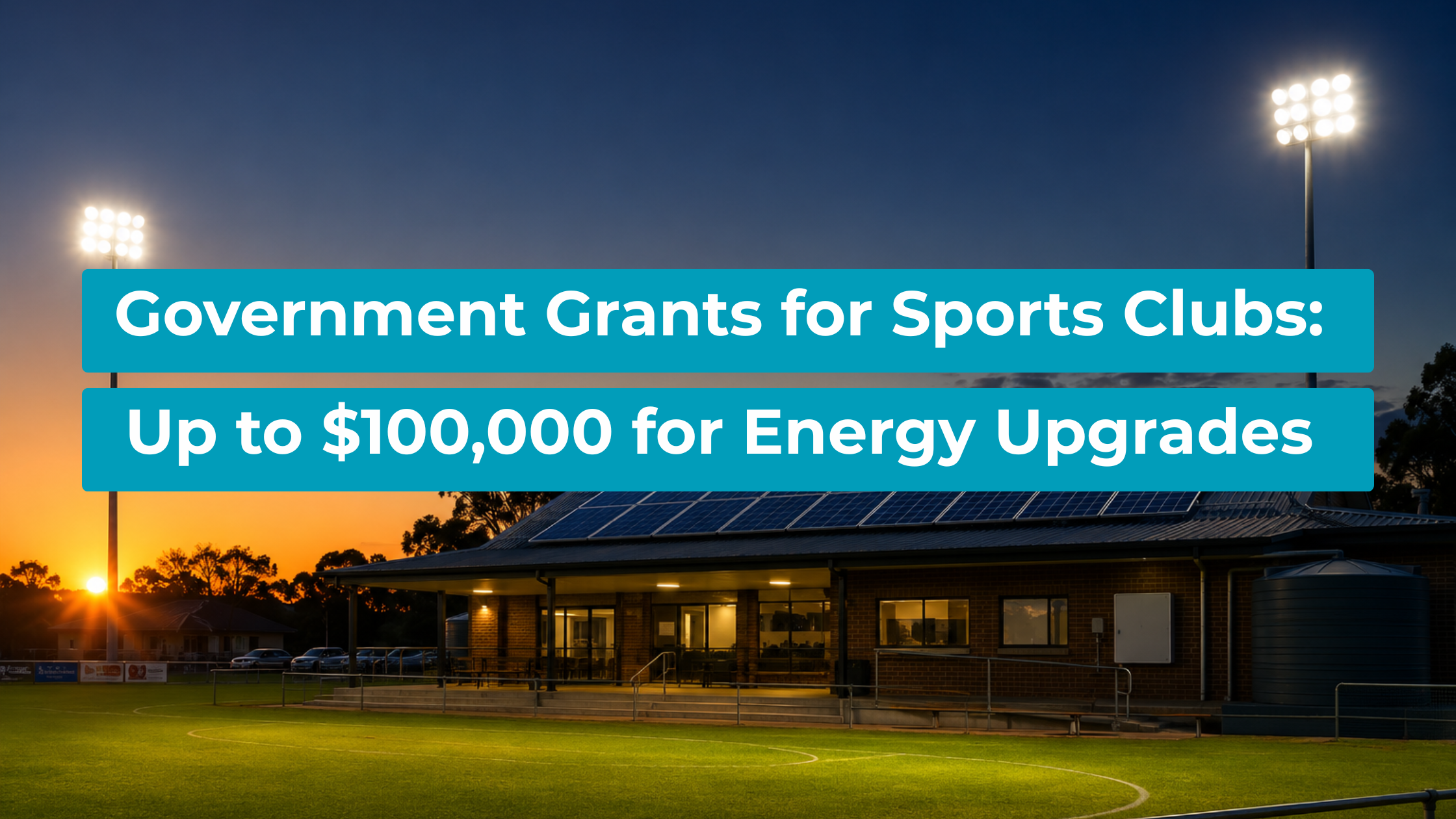
Government Grants for Sports Clubs: Up to $100,000 for Energy Upgrades in 2026
There are now federal government grants for sports clubs covering solar panels, batteries, LED lighting, and other energy upgrades, worth between $25,000 and $100,000 per club. Round 1 of the sports club energy grants 2026 program opens on 11 June and closes on 8 July, giving clubs less than four weeks to apply. If your club wants to be in the running, preparation needs to start now.
Energy bills are one of the biggest overhead costs for community sporting clubs. Lighting fields and courts, running canteens, heating and cooling change rooms all add up fast. These grants for community sporting clubs are designed to help reduce energy bills for sports clubs and make facilities more resilient to the extreme weather events that have been cancelling games and damaging infrastructure across the country.
This article explains:
- what the program covers
- who is eligible
- how much your club could receive
- and what you need to do to get an application across the line.
What Are the Government Sports Club Energy Grants Available in 2026?
Game On: Teaming Up for Climate Action is a federal program administered by the Department of Climate Change, Energy, the Environment and Water (DCCEEW). It has a total pool of $35.3 million in community sports club grants across two funding rounds, with $17.6 million available in Round 1.
The program is part of a broader $50 million, four-year government commitment to help community sport decarbonise and adapt to climate risk. It sits alongside the $100 million Community Energy Upgrades Fund (which targets local government facilities) and can be combined with the Cheaper Home Batteries Program and Clean Energy Finance Corporation financing. That means the total value of solar and battery grants available to a club could go well above $100,000.
According to the DCCEEW program page, up to 500 clubs nationally are expected to benefit across both rounds.
How Much Sports Club Solar Funding Can Your Club Access?
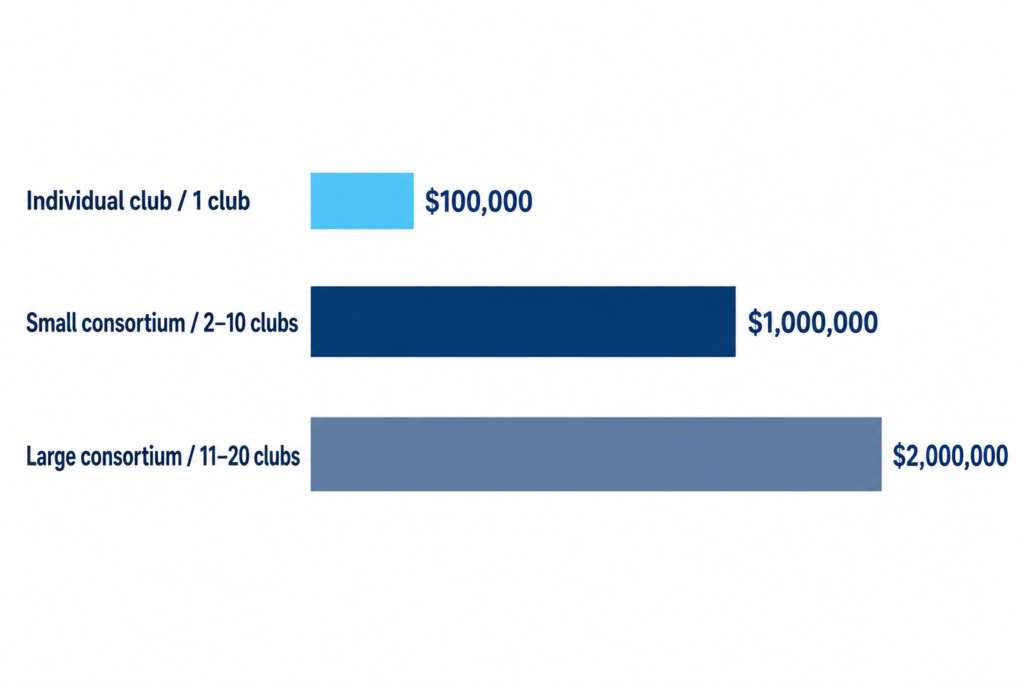
Individual clubs can apply for sports club solar grants between $25,000 and $100,000. The grant can cover up to 100% of eligible project costs, so clubs are not required to match the funding dollar for dollar.
Clubs can also apply as a consortium, which significantly increases the ceiling for local sports club funding:
- 2 to 10 clubs applying together can access up to $1 million total (up to $100,000 per club)
- 11 to 20 clubs can access up to $2 million total (up to $100,000 per club)
If your club shares grounds with another club, or if you are affiliated with a regional sporting association that could coordinate a joint application, the consortium pathway is worth serious consideration. One important caveat: clubs that participate in Round 1 as a consortium member are locked out of applying in Round 2, so make sure the consortium is the right fit before committing.
Which Community Sports Clubs Are Eligible for These Grants in Australia?
To be eligible for these community sports club grants in Australia, a club must be a not-for-profit organisation with a focus on grassroots participation. According to the DCCEEW program guidelines, clubs need:
- An Australian Business Number (ABN)
- An Australian bank account
- A proper legal structure such as an incorporated association
- Affiliation with a state or national sporting body
For-profit entities, unincorporated groups, and venues where gaming or licensed operations are the primary function are generally excluded, though there are some carve-outs in the guidelines worth checking if your club runs a bar or bistro as part of a broader community facility.
Does Your Sport Get Priority Funding?
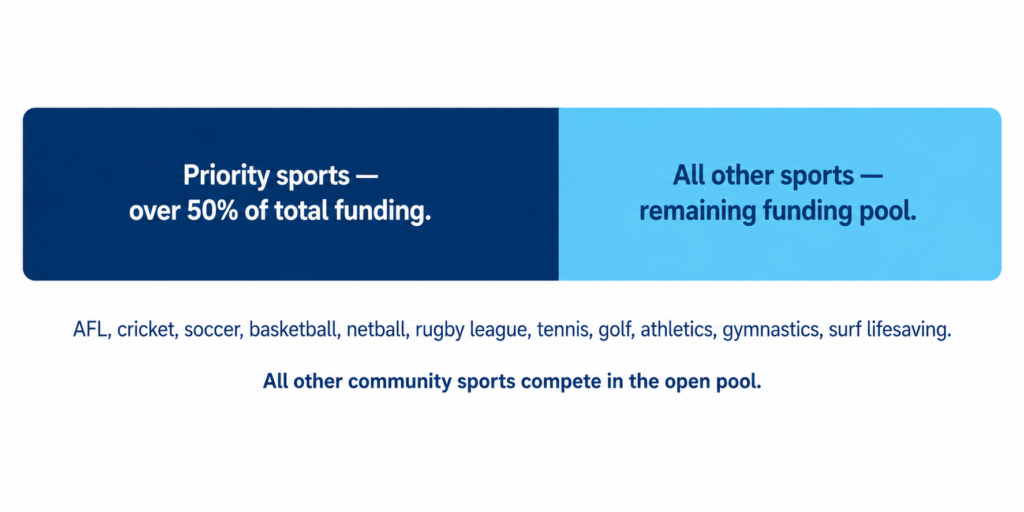
More than 50% of the total federal grants for sports clubs is reserved for clubs from 11 priority sports codes:
- AFL, cricket, soccer, basketball, netball, rugby league, tennis, golf, athletics, gymnastics, and surf lifesaving
Clubs from other sports are still eligible for solar grants for sporting clubs, but they compete in a separate pool for the remaining funding. If your club is in a priority code, your application has a structural advantage, which is another reason to get moving before Round 1 closes.
What Energy Upgrades for Sports Clubs Does the Grant Cover?
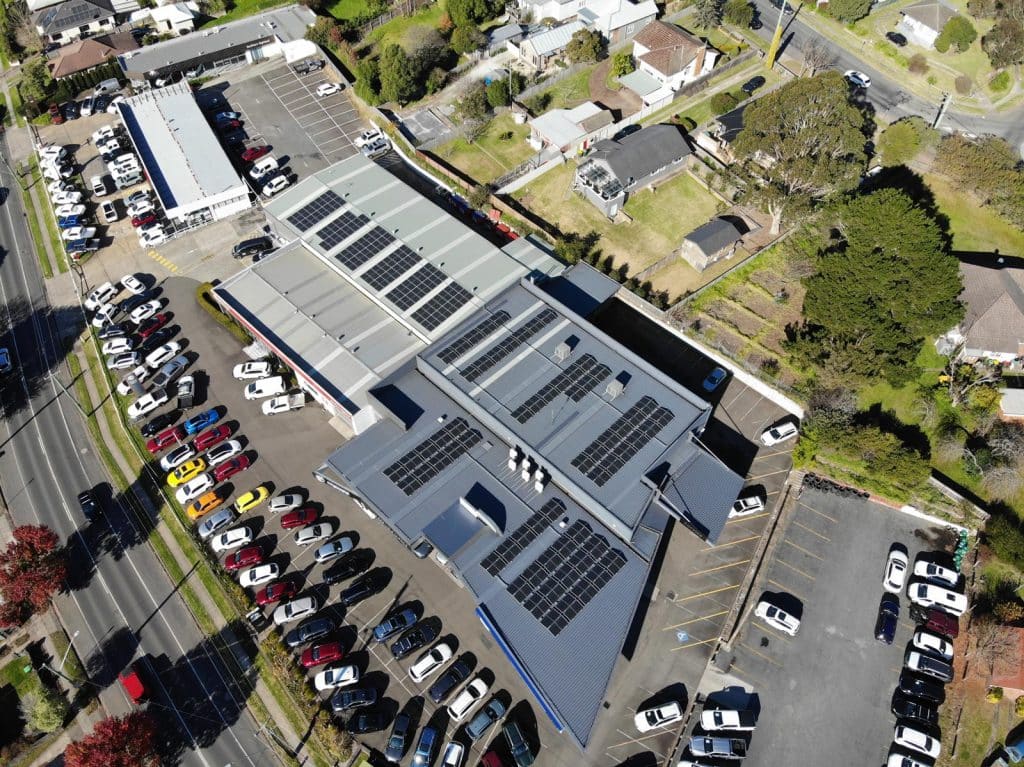
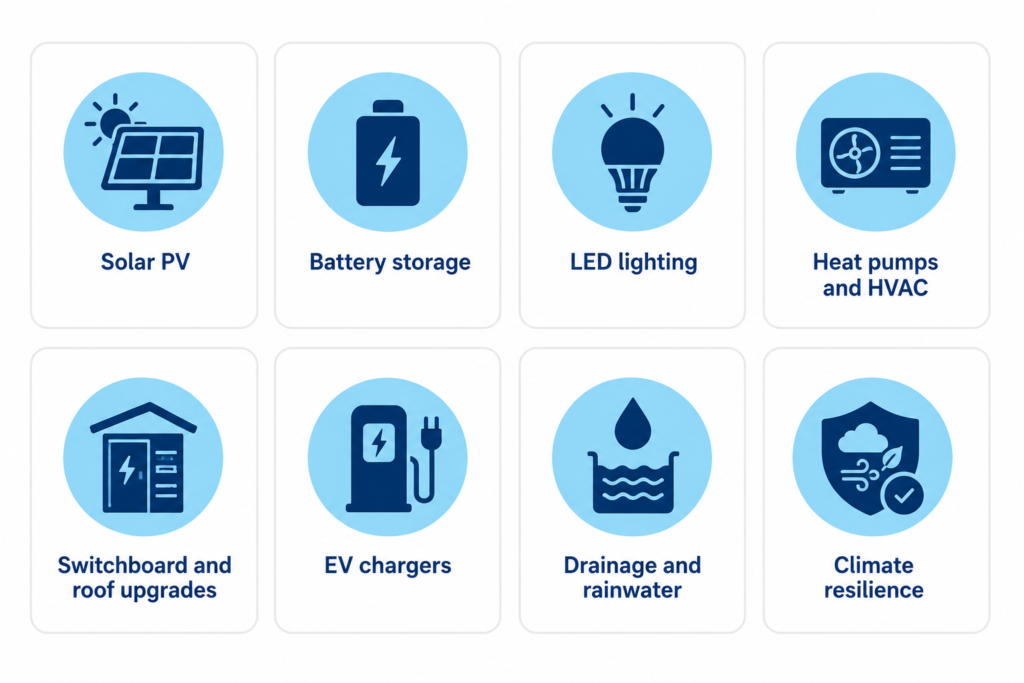
The grant is focused on building energy efficient sports facilities through electrification, renewable energy, and climate resilience upgrades. According to Smart Commercial Energy, a solar energy advisory firm that has analysed the program guidelines in detail, eligible projects for grants for club facility upgrades include:
- Solar PV systems (typically 30 to 70kW for club facilities)
- Battery storage systems
- LED lighting upgrades
- Heat pumps, HVAC, and insulation
- Switchboard upgrades and roof strengthening to support solar
- Shade structures, drainage, and rainwater harvesting
- EV charger grants for clubs are also available through this program, covering the cost of EV charging infrastructure
- Disaster-resilient features and climate risk assessments
Why Sports Club Battery Grants Are Worth Pursuing Alongside Solar
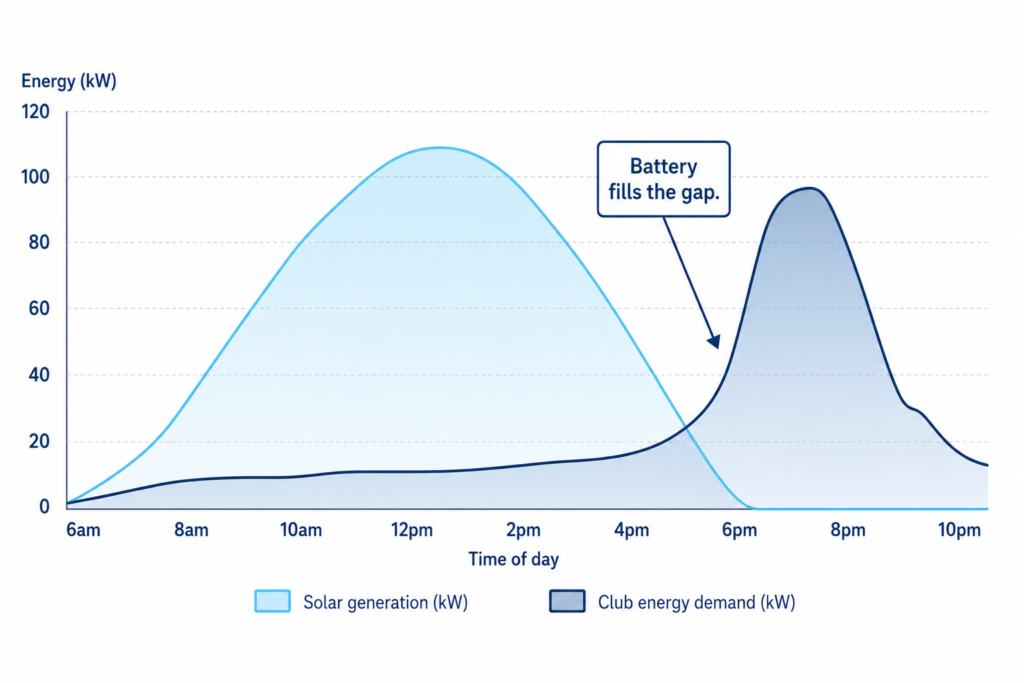
Sports clubs have a different energy usage pattern to most buildings. The heaviest demand hits at night, when field and court lighting is running for training sessions and games. A solar-only system helps with daytime usage in the canteen, office, and refrigeration, but it does not solve the evening load problem on its own.
Adding a battery means the energy generated during the day gets stored and used when the club actually needs it most. For clubs with large evening lighting loads, combining solar and battery grants in Australia through this program can make a much bigger dent in the energy bill than solar alone. It can even keep the lights on when a blackout hits.
What the Sports Club Energy Grants Cannot Pay For
There are some clear exclusions. The grant will not cover:
- Staff wages or administration costs
- Routine maintenance or repairs
- Cosmetic items
- Sporting equipment
- Any work that has already started before the grant agreement is signed
That last point is critical. Do not start any works before you have a signed grant agreement in place, or the costs will be ineligible.
What Is the Timeline for Sports Club Energy Efficiency Grants in Round 1?
- Round 1 opens: 11 June 2026
- Round 1 closes: 8 July 2026
- Assessments: August 2026
- Approvals: September 2026
- Grant agreements signed: November 2026
- Projects must be completed by: March 2028
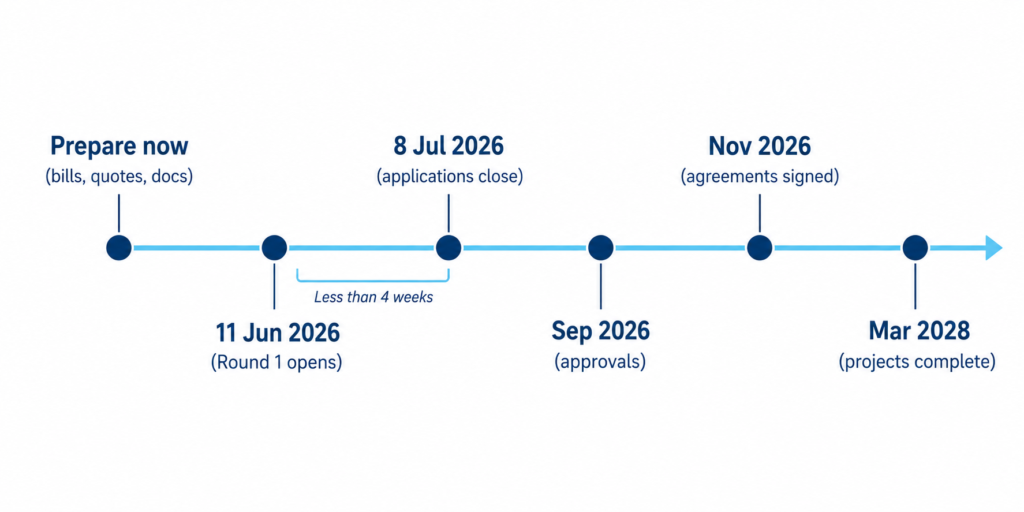
The application window is narrow, just under four weeks. That is not enough time to scramble for quotes and paperwork once the portal opens. Clubs that are ready on day one are in a much stronger position than those still gathering information in the final week.
How Do You Apply for Sports Club Energy Grants Australia?
Knowing how to apply for sports club grants is half the battle. Applications are submitted through GrantConnect (grants.gov.au). The Final Guidelines will be published there when Round 1 opens on 11 June. Per the DCCEEW program page, draft guidelines are already available, so clubs can review these now to understand the assessment criteria and start preparing.
Strong applications for community facility energy upgrades address three things clearly:
- Energy impact: how much will this upgrade reduce your sports club electricity savings compared to current bills?
- Community benefit: how do the savings flow back into your club through lower registration fees, more junior programs, or better equipment?
- Project feasibility: can your club actually deliver this, and do you have the quotes and site authority to prove it?
To be ready before the portal opens, start pulling together:
- At least four recent energy bills
- Proof of site authority such as a lease or land ownership documents
- Letters of affiliation from your state or national sporting body
- Professional quotes from accredited installers
- Consortium support letters if applicable
The DCCEEW is also engaging Program Support Providers, third-party organisations funded by the government to help clubs through the process. Contact the program team at GameOn@dcceew.gov.au to find out more.
Energy upgrades through this program deliver three clear benefits for community clubs:
- Lower energy bills.
- Energy costs for a typical club can run into tens of thousands of dollars a year
- A solar and battery system sized at 30 to 70kW can make a serious dent in that figure
- More money for what matters.
- Savings can go back into junior programs
- Better equipment for members
- Lower registration fees for families
- Better resilience.
- Improved insulation, backup battery power, drainage, and shade structures all help
Talk to Lenergy Before You Apply
Here at Lenergy we design solar, battery and EV setups for Australian facilities and we can help your club build a strong, grant-ready proposal with the right system design and accredited quotes. Send us a message and we can help work with you to get the job done.

Frequently Asked Questions
Can a small community club with limited admin capacity still apply for these grants?
Yes. The program does not require a full-time administrator to manage the process. The DCCEEW is working with Program Support Providers specifically to help clubs that do not have dedicated staff for grant applications. Getting an energy audit and professional quotes from an accredited installer does most of the technical heavy lifting, and the application itself is submitted through GrantConnect. The key is starting early because the application window is short and the preparation work takes time.
Our club leases its grounds from the council. Can we still apply?
Possibly, but you will need to establish site authority. The grant guidelines require applicants to demonstrate that they have the right to carry out the proposed works on the site. For clubs on leased council land, that typically means getting written permission from the council as the landowner. This is worth sorting out before the portal opens on 11 June, because it can take time to get the right sign-off from a local government.
What happens if our club misses Round 1?
Round 2 of the program is expected to run in the 2027 to 2028 financial year, with a further $17.6 million in community facility energy upgrades funding available. Missing Round 1 is not the end of the road. That said, clubs that apply in Round 1 and are successful get their projects underway much sooner and the savings start from an earlier date. If you are close to ready, it is worth pushing to get your application in for Round 1 rather than waiting.
Is now a good time for our club to act on sports club energy grants 2026?
Yes. The application window opens in less than two weeks from the time of writing and closes just four weeks after that. Only 500 clubs nationally will receive funding across both rounds combined, and Round 1 has $17.6 million to allocate. Clubs that have their energy bills, quotes, and supporting documents ready before 11 June are in the strongest position. If you have not already reached out to an accredited installer for a quote and site assessment, that is the most important thing you can do right now.