How the 2026–27 Federal Budget Affects Australian Homeowners with Solar and Batteries
Energy bills are not getting easier to ignore. For most Australian households, the cost of running a home on grid power has become one of the more frustrating line items in the budget and it is largely outside your control. The 2026–27 Federal Budget, delivered on 12 May 2026, speaks directly to that frustration, with 370,000 batteries installed through the Cheaper Home Batteries program they are projecting 2 million by 2030. The government confirms continued support for solar and home batteries, signals significant changes to how household energy systems will interact with the grid, and makes some adjustments to EV tax incentives that are worth understanding before you make a decision.
Here is what the federal budget actually contains, what it means for you, and where the timing matters.
Is the Cheaper Home Batteries Program Still Available in 2026?
The most directly relevant measure for anyone considering a home battery is the continuation of the Cheaper Home Batteries Program. It provides an upfront discount of around 30 percent on eligible battery systems through the Small-scale Technology Certificate (STC) scheme, reducing what you pay on the day of installation. This recently dropped in May and will continue to do so every six months
The uptake since the program launched in July 2025 has been astronomical. According to Budget Paper No. 2, more than 370,000 home batteries have been installed under the program, adding over 10 gigawatt hours of storage capacity. The government is projecting 2 million Australian households will have a home battery by 2030.
This budget allocates $14.6 million to maintain safety inspections of installations as the program scales. The rapid growth has brought a rise in substandard installations by installers cutting corners. Government-funded oversight is a direct response to that problem and will hopefully help to raise the quality of battery installations.
Can Your Solar and Battery System Earn Money Under the New Energy Market Reforms?
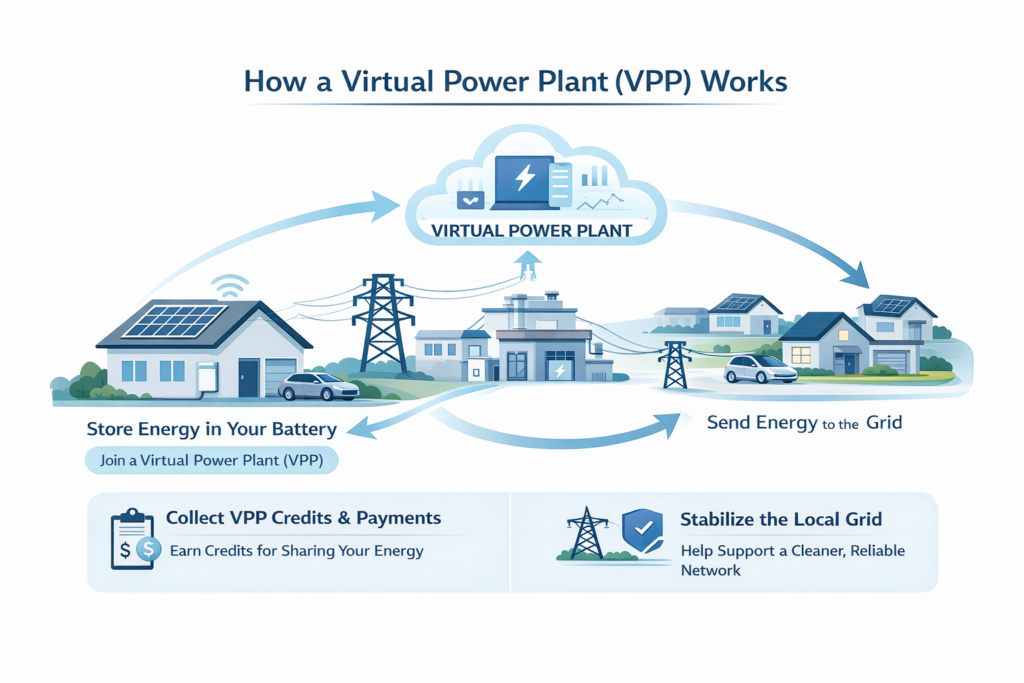
The federal budget announces the most significant reforms to the National Electricity Market (NEM) since the 1990s. According to the government’s own budget documents, these reforms will “for the first time allow household solar and battery systems to directly participate in the market.” Many households already participate indirectly through Virtual Power Plants and aggregators, but the NEM has largely treated household systems as invisible in wholesale market terms. These reforms, backed by the $97.2 million National Consumer Energy Resources Roadmap and a new National Technical Regulator, are designed to change that, enabling household batteries and future vehicle-to-grid technology to engage more directly with wholesale price signals and grid services. The government’s own modelling estimates better coordination of household solar, batteries, and V2G could cut national system costs by over $7 billion by 2050.
The practical benefits will phase in over time as rules and standards are updated. A system you install today is well positioned to take advantage of those changes as they arrive.
Alongside this, a further $15.9 million strengthens the Australian Energy Regulator, improving transparency around feed-in tariff rates and retailer conduct.
How Are the EV Fringe Benefits Tax Changes Affecting Australians in 2026?
The popular Fringe Benefits Tax exemption for electric vehicles is being scaled back. Currently, eligible EVs through a novated lease or salary packaging arrangement are fully exempt from FBT. The budget transitions this as follows, per Budget Paper No. 2:
- The full FBT exemption continues for eligible EVs up to $75,000, provided the arrangement starts before 1 April 2029.
- From 1 April 2027, a permanent 25% FBT discount (not full exemption) applies to eligible EVs above $75,000.
- From 1 April 2029, the 25% discount applies to all eligible EVs regardless of price.
- Existing arrangements are grandfathered at the rate that applied when they started.
EVs on salary packaging remain considerably more attractive than petrol equivalents, particularly when paired with home solar that makes your fuel cost close to zero. The window to lock in the full exemption is open, but it has an end date.
The federal budget also commits $40 million to kerbside and regional EV charging infrastructure, directly addressing the practical gap for homeowners outside major cities.
What Solar and Battery Funding Did the 2026–27 Federal Budget Cut?
Not everything in this budget is positive for the energy sector. The government is pulling back from two programs that were specifically designed to build a domestic solar and battery manufacturing industry in Australia.
The Battery Breakthrough Initiative (BBI) was a $500 million program designed to seed local battery manufacturing and reduce Australia’s reliance on overseas supply chains. The budget cuts it to $142 million, a reduction of around $358 million. ARENA has already stopped accepting new applications.
Solar Sunshot was a $1 billion ARENA program launched in 2024 under the Future Made in Australia agenda, aimed at commercialising Australian solar innovations and building local supply chains for solar panel manufacturing. Its uncommitted funding has also been trimmed.
The government’s stated reason is that industry uptake was slower than forecast, leaving funds uncommitted. Critics have pointed out the problem with that logic: cutting programs because growth is slow rather than using the programs to accelerate it. It is a bit like cancelling a training plan because you have not seen results yet.
In practical terms for homeowners today, the impact is limited. There are no major solar panel or battery brands currently being manufactured at scale in Australia, so the products available to you are not affected. Prices for imported panels and batteries continue to fall regardless.
The longer term concern is different. These programs were Australia’s main lever for building sovereign manufacturing capability in solar and batteries, the kind of industrial policy that has worked in the US through the Inflation Reduction Act and in Europe. Walking back from that ambition makes it harder for Australia to reduce its dependence on overseas supply chains over time. Industry groups have called it a retreat from the Future Made in Australia agenda, or as some have put it, “Future Made Somewhere Else.”
For a homeowner making a decision today, this is background context rather than a reason to pause. The technology on the market right now is excellent and continues to fall in price. The rebates and reforms covered above are unaffected.
What Does the 2026–27 Federal Budget Mean for Homeowners Considering Solar and Batteries?
Every measure in this budget, the battery program, the market reforms, the EV transition, the regulator funding, points toward the same outcome. The government is building the rules and financial incentives for Australian households to become less dependent on centralised energy systems and global fuel markets. The phrase “energy sovereignty” appears throughout the official federal budget papers for a reason.
For homeowners who act in the next one to two years, the timing is good. The Cheaper Home Batteries Program discount is available now. The FBT window for EVs is still open. The market reforms that will allow your system to earn revenue are being built in the background. Households that install quality systems now are best placed to benefit as those frameworks mature.
Get Advice Tailored to Your Home and Energy Situation
Understanding what the federal budget means is one thing. Knowing what it means for your specific home, your energy usage, and your finances is another. Here at Lenergy we design solar, battery and EV setups for Aussie homes – keen to know what makes sense for yours? Send us a message and we’ll give it to you straight.

Frequently asked questions
Is the Cheaper Home Batteries Program still available in 2026? Yes. The program is active and the federal budget confirms it is continuing. It provides an upfront discount of around 30 percent on eligible battery systems installed alongside solar, delivered through the Small-scale Technology Certificate scheme. The discount level dropped in May 2026 and will continue to step down every six months as battery costs fall. If you are considering a battery, the discount available today is higher than it will be in six months.
What batteries are eligible for the discount? Eligibility is based on battery capacity and whether the system is paired with a solar installation. The specific eligibility criteria are managed through the Clean Energy Regulator.
How do the EV FBT changes affect my novated lease? If you are currently in an eligible EV novated lease arrangement, nothing changes. Your existing arrangement is grandfathered at the rate that applied when it started. If you are considering a new arrangement, EVs priced under $75,000 retain the full FBT exemption provided the arrangement starts before 1 April 2029. EVs priced above $75,000 will move to a 25 percent FBT discount rather than full exemption from 1 April 2027. In either case, EVs remain significantly more tax-advantaged than petrol vehicles under salary packaging.
When will the energy market reforms actually affect me as a solar owner? The reforms are being implemented progressively. The government is working with states and territories to update the National Electricity Market rules and establish new technical standards through the National Technical Regulator. The full framework for households to participate directly in wholesale markets will phase in over the next few years. If you install a quality solar and battery system now, it will be compatible with these changes as they arrive. You do not need to wait for the reforms to be complete before investing.
Is now a good time to buy solar and batteries? The short answer is yes, for most homeowners. The Cheaper Home Batteries Program discount is available now and will step down over time. Installation costs for solar panels continue to fall but the rebate trajectory means waiting does not necessarily save you money. The energy market reforms being built now will make systems installed today more financially productive over time. The main reason to pause would be if your roof, usage, or financial situation is not ready, not because the policy environment is uncertain.