South Australia Solar Just Powered the Grid in Winter
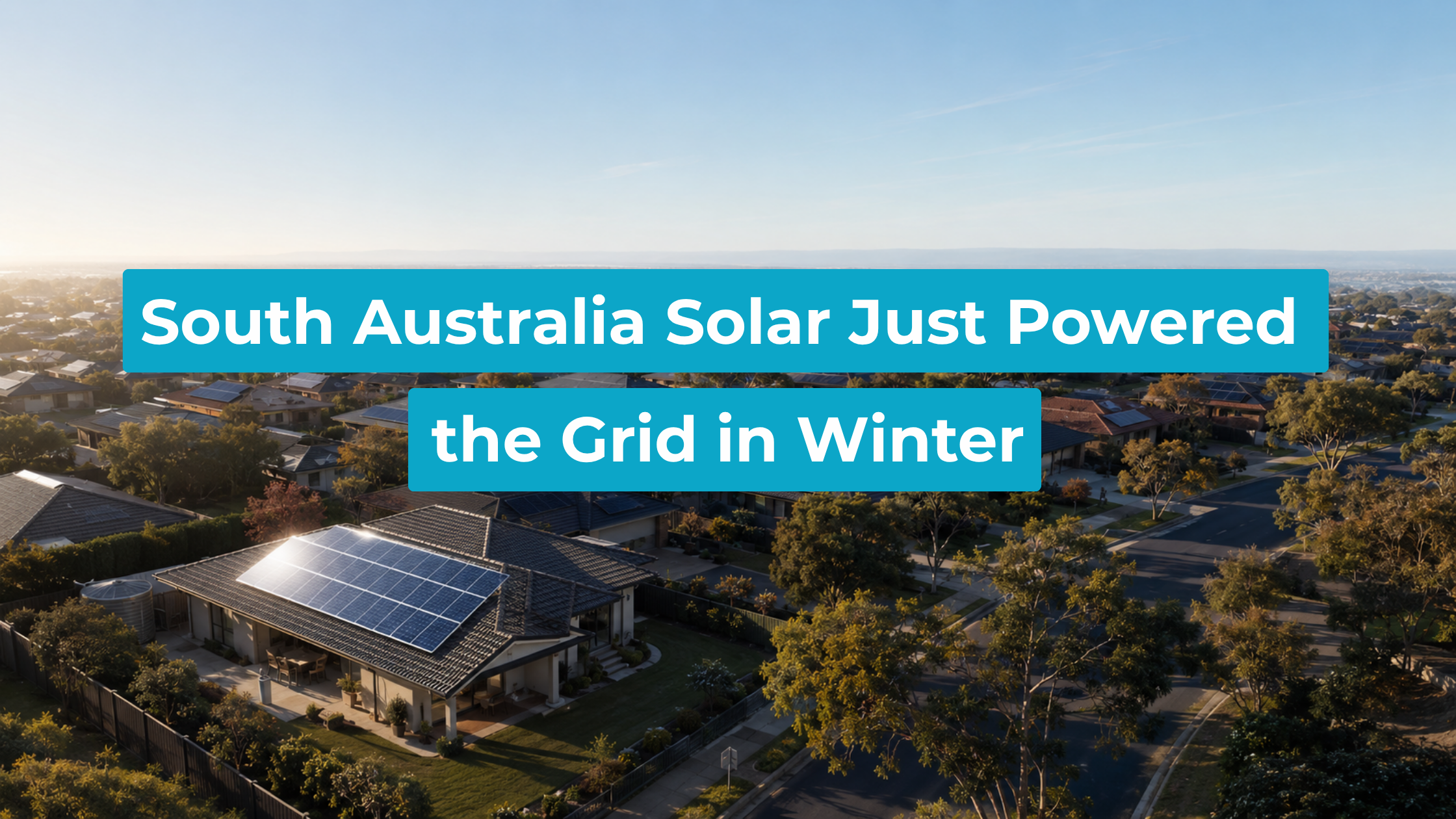
South Australia just proved that solar is capable of supporting the electricity grid. In a recent event observed by the AEMO, rooftop solar met 99.9% of grid demand setting a new record for winter.
Here is what happened:
- What South Australia’s solar record actually was
- Why the same afternoon set a national record
- What the batteries were doing
- What it means for solar owners in NSW, the ACT and Queensland
What happened at 1:30pm?
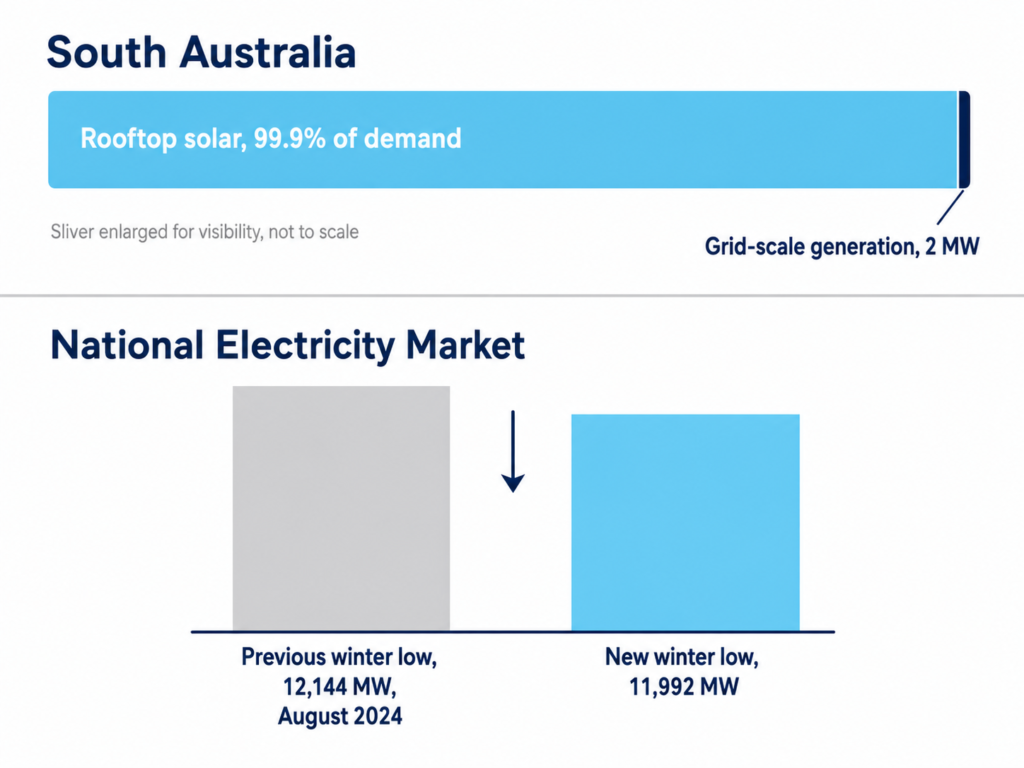
South Australia’s demand for grid-scale generation fell to 2 MW. Homes and businesses were running almost entirely on power made on their own roofs.
At the same time the National Electricity Market set a new winter minimum operational demand record of 11,992 MW, beating the 12,144 MW set in August 2024. Operational demand is the power the grid has to supply. Rooftop solar pushes it down, because those homes are not asking for much.
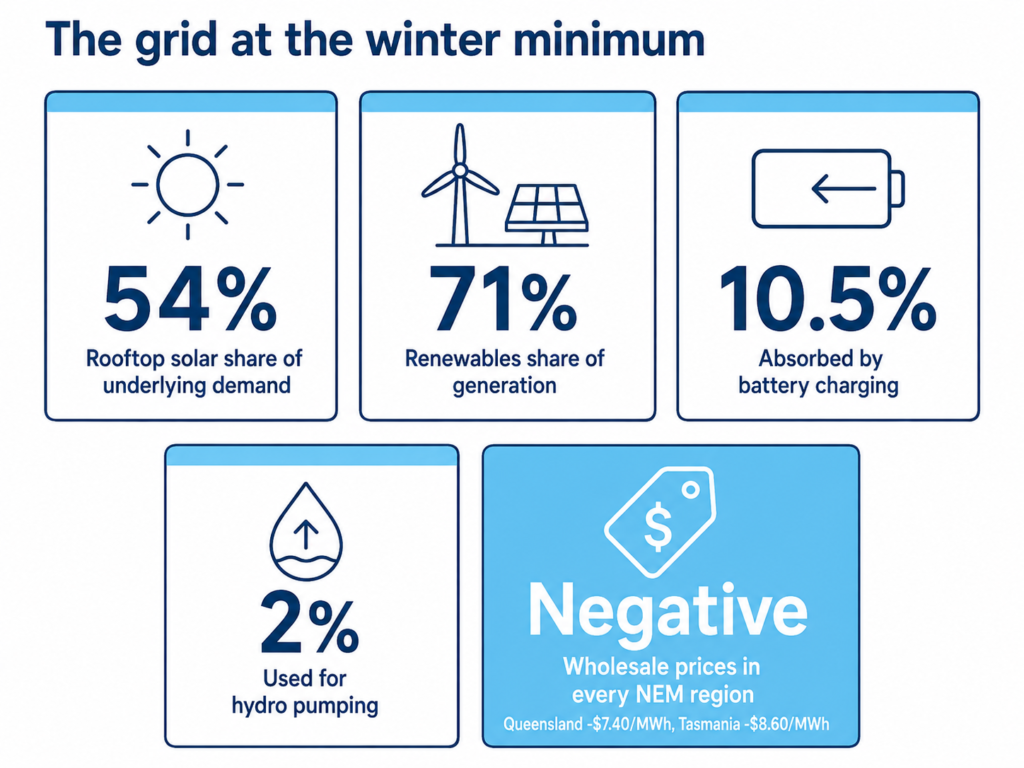
Across the NEM, rooftop solar was supplying close to 54% of underlying demand. Renewables of all kinds accounted for 71% of generation.
Why is a winter record a bigger deal?
Winter is solar’s hard season. The sun sits lower and the days are shorter. It shows that rooftop solar can carry a state through its weakest months.
What were the batteries doing?
Working hard. Wholesale prices went negative across every NEM region, from -$7.40/MWh in Queensland to -$8.60/MWh in Tasmania. Negative prices mean more power is available than the market needs.
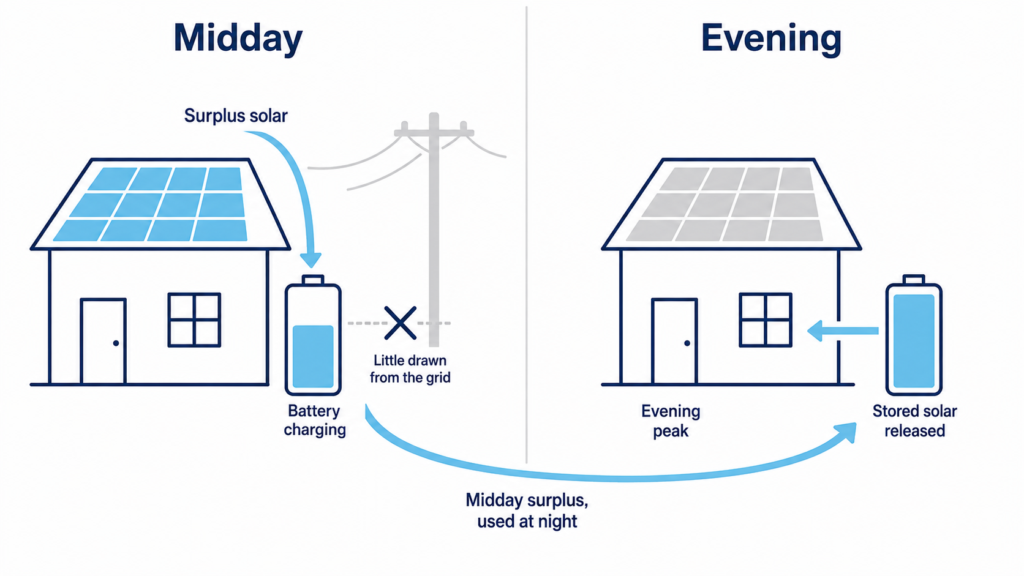
Batteries treated that as an opportunity. Charging soaked up around 10.5% of everything being generated, with hydro pumping taking another 2%. That midday surplus was not wasted. It was held and released into the evening peak.
What does this mean for NSW, the ACT and Queensland?
The same grid, the same direction. Queensland saw negative prices that afternoon too.
Rooftop solar is now the biggest single generator in the country by the middle of the day, and AEMO is planning the system around it. More storage. More flexibility.
For a homeowner the read is simple. Midday power is abundant. The households getting the most from it are the ones storing it rather than exporting it, which is worth weighing up when deciding what battery you install.
Read next: the five best ways to use three free hours of daytime energy
Frequently asked questions
Can rooftop solar really power a whole state on its own?
For short periods, yes. South Australia came within 0.1% of it at 1:30pm. Holding that around the clock is a different problem, which is where storage comes in.
Why do electricity prices go negative?
When more power is being generated than the market needs, generators pay to keep supplying rather than shut down and restart. It happens most often on sunny, mild days with low demand.
Could NSW or Queensland reach the same point?
Both are heading the same way. Queensland recorded negative prices in the same window. Neither has South Australia’s rooftop solar density yet, so the milestone will come later there.