What Electricity Retailer Should I Pick? The Best Plans for Every Situation
There’s no single best electricity retailer in Australia, only the best one for how your home actually uses power. We review bills every day, and this is exactly how we’d pick, situation by situation.
One thing before we start. Every rate in this article is based on a typical Sydney home on the Ausgrid network, using plans available in mid 2026. Rates vary significantly from area to area, and they change over time. So treat these as worked examples, not gospel. The best way to check what’s available at your exact address is the government’s free Energy Made Easy tool. It can provide information on every plan for your postcode in one place.
Here’s what we’ll cover:
- How do I pick a good electricity retailer?
- What's the best electricity retailer if I have solar, a battery and surplus power?
- What if I have solar and a battery but not enough surplus?
- What's the best electricity retailer if I have solar but no battery?
- What's the best electricity retailer if I don't have solar?
- Frequently Asked Questions
How do I pick a good electricity retailer?
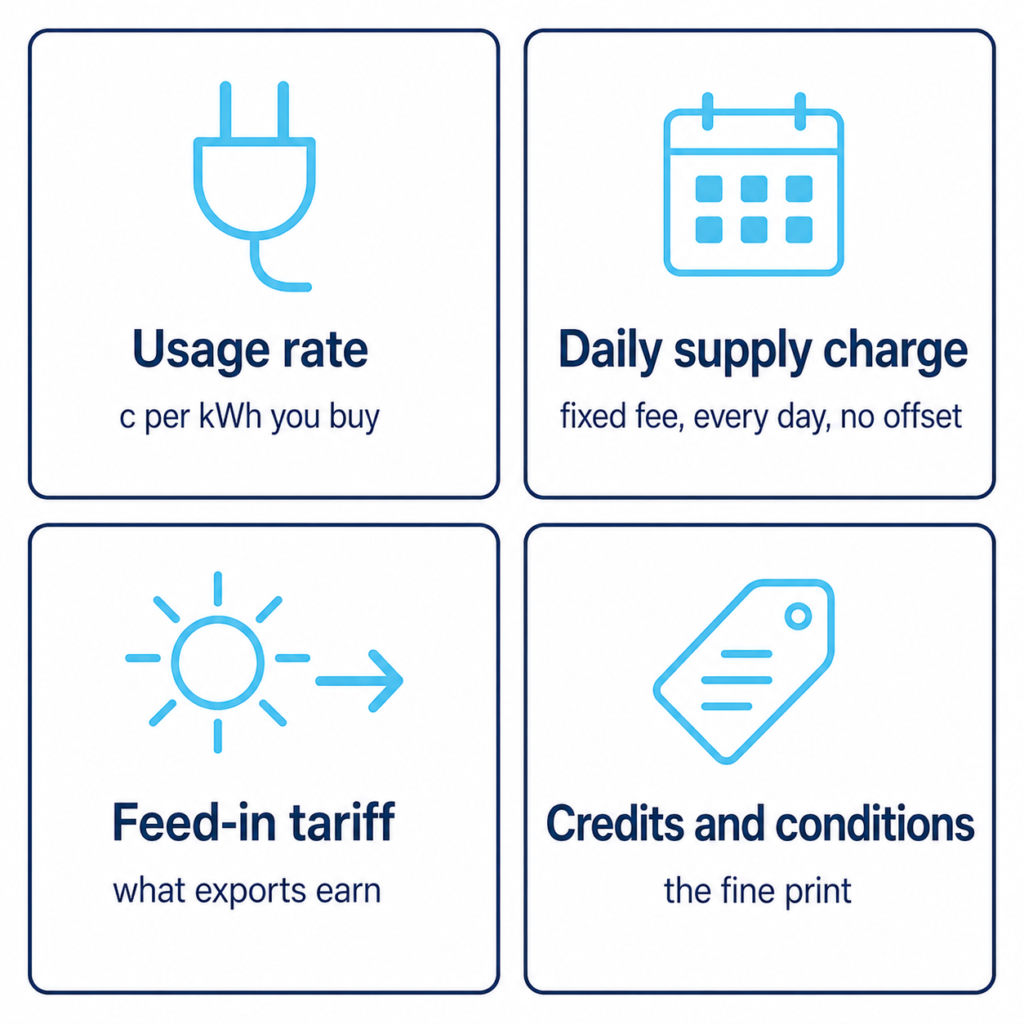
Start with your bill. It has four moving parts: your usage rate (what you pay per kilowatt hour), your daily supply charge (a fixed fee just for being connected), your feed-in tariff if you have solar, and any conditional credits or discounts. If any of that reads like another language, our guide on Understanding Your Electricity Bill: What You’re Really Paying For, breaks it all down.
A couple of weeks ago supply charges had a crazy jump. Most plans’ supply charges were sitting between 80 cents to $1.20, now $1.70 has become common, and some sit north of $2. That’s money you pay before you switch on a single light, and no solar or battery system offsets it. It stings, there’s no way around that. All you can do is get smart about which plan you pick.
So when you compare plans, look at the estimated annual cost for your actual usage, not the headline rate. A cheap rate with a fat supply charge can cost more than the reverse. Check for exit fees and lock-in terms. If you’ve got a battery, check the plan actually works with it.
Right. Let’s go situation by situation.
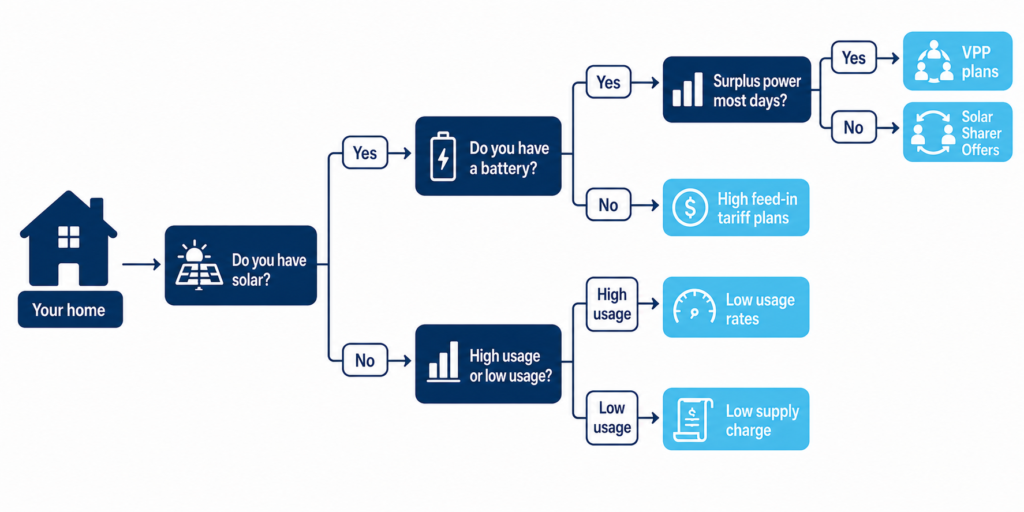
What’s the best electricity retailer if I have solar, a battery and surplus power?
If your battery is full most days and you’re still exporting these recent changes to daily supply charges have likely hit you the hardest. Despite this you’re actually in the strongest position of anyone reading this. The question stops being “how do I cut my bill” and becomes “how do I earn from my system to offset my supply charge.” That’s where a Virtual Power Plant comes in. A VPP is a network of home batteries that sells stored power back to the grid when demand spikes, and pays you for it. Instead of feeding surplus in for pennies on the dollar, you’re selling it when it’s worth the most.
Three that stood out for this situation:
| Plan | Supply charge | Usage rate | Export earnings | Notes |
| Amber SmartShift | ~103c/day (network pass-through) | ~14.6c/kWh average | ~36.2c/kWh average export | $25/month subscription; wholesale pricing |
| GloBird ZEROHERO | 181.5c/day | 0c first 50kWh off-peak, up to 59.4c peak | $1/day credit for zero grid use 6pm to 9pm, plus 10c evening super export | Restricted offer |
| GloBird WHOLESAVE | 121c/day + 72c/day membership | Wholesale, capped at $1/kWh on capped demand | Wholesale export | Only for confident load-shifters |
Amber’s numbers deserve context. That 36.2c average export rate isn’t a fixed tariff. Their usual feed-in sits around 16c, but occasional wholesale spikes up to $20/kWh lift the yearly average. On the modelled quote we reviewed (8kW solar, roughly 30kWh battery), the estimated bill came out around $74 a month, about 37% below the AER comparison price. Now here’s the catch: wholesale pricing cuts both ways. When prices spike, you’re exposed too, and it’s your battery and smart software doing the protecting. It suits people comfortable with variability. If you’d rather set and forget, it’s not for you, and that’s fine.
The honest concession on WHOLESAVE. It only wins if you can genuinely shift usage into cheap windows. This can be complicated to achieve, but if done right it can be a great choice for lowering your bills as much as possible. If you are looking for a set and forget the other two options are probably the way to go.
There’s also up to $2,156 available under the NSW Peak Demand Reduction Scheme for joining an eligible VPP. If you want the fuller picture on who VPPs suit, read Best VPPs for Solar Batteries.
What if I have solar and a battery but not enough surplus?
This is common, especially in winter. Your battery isn’t filling every day, so you’re still buying from the grid. The play here is a Solar Sharer Offer, which gives you a free power window in the middle of the day. If your solar can’t fill the battery, the free window can. Charge the battery from the grid at midday for nothing, then run the evening off stored power. If you’re not sure your setup allows that, our guide on Can You Force-Charge a Battery from the Grid? covers it, and for an update on how these offers work, see Free Daytime Electricity Is Coming. Here’s How It Actually Works.
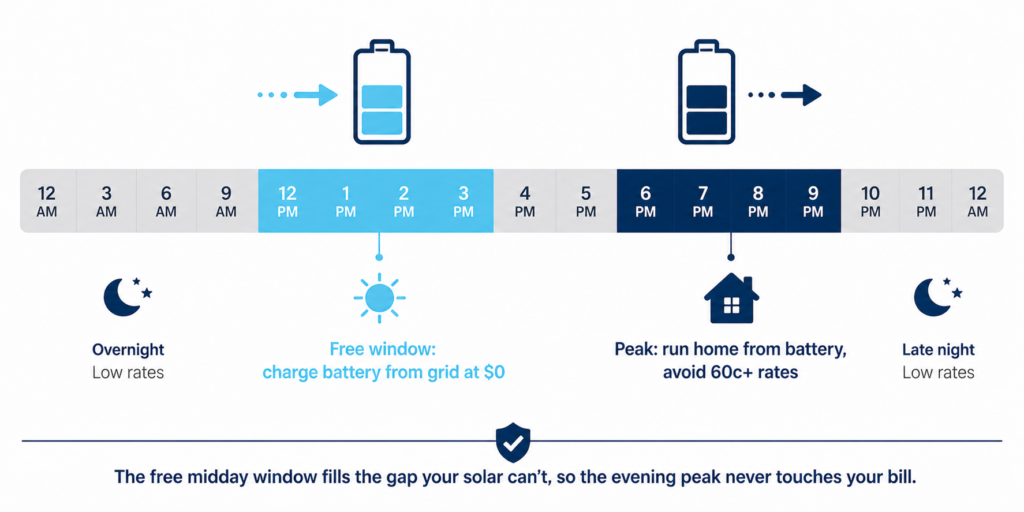
Three that stood out:
| Plan | Supply charge | Free window | Rates outside the window |
| GloBird ZEROHERO | 181.5c/day | 12pm to 3pm (joins from 1 July 2026) | Up to 59.4c peak, 30.8c off-peak balance |
| CovaU Solar Sharer | 170.5c/day | First 24kWh free in window | 63.7c peak, 27.5c off-peak |
| Kogan Solar Sharer | 170.7c/day | Free usage window, conditions apply | 0c to 63.7c/kWh |
See the pattern? The free window comes with steep peak rates and high supply charges. These plans only work if you genuinely shift load into the free window and stay off the grid at peak. With a battery doing the heavy lifting, that’s achievable. Without discipline, that 60c-plus peak rate eats the free power savings whole.
What’s the best electricity retailer if I have solar but no battery?
No battery means no storage, so your exports are your main lever. You want the highest feed-in tariff you can find, and you need to read the fine print on caps. Most high FIT plans pay the headline rate on the first 8 to 10kWh exported per day, then drop to a standard rate around 3c.
Three that stood out:
| Plan | Supply charge | Usage rate | Feed-in tariff |
| GloBird SOLARPLUS | 115.5c/day | 40.2 to 41.8c/kWh | 3c to 10c/kWh (capped) |
| ENGIE Solar Elec | 166.2c/day | 33.1c/kWh | 3c to 8c/kWh |
| Alinta Solar Balance | 156.3c/day | 31.2c/kWh | 8c first 8kWh/day, then 3c |
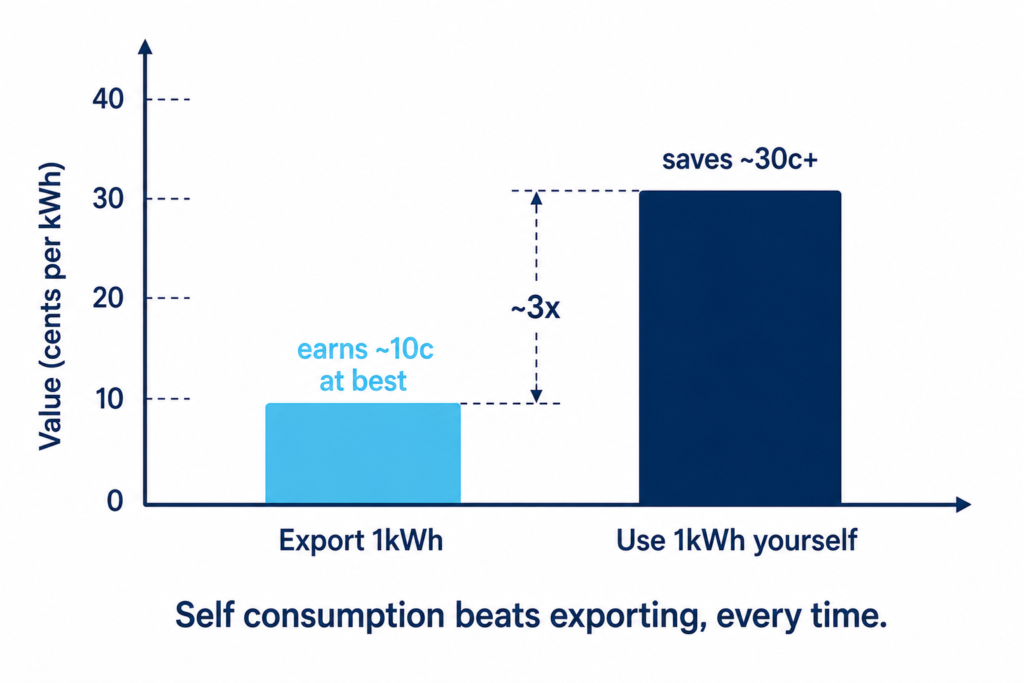
Notice GloBird’s trade-off: the best FIT and lowest supply charge, paired with the highest usage rate. If you export a lot and buy little, that maths works. If you’re home during the day using your own solar and buying heavily at night, a lower usage rate beats a higher FIT. Self consumption always beats exporting; using your own power saves you 30c-plus while exporting earns you 10c at best. Which is the whole argument for a battery, but that’s a conversation for another day.
What’s the best electricity retailer if I don’t have solar?
No solar means the whole game is the balance between your usage rate and your daily supply charge. Which side you favour depends on how much power you use, and this is a line you have to walk for your own home.
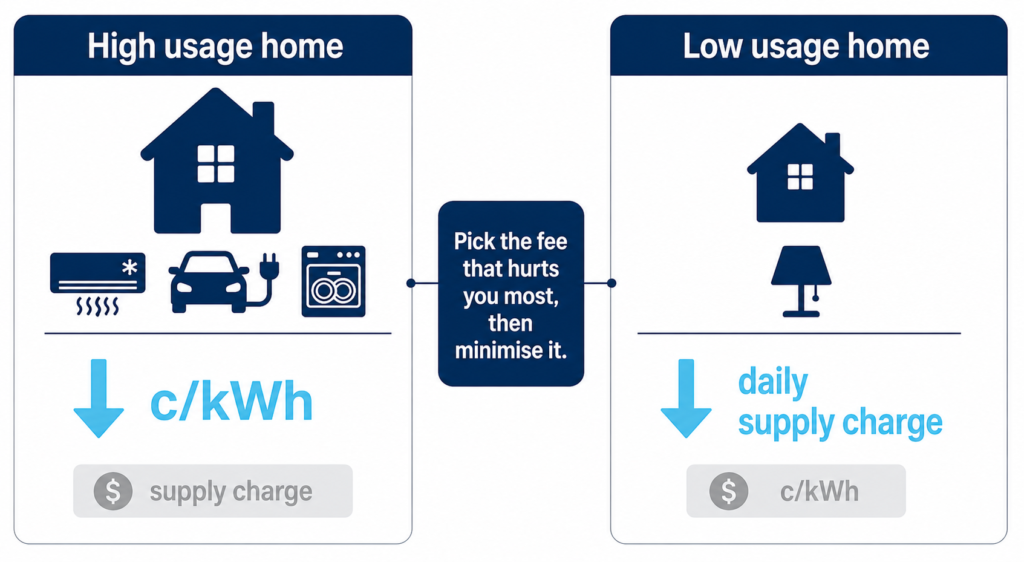
High usage household? Chase the lowest rate per kilowatt hour and accept a higher supply charge. The supply charge is fixed, so the more you use, the less it matters proportionally. Low usage household? Flip it. A high supply charge punishes you hardest because it’s the same $600-plus a year whether you use 5kWh a day or 50. Take a low supply charge even if the usage rate runs a little higher.
Here are some plans we found that looked good, at both ends:
| Plan | Supply charge | Usage rate | Best suits |
| 1st Energy 1st Quartz | 132.9c/day | 26.4c/kWh | High usage |
| ENGIE Everyday | 166.2c/day | 33.1c/kWh | Moderate to high usage |
| Sumo Local | 91.3c/day | 34.2c/kWh | Low usage |
Look at Sumo against 1st Energy. Sumo’s rate is nearly 8c/kWh higher, but its supply charge is about 42c a day lower. For a home using 5kWh a day, Sumo wins. At 15kWh a day, 1st Energy wins comfortably. Run your own average daily kWh (it’s printed on your bill) through both and the answer falls out. This is exactly why we keep saying: your situation decides, not the headline number. When in doubt, plug your details into Energy Made Easy and let the annual estimate settle it.
Read next: How NSW’s $15,000 Interest-Free Solar Loan Works

Frequently Asked Questions
What is the best electricity retailer for a home with solar and a battery?
If you have regular surplus, a VPP-enabled plan like Amber SmartShift or GloBird ZEROHERO typically returns the most. If your surplus is limited, a Solar Sharer Offer that lets you charge the battery free at midday is usually the better fit.
Which electricity retailer offers the highest feed-in tariff in Australia?
Among the plans we reviewed for the Ausgrid network, GloBird’s SOLARPLUS paid up to 10c/kWh, capped. High FIT plans almost always cap the top rate at the first 8 to 10kWh per day, so check the fine print before switching.
Is it worth joining a Virtual Power Plant with my home battery?
For most battery owners with surplus, yes. It does mean the retailer cycles your battery more. We usually say get your system first, live with it, then decide. More in Best VPPs for Solar Batteries.
What electricity plan is best if I have no solar and low power usage?
Prioritise the lowest daily supply charge you can find, even if the usage rate is slightly higher. Of the plans we reviewed, Sumo Local’s 91.3c/day supply charge was the standout for light users.
How do I compare electricity retailers on my bill?
Find your average daily kWh on your bill, then compare estimated annual costs (not headline rates) on the government’s Energy Made Easy tool. Recheck every 6 to 12 months, because plans move constantly.