500,000 Home Batteries Installed: What Australia Learned
More than 500,000 home batteries have been installed across Australia since July 2025. That is a real milestone, worth celebrating.
60.8% of installations inspected by the Clean Energy Regulator up to April 2026 were found to be substandard. That’s the part that gets far less attention.
So the lesson from half a million batteries is not about which battery you buy. It is about who puts it on your wall and we’ll show you exactly what separates a quality installation from the rest.
This article covers:
- How big the home battery rollout actually got
- Why the rebate changed on 1 May 2026, and what that did to system sizes
- What the inspections found, and what those faults look like
- How to check an installer before you sign anything
- Whether a home battery still stacks up
How Many Home Batteries Has Australia Installed?
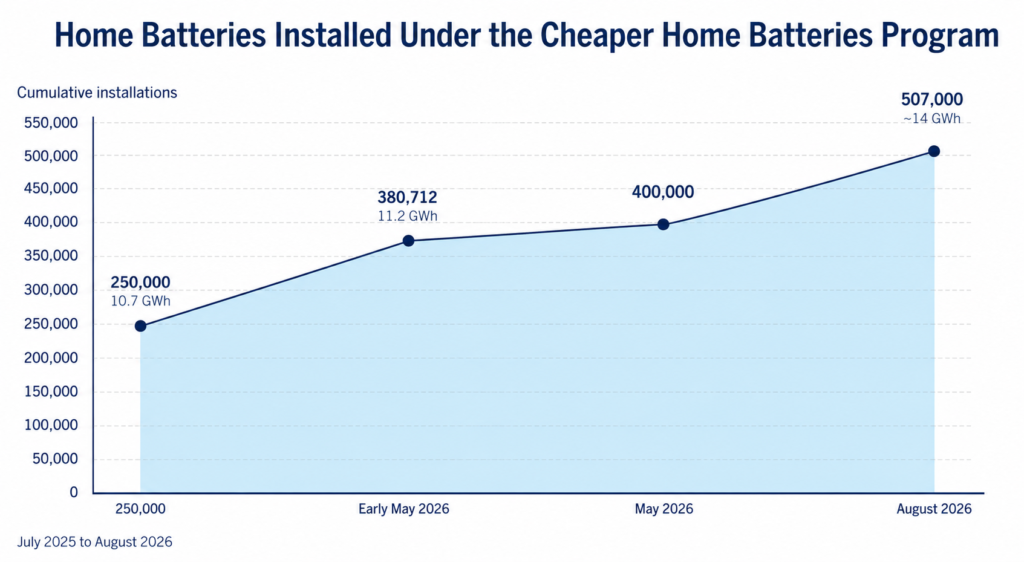
Around 507,000 under the federal Cheaper Home Batteries Program by August 2026. That is roughly 14 GWh of storage in about 13 months.
More than three quarters of installations are in outer suburban and regional areas. Castle Hill has the highest install count of any postcode in the country.
Australia now sits third in the world for total home battery deployment, and first per person.
Now, that pace needed people to do the work. The number of accredited battery installers roughly doubled to 8,846, according to Smart Energy Council figures. Hold onto that number. It matters shortly.
Why Did Home Battery Sizes Suddenly Shrink?
The original rebate did not taper by size. A 50 kWh system earned the same rate per kWh as a 14 kWh one.
So people bought big. By the end of 2025 around 175,000 applications were in, many of them close to 50 kWh, and the $2.3 billion budget was going faster than planned.
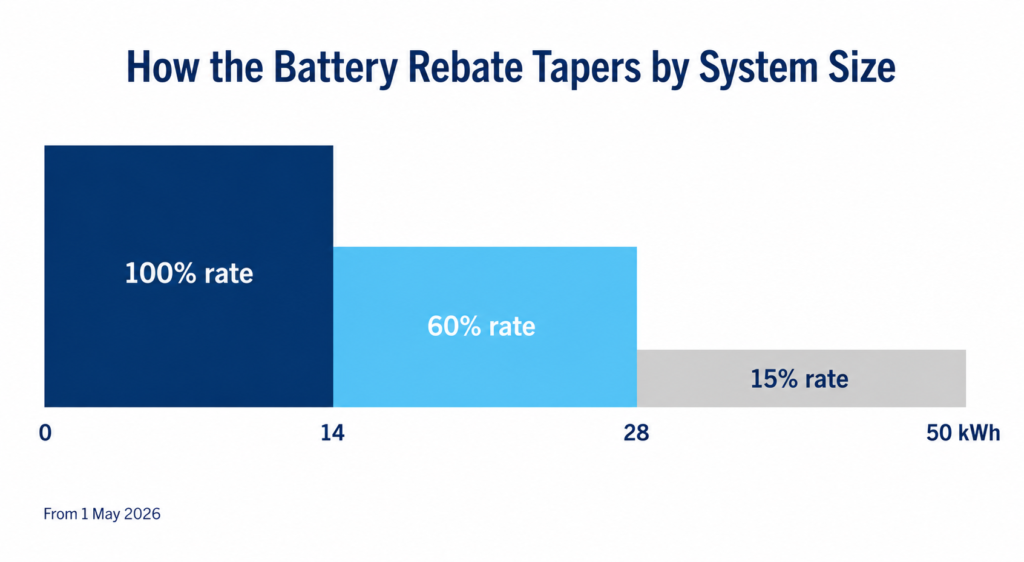
The government changed the settings from 1 May 2026. Funding was expanded to an estimated $7.2 billion over four years, with a target of more than two million batteries by 2030. The discount now tapers. Full rate on the first 14 kWh, 60 per cent from 14 to 28 kWh, then 15 per cent from 28 to 50 kWh. The STC factor also steps down every six months instead of once a year.
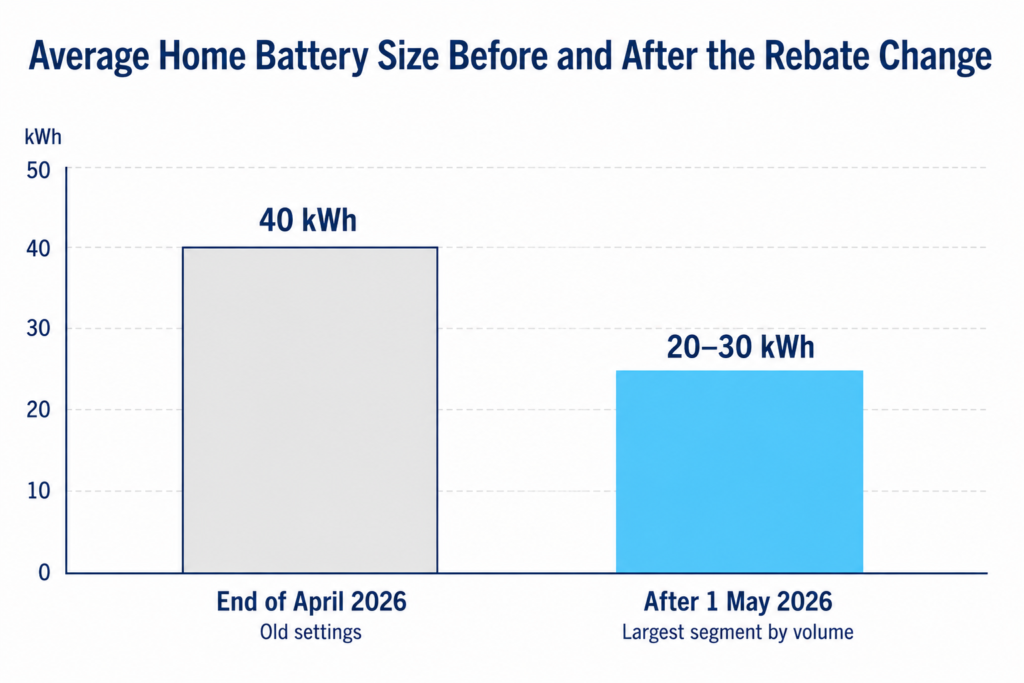
Well, everyone saw it coming, so everyone rushed. By the end of April 2026 the average system size had blown out to 40 kWh and 350,000 systems were in the ground.
That rush is the important part. A doubled installer workforce, working to a deadline, on systems sized for the rebate rather than sized to suit the home. Something had to give.
Since May the market has settled. The 20 to 30 kWh band is now the largest segment by volume, which is much closer to what most homes actually need.
What Did the Battery Inspections Find?
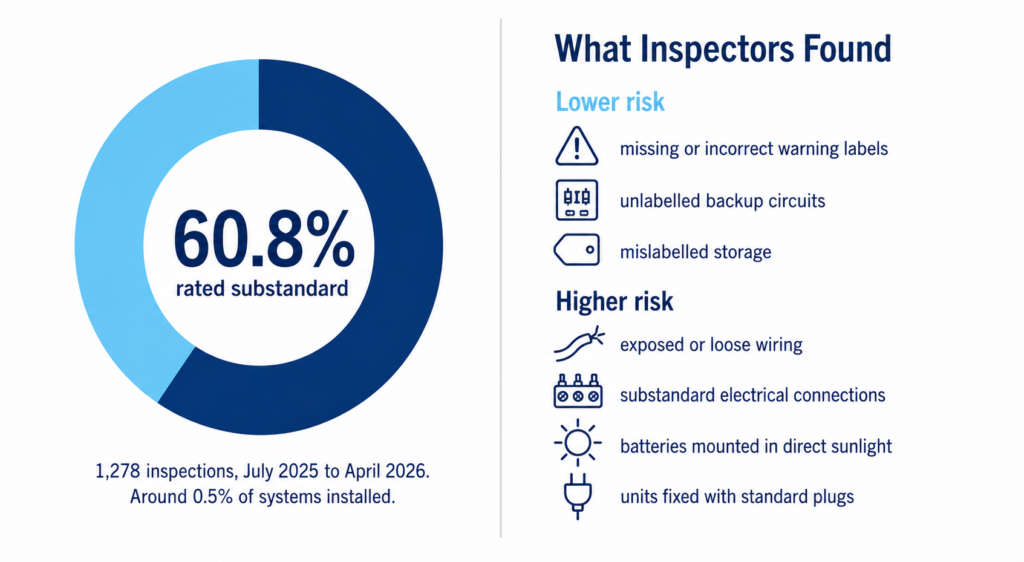
Between July 2025 and April 2026 the Clean Energy Regulator inspected 1,278 installations. That was about 0.5 per cent of everything installed at the time. Of those, 60.8 per cent were rated substandard and 1.2 per cent were rated unsafe.
Read that carefully. Inspections are targeted rather than random, so it is not a clean measure of every system in the country. It is still 60.8 per cent of the ones they chose to look at.
Some faults were paperwork. Missing or incorrect warning labels. Unlabelled backup circuits.
Others were not. Exposed or loose wiring. Substandard electrical connections. Batteries mounted in direct sunlight, which shortens their life and costs you capacity on hot days. Battery units wall mounted with standard plugs instead of proper fixings.
The regulator has since lifted inspections to around 3,400. It can strip accreditation, fail the certificates that fund your rebate, and refer matters for civil or criminal action.
How Do You Check a Battery Installer Before You Sign?
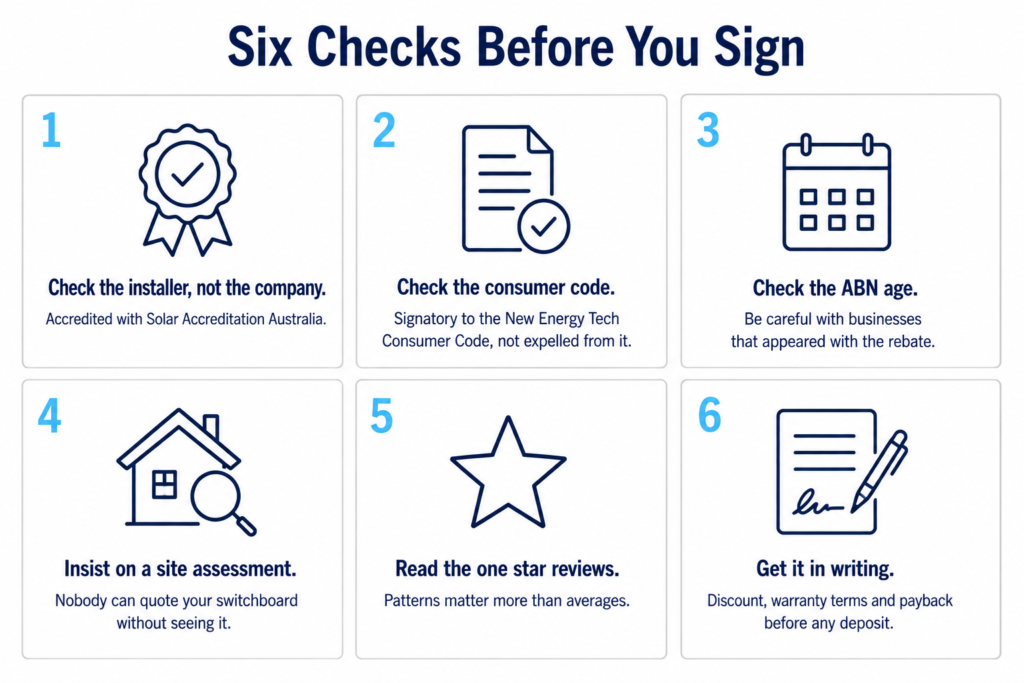
Six things, and none of them take long.
- Check the individual installer is currently accredited with Solar Accreditation Australia. Not the company. The person on your roof.
- Check the seller is a signatory to the New Energy Tech Consumer Code and has not been expelled from it.
- Look up the ABN. Be careful with businesses that appeared the same month the rebate did.
- Insist on a site assessment. Nobody can quote your home properly without seeing your switchboard.
- Read the one star reviews rather than the average. Patterns tell you more than a score.
- Get the discount amount, the warranty terms and the payback period in writing before you pay a deposit.
The red flags are consistent. Same day sign-up pressure. Claims that a rebate is about to end. A large deposit with no firm installation date. Vague “or equivalent” wording on components.
Complaints to the ACCC rose 107 per cent in the first quarter of 2026 against the same quarter in 2025. The ACCC now wants a mandatory code of conduct tied to rebate access, so a company doing poor work loses the subsidy. Solar Quotes has called the current voluntary code a toothless tiger, which is fair enough. Being expelled from it does not stop anyone installing batteries.
Look, the brand still counts for something. In the 2026 Solar Quotes Installers’ Choice awards, Sigenergy came first on 26 per cent of installer votes. Installers voting on what they trust to install in their own homes tells you more than any marketing claim. That is why we fit SigenStor.
Is a Home Battery Still Worth It?
For most solar homes, yes.
ACCC figures put households with solar and a battery between $329 and $909 a year below grid-only customers. On a virtual power plant plan, between $762 and $1,093 below. AEMO has said the effect on evening peak demand has been a pleasant surprise, even from batteries not enrolled in a VPP.
If your usage is small a large battery will not be cash flow positive. Size a system to suit your home, not to suit the rebate. That is the whole lesson of the past twelve months.
Read next: mistakes to avoid when buying a solar battery
Frequently Asked Questions
What is the Cheaper Home Batteries Program and who is eligible?
A federal program that started in July 2025. Your installer claims small-scale technology certificates and passes the value on as a discount on your invoice. Homeowners, small businesses and community facilities can all access it. The battery needs to be on the approved product list, installed by an accredited installer, paired with solar (new or existing), and capable of joining a VPP. One battery per electricity meter.
How do I know if my battery installer is reliable and accredited?
Check the individual installer, not just the company, against the Solar Accreditation Australia register. Confirm the seller signed the New Energy Tech Consumer Code. Look at how long the ABN has traded. Then insist on a proper site assessment before anyone quotes you.
What should I look for when choosing a home battery system in Australia?
Size it against your evening usage rather than the largest rebate you can claim. Check the warranty covers capacity retention, not just faults. Confirm the brand has Australian support behind it, and that the battery and inverter are designed to work together.