Solar panels for landlords? The Investment Case for Rental Properties
Solar panels for landlords never used to make much sense. Now it lifts rent, resale value and your tax position. The catch is the rebates that pay for it shrink every year you wait.
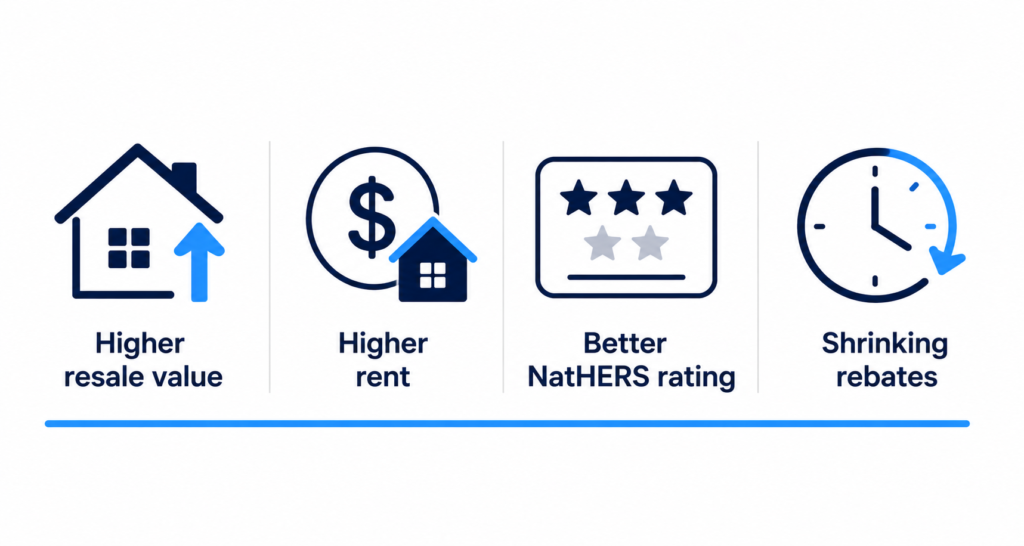
If you own a rental property in NSW, the ACT or Queensland, here’s what solar actually does to the numbers:
- Adds resale value, on average more than most renovations
- Lifts what tenants are willing to pay in rent
- Improves your property’s NatHERS energy rating
- Comes with time-limited rebates that get smaller each year
Does solar actually increase a rental property’s value?
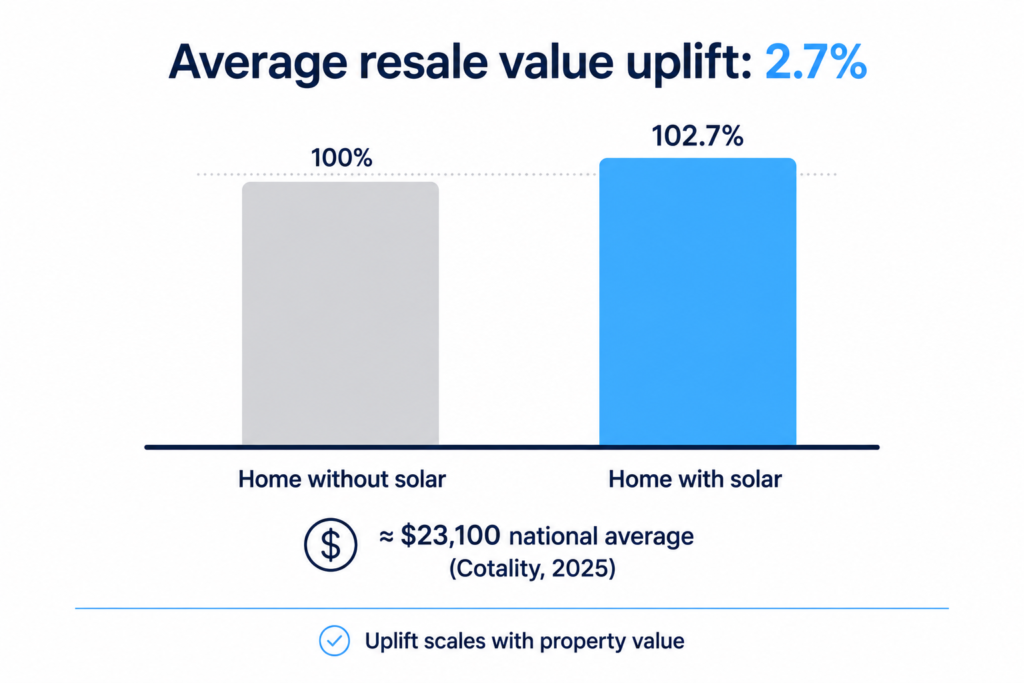
Solar-equipped homes sell for an average of 2.7% more than comparable homes without solar, according to Cotality’s 2025 “Watt’s It Worth” report. Nationally that works out to around $23,100, though because the uplift is percentage-based rather than a flat figure, it scales with the property’s value, a $1.2M home could see over $32,000 added. The gain also varies by city, stronger in markets like Hobart and Darwin, more modest in Sydney, so the exact number depends on where the property sits.
For landlords, that means solar isn’t just an operating cost. It’s equity you’re building into the property. For more on this read our article Do Solar Panels Increase Your Home Value?
Will tenants pay more rent for a solar-equipped property?
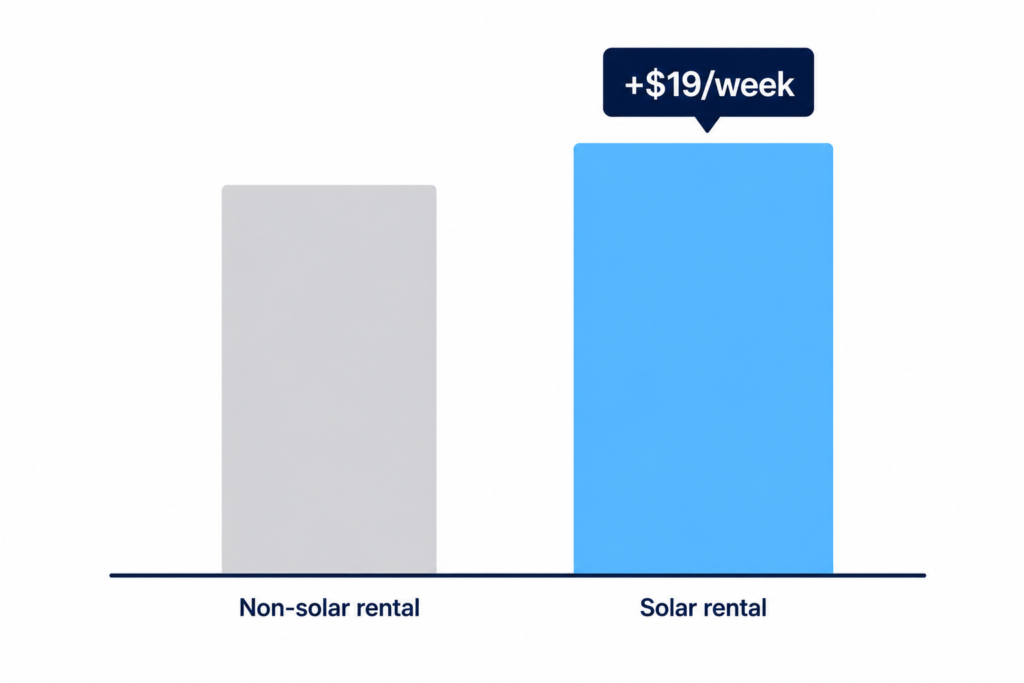
There’s good evidence they will. A peer-reviewed Australian study, using two large national household surveys, found renters in solar-equipped properties pay around $19 more a week than renters in comparable homes without solar, enough for a landlord to recover the system cost in about five years through rent alone.
It’s one more reason solar isn’t just an expense sitting on the property. With power prices trending upward and tenant demand for lower bills only growing, it’s reasonable to expect that gap to widen rather than close over time.
How does solar affect a property’s NatHERS rating?
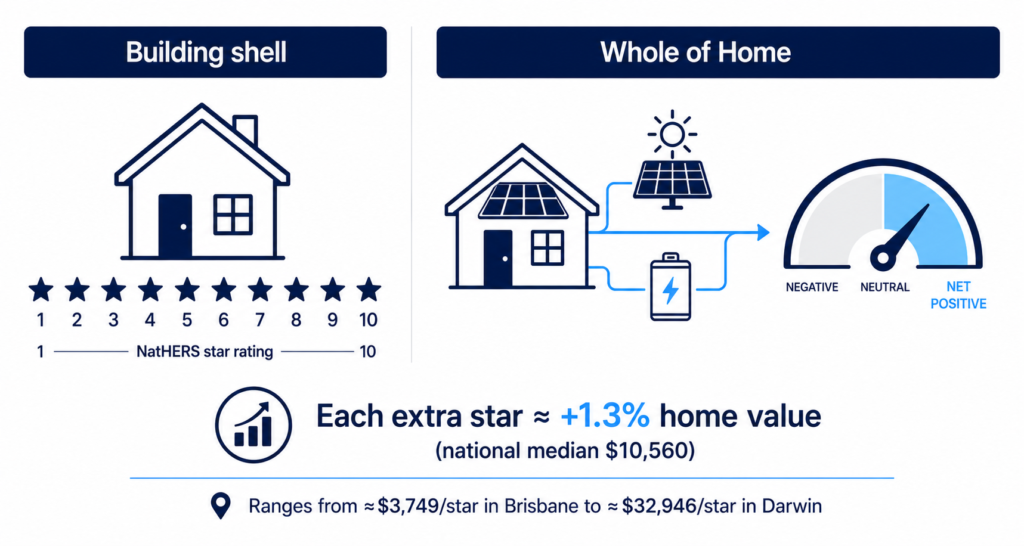
NatHERS is the scale used to measure a home’s energy efficiency, out of 10 stars for the building shell, with a second “Whole of Home” score that includes solar and battery output. A well sized system can push that second score well past neutral. The same Cotality research found each additional NatHERS star adds a median 1.3% to a home’s value nationally, around $10,560, with the premium ranging from roughly $3,749 per star in Brisbane up to $32,946 per star in Darwin. Disclosure requirements around energy ratings are expanding across the country too, so a stronger rating now is protection against tighter rules later. You can read more about NatHERS rating’s here.
What government incentives are available for landlords right now?
This is the part that won’t wait. Two schemes matter most if you’re in Lenergy’s service area:
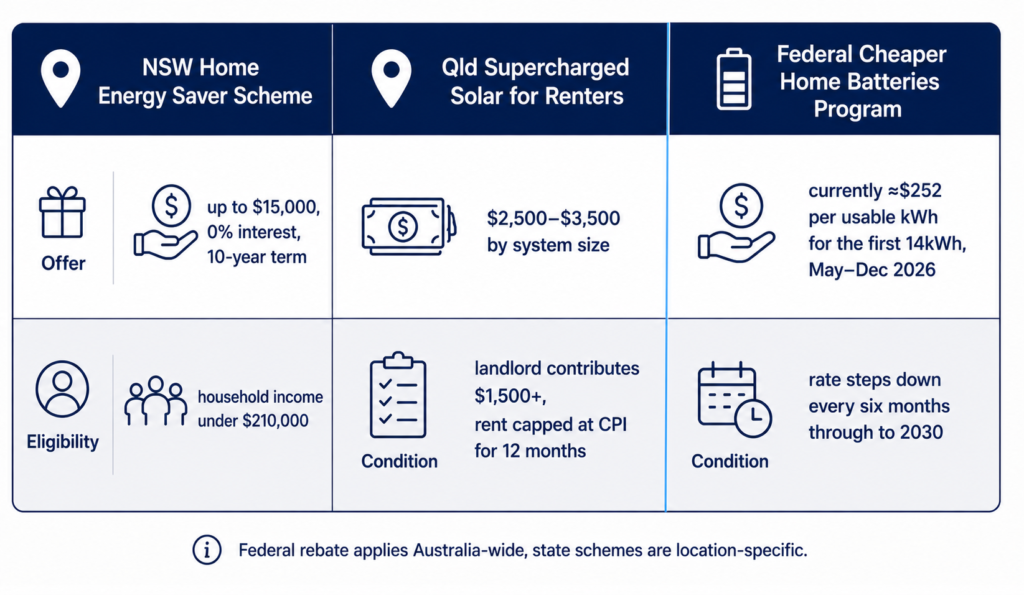
- The NSW Home Energy Saver Scheme lets eligible owners, including landlords, borrow up to $15,000 per property toward solar, batteries and other upgrades at zero interest, repaid over as long as ten years. It opened 17 June 2026, and eligibility requires combined household taxable income under $210,000. For a full breakdown of how this works you can read our article here.
- Queensland’s Supercharged Solar for Renters rebate pays landlords $2,500 to $3,500 depending on system size (capped at 5kW and above), provided the landlord contributes at least $1,500 and agrees not to raise rent above CPI for 12 months. The current round opened 12 December 2025 and is capped at 6,500 properties statewide. Learn more here.
On top of that, the federal battery rebate reduces every six months. It currently sits at around $252 per usable kWh for the first 14 kWh (May–December 2026), down from $311 earlier in the year, and is scheduled to keep dropping through to 2030. For a full breakdown on the current rebates read our article here.
What about the “split incentive” problem?
The usual objection is that the landlord pays for solar but the tenant gets the bill savings. Rent tends to be based on property value and what people are willing to pay. As more people recognise that energy efficiency in a home is the way to go it and are willing to pay for it. Research backs this up directly, renters in solar homes already pay around $19 more a week on average, which is exactly the kind of arrangement that makes the split incentive work for both sides.
Depreciation and tax
Landlords can generally claim depreciation on a solar system as a rental property asset. This is worth raising with your accountant alongside any rebate you claim, since the two can work together to shorten your payback period further.
If you’re weighing up whether now’s the right time to invest, our guide breaks down how energy ratings are set to reshape the rental market over the next few years.

FAQ
Can a landlord claim the federal solar tax credit on a rental property?
There’s no federal solar tax credit in Australia, that’s a US mechanism. What Australian landlords can access instead is the upfront rebate through STCs (the same mechanism behind the federal battery rebate) plus depreciation on the system as a rental property asset, which is worth raising with your accountant.
Do solar panels increase the value of a rental property?
Yes, by around 2.7% on average nationally, according to Cotality’s 2025 sales data, though the exact uplift depends on the suburb and home value.
Will tenants pay more rent for a solar-equipped rental?
Research shows renters in solar homes pay around $19 more a week on average than comparable non-solar rentals.
Who pays for solar panels in a rental property, the landlord or tenant?
Typically the landlord, with rebates like the NSW Home Energy Saver Scheme and Queensland’s Supercharged Solar for Renters reducing the upfront cost, and a modest rent increase helping recover the rest.