What Has the Impact of Solar Batteries Been?
Half a million Australian homes now have a solar battery. So Australia’s grid operator, AEMO, took 10,000 of them and compared them to 10,000 homes running solar alone. They found the impact of solar batteries was that homes cut their evening peak grid use by 73%, and we explain why.
Here is what this article covers:
- What the AEMO solar battery study actually measured
- The 73% figure, and how it breaks down across NSW, the ACT and Queensland
- Why the evening peak is the costly part of your day
- What a 73% drop does not mean for your bill
What did the AEMO solar battery study actually measure?
The study sits inside AEMO’s Quarterly Energy Dynamics report for the June 2026 quarter.
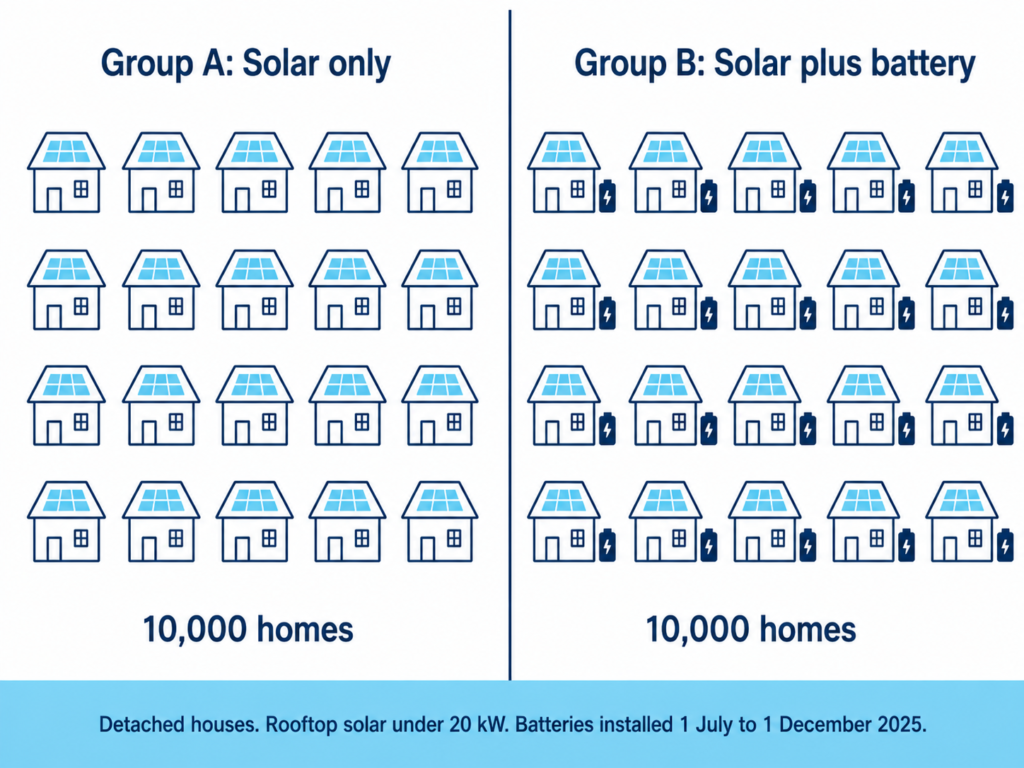
AEMO took two sample groups. Each had 10,000 detached houses. Every home had rooftop photovoltaic solar panels under 20 kW. One group had solar only. The other had solar plus a battery, installed between 1 July and 1 December 2025.
Then it compared their smart meter data across the whole quarter.
The measure was net grid imports during the evening peak, 4pm to 9pm. Net means power bought from the grid minus power sent back to it. That distinction matters, and we will come back to it.
How much do solar batteries reduce grid usage?
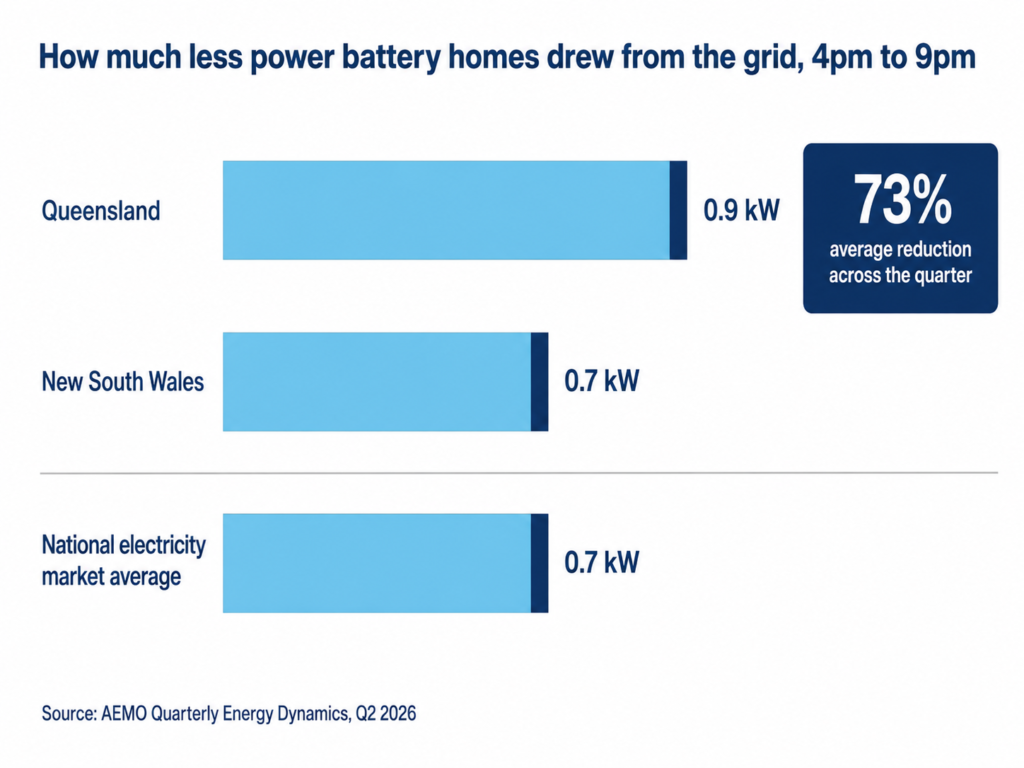
Across the national market, battery homes pulled 0.7 kW less from the grid during the evening peak. That is a 73% reduction against the solar-only group.
The figure moves by region:
| Region | Average cut in evening peak grid imports |
| Queensland | 0.9 kW |
| New South Wales | 0.7 kW |
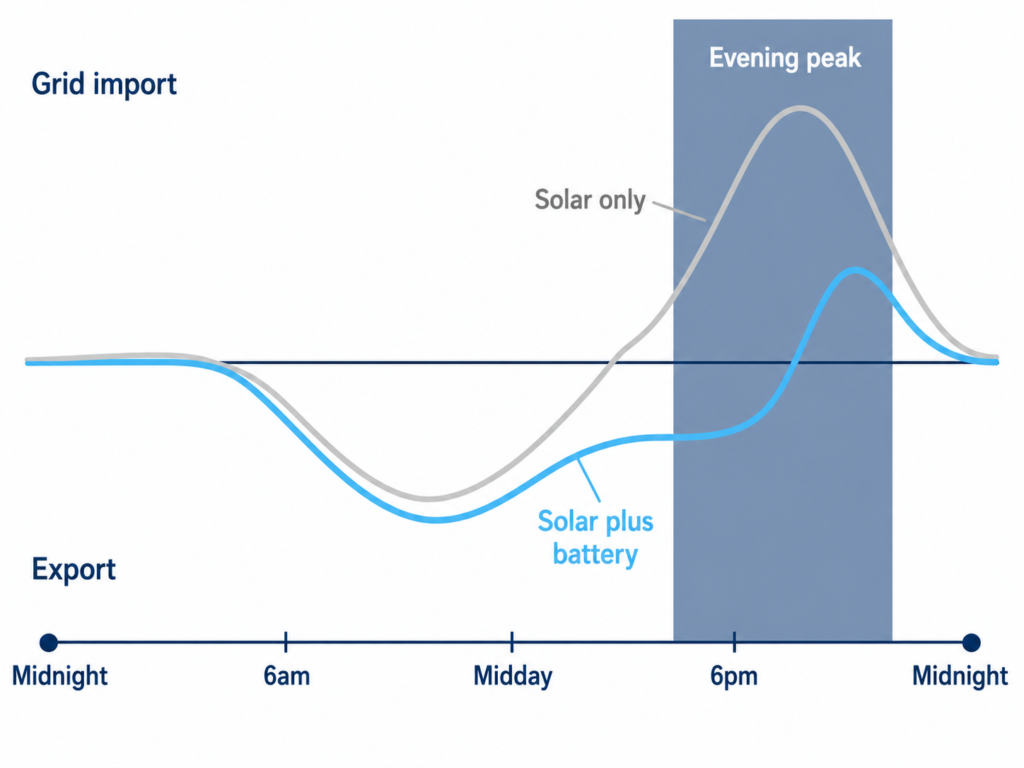
There is a second finding worth noting. Battery homes switched to net exports later in the morning, because the battery charged first. They then kept exporting later into the evening. The battery covered the house and still had surplus going out. That is home battery storage changing grid reliance in both directions.
Household uptake explains why this now shows up in national data. NSW has installed 4,865 MWh of battery capacity since July 2025. Queensland has 2,570 MWh. Nationally that is 389,137 installations in twelve months.
Why does the evening peak matter?
Think about when your house actually uses power. Lights on. Oven going. Heating or cooling running. Someone in the shower.
That is 4pm to 9pm, and your panels stopped producing an hour ago.
So you buy it back, at the hours grid electricity tends to cost the most on a time of use plan. Meanwhile your solar spent all day feeding power back for next to nothing.
A battery closes that gap. It stores the midday surplus and releases it after sunset. That is self consumption, which simply means using your own power instead of renting it back from your retailer.
The AEMO figures show how much of that evening a battery can genuinely cover.
Does a 73% drop mean a 73% lower bill?
No. This is the part worth being straight about.
The 73% measures grid imports across a five hour window. It is not your total household usage. It is not your bill.
Your bill still covers the rest of the day, your daily supply charge, and whatever the battery could not carry on a heavy night.
Averages hide that. A battery sized to your average day will still buy power on the cold nights, the guest nights, the 9pm load of washing. We use 24 kWh as a starting reference when, then size a system to suit the house in front of us.
Two more limits are worth naming. The homes in the study chose to add a battery, so they are not a perfect stand-in for the average household. AEMO also found home battery charging pushed daytime demand up. Storage moves load to times where the grid has a higher supply of electricity. It does not erase it.
What has the impact of solar batteries been on the grid?
Less stress on the network when it is under the most.
The 4pm to 9pm window is the hardest part of the day for the electricity grid. Demand climbs as people get home. Solar has stopped producing. That is when the system strains.
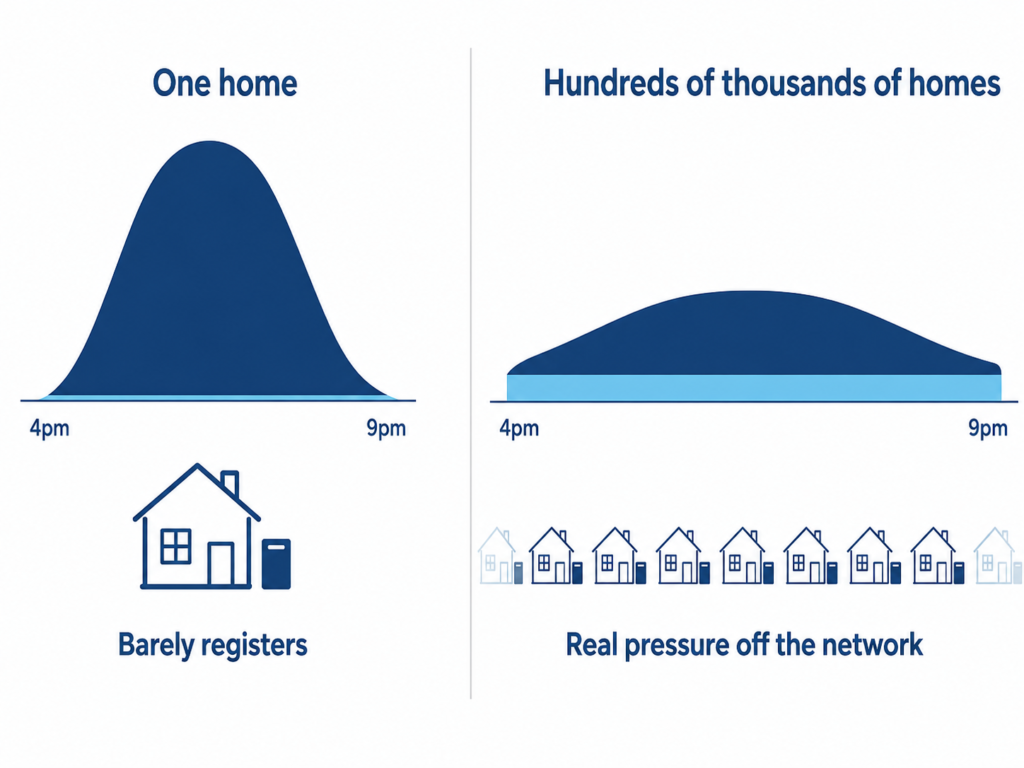
A battery takes that load off. Not by using less power, but by supplying it from a box on the wall instead of pulling it down the street.
One home doing that does nothing for the grid. Hundreds of thousands doing it across the same five hours takes real pressure off the network.
That is the impact so far. Homes covering their own evenings, and a peak that is easier for the system to carry.
Read next: The problem with cheap home battery quotes
Frequently Asked Questions
What did the AEMO study find about solar batteries in Australian homes?
AEMO compared 10,000 solar-only homes against 10,000 solar-plus-battery homes over the June 2026 quarter. Battery homes reduced their net grid imports during the 4pm to 9pm evening peak by 0.7 kW on average, a 73% reduction. Battery homes also kept exporting to the grid later into the evening.
How much can solar batteries reduce reliance on the electricity grid?
In peak hours, substantially. AEMO measured a 73% cut in evening peak grid imports across the national market, with Queensland homes averaging a 0.9 kW reduction and NSW homes 0.7 kW. Over a full day the reduction is smaller, because batteries draw power to charge and most homes still buy from the grid at some point.
Are solar batteries worth it for Australian homeowners?
It depends on your usage shape and your tariff. A household that uses most of its power after dark and pays a high evening rate gets more from storage than a household that is out all evening. Sometimes, for some homes, the figures do not stack up. Check your own bill against your usage pattern before deciding.