Why Is My Winter Electricity Bill So High in Southern NSW and the ACT?
In Southern NSW and the ACT the winter electricity bill climbs because we use more power at the worst possible time. Heaters work harder. Hot water runs longer. The sun clocks off early and most usage lands in the evening, the most expensive time of day to be pulling from the grid. After dark your tariff charges it’s peak rate.. so more power, right when it costs the most. The good news…it’s fixable.
This article walks through each one, so you know what is worth changing and what is not:
- The heating settings costing you the most
- Why draughts make your heater work twice
- What cold water does to your hot water bill
- Why your solar cannot keep up in June
- A checklist for the loads you have forgotten
Is my heater the reason my power bill is higher in winter?
Usually, yes.
Heating is the biggest single driver of winter energy costs in Australia. energy.gov.au says every extra degree can add 5 to 10% to your bill. They recommend 18 to 20 degrees. Plenty of homes sit on 25.
The worst offenders are the cheap ones. Plug-in fan heaters, oil column heaters, bar radiators. Cheap to buy, expensive to run, because they turn electricity straight into heat.
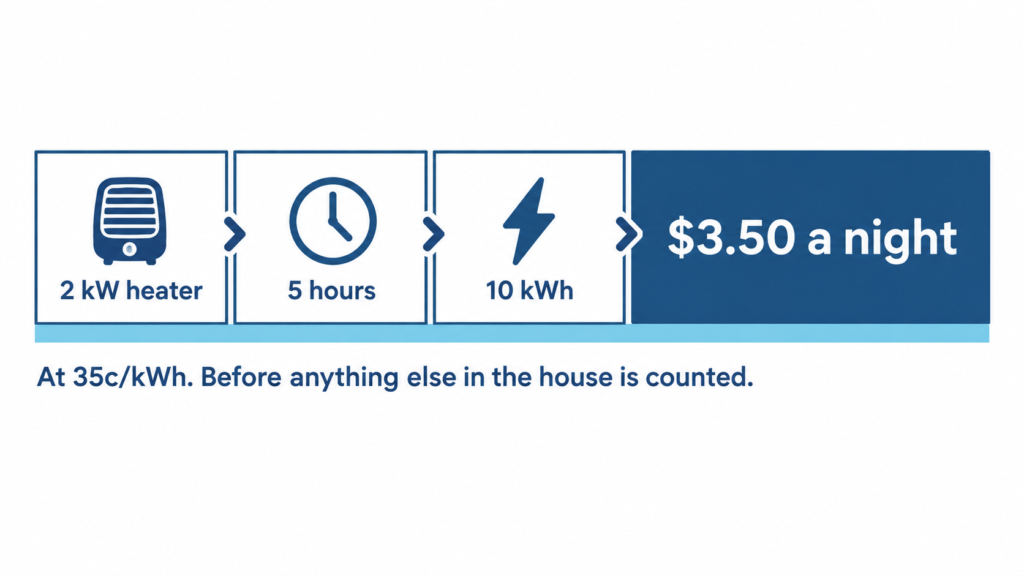
Say you run a 2 kW plug-in heater for five hours. That is 10 kWh before anything else is counted. At 35 cents a kilowatt hour, that heater costs you $3.50 a night. Run two and you are at $7 before the kettle goes on.
A reverse cycle air conditioner moves heat rather than making it. Same job, far less electricity use.
So heat the room you are in, not the whole house. Set it sensibly and leave it there. Use the timer. Shut the door.
Why does my house cost so much to heat?
Because it leaks.
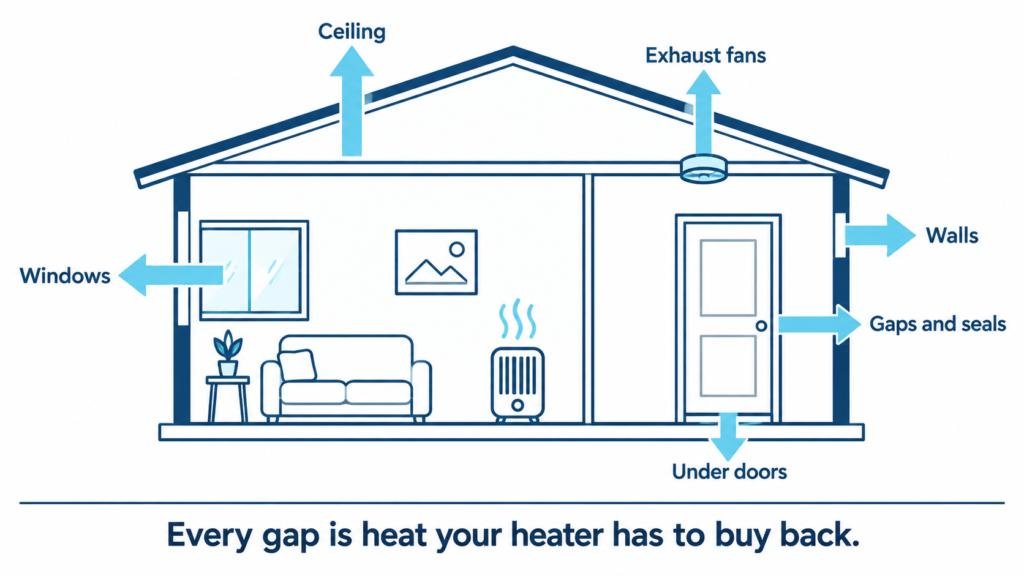
If your home lets heat out, your heater has to keep buying it back.
Plenty of older Australian homes were built with little or no insulation. Taking the right steps to insulate your household can cut heating costs by up to 45%.
Start cheap. Door snakes and weather seals on the gaps around doors and windows. Curtains closed before dark. Internal doors shut. Unsealed exhaust fans are the one most people miss.
Then the bigger items. Ceiling and wall insulation decide how hard your heater works. If you have work planned, check them then.
Is hot water adding to my winter energy costs?
It is, and almost nobody looks at it.
Showers get longer when it is cold. The water entering your tank is colder too, so the system works harder to heat it. Same shower, more energy.
If you have solar, heat your water during solar hours on a timer or relay. That turns a grid cost into self consumption. No solar? Ask your retailer about a controlled load tariff.
If your hot water system is on its way out, look at a heat pump. Old electric tanks heat water with an element, the same way a bar heater works. A heat pump moves heat instead, which costs a lot less to run.
Why is my solar not covering my winter bill?
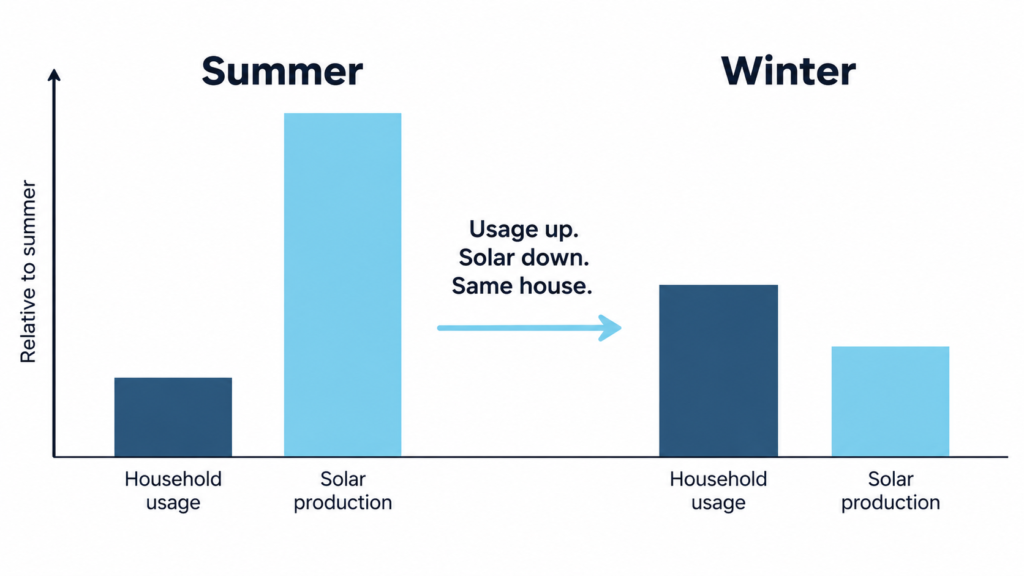
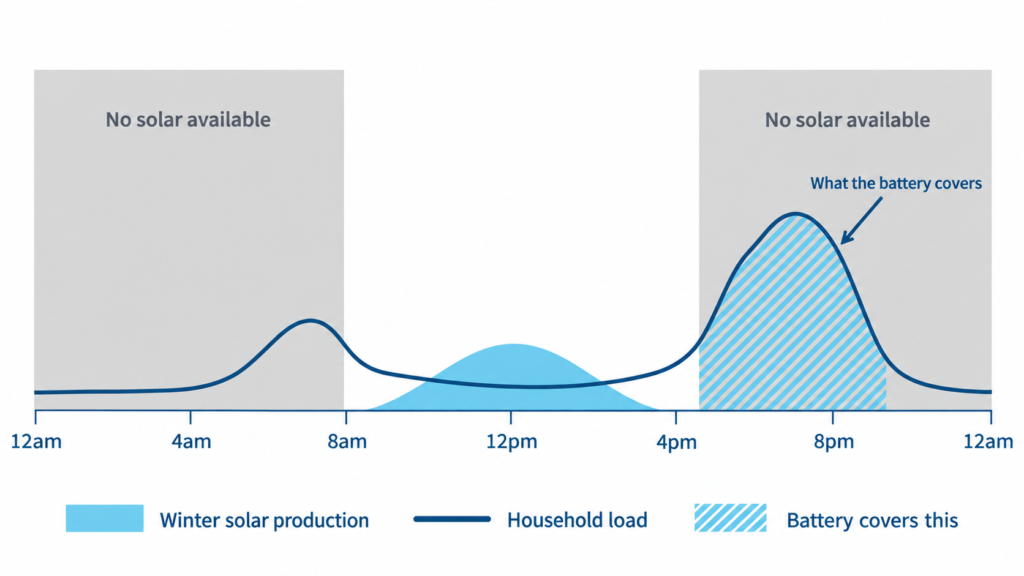
Because production drops at the same time your usage climbs.
Winter days are shorter and the sun sits lower. Rooftop solar winter output is often less than half of what the same system produces in summer.
The panels produce least at exactly the hours you need most. Anything your panels are not covering gets bought from the grid instead, and the evening block is where most retailers charge their highest rate. Your heaviest hour of the day and your dearest rate of the day are the same hour.
So the bill rises even though nothing is broken. Winter can make a good solar system look like a bad one.
A battery closes that gap. A SigenStor stores your daytime solar, or cheap grid power from a free power window and releases it through the evening peak. It will not fix a leaky house or a 25 degree thermostat. It will offset your usage at the most expensive hours of the day.
Which is why a system should be sized to suit your winter load, not your summer production. Good design starts with what your home uses in July, not what the roof does in January. From there it is a question of what closes the gap. A battery. More panels to lift the winter yield. A Solar Sharer Offer, which gives you a cheap or free daytime block from your retailer to charge from. Often a mix of all three.
What else should I check before the next winter bill?
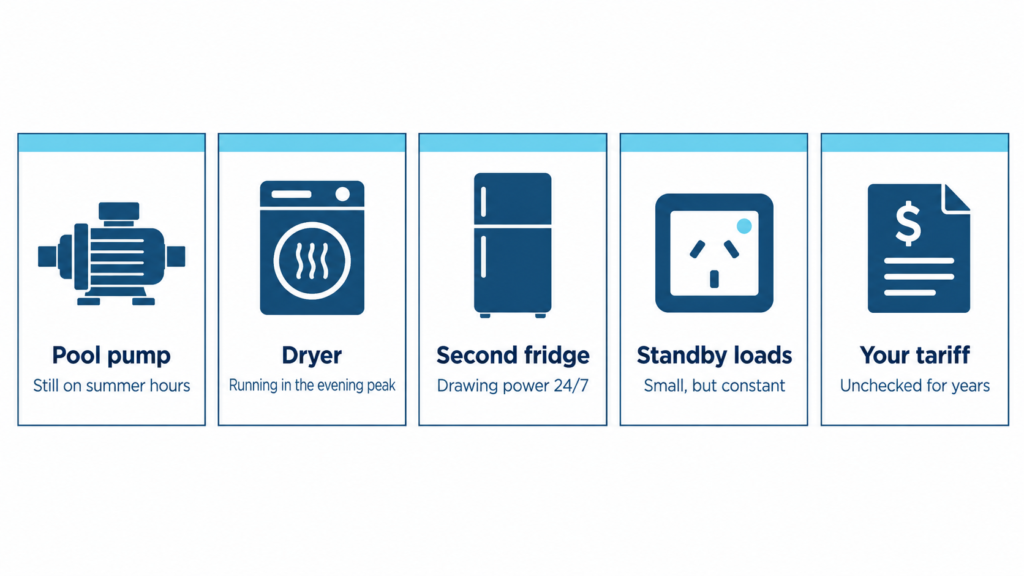
Five minutes walking around the house will find money.
- Pool pump. Most run summer hours all year. Two extra hours a day is roughly 2 kWh, about 70 cents at 35 cents a kilowatt hour. Across a winter that adds up.
- Clothes dryer. Spin on high first, then rack dry what you can. If it has to go on, run it in solar hours, not the evening peak.
- Second fridges. A half-empty beer fridge draws power every hour of every day.
- Standby loads. Computers left on, outdoor lighting with no sensor, smart home gear. Each is small. All of them running all day is not.
- Your tariff. Check it once a year. Time of use peak rates are where winter bills do most of their damage. Read our most recent recommendations here.
Read next: 5 Things To Do If You Are Considering Solar
Frequently Asked Questions
Why does my electricity bill double in winter?
Rarely one cause. Usage rises because heating runs for hours, hot water works harder and the dryer comes out more often. At the same time your solar produces less, and most of the extra load lands in the evening peak. More kilowatt hours, at a higher rate per kilowatt hour, on a bill covering the coldest months of the year.
Does solar power work less effectively in winter?
Panels handle the cold fine. Cold is not the problem. Shorter days and a lower sun angle are. Winter output is often around half of summer production, and your heaviest loads run before sunrise and after sunset when the panels are producing nothing at all.
What time of day is electricity most expensive in winter?
On most time of use tariffs, the evening peak. That is exactly when heating, cooking, lighting and the TV all come on together. Shifting what you can into the middle of the day is the simplest way to reduce your electricity bill in winter.